Historical Fiction
All countries
Afghanistan
Albania
Algeria
Angola
Antigua and Barbuda
Argentina
Armenia
Australia
Austria
Azerbaijan
Bangladesh
Barbados
Belize
Benin
Bosnia and Herzegovina
Brazil
Bulgaria
Burundi
Canada
Chile
China
Congo, Democratic Republic
Côte d’Ivoire (Ivory Coast)
Croatia
Cuba
Cyprus
Denmark
Djibouti
Dominica
Dominican Republic
Egypt
El Salvador
Ethiopia
Fiji
France
Georgia
Germany
Ghana
Greece
Guatemala
Hungary
Iceland
India
Indonesia
Iran
Iraq
Ireland
Italy
Jamaica
Japan
Kazakhstan
Kenya
Kuwait
Latvia
Lebanon
Libya
Madagascar
Malaysia
Mexico
Moldova
Morocco
Myanmar
Netherlands
Nigeria
North Korea
Oman
Pakistan
Palestine
Philippines
Poland
Portugal
Puerto Rico
Romania
Rwanda
Saudi Arabia
Senegal
Singapore
Slovenia
South Africa
South Korea
Spain
Sri Lanka
Sudan
Sweden
Switzerland
Syria
Taiwan
Tanzania
Thailand
Türkiye
Turkmenistan
Uganda
Ukraine
United Arab Emirates
United Kingdom
United States
Uruguay
Uzbekistan
Vietnam
Yemen
Zambia
Zimbabwe
1
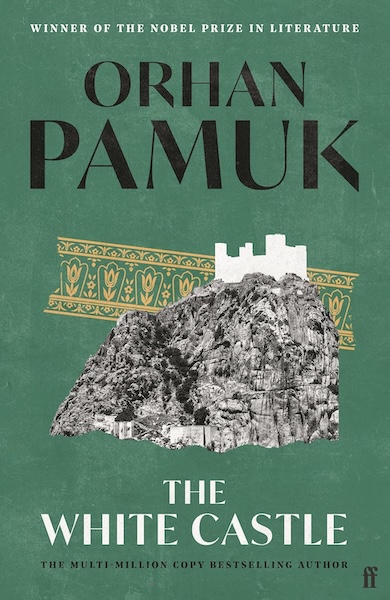
The White Castle
In the seventeenth century, a young Italian scholar travelling from Venice is captured by pirates and taken to Constantinople, where he becomes a slave. His new master, Hoja, is an Ottoman scholar fascinated by Western science and technology. But their relationship becomes increasingly strange when they discover that they look almost exactly alike.
As the Italian teaches Hoja everything he knows about astronomy, medicine, and engineering, their intellectual partnership develops into a psychological struggle. Each man becomes obsessed with understanding the other, probing his memories, fears, and deepest secrets. Gradually, the boundaries between master and slave begin to blur, raising an unsettling question: if two people know everything about each other, can they exchange identities?
Set against the grandeur and brutality of the Ottoman Empire, The White Castle is a philosophical tale about selfhood, cultural differences, and the fragile boundaries separating East from West.
Türkiye
1985
2
Like a Sword Wound
Like a Sword Wound opens Ahmet Altan’s Ottoman Quartet, a historical series exploring the final decades of the Ottoman Empire and the emergence of modern Turkey. Set against political upheaval and the decline of imperial authority, the novel follows a cast of characters whose personal desires conflict with the traditions and expectations of their society. Among them are an Ottoman army officer, members of the royal household, and a Turkish aristocrat whose attraction to a conservative religious leader challenges her independent life in Paris. Their relationships unfold amid betrayal, shifting loyalties, and the growing influence of Western ideas. Altan combines historical drama with intimate explorations of love, sexuality, and power, revealing how political transformation changes both public institutions and private relationships. The novel examines the tension between modernity and tradition in a society struggling to determine its future.
Türkiye
1998
3
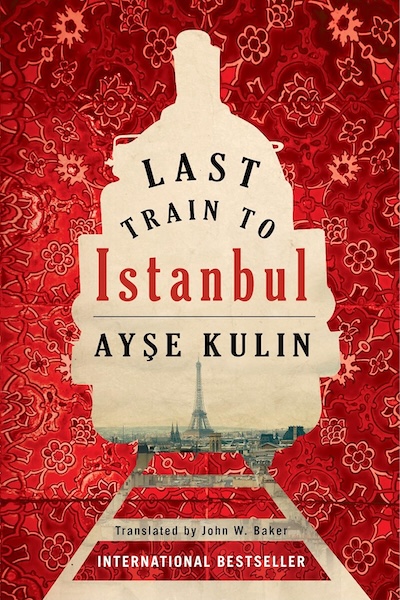
Last Train to Istanbul
As the Second World War threatens to engulf Europe, Selva, the daughter of a prominent Ottoman family, falls in love with Rafael Alfandari, a young Jewish man. Their relationship defies the expectations of both families, forcing them to leave Turkey and begin a new life together in France. But when the Nazis occupy the country, their happiness is overshadowed by the growing danger facing Jewish communities across Europe.
As persecution intensifies, Selva and Rafael find themselves trapped in a hostile world where their love and their young family may not be enough to keep them safe. Meanwhile, Turkish diplomats work behind the scenes to rescue Jewish people stranded in occupied Europe, arranging a perilous journey towards freedom. With time running out, the fate of Selva and Rafael becomes intertwined with the courage of those willing to risk their lives to save strangers.
Moving between Ankara, Istanbul, Paris, and other wartime cities, Last Train to Istanbul combines an intimate family story with a little-known chapter of Holocaust history. Inspired by accounts of Turkish diplomats who helped rescue Jews during the war, the novel explores love across cultural boundaries, moral courage, and the extraordinary acts of humanity that can emerge in the darkest times.
Türkiye
France
2002
4
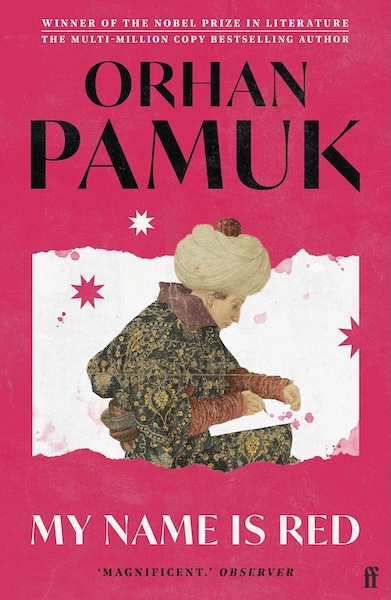
My Name Is Red
Set in sixteenth-century Istanbul during the Ottoman Empire, My Name Is Red follows a group of miniature painters commissioned to create an illustrated book for the sultan. Their work becomes controversial because it incorporates European artistic techniques that challenge traditional Islamic approaches to representation. When one of the artists is murdered, the investigation exposes rivalries, jealousy, and competing ideas about art, religion, and cultural identity. The story unfolds through multiple narrators, including artists, objects, and even a corpse, creating a complex picture of a society caught between established traditions and new influences. Pamuk explores the relationship between artistic expression and political authority, asking whether adopting foreign ideas represents progress or the loss of cultural heritage. The novel combines a murder mystery with a philosophical examination of how people understand themselves through art and tradition.
Türkiye
2002
5
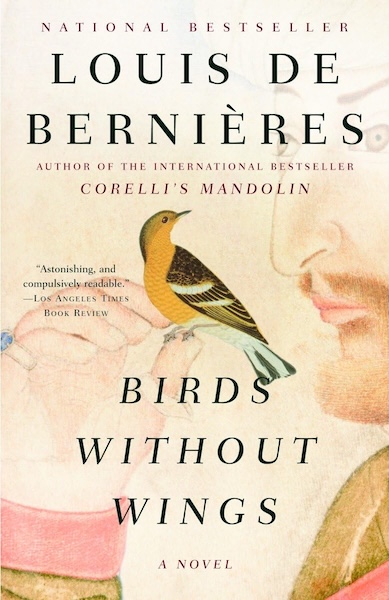
Birds Without Wings
In the small Anatolian village of Eskibahçe, Muslims and Christians have lived side by side for generations, sharing a language, traditions, friendships, and everyday life. At the heart of this close-knit community is the tender love between Philothei, a beautiful Greek Christian girl, and Ibrahim, a Muslim goatherd who has loved her since childhood. Their future seems possible—until the forces of history begin to tear their world apart.
As the Ottoman Empire collapses and modern Turkey emerges, the villagers are swept into the First World War, the rise of nationalism, and the brutal Greek-Turkish conflict. Through the voices of ordinary people, de Bernières creates an expansive portrait of a society destroyed by religious divisions, political ambition, and forced displacement. Both heartbreaking and darkly humorous, Birds Without Wings explores how people who once lived as neighbours can become enemies—and how love and humanity endure even amid extraordinary cruelty.
Türkiye
2004
6
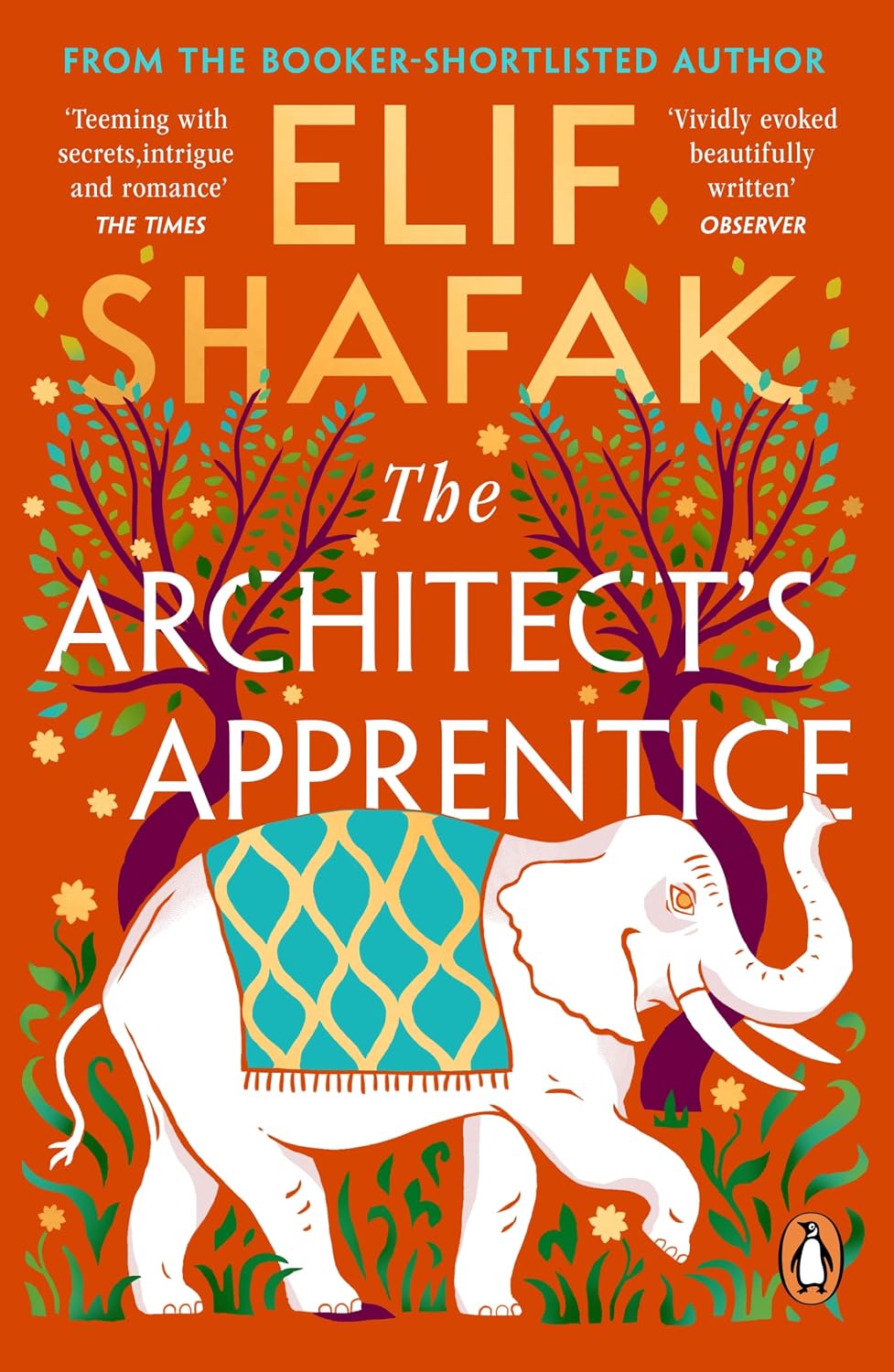
Architect's Apprentice
Set in the sixteenth-century Ottoman Empire, The Architect’s Apprentice follows Jahan, a twelve-year-old boy who arrives in Istanbul with Chota, an extraordinary white elephant intended for the sultan’s menagerie. As Jahan becomes involved in palace life, he encounters the celebrated imperial architect Mimar Sinan, who eventually takes him under his wing. Jahan enters a world of magnificent buildings, political intrigue, artistic ambition, and dangerous rivalries among the architect’s apprentices. As he grows older, his experiences expose him to the contradictions of an empire where beauty and intellectual achievement coexist with cruelty, jealousy, and the struggle for power. Shafak combines historical detail with an imaginative coming-of-age story, exploring loyalty, creativity, and the desire to find one’s place in the world. The novel celebrates architecture as both an artistic achievement and a lasting expression of human imagination.
Türkiye
2006
7
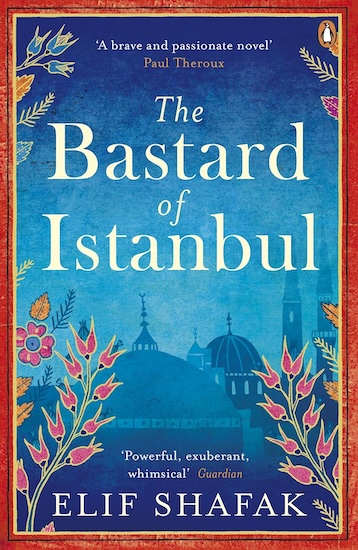
The Bastard of Istanbul
The Bastard of Istanbul centres on two young women whose lives connect through a complicated family history shaped by Turkish and Armenian experiences. Asya Kazancı grows up in Istanbul in a household dominated by women, surrounded by family secrets and conflicting interpretations of the past. Meanwhile, Armanoush, an Armenian American teenager, travels secretly to Istanbul in search of her cultural roots and a better understanding of her family’s history. When the two meet, their friendship brings buried memories and long-suppressed truths to the surface, particularly those connected to the Armenian genocide and its legacy. Through humour, food, family relationships, and competing memories, Shafak examines the relationship between personal identity and collective history. The novel explores how silence and denial can shape generations, while asking whether individuals can build meaningful connections across cultural and historical divisions.
Türkiye
2006
8
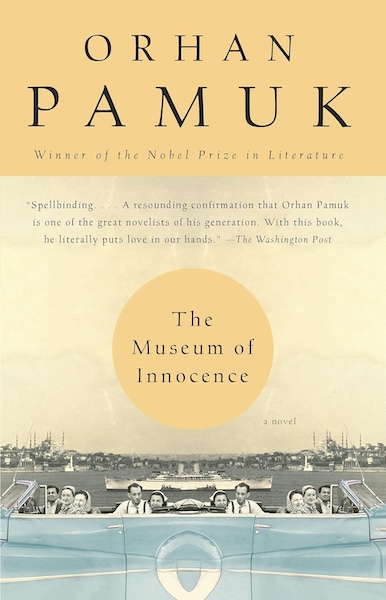
The Museum of Innocence
Istanbul, 1975. Kemal, the privileged son of a wealthy family, is preparing to marry Sibel, a woman who belongs to his own sophisticated social circle. But a chance encounter with Füsun, a beautiful young shop assistant and distant relative, sets his carefully ordered life on an unexpected course. Their passionate affair soon becomes complicated by social conventions, class divisions, and the expectations placed on women in a rapidly modernising Turkey.
When Füsun disappears from his life, Kemal begins collecting objects connected to her: earrings, hair clips, cigarette butts, and countless other seemingly insignificant things. Each item becomes a vessel for memory, allowing him to preserve moments that time would otherwise erase. Over the years, his collection grows into an extraordinary personal museum, reflecting both his devotion and his inability to let go.
Spanning decades of Istanbul’s social and cultural transformation, The Museum of Innocence is a richly layered exploration of love, obsession, memory, and longing. Nobel Prize-winning author Orhan Pamuk transforms ordinary objects into fragments of a vanished world, asking whether preserving the past can bring happiness—or merely keep us imprisoned within it.
Türkiye
2008
9
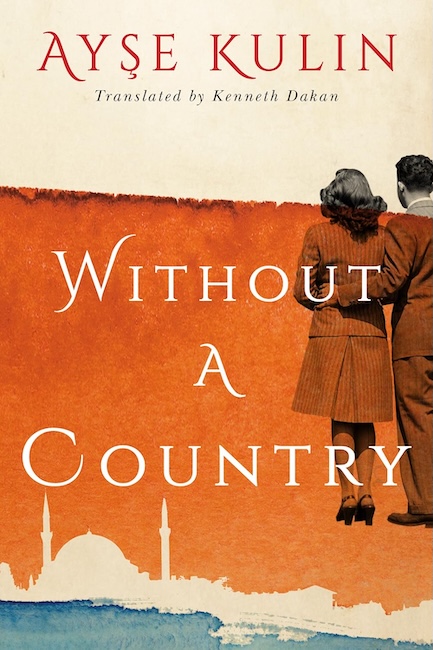
Without a Country
As Hitler’s persecution of Jews intensifies in 1930s Germany, medical professor Gerhard Schliemann and his wife, Elsa, face an impossible choice: remain in the country they call home or flee to protect their family. Their escape leads them to Turkey, where German Jewish academics are offered positions at universities and hospitals as the young republic works to modernise its institutions.
Although the Schliemanns find refuge and the opportunity to rebuild their lives, safety does not guarantee belonging. Across four generations, their descendants navigate political upheaval, military coups, interfaith relationships, and renewed antisemitism. As Turkey itself changes, the family must confront difficult questions about identity, loyalty, and what it means to belong to a country that may never fully accept them.
Spanning nearly a century, Without a Country is a multigenerational saga inspired by the real history of German-speaking Jewish academics who found refuge in Turkey during the Nazi era. Ayşe Kulin explores the complicated relationship between displacement and belonging, showing how the search for a safe home can shape a family’s destiny long after the original refugees are gone.
Türkiye
Germany
2016
10
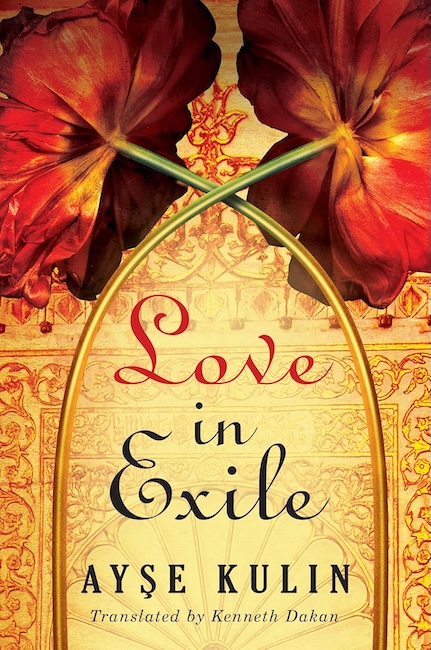
Love in Exile
In 1920s Turkey, Sabahat is a bright, determined young Muslim woman who dreams of an education and a life beyond the traditional expectations placed on women. Persuading her family to let her pursue her studies, she begins to imagine a future shaped by her own ambitions rather than an arranged marriage. But her plans take an unexpected turn when she falls in love with Aram, an Armenian Christian student.
Their feelings deepen despite the religious and cultural divisions separating their families. In a society where interfaith relationships challenge deeply rooted traditions, their love becomes a source of both hope and conflict. As family loyalties and social pressures threaten to tear them apart, Sabahat and Aram must decide how much they are willing to sacrifice to remain together.
Inspired by Ayşe Kulin’s own family history, Love in Exile is a sweeping romance set during a period of profound transformation in Turkish society. It explores forbidden love, women’s independence, religious difference, and the painful choices people face when personal happiness conflicts with family expectations.
Türkiye
2016
11
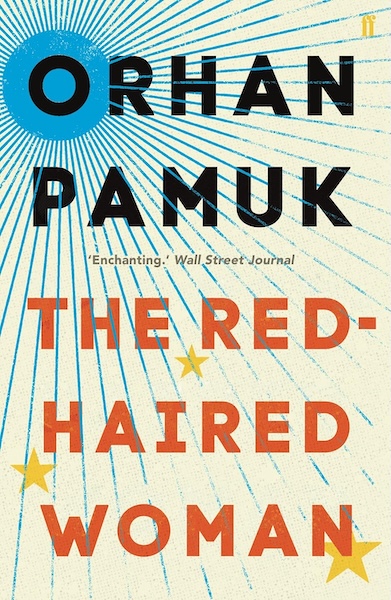
The Red-Haired Woman
In the mid-1980s, teenage Cem leaves Istanbul to work as an apprentice to Mahmut, an experienced well-digger. Together, they travel to a small town outside the city, where they labour to find water in the dry earth. As they work, Mahmut becomes a father figure to Cem, teaching him practical skills and sharing stories that shape the young man’s understanding of the world.
One summer, Cem encounters a mysterious red-haired woman performing with a travelling theatre troupe. Fascinated by her, he becomes entangled in an experience that will haunt him for decades. A terrible incident at the well changes the course of his life, and years later, when Cem has become a successful businessman, the past returns with consequences he could never have anticipated.
Drawing on the ancient myths of Oedipus and Rostam and Sohrab, The Red-Haired Woman explores fathers and sons, guilt, authority, and the forces that shape our destinies. It is a compact, unsettling novel about the stories we inherit and whether we can ever escape them.
Türkiye
2016
12
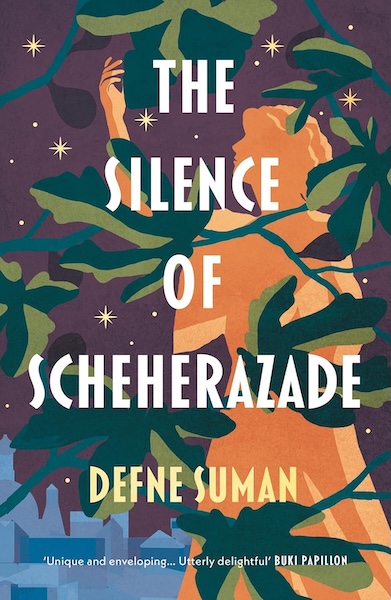
The Silence of Scheherazade
In September 1905, in the cosmopolitan Ottoman port city of Smyrna, a girl named Scheherazade is born as an Indian spy arrives with a secret mission for the British Empire. Their stories unfold alongside those of four families—a Levantine, a Greek, a Turkish, and an Armenian—whose lives are bound together by love, ambition, and the city’s extraordinary cultural diversity.
Over the following seventeen years, the families navigate political upheaval, shifting loyalties, forbidden relationships, and the growing tensions surrounding the decline of the Ottoman Empire. As war transforms the region, the world they know begins to crumble, culminating in the devastating fire that engulfs Smyrna in 1922.
Rich in historical detail and intimate human drama, The Silence of Scheherazade resurrects a lost multicultural world and gives voice to the people caught between competing nationalisms. It is a story of love, displacement, and the silences that history leaves behind.
Türkiye
2016