Historical Fiction

All countries Afghanistan Albania Algeria Angola Antigua and Barbuda Argentina Armenia Australia Austria Azerbaijan Bangladesh Barbados Belize Benin Bosnia and Herzegovina Brazil Bulgaria Burundi Canada Chile China Congo, Democratic Republic Côte d’Ivoire (Ivory Coast) Croatia Cuba Cyprus Denmark Djibouti Dominica Dominican Republic Egypt El Salvador Ethiopia Fiji France Georgia Germany Ghana Greece Guatemala Hungary Iceland India Indonesia Iran Iraq Ireland Italy Jamaica Japan Kazakhstan Kenya Kuwait Latvia Lebanon Libya Madagascar Malaysia Mexico Moldova Morocco Myanmar Netherlands Nigeria North Korea Oman Pakistan Palestine Philippines Poland Portugal Puerto Rico Romania Rwanda Saudi Arabia Senegal Singapore Slovenia South Africa South Korea Spain Sri Lanka Sudan Sweden Switzerland Syria Taiwan Tanzania Thailand Türkiye Turkmenistan Uganda Ukraine United Arab Emirates United Kingdom United States Uruguay Uzbekistan Vietnam Yemen Zambia Zimbabwe
Newest first Oldest first
1
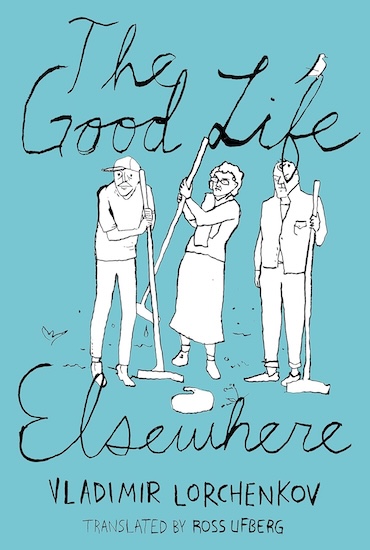
The Good Life Elsewhere
Vladimir Lorchenkov
Set in the Moldovan village of Larga in the years following the collapse of the Soviet Union, The Good Life Elsewhere follows a community of villagers desperate to escape poverty and build better lives in Italy. Convinced that prosperity awaits them in Western Europe, the villagers devise increasingly absurd and improbable schemes to cross the border, despite repeated obstacles and the near impossibility of obtaining visas. Among them are an Orthodox priest whose wife has emigrated to Italy, a resourceful mechanic who dreams of transforming his tractor into a vehicle capable of travelling by air and sea, and villagers who embark on an enormous, misguided crusade towards their imagined promised land. Even local politicians become entangled in the collective obsession with escape, revealing a society where hope and desperation often override common sense. Blending absurdist humour, political satire, and tragedy, Lorchenkov portrays a country caught between its Soviet past and an uncertain future. Italy becomes more than a destination: it represents the promise of dignity, opportunity, and freedom from a life that seems impossible to change. Yet the villagers’ increasingly desperate attempts expose the harsh realities of migration, economic inequality, corruption, and the idealisation of life abroad. Beneath its comic extravagance, the novel offers a poignant portrait of people searching for a better future when home no longer seems to offer one.
Moldova 2008