Historical Fiction

All countries Afghanistan Albania Algeria Angola Antigua and Barbuda Argentina Armenia Australia Austria Azerbaijan Bangladesh Barbados Belize Benin Bosnia and Herzegovina Brazil Bulgaria Burundi Canada Chile China Congo, Democratic Republic Côte d’Ivoire (Ivory Coast) Croatia Cuba Cyprus Denmark Djibouti Dominica Dominican Republic Egypt El Salvador Ethiopia Fiji France Georgia Germany Ghana Greece Guatemala Hungary Iceland India Indonesia Iran Iraq Ireland Italy Jamaica Japan Kazakhstan Kenya Kuwait Latvia Lebanon Libya Madagascar Malaysia Mexico Moldova Morocco Myanmar Netherlands Nigeria North Korea Oman Pakistan Palestine Philippines Poland Portugal Puerto Rico Romania Rwanda Saudi Arabia Senegal Singapore Slovenia South Africa South Korea Spain Sri Lanka Sudan Sweden Switzerland Syria Taiwan Tanzania Thailand Türkiye Turkmenistan Uganda Ukraine United Arab Emirates United Kingdom United States Uruguay Uzbekistan Vietnam Yemen Zambia Zimbabwe
Newest first Oldest first
1
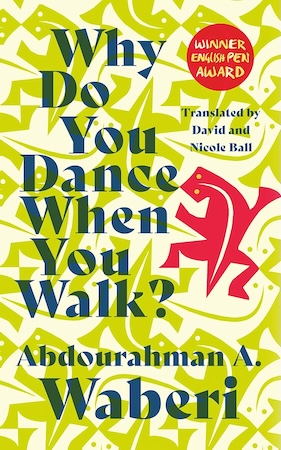
Why Do You Dance When You Walk
Abdourahman A. Waberi
One morning in Paris, eight-year-old Béa asks her father, Aden, a deceptively simple question: “Papa, why do you dance when you walk?” Her curiosity about his unusual gait prompts him to revisit the childhood experiences that shaped his life, taking readers from contemporary France to Djibouti during the years leading up to independence. Growing up in a poor neighbourhood marked by dust, heat, and hardship, Aden was a bright but physically vulnerable child. After contracting polio at the age of seven, he was left with a weakened leg that made him stand out among his peers. His childhood becomes a story of illness, loneliness, and resilience, shaped by his complicated relationship with his mother, his beloved grandmother, and the colourful characters who inhabit his neighbourhood. Through Aden’s memories, Waberi evokes a world on the threshold of political independence while exploring the intimate realities of growing up in a society shaped by colonialism. The novel is also a meditation on parenthood: as Aden answers his daughter’s questions, he reflects on how the wounds of childhood influence the stories we tell our own children. Poetic and deeply personal, this short novel explores disability, family, memory, and the transformative power of storytelling. It asks how we learn to live with our scars—and how even the most difficult experiences can become part of the dance of being alive.
Djibouti 2019