Historical Fiction
All countries
Afghanistan
Albania
Algeria
Angola
Antigua and Barbuda
Argentina
Armenia
Australia
Austria
Azerbaijan
Bangladesh
Barbados
Belize
Benin
Bosnia and Herzegovina
Brazil
Bulgaria
Burundi
Canada
Chile
China
Congo, Democratic Republic
Côte d’Ivoire (Ivory Coast)
Croatia
Cuba
Cyprus
Denmark
Djibouti
Dominica
Dominican Republic
Egypt
El Salvador
Ethiopia
Fiji
France
Georgia
Germany
Ghana
Greece
Guatemala
Hungary
Iceland
India
Indonesia
Iran
Iraq
Ireland
Italy
Jamaica
Japan
Kazakhstan
Kenya
Kuwait
Latvia
Lebanon
Libya
Madagascar
Malaysia
Mexico
Moldova
Morocco
Myanmar
Netherlands
Nigeria
North Korea
Oman
Pakistan
Palestine
Philippines
Poland
Portugal
Puerto Rico
Romania
Rwanda
Saudi Arabia
Senegal
Singapore
Slovenia
South Africa
South Korea
Spain
Sri Lanka
Sudan
Sweden
Switzerland
Syria
Taiwan
Tanzania
Thailand
Türkiye
Turkmenistan
Uganda
Ukraine
United Arab Emirates
United Kingdom
United States
Uruguay
Uzbekistan
Vietnam
Yemen
Zambia
Zimbabwe
1
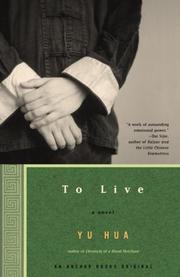
To Live
To Live follows Fugui, the son of a wealthy Chinese landowner whose reckless gambling eventually costs his family its fortune. Forced to abandon his privileged lifestyle, Fugui begins a difficult journey through decades of political and social upheaval in twentieth-century China, including the Chinese Civil War, the Great Leap Forward, and the Cultural Revolution. As the country undergoes profound transformations, Fugui and his family struggle to survive poverty, political persecution, and personal tragedy.
Told through Fugui’s recollections to a travelling folk singer, the novel offers an intimate portrait of ordinary people caught in the forces of history. Despite repeated losses, Fugui continues to endure, finding meaning in the simple act of living. Yu Hua combines stark realism with moments of dark humour and tenderness, exploring family bonds, resilience, and the fragility of human happiness. Ultimately, To Live is a moving reflection on suffering and survival, suggesting that the determination to continue can itself become a form of courage.
China
1993
2
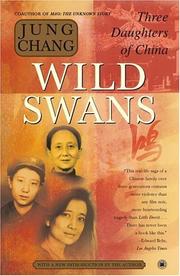
Wild Swans
Wild Swans: Three Daughters of China is a multigenerational memoir tracing the lives of Jung Chang, her mother, and her grandmother against the backdrop of China’s turbulent twentieth-century history. Beginning with her grandmother’s life under imperial rule, the narrative follows her mother’s experiences during the rise of the Communist Party and Chang’s own childhood during the Cultural Revolution. Through their personal stories, the book reveals the profound impact of political upheaval, traditional gender roles, and ideological control on ordinary Chinese families. Chang recounts her family’s experiences of arranged marriage, political persecution, forced labor, and shifting loyalties, illustrating how individual lives become entangled with national history. Combining intimate family memories with historical testimony, the memoir offers a powerful portrait of resilience, sacrifice, and the struggle for personal freedom across three generations of Chinese women.
China
2003
3
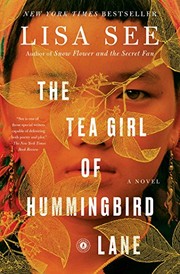
The Tea Girl of Hummingbird Lane
Set in the mountains of Yunnan, China, The Tea Girl of Hummingbird Lane follows Li-yan, a young woman from the Akha ethnic community whose life is shaped by centuries-old traditions surrounding tea cultivation, marriage, and family. When Li-yan gives birth to a daughter outside marriage, she makes the painful decision to leave her baby near an orphanage rather than follow a tradition that threatens the child’s life. The girl, Haley, is adopted by an American family and grows up far from her biological roots. As the years pass, both mother and daughter struggle with questions about their identities and origins. Connected by their shared heritage and the ancient tea trade, their stories explore motherhood, cultural change, adoption, and the enduring bonds between generations.
China
2017
4
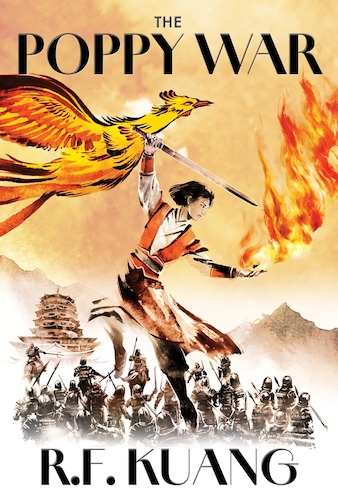
The Poppy War
An orphan from a poor southern province. An elite military academy. A power that could destroy an empire.
When Rin unexpectedly earns a place at Sinegard, the Nikara Empire’s most prestigious military academy, she believes she has finally escaped a future of poverty and forced marriage. But prejudice, relentless training, and the discovery of her extraordinary shamanic abilities soon push her into a world far more dangerous than she imagined. As war threatens to engulf the empire, Rin discovers that the gods are real—and that the power they offer comes at a terrible price. Inspired by twentieth-century Chinese history, particularly the Second Sino-Japanese War, this dark and uncompromising fantasy explores the brutal realities of warfare, the seduction of vengeance, and the devastating consequences of power. Rin must decide what she is willing to sacrifice to protect her people—and what remains of her humanity when survival demands unimaginable choices.
China
2019
5
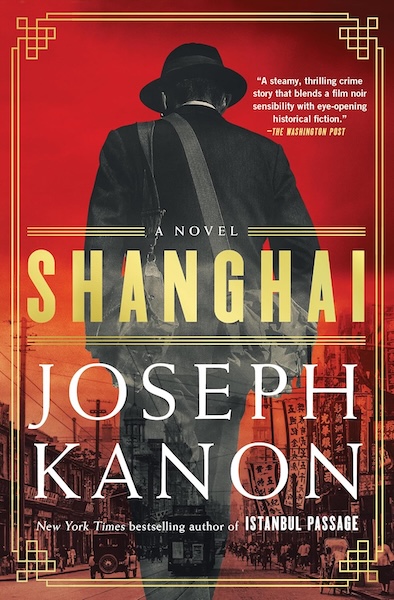
Shanghai
In 1938, as Nazi persecution intensifies across Europe, Shanghai becomes an unlikely refuge for Jewish refugees fleeing Germany. But escaping persecution does not mean escaping danger.
Daniel Lohr, a German Jew who has survived the Gestapo, arrives in Shanghai hoping to begin again. Penniless and stateless, he turns to his uncle Nathan, a mysterious businessman who runs a glamorous nightclub and maintains dangerous connections with the city’s criminal underworld. Meanwhile, Daniel cannot forget Leah, a woman he met during the voyage to China, whose fate becomes entangled with his own.
As political tensions rise and Japanese occupation looms, Daniel is drawn into a world of gang warfare, corruption, espionage, and shifting loyalties. In a city where survival depends on knowing whom to trust, every alliance carries a price—and the past is never entirely left behind.
Atmospheric and suspenseful, Shanghai brings to life a city caught between cultures and conflicts, where desperate refugees, gangsters, and political operatives struggle to survive. Joseph Kanon explores the moral compromises people make in extraordinary circumstances, asking how much of oneself can be sacrificed in the pursuit of safety.
China
Germany
2024
6
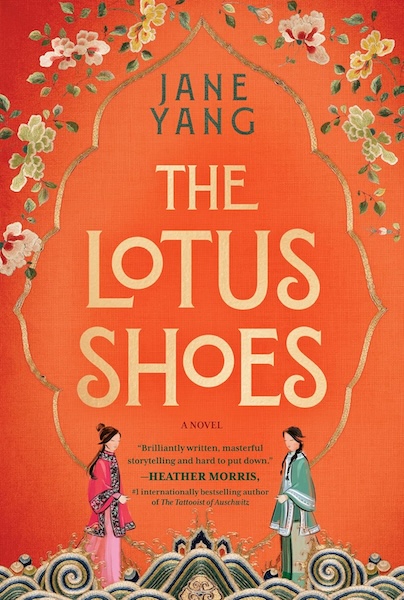
The Lotus Shoes
In nineteenth-century China, bound feet known as “golden lilies” are considered essential to a woman’s marriage prospects and social standing. Little Flower, a talented young girl from a poor family, is sold into servitude as a muizai to Linjing, the privileged daughter of the wealthy Fong family. Despite their unequal positions, both girls possess qualities that could determine their futures: Little Flower has bound feet and an extraordinary gift for embroidery, while Linjing has the family connections and status that Little Flower can only dream of.
Jealous of Little Flower’s talents, Linjing does everything she can to keep her servant under her control. But when scandal destroys the Fong family’s standing, both women are cast out and sent to the Celibate Sisterhood, a community of women who weave silk and seek independence from traditional marriage. There, Little Flower’s embroidery attracts the attention of a nobleman, offering her a possible escape—but also putting her life in danger.
Rich in historical detail, The Lotus Shoes explores female ambition, class divisions, and the restrictive traditions governing women’s lives. Through two women whose relationship shifts between rivalry and solidarity, Jane Yang examines the difficult choices women make to survive and the unexpected ways they can shape one another’s destinies.
China
2025
7
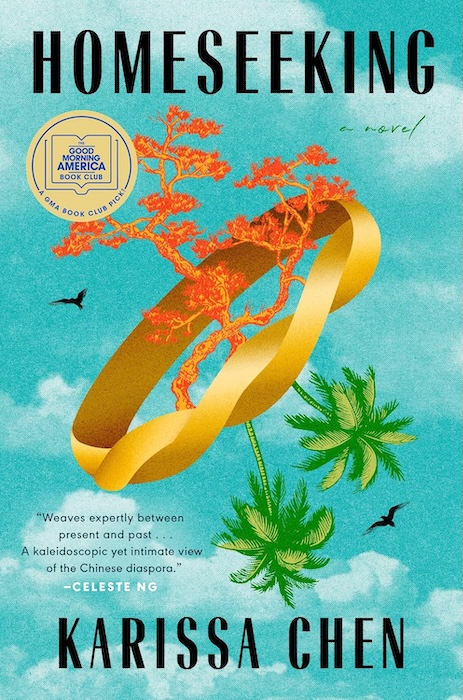
Homeseeking
Homeseeking follows Suchi and Haiwen, childhood sweethearts whose lives are transformed by the political upheavals of twentieth-century China. They first meet in Shanghai, where Haiwen’s violin draws Suchi into his world. Their young love is interrupted when Haiwen joins the Nationalist army in 1947, leaving Suchi behind with little explanation. Over the following decades, war, migration, and changing political circumstances carry them through Hong Kong, Taiwan, and the United States, shaping their lives in different ways. Sixty years later, they unexpectedly encounter one another again in Los Angeles. Chen moves between their perspectives to explore memory, sacrifice, and the meaning of home. The novel examines how historical forces can separate people while emotional attachments continue to endure across distance and time.
China
Taiwan
United States
2025
8
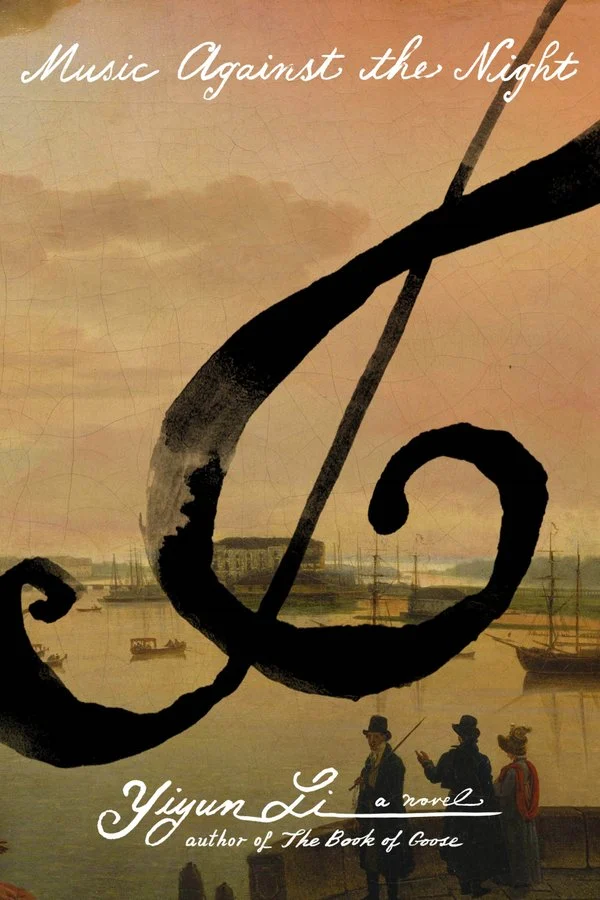
Music Against the Night
Set against the political and cultural upheavals of the late eighteenth and nineteenth centuries, Yiyun Li’s sweeping historical novel follows two gifted musicians whose ambitions take them across continents.
John Field, born in Dublin in 1782, is a musical prodigy whose father dreams of making him the next Mozart. His talent carries him from Ireland to England, France, and eventually Russia, where he becomes a celebrated pianist and composer. He helps popularize the nocturne, a musical form later associated most famously with Frédéric Chopin.
Meanwhile, in Pondicherry, French India, Adelaide Percheron—an orphan raised by her formidable grandmother—discovers her own passion for music. Determined to escape the limitations imposed by her circumstances, she pursues opportunities in Paris and Moscow, striving to build a life beyond the expectations placed upon women of her time.
When their paths eventually converge, John and Adelaide must navigate the complexities of marriage, artistic ambition, and competing desires. Through their intertwined lives, Li examines the price of genius, the exploitation of talent, and the fragile boundary between artistic achievement and personal fulfilment. The novel asks what artists must sacrifice for recognition—and whether their work can outlive the people who create it.
China
2026
9
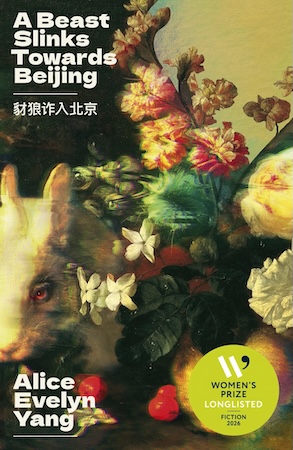
A Beast Slinks Towards Beijing
Spanning three generations and moving between Japanese-occupied Manchuria, the Cultural Revolution, and contemporary America, A Beast Slinks Towards Beijing is a dark, magical-realist family saga about inherited trauma, historical violence, and the stories families carry across generations.
Twenty-five-year-old Qianze has not seen her father, Weihong, since he abandoned her on the night of her fourteenth birthday. Eleven years later, he reappears at her childhood home in Virginia, aged beyond recognition and struggling with dementia and alcoholism. Haunted by a half-forgotten prophecy, he begins recounting his past, including his violent experiences as a Red Guard during the Cultural Revolution and the hardships endured by his mother under Japanese occupation. As Qianze listens, she discovers a family history far more disturbing than she imagined. Strange visions begin to invade her everyday life: fox spirits follow her through the city, and a terrifying mythical creature stalks her nightmares.
Blending Chinese and Japanese folklore with historical fiction and supernatural horror, Yang explores how colonialism, political violence, and family secrets shape successive generations. The novel asks whether understanding the past can offer a path toward forgiveness—or whether some histories continue to haunt the living.
China
2026
10
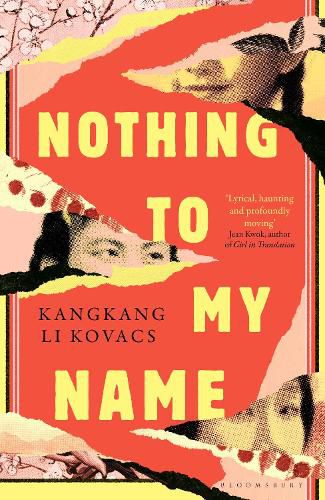
Nothing to My Name
Nothing to My Name is a multigenerational family saga following three Chinese women whose lives are shaped by political upheaval, social expectations, and the enduring bonds between mothers and daughters. Inspired by the author’s family history, the novel spans four decades of modern Chinese history, from the Communist Revolution to the aftermath of the 1989 Tiananmen Square protests.
In 1948, twelve-year-old Ah Xue grows up in a small fishing village in Zhoushan, where her mother earns a modest living combing the hair of wealthy women. As the civil war approaches, their already precarious existence becomes increasingly uncertain. Her daughter, Mimosa, later comes of age during the Cultural Revolution, when political tensions threaten to tear her family apart. In the next generation, Fei struggles with questions of gender identity under the influence of her activist father, whose expectations are shaped by China’s turbulent recent history.
Through these intertwined stories, Kovacs explores the lasting effects of trauma, the sacrifices women make to protect their families, and the ways history echoes across generations. The novel is a portrait of resilience, identity, and the complicated love that binds families together despite profound change.
China
2026
11
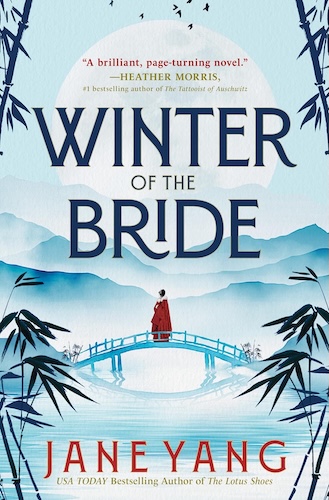
Winter of the Bride
Two brides, a century apart, are bound to the same powerful Chinese family—and a haunting legacy neither can escape. In 1806, Jiayi, a servant chosen as the heir’s “little wife,” discovers that her marriage offers little protection from her husband’s scheming relatives. A hundred years later, Scarlet, a midwife determined to bring modern medicine to a remote village, arrives at the family estate after marrying into it. But whispers of a curse and the ghost of a former bride begin to blur the boundary between past and present. A haunting tale of love, tradition, and the secrets that bind generations of women.
China
2027