Crime
1
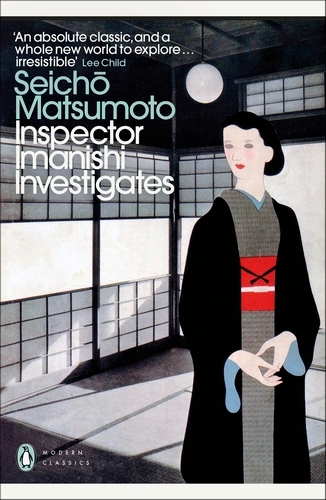
Inspector Imanishi Investigates
First published in 1961, Inspector Imanishi Investigates is a classic Japanese crime novel that follows Inspector Eitaro Imanishi as he investigates the mysterious murder of a man found dead beneath a train in Tokyo. What initially appears to be a straightforward case gradually unfolds into a complex investigation involving false identities, concealed pasts, and the social prejudices of postwar Japan. As Imanishi follows a trail of clues across the country, he encounters people whose lives have been shaped by ambition, discrimination, and the desire to escape their origins. Seichō Matsumoto combines the careful logic of a police procedural with a thoughtful examination of Japanese society, creating a mystery in which understanding human motivations is just as important as uncovering physical evidence.
Japan
1961
2
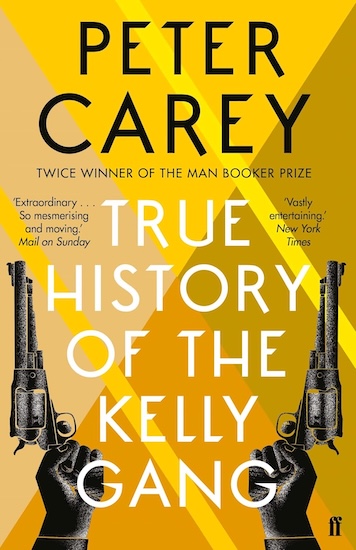
True History of the Kelly Gang
In True History of the Kelly Gang, Australian novelist Peter Carey reimagines the life of Ned Kelly, one of Australia’s most notorious historical outlaws, through a fictional autobiography written in Kelly’s own voice. Growing up in colonial Victoria during the nineteenth century, Ned experiences poverty, discrimination, and repeated confrontations with the authorities. His Irish family is treated with suspicion by the British colonial establishment, and his early encounters with the police help shape his growing resentment of a system he sees as unjust.
As Ned becomes a bushranger, he transforms from a struggling young man into a legendary outlaw whose exploits divide public opinion. To the authorities, he is a dangerous criminal; to some members of the impoverished colonial population, he represents resistance to oppression. Writing his account for the daughter he hopes will one day understand him, Ned attempts to reclaim his story from those who would define him as a villain.
Blending historical events with imaginative storytelling, Carey explores the relationship between truth and myth, the legacy of colonialism, and the ways poverty and injustice can shape a person’s destiny. Written in a distinctive vernacular style, the novel challenges readers to question who has the power to tell history and whose voices are remembered.
Australia
2000
3
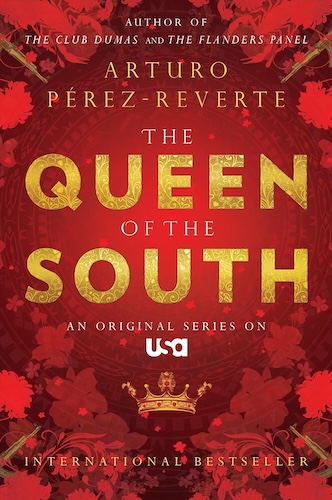
Queen of the South
When the phone rings, Teresa Mendoza knows her life is about to change forever. Her boyfriend, a pilot who smuggles drugs for the Mexican cartels, has warned her that if she ever receives that call, she must run for her life. When he is murdered, Teresa flees Mexico, leaving behind everything she knows and entering an unfamiliar world where survival depends on intelligence, courage, and the ability to trust no one.
Her journey takes her from Mexico to Spain, where she becomes involved in the dangerous business of smuggling hashish across the Strait of Gibraltar. Initially an outsider in a ruthless, male-dominated criminal world, Teresa gradually discovers her talent for negotiation, strategy, and business. As she builds her own network and accumulates wealth and influence, she transforms herself from a frightened young woman into a formidable criminal leader.
Spanning continents and more than a decade, Pérez-Reverte’s novel combines crime thriller, political intrigue, and a powerful portrait of female ambition. Inspired in part by real-world drug-trafficking networks, the story explores loyalty, betrayal, identity, and the price of power. Teresa’s rise challenges conventional ideas about femininity and authority, while revealing the brutal realities of a world where survival often demands becoming the very person one once feared.
Spain
2002
4
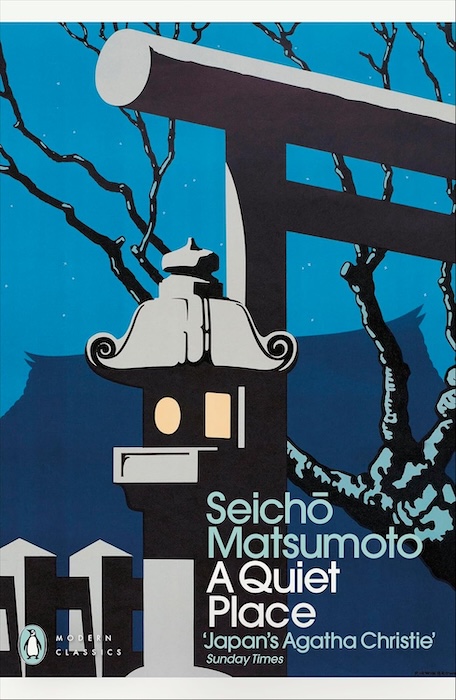
A Quiet Place
A Quiet Place follows Tsuneo Asai, a reserved government official whose life is disrupted when he learns that his wife, Eiko, has died suddenly while he is away on a business trip. Although she had a heart condition, the circumstances of her death trouble him: she collapsed in a small shop in a Tokyo neighbourhood she seemingly had no reason to visit.
Determined to understand what happened, Asai investigates the area and discovers clues suggesting that his seemingly quiet and devoted wife may have been hiding a secret life. His search gradually draws him into a world of clandestine relationships, suspicion, and uncomfortable revelations. As he uncovers details about Eiko’s movements, his grief gives way to jealousy and doubt, threatening the orderly existence he has carefully maintained.
Through this psychological mystery, Matsumoto examines the hidden tensions beneath respectable appearances, the constraints of marriage, and the effects of ambition and social expectations in postwar Japanese society. The novel reveals how little people may truly know about those closest to them.
Japan
2016
5

Red Water
One summer evening in 1989, seventeen-year-old Silva Vela disappears from a small coastal village in Dalmatia. At first, the police suspect she has run away, but as Yugoslavia begins to unravel, her disappearance becomes a mystery that will haunt two families for decades. Silva’s brother, Mate, refuses to give up searching for her, while the investigation exposes buried secrets, fractured loyalties, and the quiet transformations of a society caught between socialism, war, and capitalism. Spanning thirty years, Red Water is more than a gripping crime novel: it is a portrait of a community slowly changing beyond recognition. Against the backdrop of Croatia’s turbulent recent history, Pavičić explores how a single disappearance can reshape lives, reveal uncomfortable truths, and leave a wound that never quite heals.
Croatia
2017
6
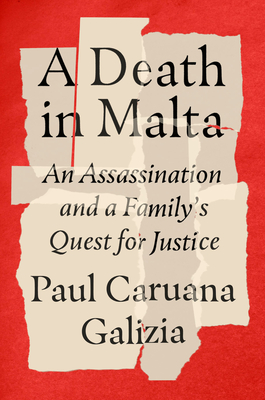
A Death in Malta: An Assassination and a Family's Quest for Justice
In this powerful memoir and work of investigative journalism, Paul Caruana Galizia recounts the assassination of his mother, Daphne Caruana Galizia, a Maltese investigative journalist known for exposing corruption and misconduct among the country’s powerful figures. On 16 October 2017, Daphne was killed by a car bomb near her home, following years of intimidation linked to her work.
Her death transformed her family’s lives. Paul and his brothers, together with their father, embarked on a determined search for the truth, seeking to uncover who was responsible for the murder and who had benefited from silencing their mother. Their pursuit of justice reveals the complex relationships between political power, financial interests, and corruption in Malta.
Combining personal grief with investigative reporting, the book is both a tribute to a courageous journalist and an examination of the challenges facing democracy and press freedom. It explores the cost of speaking truth to power and the determination required to hold powerful institutions accountable.
Malta
2023
7

The Silver Bone
Kyiv, 1919. The city is caught in the turmoil of revolution, with Soviet forces controlling its streets while White armies threaten from the west. Amid political violence, shifting loyalties, and widespread lawlessness, young Samson Kolechko witnesses the brutal murder of his father by Cossacks. He survives the attack but loses his right ear, becoming an orphan in a city where survival is increasingly uncertain.
When Red Army soldiers take over his apartment, Samson inadvertently uncovers their secret plans. His attempt to expose their activities draws him into a dangerous world of murder, espionage, and political intrigue. Soon recruited into the local police force, he begins investigating crimes that reveal the bizarre contradictions of life under revolutionary rule.
The first novel in Kurkov’s Kyiv Mysteries series, The Silver Bone blends historical crime fiction with magical realism and dark humour. Through Samson’s investigations, Kurkov portrays a society where political upheaval has transformed ordinary life and the boundaries between justice, absurdity, and survival have become dangerously blurred.
Ukraine
2025
8
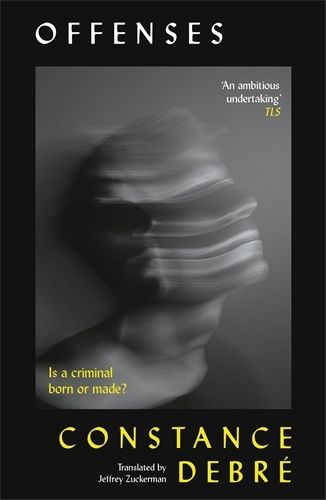
Offenses
Based on a real murder case, Offenses examines the relationship between crime, poverty, and justice in contemporary France. In a housing estate outside Paris, a nineteen-year-old man stabs his elderly neighbour ten times to settle a €450 drug debt. The crime appears senseless in its brutality, but Constance Debré looks beyond the immediate act to examine the social conditions surrounding both the perpetrator and his victim.
Drawing on her experience as a criminal defence lawyer, Debré explores the boundaries between individual responsibility and collective failure. The young man’s circumstances, the victim’s vulnerability, and the environment in which they live become part of a wider portrait of a society divided by class and opportunity. Written in Debré’s characteristic spare, unsentimental prose, the novella questions whether justice can truly be separated from the inequalities that shape people’s lives. Rather than offering easy explanations or moral resolutions, it confronts readers with uncomfortable questions about guilt, punishment, and the possibility of escaping the circumstances into which one is born.
France
2026
9
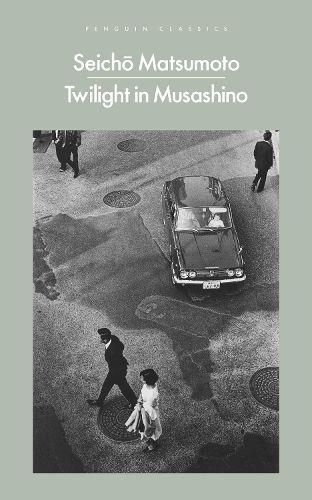
Twilight in Musashino
Set in postwar Japan in 1959, Twilight in Musashino begins with the discovery of a young Japanese flight attendant strangled on the icy banks of a river. As Detective Fujisawa investigates the murder, his attention turns to a foreign priest and the Guglielmo Church, a charitable Christian mission with an unsettling connection to the victim. What initially appears to be a straightforward criminal investigation gradually reveals a tangled web involving narcotics, postwar relief operations, and international diplomacy. The deeper Fujisawa digs, the more he encounters powerful institutions determined to protect their reputations and conceal uncomfortable truths. Blending meticulous police work with an incisive examination of social power, Seicho Matsumoto constructs a slow-burning mystery in which the pursuit of justice collides with political influence and institutional silence. The novel offers a compelling portrait of a society negotiating its identity in the aftermath of war, exposing the tensions between public morality and private corruption.
Japan
2026
10
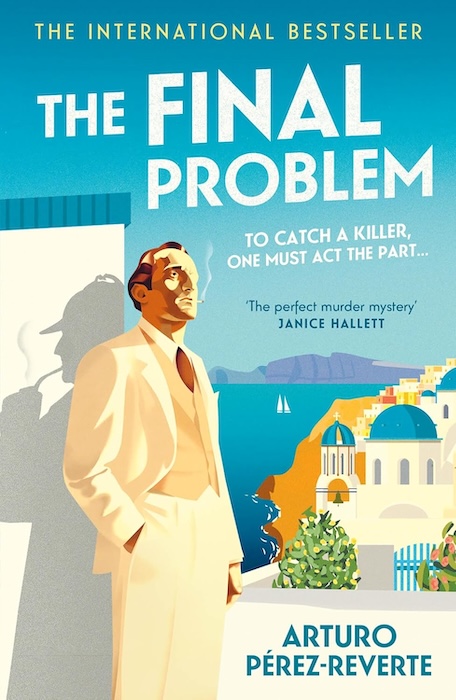
The Final Problem
In June 1960, a violent storm traps nine travelers on the secluded Greek island of Utakos, where they are staying at the island’s only hotel. Their isolation takes a sinister turn when Edith Mander, a quiet British tourist, is found dead in a beach pavilion. Although her death initially appears to be suicide, the circumstances suggest something far more mysterious. With the island cut off from the outside world, the guests find themselves trapped in a classic locked-room mystery, and everyone becomes a potential suspect.
Their unlikely investigator is Ormond Basil, a once-famous actor whose most celebrated role was Sherlock Holmes. Although Basil has spent his career portraying the legendary detective rather than solving real crimes, his familiarity with Holmes’s methods may be the group’s only hope. When another body is discovered, the mystery deepens into a deadly game involving literary clues, carefully staged murders, and a killer who seems to understand detective fiction as intimately as Basil himself.
A witty homage to the golden age of crime fiction, the novel explores the boundaries between fiction and reality, the nature of storytelling, and the intellectual duel between a detective and a murderer—and between an author and a reader.
Spain
2026