Books from Japan
Suggest a book
All genres
Historical Fiction
Literary Fiction
Fantasy
Romance
Horror
Thriller
Non-Fiction
Mystery
Memoir
Classics
History
Sci-Fi
Contemporary Fiction
Science Fiction
Fiction
Poetry
Essays
Family Saga
Magical Realism
Family Drama
Dark Academia
Psychological Fiction
Dark Comedy
Political Writing
Feminist Fiction
Satire
Campus Fiction
Cultural Studies
Biography
Philosophy
Comedy
Drama
Young Adult
Gothic
Dystopia
Crime
Children's Books
Short Stories
Mythology
Cozy
Retellings
Humour
Adventure
All themes
Love & Passion
Adventure & Journey
Identity & Belonging
War & Conflict
Freedom & Resistance
Family & Heritage
Nature & Landscape
Society & Class
Spirituality & Faith
Solitude & Exile
Coming of Age
Revolution & Change
Friendship
History
Immigration
Myths and Retellings
Colonialism
Women & Society
Mental Health
Motherhood
1
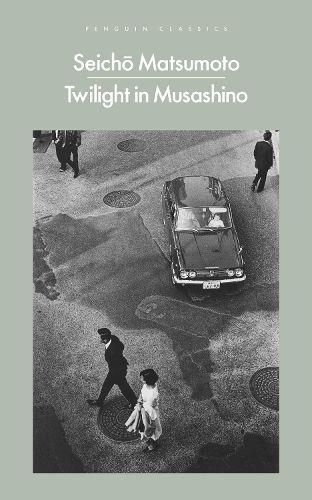
Twilight in Musashino
Set in postwar Japan in 1959, Twilight in Musashino begins with the discovery of a young Japanese flight attendant strangled on the icy banks of a river. As Detective Fujisawa investigates the murder, his attention turns to a foreign priest and the Guglielmo Church, a charitable Christian mission with an unsettling connection to the victim. What initially appears to be a straightforward criminal investigation gradually reveals a tangled web involving narcotics, postwar relief operations, and international diplomacy. The deeper Fujisawa digs, the more he encounters powerful institutions determined to protect their reputations and conceal uncomfortable truths. Blending meticulous police work with an incisive examination of social power, Seicho Matsumoto constructs a slow-burning mystery in which the pursuit of justice collides with political influence and institutional silence. The novel offers a compelling portrait of a society negotiating its identity in the aftermath of war, exposing the tensions between public morality and private corruption.
2026
2
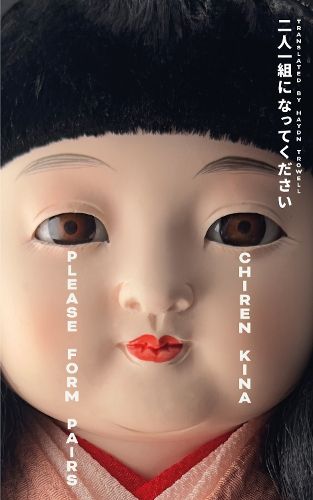
Please Form Pairs
In a world where popularity determines survival, Mishin Mizushima is a teenage girl who struggles to meet Japan’s unforgiving standards of beauty and social status. Unpopular at school and abandoned emotionally by her mother, she occupies the lowest rung of a ruthless social hierarchy dominated by glamorous, powerful girls. But when a new teacher introduces a seemingly simple instruction—students must form pairs, and no two people can pair together twice—the established order begins to collapse. Those left without partners face a terrifying consequence: execution. Blending the vicious social politics of Mean Girls with the deadly competition of Squid Game, Chiren Kina’s dark, candy-coloured thriller explores bullying, conformity, beauty standards, and the desperate human need to belong. Beneath its exaggerated, unsettling premise lies a sharp examination of how easily social exclusion can become a matter of life and death.
2026
3
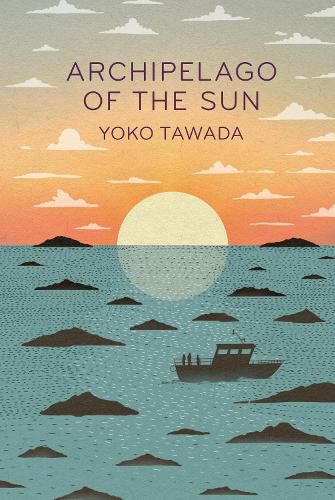
Archipelago of the Sun
In the concluding volume of Yoko Tawada’s imaginative Scattered All Over the Earth trilogy, Hiruko continues her search for her lost homeland, a country that seems to have disappeared from maps and from collective memory. Travelling aboard a mail boat across the Baltic Sea, she is accompanied by an unusual group of companions: Knut, a Danish linguist; Akash, an Indian man exploring gender identity; Nanook, a Greenlander and former sushi chef; Nora, a German museum worker concerned with social justice and the environment; and Susanoo, a mysterious Japanese cook. As the voyage unfolds, unexpected passengers—including figures from literature and mythology—complicate their journey and challenge their understanding of history, nationality and belonging. Blending surrealism, humour and philosophical speculation, Tawada explores how language shapes identity and how people build connections across cultural boundaries. The novel ultimately imagines belonging not as a fixed geographical inheritance, but as something that can emerge through dialogue, storytelling and shared experience.
2026
4
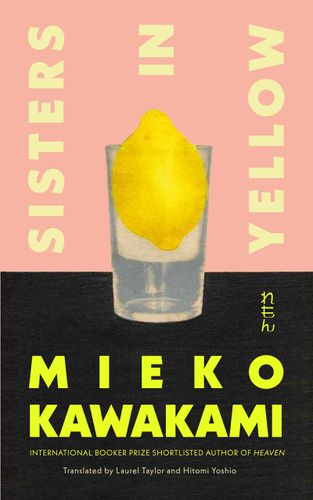
Sisters in Yellow
Fifteen-year-old Hana Ito lives with her young mother in a cramped Tokyo apartment, struggling with poverty and the uncertainty of a life without security. In the late 1990s, when Japan is grappling with economic stagnation, the future seems particularly bleak for those born without privilege. Then Hana meets Kimiko Yoshikawa, an older woman whose confidence and warmth offer her a glimpse of another possible life. Together, they establish Lemon, a modest bar that becomes a refuge for Hana and a place where she begins to imagine a future beyond mere survival.
As the business grows, Hana forms relationships with other young women who, like her, are trying to find their footing in a world that offers them few choices. But financial desperation, dangerous acquaintances, and difficult moral compromises gradually threaten the fragile community they have built. Decades later, news of a shocking criminal case involving Kimiko forces Hana to revisit the past and confront the consequences of decisions she has spent years trying to forget.
Blending crime fiction with an intimate portrait of female relationships, Kawakami explores poverty, ambition, betrayal, and the ways women struggle to protect one another in an unequal society. The novel asks how far people will go to survive—and whether the bonds formed in desperate circumstances can withstand the weight of time and guilt.
2026
5
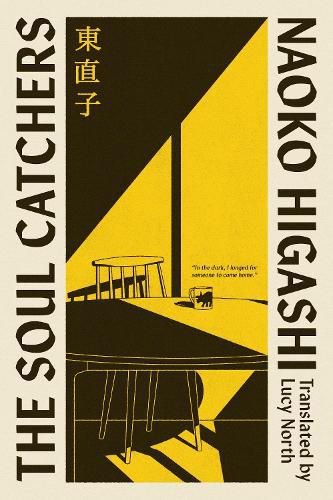
The Soul Catchers
What if, after death, you were given one final chance to remain close to the people you love? In The Soul Catchers, eleven recently deceased people encounter a mysterious, nameless spirit who offers them an unusual opportunity: they can return to the world of the living by inhabiting an object cherished by someone they left behind. A treasured mug, a mother’s hearing aid, a diary, or a playground climbing frame becomes a vessel through which the departed can continue to experience fragments of the lives they once knew.
Through these intimate encounters, Naoko Higashi explores the quiet, complicated emotions that accompany love and loss. Each story offers a different perspective on the bonds that connect people across generations, even when death has made ordinary communication impossible. Blending magical realism with elements of Japanese folk beliefs about spirits and the presence of souls in everyday objects, this tender, gently humorous collection reflects on grief, memory, and the difficulty of letting go. It invites readers to reconsider the meaning of presence and suggests that love can endure in the smallest, most unexpected corners of our lives.
2026
6
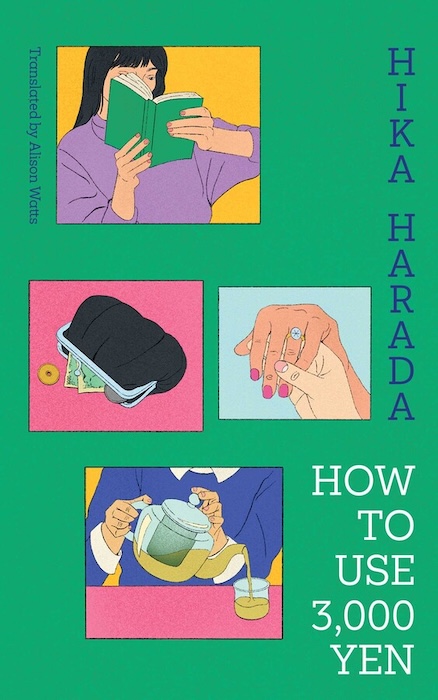
How To Use 3,000 Yen
How to Use 3,000 Yen follows three generations of women in the Mikuriya family as they navigate the financial and emotional challenges of everyday life. At the heart of the story is Miho, a young woman beginning her independent life and learning to manage her money. Her experiences connect with those of her older sister, Maho, their mother, Tomoko, and their grandmother, Kotoko, each of whom faces different questions about financial security, family responsibilities, and the future.
For the women of the Mikuriya family, money is more than a practical concern: it reflects their hopes, fears, relationships, and ideas about happiness. As they encounter unexpected expenses and major life changes, each must reconsider what it means to save wisely and live well.
With warmth and gentle humor, Hika Harada explores the relationship between money and personal freedom, showing how financial decisions shape the lives of women across generations. The novel offers a thoughtful portrait of contemporary Japanese society, where economic pressures intersect with family expectations and the desire for independence.
2026
7
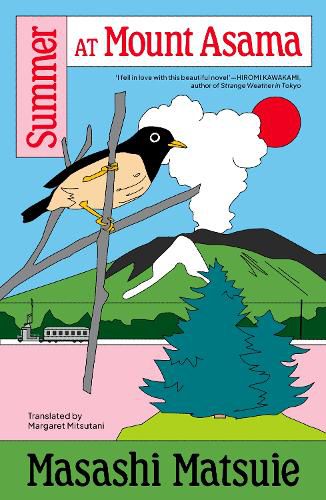
Summer at Mount Asama
Set in Japan in the summer of 1982, Summer at Mount Asama follows Tōru Sakanishi, a recent university graduate who joins a prestigious architectural practice in Tokyo. Founded by Shunsuke Murai, a distinguished architect and former student of Frank Lloyd Wright, the firm is known for its thoughtful designs and quiet devotion to craftsmanship. When the team relocates to a mountain retreat near Mount Asama, they begin work on a competition to design the National Library of Modern Literature. As Tōru observes the creative process and the relationships among his colleagues, he encounters four remarkable women whose presence gradually transforms his understanding of love, ambition and adulthood. The tranquil mountain setting, with its changing light and natural beauty, offers a counterpoint to the professional rivalries and personal uncertainties unfolding around him. Through its subtle portrayal of architecture, memory and human relationships, Matsuie’s novel explores how places shape our lives and how the smallest encounters can influence the course of a future.
2025
8
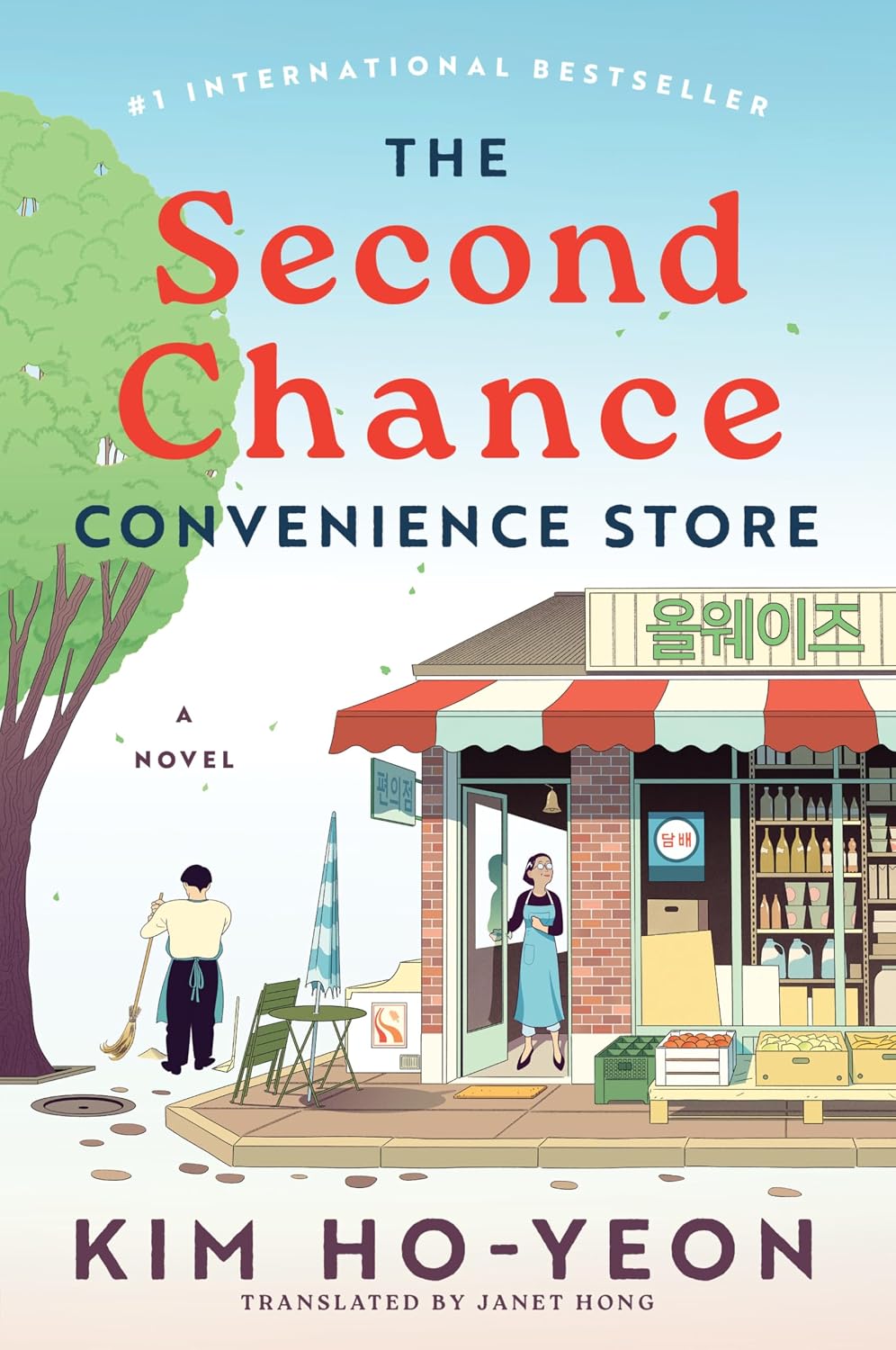
Second Chance Convenience Store
The Second Chance Convenience Store follows Dokgo, a homeless man living near Seoul Station who has lost his memory and struggles to make sense of his past. His life begins to change after he finds and returns a wallet belonging to Mrs Yeom, a retired teacher who owns a small convenience store. Grateful for his honesty, she offers him food and eventually gives him a job at her shop. As Dokgo becomes part of the neighbourhood, his quiet kindness begins to transform the lives of customers and colleagues dealing with loneliness, family conflict, and personal disappointment. Yet his mysterious past continues to cast a shadow over his new beginning. Through the everyday encounters taking place inside the store, Kim explores social isolation, economic insecurity, and the importance of community. The novel celebrates compassion and suggests that small acts of kindness can help people recover their dignity and rebuild their lives.
2025
9
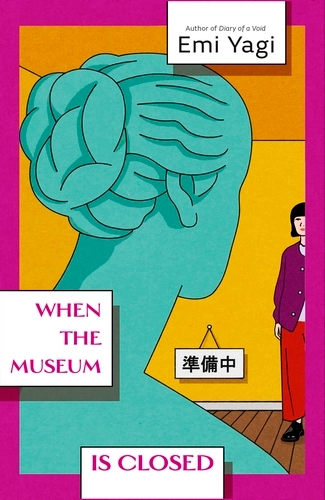
When the Museum is Closed
Rika Horauchi has spent much of her life hiding from the world behind an invisible yellow raincoat, an imaginary barrier that protects her from unwanted attention and human interaction. Working in a frozen-food warehouse and spending her evenings watching livestreams, she leads a quiet, isolated existence. Everything changes when she accepts an unusual part-time job at a museum: conversing in Latin with a statue of Venus on Mondays, when the museum is closed. Initially intimidated by the goddess’s beauty, Rika gradually discovers a surprising connection with her. As their conversations deepen, Venus becomes a companion who challenges Rika’s assumptions about beauty, desire, and the way women are perceived by others. Their relationship develops into an unconventional love story that opens up new possibilities for Rika, encouraging her to reconsider her isolation and imagine a different kind of freedom. Blending surrealism, dark humour, and feminist commentary, Emi Yagi’s novel explores loneliness, queer desire, and the transformative power of being understood. Beneath its whimsical premise lies a thoughtful examination of how society shapes women’s identities and how intimacy can help us break free from expectations.
2023
10
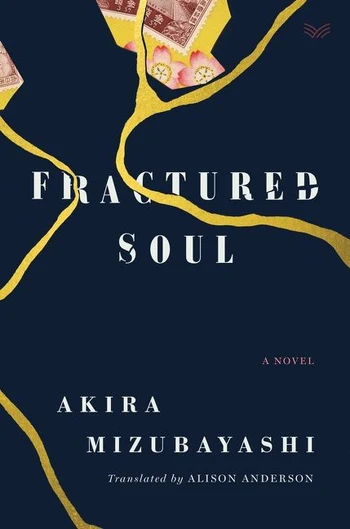
Fractured Soul
Tokyo, 1938. During a private musical gathering, military police burst in and arrest Yu, a Japanese musician whose love of Western classical music has drawn suspicion. His young son, Rei, witnesses the destruction of his father’s violin and the sudden collapse of their family. With the help of a compassionate stranger, Rei escapes to France, carrying the fragments of the broken instrument. Decades later, now living in Paris as a violin maker, he dedicates himself to restoring damaged instruments—but the wounds of his childhood remain unresolved. When a young violinist unexpectedly reconnects him with his past, the broken violin becomes a symbol of memory, loss, and the possibility of healing. Moving between Japan and France, Fractured Soul explores the enduring power of music to transcend political violence and bring people together across generations. It is a poignant story about what war destroys, what art preserves, and how beauty can emerge from the deepest suffering.
2019
11
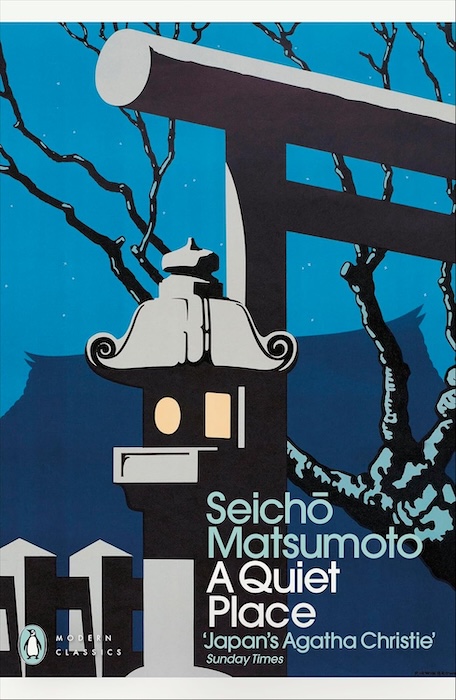
A Quiet Place
A Quiet Place follows Tsuneo Asai, a reserved government official whose life is disrupted when he learns that his wife, Eiko, has died suddenly while he is away on a business trip. Although she had a heart condition, the circumstances of her death trouble him: she collapsed in a small shop in a Tokyo neighbourhood she seemingly had no reason to visit.
Determined to understand what happened, Asai investigates the area and discovers clues suggesting that his seemingly quiet and devoted wife may have been hiding a secret life. His search gradually draws him into a world of clandestine relationships, suspicion, and uncomfortable revelations. As he uncovers details about Eiko’s movements, his grief gives way to jealousy and doubt, threatening the orderly existence he has carefully maintained.
Through this psychological mystery, Matsumoto examines the hidden tensions beneath respectable appearances, the constraints of marriage, and the effects of ambition and social expectations in postwar Japanese society. The novel reveals how little people may truly know about those closest to them.
2016
12
More Days at the Morisaki Bookshop
More Days at the Morisaki Bookshop continues the story of Takako, a young woman who found comfort and a new direction in life while living above her uncle’s second-hand bookshop in Tokyo. Having gradually rebuilt her confidence after a painful romantic disappointment, Takako becomes more involved in the lives of her uncle Satoru and aunt Momoko. When Momoko returns after a long absence, old emotions and unanswered questions emerge, prompting the family to reconsider the choices that have kept them apart. Takako also begins exploring new relationships and possibilities beyond the bookshop, discovering that healing does not mean leaving the past behind completely. Set in Tokyo’s book-loving Jinbōchō district, the novel celebrates literature, ordinary routines, and the quiet comfort of human connection. Yagisawa explores family bonds, emotional recovery, and the ways people create a sense of belonging through shared spaces and everyday acts of kindness.
2008