Books from Iran
Suggest a book
All genres
Historical Fiction
Literary Fiction
Fantasy
Romance
Horror
Thriller
Non-Fiction
Mystery
Memoir
Classics
History
Sci-Fi
Contemporary Fiction
Science Fiction
Fiction
Poetry
Essays
Family Saga
Magical Realism
Family Drama
Dark Academia
Psychological Fiction
Dark Comedy
Political Writing
Feminist Fiction
Satire
Campus Fiction
Cultural Studies
Biography
Philosophy
Comedy
Drama
Young Adult
Gothic
Dystopia
Crime
Children's Books
Short Stories
Mythology
Cozy
Retellings
Humour
Adventure
All themes
Love & Passion
Adventure & Journey
Identity & Belonging
War & Conflict
Freedom & Resistance
Family & Heritage
Nature & Landscape
Society & Class
Spirituality & Faith
Solitude & Exile
Coming of Age
Revolution & Change
Friendship
History
Immigration
Myths and Retellings
Colonialism
Women & Society
Mental Health
Motherhood
1
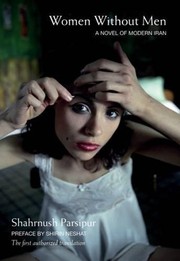
Women Without Men
Set in Iran against the backdrop of the 1953 coup d’état, Women Without Men follows the interconnected lives of five women whose experiences reflect the restrictions placed on women by family, marriage, and society. Among them are Munis, a woman longing to escape her brother’s control; Faizeh, her friend who dreams of marriage; Mahdokht, a woman troubled by conventional expectations of femininity; Farrokhlaqa, a wealthy housewife seeking a different life; and Zarrinkolah, a sex worker who begins to question the world around her.
Their individual journeys eventually lead them to a garden on the outskirts of Tehran, where they attempt to create a life beyond the rules that have governed them. Blending magical realism, mysticism, and historical events, Parsipur explores female autonomy, sexuality, and the search for identity. Through surreal transformations and symbolic storytelling, the novella imagines the possibility of women reclaiming their bodies, choices, and futures.
1989
2
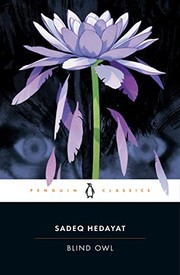
Blind Owl
The Blind Owl is a landmark of modern Persian literature, exploring obsession, alienation, and the fragile boundary between reality and imagination. The novella follows an unnamed narrator, a reclusive artist who paints pen cases and becomes consumed by the image of a mysterious, beautiful woman. After an unsettling encounter with her, he recounts a series of disturbing events in a fragmented, dreamlike narrative that gradually dissolves into hallucination, violence, and psychological torment.
Divided into two interconnected sections, the story moves between seemingly different realities, repeating images and experiences in ways that make it difficult to distinguish memory from fantasy. The narrator’s isolation deepens as he becomes trapped in cycles of obsession and despair, addressing his thoughts to a shadow resembling an owl.
Through surreal imagery and an unreliable narrator, Hedayat explores loneliness, mortality, and the disintegration of identity. Dark and unsettling, the novella remains a powerful examination of the human mind and the impossibility of escaping one’s inner world.
1937