Books from Egypt
Suggest a book
All genres
Historical Fiction
Literary Fiction
Fantasy
Romance
Horror
Thriller
Non-Fiction
Mystery
Memoir
Classics
History
Sci-Fi
Contemporary Fiction
Science Fiction
Fiction
Poetry
Essays
Family Saga
Magical Realism
Family Drama
Dark Academia
Psychological Fiction
Dark Comedy
Political Writing
Feminist Fiction
Satire
Campus Fiction
Cultural Studies
Biography
Philosophy
Comedy
Drama
Young Adult
Gothic
Dystopia
Crime
Children's Books
Short Stories
Mythology
Cozy
Retellings
Humour
Adventure
All themes
Love & Passion
Adventure & Journey
Identity & Belonging
War & Conflict
Freedom & Resistance
Family & Heritage
Nature & Landscape
Society & Class
Spirituality & Faith
Solitude & Exile
Coming of Age
Revolution & Change
Friendship
History
Immigration
Myths and Retellings
Colonialism
Women & Society
Mental Health
Motherhood
1
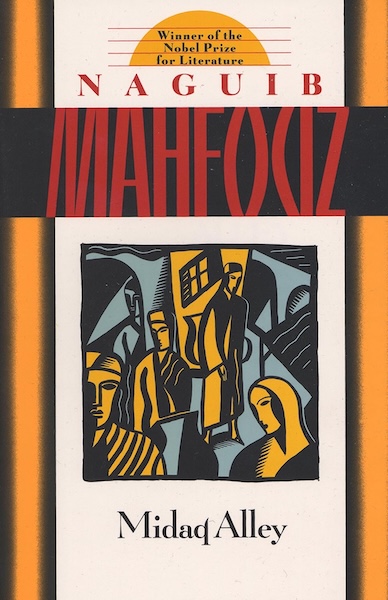
Midaq Alley
Midaq Alley portrays life in a small, crowded alley in Cairo during the Second World War, where shopkeepers, barbers, café owners, and residents struggle to survive amid poverty and social change. At the centre of the story is Hamida, a beautiful and ambitious young woman who dreams of escaping the limitations of her neighbourhood and achieving wealth and independence. Her desire for a different life brings her into conflict with Abbas, a humble barber who hopes to marry her and build a future together.
As Hamida becomes increasingly attracted to the promises of modernity and material success, her choices lead her toward a darker world shaped by exploitation and disillusionment. Meanwhile, the other residents pursue their own ambitions, revealing the contradictions, humour, and hardships of everyday life. Through this interconnected portrait of a Cairo community, Naguib Mahfouz explores class inequality, gender expectations, ambition, and the impact of historical change on ordinary people. The alley becomes a microcosm of Egyptian society, where dreams of escape coexist with the powerful forces that keep people trapped in familiar circumstances.
1947
2
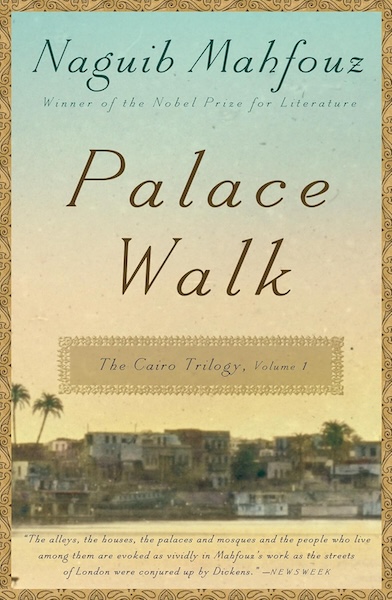
Palace Walk
Palace Walk is the first novel in Naguib Mahfouz’s acclaimed Cairo Trilogy, following the lives of the al-Sayyid family in Cairo during the First World War and the Egyptian nationalist movement of 1919. At the centre of the household is Ahmad Abd al-Jawad, a prosperous merchant who rules his family with absolute authority while secretly indulging in a life of pleasure outside the home. His wife, Amina, remains largely confined to the house, devoted to her husband and children, while their sons and daughters gradually develop ambitions that challenge the traditional values governing their lives.
As political unrest spreads through Egypt, the family’s private struggles reflect the wider tensions between tradition and modernity, religious authority and personal freedom, and colonial rule and national independence. Mahfouz portrays a society undergoing profound transformation, where generational conflicts reveal changing attitudes toward gender, education, and individual choice. Through richly detailed depictions of domestic life in historic Cairo, the novel examines the contradictions of patriarchal power and the ways political change reshapes even the most private relationships.
1956
3
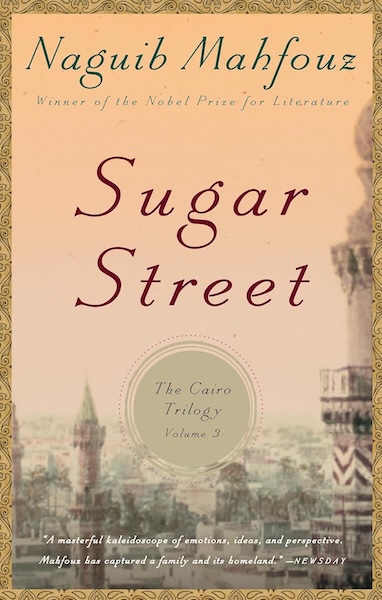
Sugar Street
Sugar Street is the final novel in Naguib Mahfouz’s Cairo Trilogy, following the al-Sayyid family into the 1930s and the political and social changes that reshape Egypt. As the country moves toward greater independence, a new generation emerges with different ideas about religion, politics, and personal freedom. The family patriarch, Ahmad Abd al-Jawad, is now ageing, while his children and grandchildren navigate a world increasingly distant from the traditions that once governed their lives.
The novel focuses on the consequences of these generational shifts, particularly as family members become involved in competing political movements and question established beliefs. Kamal, now a teacher, struggles with disillusionment and the loss of the ideals that once shaped his youth. Through the family’s experiences, Mahfouz examines the rise of nationalism, the appeal of secular thought, and the tensions between religious conservatism and modernity. Set against the lively streets and changing social landscape of Cairo, Sugar Street explores how political transformation influences private lives and how each generation must negotiate the relationship between inherited traditions and an uncertain future.
1957
4
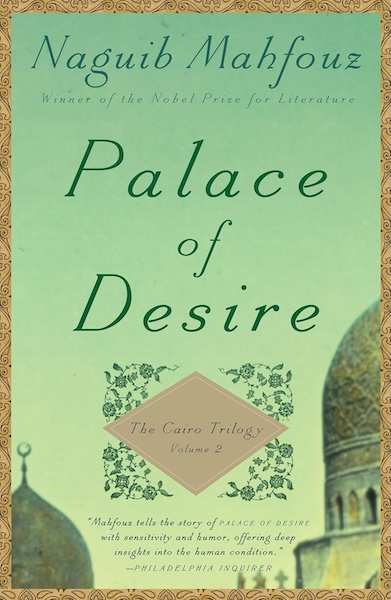
Palace of Desire
Palace of Desire is the second novel in Naguib Mahfouz’s Cairo Trilogy, continuing the story of the al-Sayyid family in Cairo during the 1920s. As Egypt experiences political change and growing demands for independence, the family faces its own transformations. Ahmad Abd al-Jawad, once the unquestioned authority in his household, grows older while continuing to struggle with his desire for pleasure and control. Meanwhile, his children enter adulthood, developing beliefs, ambitions, and relationships that increasingly challenge the traditions imposed upon them.
The novel focuses particularly on the younger generation’s changing attitudes toward religion, politics, love, and personal freedom. Kamal, the youngest son, becomes increasingly absorbed in philosophy and literature, questioning the religious certainties of his upbringing and struggling with unrequited love. Through the family’s experiences, Mahfouz explores the tension between inherited values and modern ideas, revealing how political upheaval and cultural transformation reshape intimate relationships. Rich in psychological detail, Palace of Desire portrays a society caught between tradition and modernity, where the search for independence often comes at the cost of family harmony.
1957
5
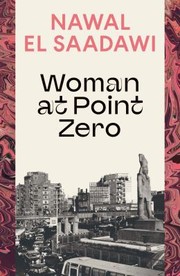
Woman at Point Zero
Woman at Point Zero tells the story of Firdaus, an Egyptian woman awaiting execution in a Cairo prison after killing a man. Through conversations with a female psychiatrist, Firdaus recounts the experiences that shaped her life, from a difficult childhood marked by poverty and abuse to her encounters with exploitation, violence, and patriarchal authority.
As Firdaus grows older, she discovers how men and social institutions repeatedly attempt to control her body, choices, and future. After experiencing marriage, prostitution, and various forms of economic dependence, she begins to question the values of a society that condemns women while protecting those who exploit them.
Drawing on themes of gender inequality, class, and power, El Saadawi presents Firdaus as a woman struggling to claim ownership of her life in a world that offers her few choices. The novel is a powerful critique of systemic oppression and an exploration of what freedom means when society denies a person dignity and autonomy.
1975
6
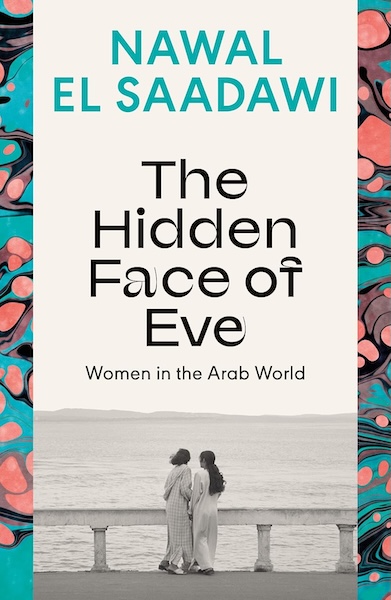
The Hidden Face of Eve
What lies beneath the traditions, laws, and social expectations that have shaped women’s lives for generations?
Drawing on her experience as a physician and feminist activist, Nawal El Saadawi examines the realities of women’s lives across the Arab world. She confronts subjects often pushed into silence, including female genital mutilation, sexual violence, honour killings, reproductive rights, and legal inequality.
Combining personal testimony, historical analysis, and cultural criticism, El Saadawi challenges the patriarchal structures used to justify women’s oppression. She also recovers the histories of women who resisted restrictive gender roles, questioning the boundaries between tradition, religion, and power.
First published in Arabic in 1977, this uncompromising work remains a landmark of Arab feminist writing and a powerful call for women’s freedom and equality.
1977
7
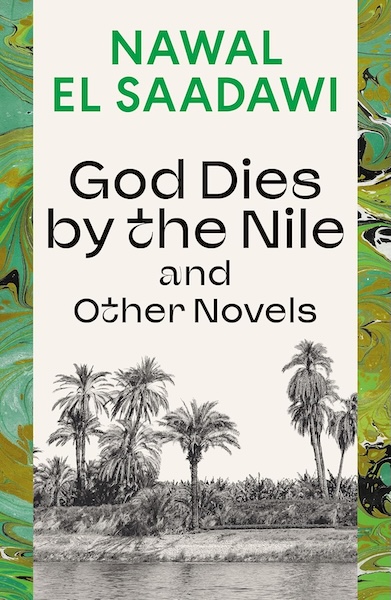
God Dies by the Nile and Other Novels
What lies beneath the traditions, laws, and social expectations that have shaped women’s lives for generations?
In The Hidden Face of Eve, Egyptian writer, physician, and feminist Nawal El Saadawi examines the realities of women’s lives across the Arab world, drawing on her medical work in rural Egypt and her experiences as a women’s rights activist. She confronts subjects often pushed into silence, including female genital mutilation, sexual violence, honour killings, reproductive rights, and legal inequality.
Moving between personal testimony, historical analysis, religion, and cultural criticism, El Saadawi challenges the social structures used to justify women’s oppression. She also explores the historical contributions of Arab women and the struggles of those who have resisted restrictive gender roles.
Passionate and uncompromising, this influential work asks readers to question the boundaries between tradition, faith, and patriarchal power. First published in Arabic in 1977, The Hidden Face of Eve remains a landmark of Arab feminist writing and a powerful call for women’s freedom and equality.
1977
8
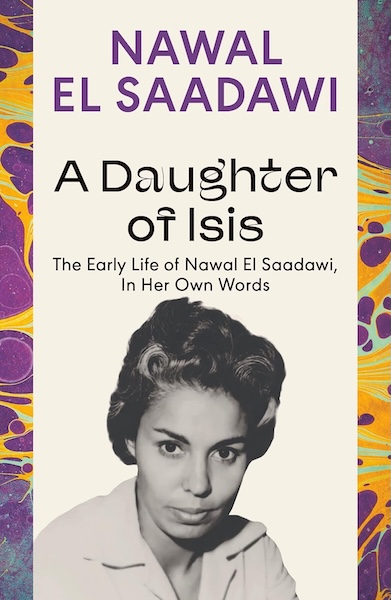
A Daughter of Isis
Long before she became one of the Arab world’s most outspoken feminist voices, Nawal El Saadawi was a young girl growing up in a village beside the Nile, questioning the rules that governed women’s lives.
In A Daughter of Isis, El Saadawi revisits her childhood and early adulthood, tracing the experiences that shaped her determination to challenge injustice. She recalls her family, her education, the restrictions imposed on girls, and her growing awareness of the contradictions between religious teachings, social expectations, and women’s lived realities.
With characteristic candour, she recounts the beginnings of her journey as a physician, writer, and activist, revealing how personal rebellion gradually became a lifelong commitment to equality. Her story is also a portrait of twentieth-century Egypt, where changing political and social landscapes shaped the possibilities available to women.
Intimate, defiant, and deeply reflective, this memoir illuminates the experiences behind El Saadawi’s revolutionary ideas and celebrates the courage required to forge an independent life.
1999
9
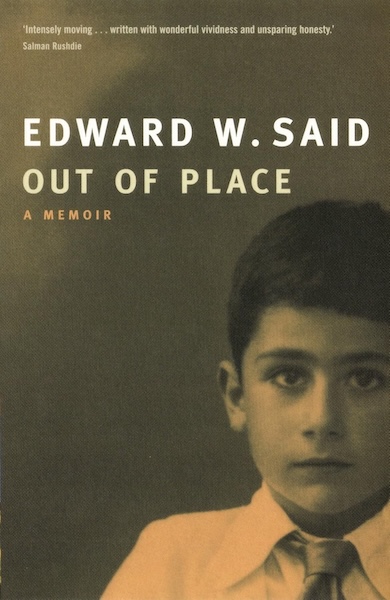
Out Of Place: A Memoir
What does it mean to belong when home is never quite one place?
In Out of Place, Edward W. Said recounts his childhood and early adulthood across Jerusalem, Cairo, and the United States. Born into a Palestinian family in 1935, he grew up moving between cultures, languages, and expectations, often feeling that he did not fully belong anywhere.
With candour and introspection, Said revisits his complicated relationships with his family, his education, and the competing identities that shaped him. His memories reveal the intimate experience behind his later work on exile, culture, and displacement, offering a personal perspective on the historical upheavals of the twentieth century.
More than a conventional autobiography, Out of Place is a meditation on memory and belonging—and on the enduring experience of living between worlds.
1999
10
The Map of Love
The Map of Love weaves together two love stories separated by a century, exploring the connections between personal relationships and political history in Egypt. In 1997, American journalist Isabel Parkman travels to Egypt with a mysterious collection of letters, diaries, and photographs belonging to her great-grandmother, Anna Winterbourne. The documents reveal Anna’s journey to Egypt in 1900, where she falls in love with Sharif al-Baroudi, an Egyptian nationalist and aristocrat. As Isabel and her Egyptian-American lover, Omar, investigate their ancestors’ story, they uncover a history shaped by British colonial rule, cultural misunderstandings, and the struggle for Egyptian independence. Moving between past and present, Ahdaf Soueif explores love across cultural boundaries, the legacy of colonialism, and the complexities of identity and belonging. The novel reveals how intimate relationships can illuminate the broader forces that shape nations and generations.
1999
11
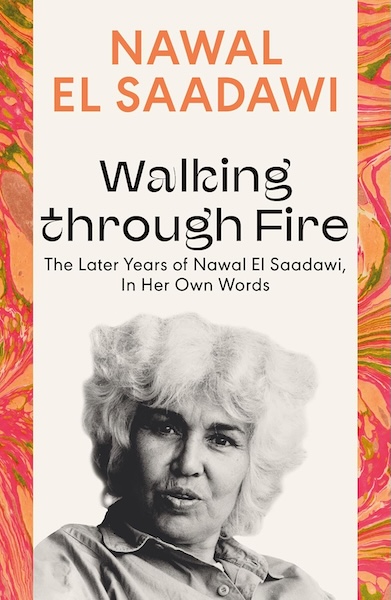
Walking through Fire
For Nawal El Saadawi, speaking openly about women’s oppression came at a personal cost: censorship, imprisonment, threats, and eventually exile. Yet she refused to surrender her voice.
In Walking Through Fire, El Saadawi continues the story of her extraordinary life, recounting her years as a physician, writer, and activist in a society where challenging political and religious authority could be dangerous. She describes her efforts to establish women’s organisations and publish feminist writing, the threats that forced her into exile, and the personal struggles that accompanied her public resistance.
The memoir reveals the woman behind the internationally recognised intellectual: passionate, questioning, and sometimes conflicted, but determined to live according to her convictions. Through recollections of marriage, motherhood, political repression, and the fight for justice, she explores what it means to remain independent in the face of relentless pressure.
A testament to intellectual courage and personal freedom, the book documents a life spent confronting the forces that sought to silence her.
2002
12
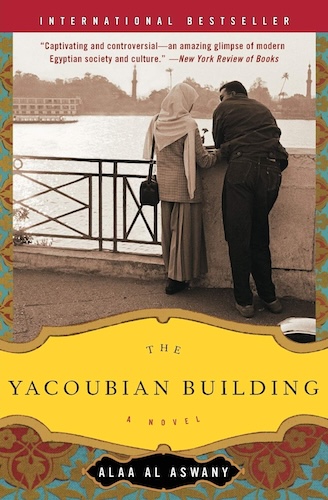
The Yacoubian Building
Behind the elegant façade of a once-grand Cairo apartment building lies a society fractured by corruption, poverty, and unfulfilled dreams. Its residents include a disillusioned journalist, a young man whose ambition to become a police officer is crushed by class prejudice, a wealthy businessman pursuing forbidden pleasures, and an ageing aristocrat haunted by a vanished past. As their lives intersect, the building becomes a microcosm of modern Egypt, exposing the hypocrisies of its ruling class and the quiet desperation of those struggling to escape their circumstances. Bold and provocative, The Yacoubian Building offers an unforgettable portrait of a nation caught between tradition, repression, and the desire for change.
2006