Egypt
Africa
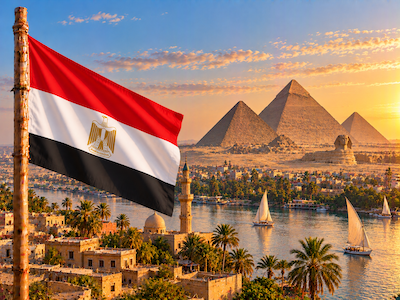
Egypt is a country where the Nile Valley and Delta meet the vast Sahara, creating one of the world’s oldest and most influential civilizations. Ancient temples, pyramids, mosques, Coptic churches, and bustling modern cities exist alongside one another, while Cairo remains a major cultural center of the Arab world. Egyptian culture has been shaped by ancient Egyptian, Arab, African, Mediterranean, and Islamic traditions.
Egypt has one of the longest and richest literary traditions in the world, beginning with ancient Egyptian religious texts, wisdom literature, poetry, and stories written in hieroglyphic and later scripts. In the modern period, Arabic became the central literary language, and Egypt developed into one of the most influential centers of Arabic publishing, journalism, poetry, and fiction. Naguib Mahfouz, the first Arab writer to receive the Nobel Prize in Literature, is perhaps Egypt’s most internationally recognized novelist. His Cairo Trilogy transforms the streets and neighborhoods of Cairo into a portrait of Egyptian society, family, politics, and social change. Other major figures include Taha Hussein, an influential intellectual and advocate for education, Gamal al-Ghitani, known for blending historical and contemporary narratives, and Ahdaf Soueif, whose fiction explores identity, politics, gender, and the relationship between Egypt and the wider world. Egyptian literature frequently engages with history, religion, social class, political change, colonialism, gender, memory, and the experience of modern life in a rapidly changing society.