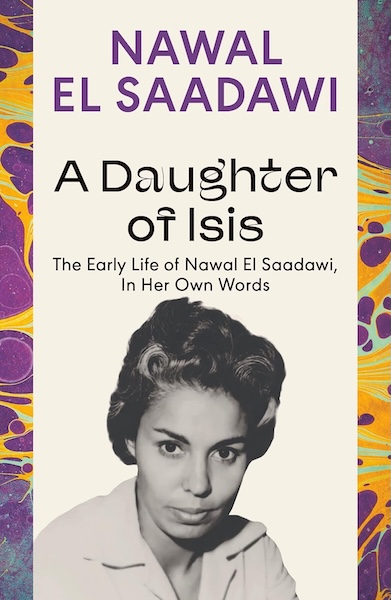
A Daughter of Isis
Summary
Long before she became one of the Arab world’s most outspoken feminist voices, Nawal El Saadawi was a young girl growing up in a village beside the Nile, questioning the rules that governed women’s lives.
In A Daughter of Isis, El Saadawi revisits her childhood and early adulthood, tracing the experiences that shaped her determination to challenge injustice. She recalls her family, her education, the restrictions imposed on girls, and her growing awareness of the contradictions between religious teachings, social expectations, and women’s lived realities.
With characteristic candour, she recounts the beginnings of her journey as a physician, writer, and activist, revealing how personal rebellion gradually became a lifelong commitment to equality. Her story is also a portrait of twentieth-century Egypt, where changing political and social landscapes shaped the possibilities available to women.
Intimate, defiant, and deeply reflective, this memoir illuminates the experiences behind El Saadawi’s revolutionary ideas and celebrates the courage required to forge an independent life.
Reviews
Login to leave a review.
No reviews yet. Be the first!
You might also like

- Published
- 1999
- Author
- Nawal El Saadawi