Books from Brazil
Suggest a book
All genres
Historical Fiction
Literary Fiction
Fantasy
Romance
Horror
Thriller
Non-Fiction
Mystery
Memoir
Classics
History
Sci-Fi
Contemporary Fiction
Science Fiction
Fiction
Poetry
Essays
Family Saga
Magical Realism
Family Drama
Dark Academia
Psychological Fiction
Dark Comedy
Political Writing
Feminist Fiction
Satire
Campus Fiction
Cultural Studies
Biography
Philosophy
Comedy
Drama
Young Adult
Gothic
Dystopia
Crime
Children's Books
Short Stories
Mythology
Cozy
Retellings
Humour
Adventure
All themes
Love & Passion
Adventure & Journey
Identity & Belonging
War & Conflict
Freedom & Resistance
Family & Heritage
Nature & Landscape
Society & Class
Spirituality & Faith
Solitude & Exile
Coming of Age
Revolution & Change
Friendship
History
Immigration
Myths and Retellings
Colonialism
Women & Society
Mental Health
Motherhood
1
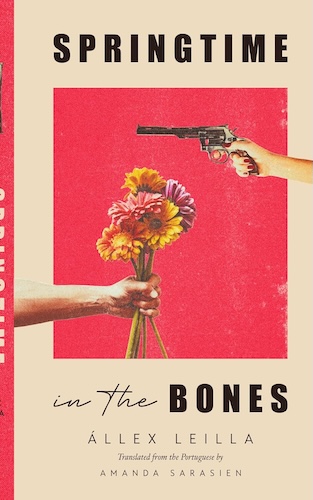
Springtime in the Bones
Set in Salvador, Bahia, Springtime in the Bones follows Luísa, a successful advertising professional whose carefully constructed life is shattered by sexual assault and the breakdown of her marriage. Still emotionally attached to her former husband, Michel, who has embraced his attraction to men, Luísa finds herself confronting two profound losses: the love she cannot let go of and the sense of safety stolen from her. As she struggles with the aftermath of violence, grief gives way to an uncompromising desire for revenge against the men who attacked her.
Told through a fragmented, nonlinear narrative, the novel moves between memories, philosophical reflections, dark humor, and moments of raw emotional intensity. Leilla creates a protagonist who refuses to remain a passive victim, instead exploring the uncomfortable relationship between trauma, anger, and the pursuit of justice. Through Luísa’s determination to reclaim control over her body and her life, the novel challenges conventional expectations of how survivors should respond to violence. Poetic, provocative, and formally experimental, it is a powerful exploration of female autonomy, desire, and the possibility of renewal after profound suffering.
2026
2

Strangerland
Set in 1990, Strangerland follows two people whose lives are shaped by migration, family obligations, and the search for belonging.
Zivoin has recently arrived in London from Yugoslavia. As the dependable eldest son, he works long hours and sends his savings home to support his family, while watching news of his homeland’s growing political turmoil. Thousands of miles away, in Uberlândia, Brazil, Alegria prepares to leave the country and family she loves in pursuit of a better future. Ambitious and determined, she hopes to provide her parents with greater security, even if it means building a life far from home.
When their paths cross, Zivoin and Alegria discover an unexpected connection that offers them a sense of belonging in unfamiliar surroundings. Their journey together takes them across countries and continents, testing their relationship and forcing them to confront the sacrifices involved in making a life elsewhere.
Inspired by the author’s family history, the novel explores immigration, cultural identity, family loyalty, and the enduring power of love to transcend borders, languages, and time.
2026
3
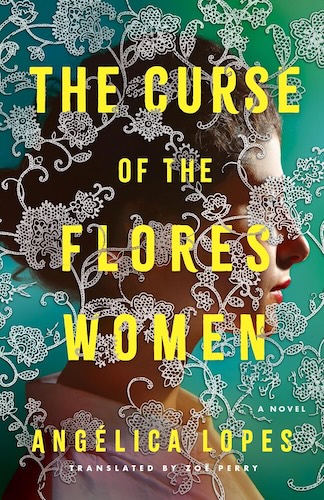
Curse of the Flores Women
In this haunting novel about the enduring bonds of womanhood, a young girl weaves together the truth behind her family history and the secrets that resonate through generations.
Eighteen-year-old Alice Ribeiro is constantly fighting―against the status quo, female oppression in Brazil, and even her own mother. But when a family veil is passed down to her, Alice is compelled to fight for the rights of all womankind while also uncovering the hidden history of the women in her family.
Seven generations ago, the small town of Bom Retiro shunned the Flores women because of a “curse” that rendered them unlucky in love. With no men on the horizon to take care of them, the women learned the art of lacemaking to build lives of their own. But their peace was soon threatened by forces beyond any woman’s control.
As Alice begins piecing together the tapestry that is her history, she discovers revelations about the past, connections to the present, and a resilience in her blood that will carry her toward the future her ancestors strove for.
2024
4
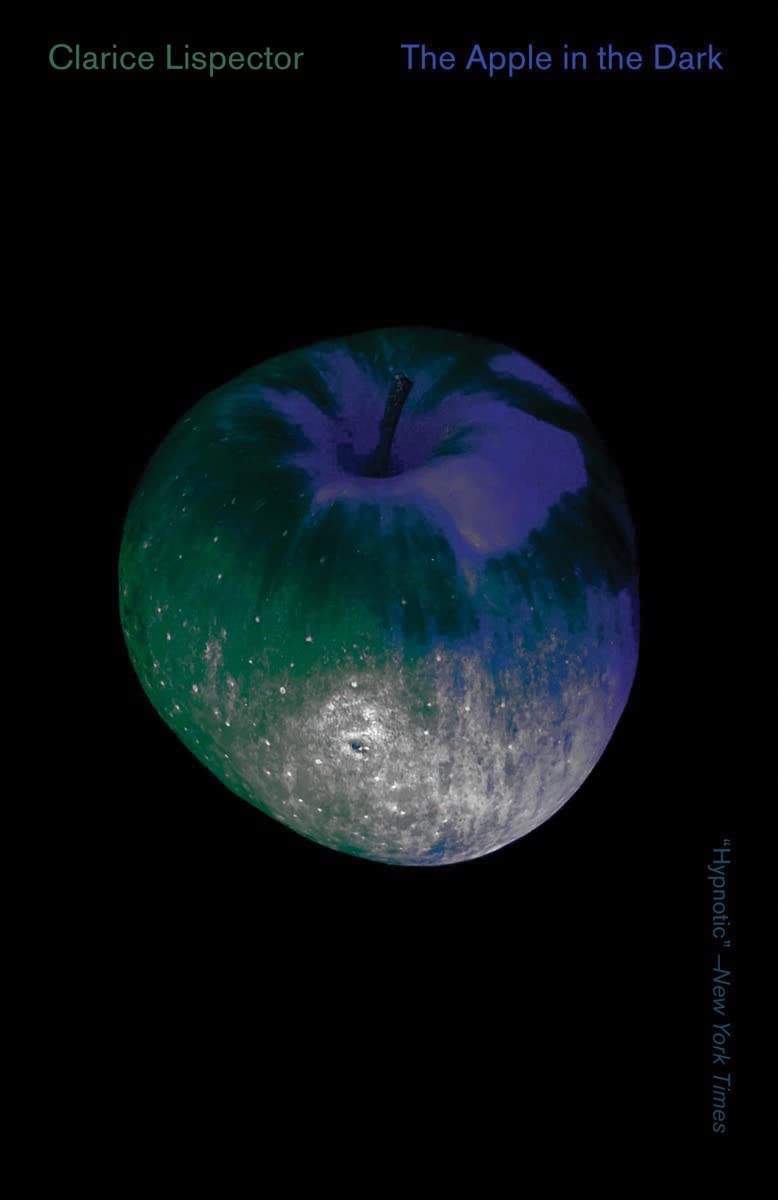
Apple in the Dark
The Apple in the Dark follows Martim, a man who flees his home after believing he has committed a terrible act against his wife. Seeking refuge in the Brazilian countryside, he finds work on a remote farm owned by two women, Vitória and Ermelinda. Away from the structures of his former life, Martim begins to experience the world as if he were discovering it for the first time. His escape becomes a profound journey into the nature of consciousness, language, morality, and personal identity. Through introspective prose and philosophical reflections, Clarice Lispector explores what remains of a person when familiar social roles and established beliefs fall away. Rather than offering a conventional narrative of guilt and redemption, the novel examines the unsettling possibility of creating oneself anew. It is a deeply existential work about freedom, responsibility, and the struggle to understand what it means to be human.
2023
5
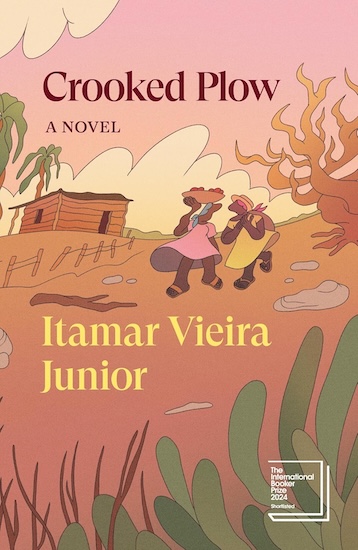
Crooked Plow
Set in the rural hinterlands of Bahia, Brazil, Crooked Plow follows Bibiana and Belonísia, two sisters growing up in a community of Black agricultural workers descended from enslaved people. Their lives change dramatically when, as children, they discover an old knife hidden beneath their grandmother’s bed. A sudden accident leaves one sister unable to speak, creating a bond between them that shapes their identities and futures.
As the sisters grow older, their paths diverge. Bibiana leaves home and becomes increasingly aware of the social and political forces that keep her community trapped in poverty, while Belonísia remains closely connected to the land and the traditions of her ancestors. Through their experiences, the novel reveals the exploitation of rural workers who cultivate land they do not own, despite generations of labour and their deep ancestral ties to it.
Blending social realism with magical elements and Afro-Brazilian spiritual traditions, Vieira Junior explores the enduring consequences of slavery, racial inequality, and land dispossession. The land itself becomes a source of both suffering and belonging, connecting the community to its history while providing the foundation for resistance. Through the sisters’ intertwined lives, the novel examines how people preserve their dignity, culture, and collective memory in the face of persistent injustice.
2018
6
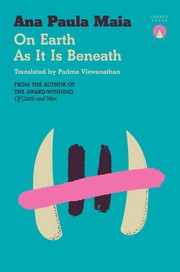
On Earth As It Is Beneath
On Earth as It Is Beneath takes place in a remote Brazilian penal colony that has been abandoned by the authorities, leaving prisoners and guards trapped in a brutal and isolated environment. As the prison deteriorates, the people within it become increasingly subject to violence, cruelty, and arbitrary power. The boundaries between those responsible for maintaining order and those imprisoned begin to blur, exposing the moral corruption of a system that has effectively abandoned its own rules. Maia writes in stark, uncompromising prose, creating an atmosphere of dread in which the surrounding landscape intensifies the characters’ sense of confinement. The novel examines punishment, institutional neglect, and the dehumanising effects of unchecked authority. It asks what happens when a society removes people from view and then abandons responsibility for their lives.
2017
7
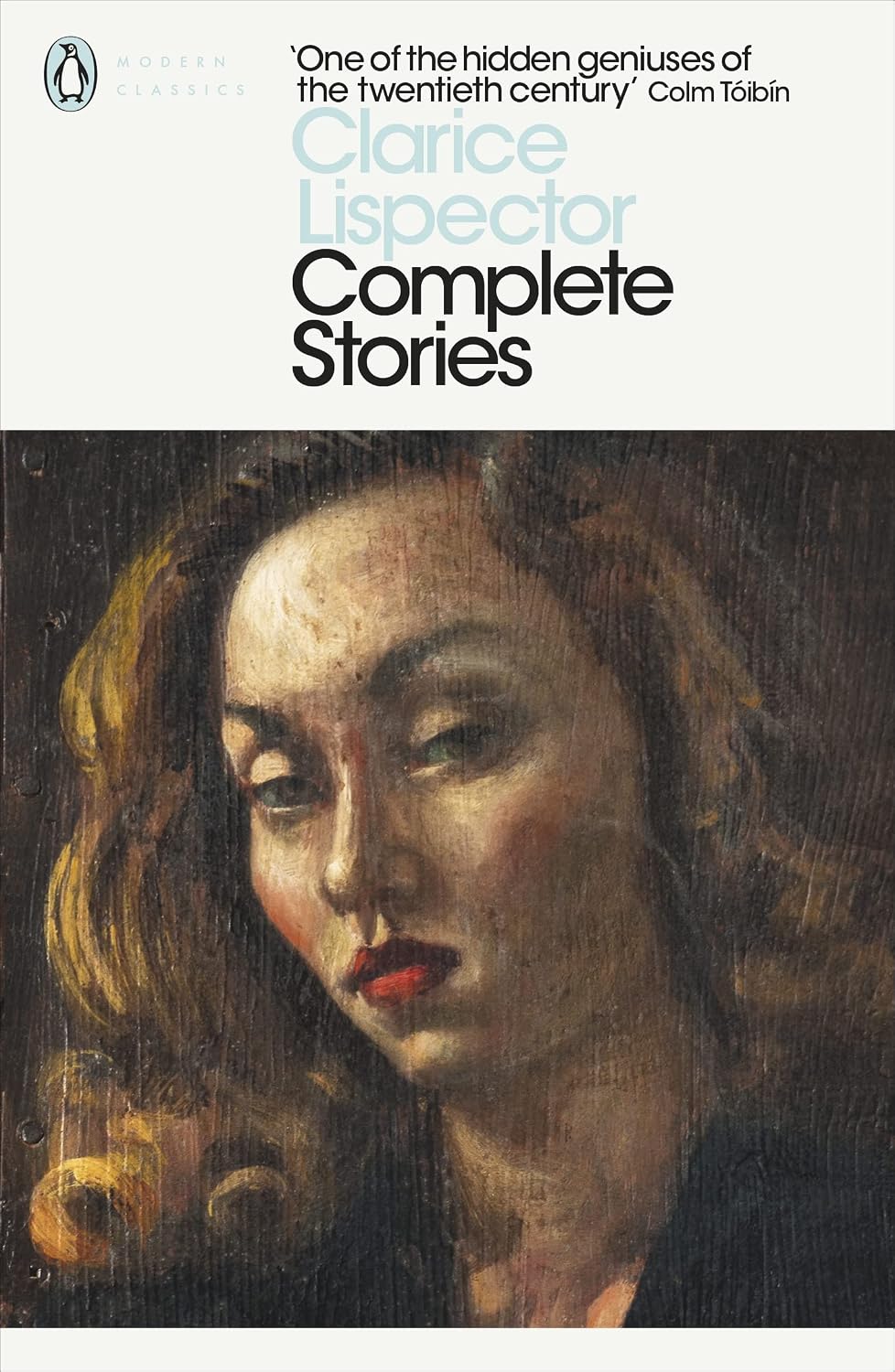
Complete Stories
Complete Stories brings together the short fiction of Clarice Lispector, spanning her entire career and revealing the extraordinary range of one of Brazil’s most influential literary voices. Across stories set in ordinary homes, crowded cities, and unfamiliar landscapes, Lispector explores the hidden emotional lives of women, children, domestic workers, and other characters whose everyday experiences conceal profound inner conflicts.
Often beginning with seemingly insignificant moments—a conversation, a household routine, an encounter with an animal—her stories gradually uncover unsettling questions about identity, desire, freedom, and the nature of existence. Characters experience sudden revelations that disrupt their familiar understanding of themselves and the world, exposing the tension between social expectations and private impulses. Lispector’s distinctive prose combines psychological intensity, philosophical reflection, and unexpected humour, frequently blurring the boundaries between the ordinary and the surreal. Rather than offering clear resolutions, these stories invite readers into the uncertainties of consciousness and the complexity of being human.
2015
8
The Passion According to G.H.
In The Passion According to G.H., a wealthy sculptor in Rio de Janeiro experiences a profound existential crisis after entering her former maid’s room and encountering a cockroach. What begins as an ordinary domestic moment transforms into a disturbing confrontation with her identity, humanity, and understanding of existence. Through an intense stream of consciousness, Clarice Lispector explores the boundaries between self and other, human and animal, and the sacred and the material. As G.H.’s familiar sense of self begins to dissolve, she confronts the unsettling possibility that true understanding requires abandoning the illusions that define human identity. The novel is a challenging philosophical exploration of consciousness, transformation, and the search for meaning beyond conventional beliefs.
2012
9
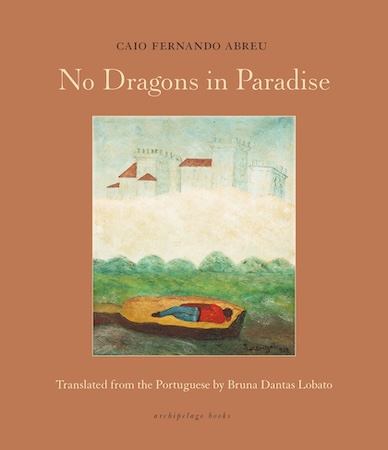
No Dragons in Paradise
Love can be intoxicating, terrifying, and impossible to escape. In this collection of thirteen interconnected stories, Caio Fernando Abreu explores the lives of people searching for intimacy in a world that often leaves them feeling invisible. A boy experiences the overwhelming intensity of his first crush; a drag queen searches for connection in the night; a lonely son visits his mother; and two men discover unexpected tenderness in the darkness. Moving between desire, heartbreak, loneliness, and moments of ecstatic possibility, Abreu portrays characters who refuse to surrender their longing for love, even when society rejects them. Music, astrology, dreams, and popular culture weave through these stories, creating a sensuous, almost psychedelic portrait of urban Brazil. Written during the shadow of military dictatorship and at the dawn of the AIDS crisis, the collection gives voice to outsiders whose experiences were frequently marginalised. Tender, restless, and unapologetically queer, it celebrates the fragile beauty of being alive and loving another person.
1988
10
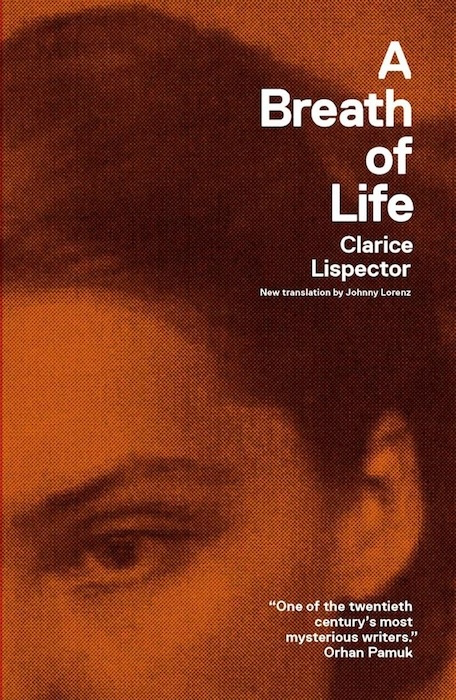
A Breath of Life: Pulsations
A Breath of Life: Pulsations is an experimental, posthumously published novel in which Clarice Lispector explores the mysterious relationship between a creator and the character he brings into existence. The book unfolds as a dialogue between an unnamed male author and Angela Pralini, the fictional woman whose thoughts, desires, and contradictions gradually take shape through his writing. As the two voices interact, the boundaries between author and creation become increasingly uncertain, raising questions about who controls a story and whether a fictional character can exist independently of the person who imagines her.
Moving between philosophical reflections, fragments of narrative, and intimate meditations on existence, the novel examines creativity, consciousness, mortality, and the limitations of language. The author struggles to understand Angela, while she resists being reduced to his interpretation of her. Through this unusual structure, Lispector investigates the tension between identity and invention, revealing the restless search for meaning that lies at the heart of both artistic creation and human life.
1978
11
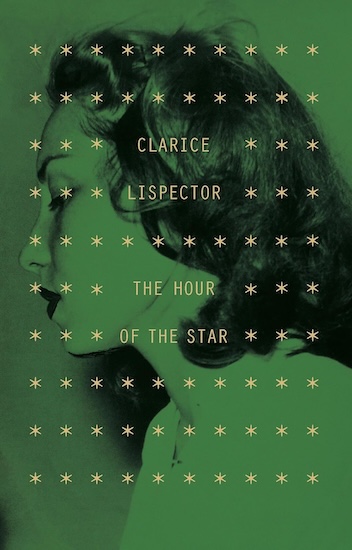
The Hour of the Star
The Hour of the Star follows Macabéa, a poor young woman from northeastern Brazil who moves to Rio de Janeiro in search of a better life. Working as a typist and living in poverty, she leads an almost invisible existence, lacking the education, confidence, and social awareness to understand the world around her. Despite her difficult circumstances, Macabéa possesses a quiet innocence and an unexpected capacity for happiness, finding small pleasures in everyday life.
Her story is narrated by Rodrigo S.M., a writer who struggles to represent her life honestly while confronting his own privilege and the limitations of storytelling. Through this unusual narrative perspective, Clarice Lispector explores poverty, gender, social exclusion, and the difficulty of giving voice to those society overlooks. Both intimate and unsettling, the novel asks profound questions about human dignity, identity, and whether an insignificant life can ever receive its moment of recognition.
1977
12
Água Viva
Água Viva is an experimental novel narrated by an unnamed woman, an artist who attempts to capture the fleeting experience of being alive through a continuous flow of thoughts, sensations, and reflections. Addressing an unnamed listener, she moves between memories, observations of nature, artistic inspiration, and philosophical questions, seeking to express what she calls the present moment—the elusive instant in which life is experienced before it becomes memory.
Rather than following a conventional plot, Clarice Lispector creates an intensely intimate meditation on consciousness, language, time, and existence. The narrator struggles with the limitations of words, searching for a form of expression that can convey the raw immediacy of experience. Images of flowers, animals, music, and water recur throughout the text, connecting the physical world with questions about the mysterious nature of being. Both poetic and challenging, Água Viva invites readers to experience life as something fluid, unpredictable, and impossible to fully explain.
1973