Books from Brazil
Suggest a book
All genres
Historical Fiction
Literary Fiction
Fantasy
Romance
Horror
Thriller
Non-Fiction
Mystery
Memoir
Classics
History
Sci-Fi
Contemporary Fiction
Science Fiction
Fiction
Poetry
Essays
Family Saga
Magical Realism
Family Drama
Dark Academia
Psychological Fiction
Dark Comedy
Political Writing
Feminist Fiction
Satire
Campus Fiction
Cultural Studies
Biography
Philosophy
Comedy
Drama
Young Adult
Gothic
Dystopia
Crime
Children's Books
Short Stories
Mythology
Cozy
Retellings
Humour
Adventure
All themes
Love & Passion
Adventure & Journey
Identity & Belonging
War & Conflict
Freedom & Resistance
Family & Heritage
Nature & Landscape
Society & Class
Spirituality & Faith
Solitude & Exile
Coming of Age
Revolution & Change
Friendship
History
Immigration
Myths and Retellings
Colonialism
Women & Society
Mental Health
Motherhood
1

Strangerland
Set in 1990, Strangerland follows two people whose lives are shaped by migration, family obligations, and the search for belonging.
Zivoin has recently arrived in London from Yugoslavia. As the dependable eldest son, he works long hours and sends his savings home to support his family, while watching news of his homeland’s growing political turmoil. Thousands of miles away, in Uberlândia, Brazil, Alegria prepares to leave the country and family she loves in pursuit of a better future. Ambitious and determined, she hopes to provide her parents with greater security, even if it means building a life far from home.
When their paths cross, Zivoin and Alegria discover an unexpected connection that offers them a sense of belonging in unfamiliar surroundings. Their journey together takes them across countries and continents, testing their relationship and forcing them to confront the sacrifices involved in making a life elsewhere.
Inspired by the author’s family history, the novel explores immigration, cultural identity, family loyalty, and the enduring power of love to transcend borders, languages, and time.
2026
2
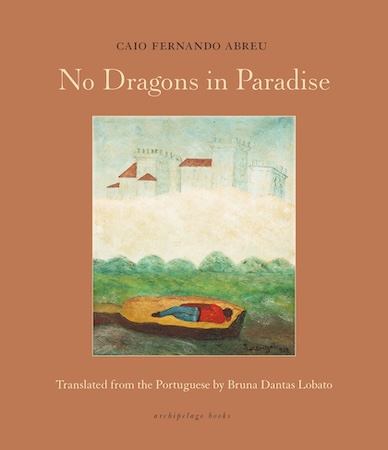
No Dragons in Paradise
Love can be intoxicating, terrifying, and impossible to escape. In this collection of thirteen interconnected stories, Caio Fernando Abreu explores the lives of people searching for intimacy in a world that often leaves them feeling invisible. A boy experiences the overwhelming intensity of his first crush; a drag queen searches for connection in the night; a lonely son visits his mother; and two men discover unexpected tenderness in the darkness. Moving between desire, heartbreak, loneliness, and moments of ecstatic possibility, Abreu portrays characters who refuse to surrender their longing for love, even when society rejects them. Music, astrology, dreams, and popular culture weave through these stories, creating a sensuous, almost psychedelic portrait of urban Brazil. Written during the shadow of military dictatorship and at the dawn of the AIDS crisis, the collection gives voice to outsiders whose experiences were frequently marginalised. Tender, restless, and unapologetically queer, it celebrates the fragile beauty of being alive and loving another person.
1988
3
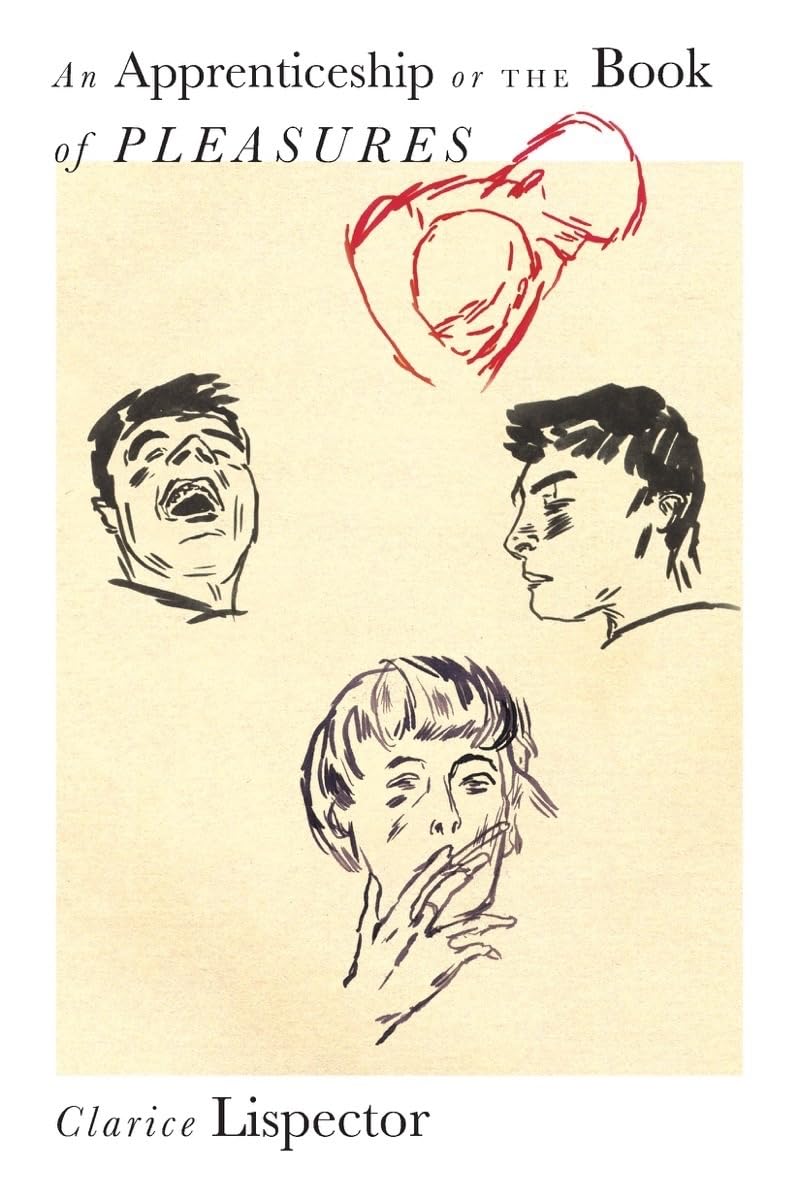
Apprenticeship or the Book of Pleasures
Apprenticeship or the Book of Pleasures follows Lóri, a schoolteacher living in Rio de Janeiro who struggles with loneliness, emotional vulnerability, and the difficulty of allowing herself to experience happiness. When she meets Ulisses, a philosophy professor who challenges her to confront her fears and desires, she begins a gradual journey toward emotional and personal freedom. Their relationship develops slowly, shaped by conversations, uncertainty, and Lóri’s attempts to understand what it means to love another person without losing herself.
Through introspective prose and philosophical reflections, Clarice Lispector explores love not simply as romance, but as a process of self-discovery and transformation. Lóri must learn to accept her own body, embrace uncertainty, and become comfortable with being alone before she can fully connect with someone else. Blurring the boundaries between fiction and philosophical meditation, the novel examines desire, intimacy, vulnerability, and the courage required to experience life more fully.
1969
4

Gabriela, Clove and Cinnamon
Set in the coastal Brazilian town of Ilhéus in the 1920s, Gabriela, Clove and Cinnamon follows Gabriela, a beautiful and carefree young woman who arrives in town during a period of economic transformation driven by the cocoa trade. She becomes a cook in the bar of Nacib, a Syrian immigrant who falls in love with her and eventually marries her. However, Gabriela’s independent spirit and sensual nature clash with the conservative social expectations of marriage and respectability. Against the backdrop of political rivalries, changing gender roles, and the decline of traditional power structures, Jorge Amado portrays a society caught between old customs and modern aspirations. Blending romance, humor, and social satire, the novel explores desire, freedom, and the struggle of women to live beyond the constraints imposed by patriarchal traditions. Through its vivid characters and colorful setting, the book celebrates Brazilian culture and the transformative power of social change.
1958