Jacqueline Harpman
BelgiumAbout
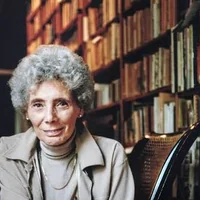
Jacqueline Harpman was a Belgian novelist and psychoanalyst, born in Brussels in 1929. She began publishing fiction in the 1950s, later trained as a psychoanalyst, and returned to writing novels after a long hiatus. I Who Have Never Known Men was originally published in French as Moi qui n’ai pas connu les hommes in 1995; the English translation by Ros Schwartz appeared in 1997.
Books on TheBookRoads
1
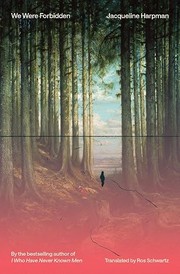
We Were Forbidden
We Were Forbidden is a collection of three previously untranslated stories exploring defiance, oppression, and the struggle for personal freedom. In The Ardennes Forest, a woman and her fellow survivors wander through a mysterious woodland after an unexplained war, forbidden from leaving its boundaries or stopping their endless march. In The Outcast, a teenage girl attending a French school in 1940s Casablanca is punished for questioning the beliefs and political ideas she is expected to accept. In The Broom Cupboard, a young woman trapped in a loveless marriage begins to question the expectations governing her intimate life and imagine alternatives to her circumstances.
Although the stories unfold in very different settings, each portrays a woman confronting rules imposed by external authorities or social conventions. Through unsettling scenarios, psychological insight, and understated prose, Harpman examines how obedience becomes ingrained and how individuals begin to resist it. The collection explores the tension between conformity and independence, revealing the quiet but powerful ways people challenge the boundaries placed around their lives.
2026
Belgium
2
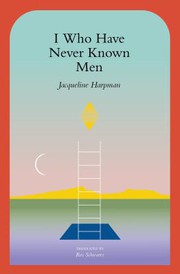
I Who Have Never Known Men
I Who Have Never Known Men follows an unnamed young woman imprisoned underground with thirty-nine other women. Guarded by silent male soldiers, the women live in a confined space, deprived of privacy, freedom, and meaningful knowledge of the outside world. Unlike her fellow prisoners, who remember their lives before captivity, the narrator has no memories of the world beyond the prison and has never experienced ordinary human relationships.
When an unexpected event allows the women to escape, they emerge into an unfamiliar landscape that appears almost entirely devoid of human life. Forced to survive together, they search for answers about their captivity and the fate of humanity, but the world offers few explanations. As time passes, the narrator struggles to understand concepts such as love, sexuality, memory, and death without having experienced them in the ways others have.
Blending dystopian fiction with philosophical reflection, Harpman’s novel explores freedom, loneliness, human nature, and what it means to be human when society and its inherited knowledge have disappeared.
2022
Belgium
Country
Belgium
Europe