Belgium

Europe
Belgium
4
books
3
authors

Books from Belgium

1
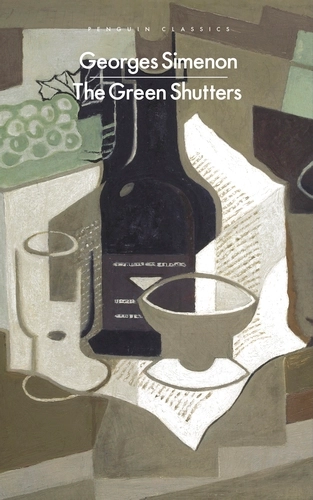
The Green Shutters
The Green Shutters
What remains of a man when fame, success, and the fearsome reputation he has built can no longer protect him from himself? Émile Maugin is a celebrated French actor who has spent his life commanding attention, intimidating those around him, and escaping his troubles through alcohol. But shortly before his sixtieth birthday, a devastating medical diagnosis forces him to confront his mortality. As memories of his impoverished childhood, failed relationships, and estranged son resurface, Maugin begins to question the life he has constructed. Beneath his arrogance lies a man haunted by a longing for something he has never truly possessed: the security and warmth of an ordinary family home. With Simenon’s characteristic psychological insight, this haunting novel explores the loneliness behind celebrity, the wounds inherited from childhood, and the painful distance between the person we present to the world and the person we really are.
1950
2
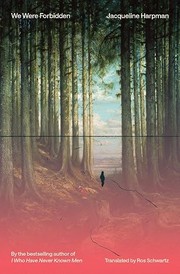
We Were Forbidden
We Were Forbidden
We Were Forbidden is a collection of three previously untranslated stories exploring defiance, oppression, and the struggle for personal freedom. In The Ardennes Forest, a woman and her fellow survivors wander through a mysterious woodland after an unexplained war, forbidden from leaving its boundaries or stopping their endless march. In The Outcast, a teenage girl attending a French school in 1940s Casablanca is punished for questioning the beliefs and political ideas she is expected to accept. In The Broom Cupboard, a young woman trapped in a loveless marriage begins to question the expectations governing her intimate life and imagine alternatives to her circumstances. Although the stories unfold in very different settings, each portrays a woman confronting rules imposed by external authorities or social conventions. Through unsettling scenarios, psychological insight, and understated prose, Harpman examines how obedience becomes ingrained and how individuals begin to resist it. The collection explores the tension between conformity and independence, revealing the quiet but powerful ways people challenge the boundaries placed around their lives.
2026
3
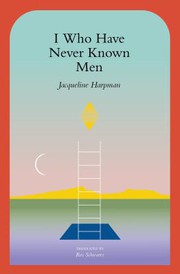
I Who Have Never Known Men
I Who Have Never Known Men follows an unnamed young woman imprisoned underground with thirty-nine other women. Guarded by silent male soldiers, the women live in a confined space, deprived of privacy, freedom, and meaningful knowledge of the outside world. Unlike her fellow prisoners, who remember their lives before captivity, the narrator has no memories of the world beyond the prison and has never experienced ordinary human relationships. When an unexpected event allows the women to escape, they emerge into an unfamiliar landscape that appears almost entirely devoid of human life. Forced to survive together, they search for answers about their captivity and the fate of humanity, but the world offers few explanations. As time passes, the narrator struggles to understand concepts such as love, sexuality, memory, and death without having experienced them in the ways others have. Blending dystopian fiction with philosophical reflection, Harpman’s novel explores freedom, loneliness, human nature, and what it means to be human when society and its inherited knowledge have disappeared.
2022
4
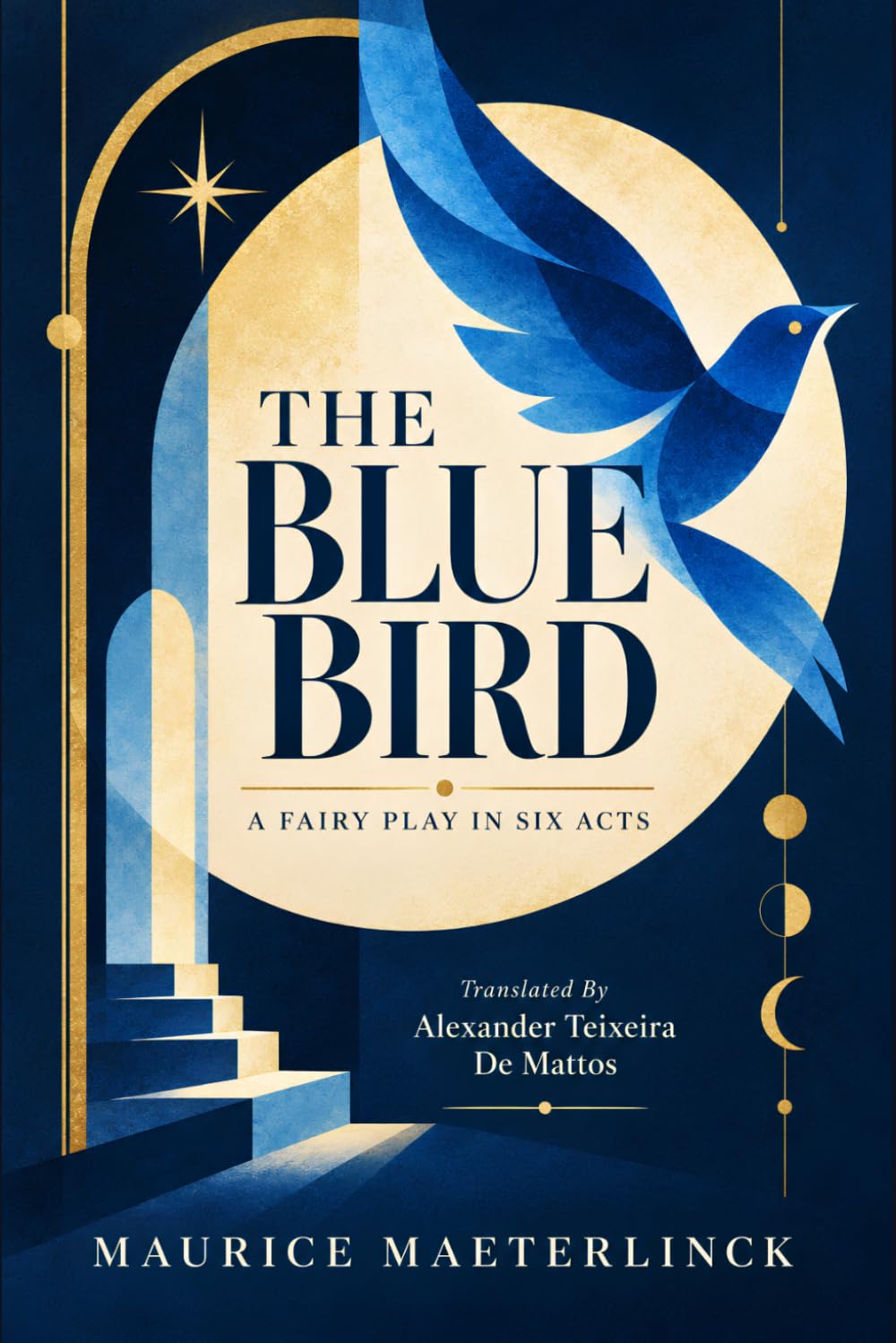
Blue Bird
Blue Bird
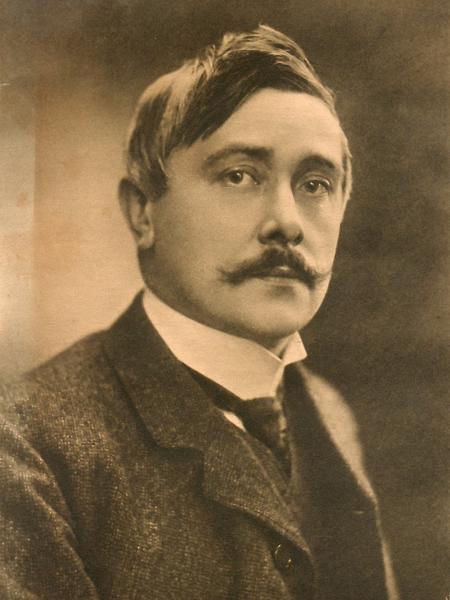
The Blue Bird is a philosophical fairy play that follows two children, Tyltyl and Mytyl, who embark on a magical journey in search of the mysterious Blue Bird of Happiness. Guided by a fairy, they travel through enchanted kingdoms and extraordinary landscapes, accompanied by personified versions of everyday objects and animals. Along the way, they visit the Land of Memory, the Palace of Night, and the Kingdom of the Future, encountering spirits, dreams, and visions that challenge their understanding of the world. As the children explore these fantastical places, they discover that happiness may be connected to things they have overlooked in their ordinary lives. Through its blend of fantasy, symbolism, and philosophical reflection, Maeterlinck’s play examines the nature of happiness, the power of imagination, and the relationship between life and death. Rather than presenting happiness as a distant treasure, the story suggests that its meaning often becomes clear only when people learn to appreciate what they already have.
1908

Famous authors from Belgium

About Belgium

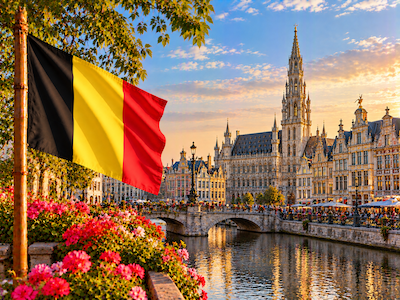
Belgium is a small country in Western Europe known for its medieval cities, Gothic architecture, canals, art, chocolate, beer, and multilingual culture. Dutch, French, and German are official languages, reflecting Belgium’s position at the meeting point of several European cultural traditions. Cities such as Brussels, Bruges, Ghent, and Antwerp combine historic architecture with a lively contemporary cultural scene.

Region
Europe
Literary Context

Belgian literature reflects the country’s linguistic diversity and complex regional identities. Literature exists primarily in Dutch and French, with distinct Flemish and Walloon traditions. Belgian writing often explores identity, Catholicism, social class, surrealism, memory, and the tension between regional and national belonging. The country’s tradition of surrealism is particularly distinctive, with artists and writers challenging conventional ideas of reality and language.

Europe