About

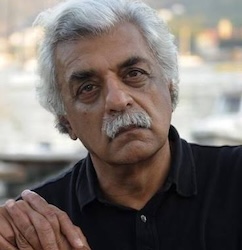
Tariq Ali is a British-Pakistani writer, historian, filmmaker, and political commentator born in Lahore, Pakistan, in 1943. He studied at the University of Punjab before moving to Britain, where he became involved in student activism and political movements during the 1960s. He is a longtime editor of New Left Review and has written extensively on history, politics, imperialism, and international affairs. Ali is the author of numerous nonfiction books, including The Clash of Fundamentalisms and The Duel, as well as plays, screenplays, and novels. Shadows of the Pomegranate Tree is the first novel in his Islam Quintet, a series of historical novels exploring encounters and conflicts between Muslim and Western societies across different periods. His historical fiction frequently revisits overlooked perspectives and challenges dominant narratives about religion, empire, and cultural identity. Through his writing, Ali examines how political power shapes historical memory and how communities struggle to preserve their cultural heritage in the aftermath of conquest.

Books on TheBookRoads
1
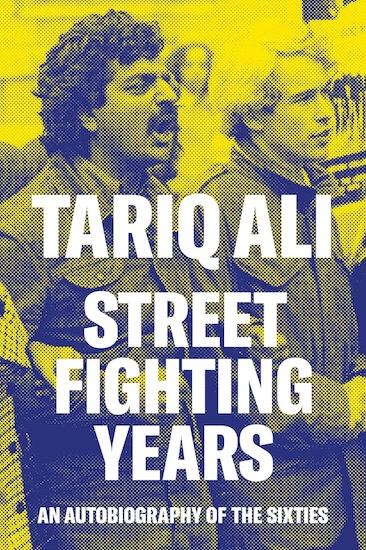
Street Fighting Years
In Street Fighting Years, Tariq Ali recounts his transformation from a young Pakistani student into one of the most prominent radical activists of the 1960s. Moving between London, Paris, Prague, Hanoi, and other centres of political upheaval, Ali offers a personal account of a decade defined by student revolts, anti-war demonstrations, revolutionary movements, and challenges to established political authority. Through his encounters with figures such as Malcolm X, Bertrand Russell, Che Guevara, and Mick Jagger, Ali captures the energy and contradictions of a generation determined to reshape society. He reflects on the Vietnam War, the suppression of the Prague Spring, the rise of the international protest movement, and the growing opposition to Western imperialism. Blending autobiography with political history, the book explores the hopes, disagreements, and disappointments of activists who believed that collective action could transform the world. It is both a portrait of a turbulent era and a reflection on the personal costs of political commitment.
2018 Pakistan United Kingdom
2
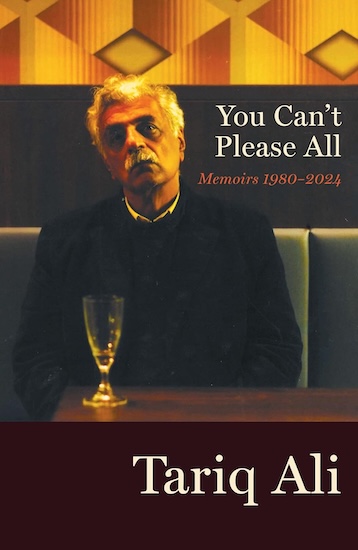
You Can’t Please All
In You Can’t Please All, Tariq Ali reflects on more than four decades of political activism, intellectual debate, and cultural life, continuing the story begun in his earlier memoir, Street Fighting Years. Moving between continents and pivotal historical moments, Ali recounts witnessing the collapse of the Soviet Union, meeting political figures such as Hugo Chávez, and campaigning against the wars in Iraq and Afghanistan as a prominent critic of Western foreign policy. Combining personal recollections, political commentary, anecdotes, and reflections on literature, theatre, and film, the memoir also offers intimate portraits of influential writers, activists, and friends, including Edward Said and Benazir Bhutto. Ali explores the relationship between personal convictions and public life, tracing the changing fortunes of the political left from the aftermath of the revolutionary movements of the 1960s to the conflicts and ideological struggles of the twenty-first century. The book also looks back at his family’s experiences in the early years of Pakistan, connecting his personal history with the broader political forces that shaped his life.
2024 Pakistan United Kingdom
3
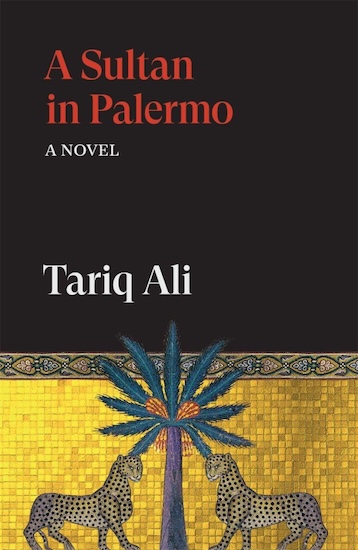
A Sultan in Palermo (The Islam Quintet)
Set in Sicily in 1153, A Sultan in Palermo explores a fascinating period when Norman rulers governed an island deeply shaped by Arab and Muslim culture. Palermo is a flourishing centre of learning, where Arabic language and intellectual traditions remain influential despite the political dominance of Christian rulers. At the heart of the novel is Muhammad al-Idrisi, a celebrated Muslim cartographer and scholar, who serves King Roger II of Sicily, known to his Muslim subjects as Sultan Rujari. As Idrisi navigates his friendship with the ageing ruler, he becomes increasingly torn between loyalty to the royal court and solidarity with fellow Muslims who are resisting Norman rule or preparing to leave the island. Surrounded by political intrigue, religious tensions, and personal desires, he must confront the moral compromises of life under an increasingly unstable regime. Blending historical figures with imaginative storytelling, Tariq Ali explores cultural coexistence, the struggle for power, and the fragile relationship between political authority and personal conscience. The novel is the fourth book in Ali’s Islam Quintet.
2026 Italy
4
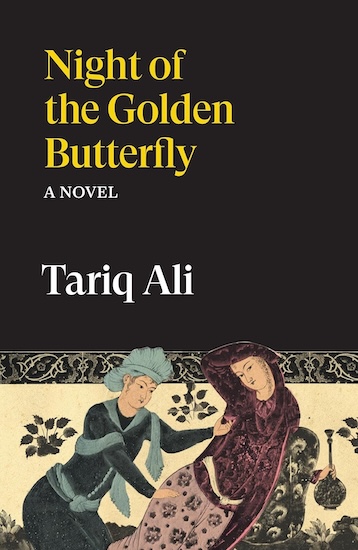
Night of the Golden Butterfly (The Islam Quintet)
Moving between Lahore, London, Paris, and Beijing, Tariq Ali’s Night of the Golden Butterfly explores friendship, love, political disillusionment, and the changing identity of Pakistan. The story follows Dara, a writer living in London, who is asked by his old friend Mohammed Aflatun—nicknamed Plato, an eccentric and gifted painter—to write the story of his life. As Dara reconnects with people from his past, old romances and long-buried memories resurface, revealing the complicated relationships that bind their lives together. Alongside this contemporary narrative, the novel reaches back into Chinese-Muslim history through the family of Jindie, Dara’s first love. Blending satire, personal recollection, and historical storytelling, Ali examines the tensions between East and West, the effects of political power and religious fundamentalism, and the struggles of a society confronting its own contradictions. The novel is the fifth and final volume of The Islam Quintet.
2026 Pakistan
5
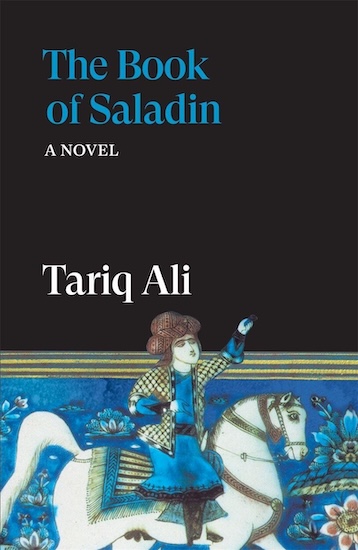
The Book of Saladin (The Islam Quintet)
Set in the twelfth century, The Book of Saladin reimagines the life of Salah al-Din, better known as Saladin, the Kurdish Muslim ruler who united Egypt and Syria and recaptured Jerusalem from the Crusaders in 1187. The novel takes the form of Saladin’s fictional memoir, dictated to Ibn Yakub, a Jewish scribe tasked with recording the Sultan’s life and achievements. To create a fuller portrait of his subject, Ibn Yakub interviews Saladin’s wives, servants, and companions, revealing the private relationships and personal ambitions behind the public image of a celebrated military leader. As Saladin rises to power and prepares to reclaim Jerusalem, the narrative explores the political rivalries, religious tensions, and fragile alliances that shape his world. Alongside military campaigns and diplomatic intrigue, the novel delves into the intimate lives of the royal household, including a passionate relationship between Saladin’s favoured wife, Jamila, and another woman in the harem, Halima. Ali presents a complex portrait of medieval Muslim society, challenging simplified accounts of the Crusades and exploring the contradictions between political ideals and personal desires. Questions of faith, power, loyalty, sexuality, and cultural coexistence run throughout the story, connecting the struggles of the medieval world with conflicts that continue to resonate today.
2026 Egypt Palestine Syria
6
Shadows of the Pomegranate Tree (The Islam Quintet)
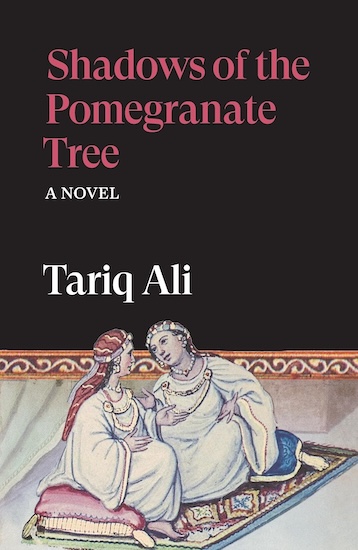
Set in the final years of Muslim rule in Granada, Spain, at the end of the fifteenth century, Shadows of the Pomegranate Tree explores the fate of a Muslim family as their world is transformed by the Christian conquest of Al-Andalus. The novel centres on the Banu Hudayl family, who have lived for generations in a village near Granada. Led by the respected Omar bin Abdallah, the family struggles to preserve its traditions, faith, and way of life as the Catholic monarchs Ferdinand and Isabella consolidate their power. Following the fall of Granada in 1492, Muslims face increasing persecution, forced conversions, and the destruction of their cultural heritage. As religious authorities tighten their control, members of the family respond in different ways. Some attempt to adapt to the new order, while others resist the loss of their identity and the restrictions imposed on their freedom. Their personal conflicts reflect the wider tragedy unfolding across the region, where libraries are burned, intellectual traditions are suppressed, and centuries of coexistence give way to religious intolerance. Through the family’s experiences, Tariq Ali brings to life the final chapter of Muslim Spain, exploring the relationship between faith, power, memory, and cultural survival. The novel also challenges simplified accounts of the past, revealing how conquest affects ordinary people, fractures communities, and threatens the knowledge and traditions passed from one generation to the next.
2026 Spain