United Kingdom

Europe
United Kingdom
73
books
64
authors

Books from United Kingdom

1
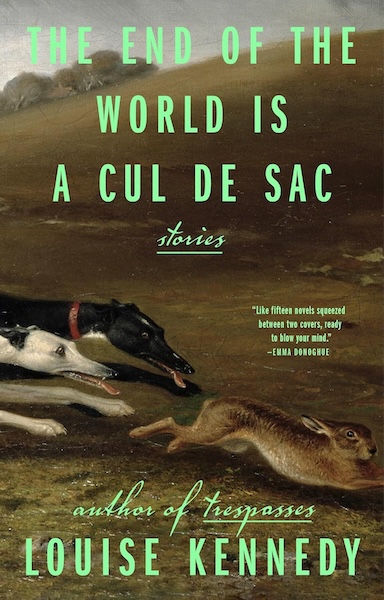
The End of the World Is a Cul de Sac
In this striking collection of fifteen short stories, ordinary lives unravel in unexpected ways. A newly married woman finds herself abandoned in a half-finished housing estate; a mother grows increasingly suspicious of her husband’s relationship with a teenage girl; a woman struggles with guilt after an abortion threatens her marriage. Across these stories, Louise Kennedy’s characters confront betrayal, poverty, violence, loneliness, and the quiet desperation of lives that have not turned out as planned. Set against the landscapes and social realities of Ireland, the collection reveals how private struggles are shaped by wider forces, from the legacy of the Troubles to restrictive expectations placed on women. Kennedy balances bleak humour with moments of tenderness and beauty, finding humanity in characters who are often flawed, trapped, or complicit in their own unhappiness. The End of the World Is a Cul de Sac is an unflinching portrait of people at breaking points, exploring how cruelty and vulnerability coexist—and how unexpected glimpses of hope can emerge from the most difficult circumstances.
2021
2
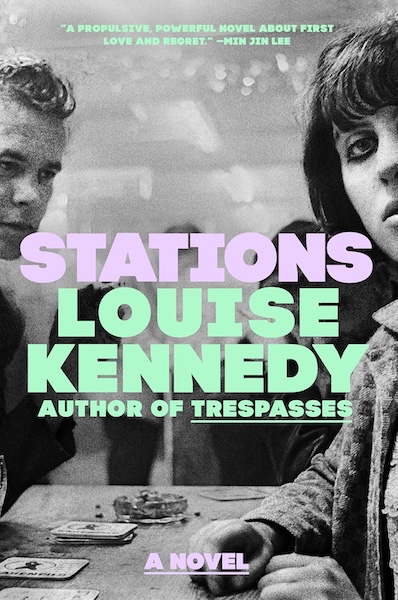
Stations
Stations
In a small Irish town in 1982, Róisín and Red form an intense bond as two sharp-minded teenagers who feel out of place in their own lives. Red is rebellious and troubled, while Róisín carries the pain of growing up with an absent father and a difficult home life. When Red’s encounter with the law forces him to leave Ireland for England, their connection survives across distance, becoming a fragile thread linking them through the years. Eventually, Róisín travels to London to visit her estranged father and finds Red again, moving into his squat in Pimlico. But the life he has chosen is darker and more complicated than she imagined, and the pair gradually drift apart. Even as their paths diverge, Róisín remains haunted by her unfulfilled passion for him. Moving between Ireland and London over decades, Stations explores first love, addiction, friendship, and the lasting consequences of youthful choices. It asks whether we can release the people who shaped us—and whether learning to love someone else begins with learning to love ourselves.
2026
3
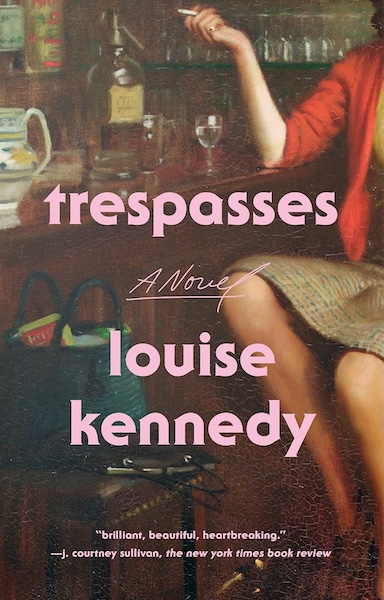
Trespasses
Trespasses
In 1970s Northern Ireland, as the Troubles bring violence and fear to everyday life, Cushla Lavery tries to build a future beyond the narrow confines of her small Catholic community. She teaches young children at a parochial school and helps run her family’s pub, all while caring for her troubled mother. One evening, she meets Michael Agnew, an older, married Protestant barrister known for defending IRA members. Despite the religious divisions and social dangers surrounding them, Cushla begins a passionate affair with him. But their private relationship unfolds against a landscape where loyalties are fiercely policed and even the smallest actions can have devastating consequences. When a young pupil’s father is brutally attacked, Cushla becomes caught in a chain of events that threatens the people she loves. Tender and unflinching, Trespasses explores forbidden love, sectarian hatred, and the impossible choices faced by ordinary people living through extraordinary violence.
2022
4
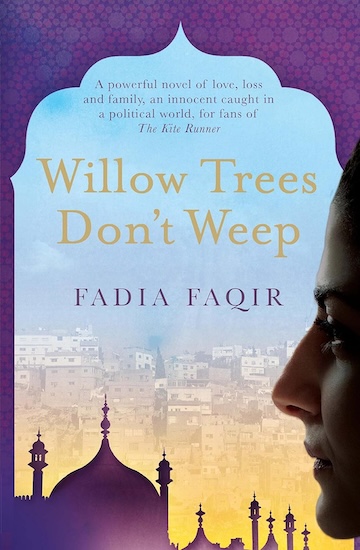
Willow Trees Don't Weep
When Najwa’s mother dies, the young Jordanian woman finds herself facing a future she has never been prepared for. In the conservative society of Amman, an unmarried woman without a male guardian has few options. Her father, Omar, abandoned the family when she was a child to join a radical Islamist movement, leaving Najwa to grow up with unanswered questions about his disappearance and the beliefs that drove him away. Determined to find him, Najwa sets out on a dangerous journey from Jordan to Afghanistan, following the trail of a man she barely remembers. But the father she imagines is not the man she discovers. Her search eventually takes her to Britain, where she must confront painful truths about her family, her father’s ideology, and her own place in the world. As she crosses borders and encounters unfamiliar cultures, Najwa begins to understand that finding her father may be less important than discovering who she wants to become. Moving between the Middle East, Afghanistan, and Britain, Willow Trees Don’t Weep explores the consequences of political extremism through the intimate story of a daughter left behind. Fadia Faqir examines patriarchal expectations, religious identity, and the struggle for female independence in a world where women are often forced to live with the consequences of men’s decisions.
2014
5
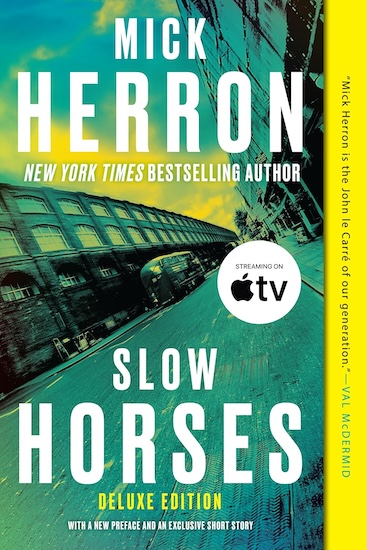
Slow Horses
Slow Horses
At the edge of London’s intelligence world lies Slough House, a drab office where MI5 sends agents who have made career-ending mistakes. Known as the “slow horses,” these disgraced spies spend their days drowning in paperwork, enduring humiliating assignments, and dreaming of returning to serious intelligence work. Their miserable existence is overseen by Jackson Lamb, a brilliant but abrasive veteran whose apparent laziness conceals a formidable understanding of the spying business. River Cartwright, a promising young agent whose career collapses after a disastrous training exercise, finds himself among them. When a young man is kidnapped and his captors threaten to broadcast his execution online, the slow horses see an opportunity to prove their worth. But as they investigate, they begin to suspect that the kidnapping may be part of a much larger game—and that powerful people within the intelligence establishment have their own reasons for wanting the truth to remain hidden. Combining tense espionage with dark humour and political satire, Slow Horses offers a refreshingly unglamorous portrait of intelligence work. Mick Herron explores ambition, professional failure, and institutional corruption, revealing how the people dismissed as useless can sometimes see what the powerful refuse to acknowledge.
2010

Famous authors from United Kingdom

About United Kingdom

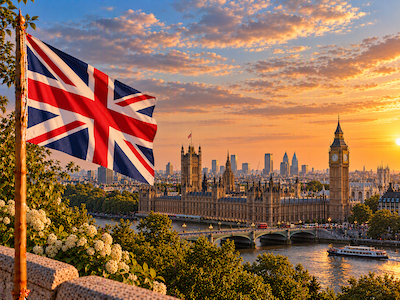
The United Kingdom is an island nation in northwestern Europe, comprising England, Scotland, Wales, and Northern Ireland. Its landscapes range from the rolling countryside of southern England and the rugged Scottish Highlands to the green valleys of Wales and the dramatic coastlines of Northern Ireland. London, the capital, is a global center of culture, finance, and the arts, where historic landmarks such as the Palace of Westminster stand alongside contemporary architecture. The UK’s cultural identity has been shaped by Celtic traditions, Roman and Norman influences, centuries of monarchy, industrialization, and migration from around the world. English is the main language, while Welsh, Scottish Gaelic, Irish, Scots, and other regional languages reflect the country’s linguistic diversity. Its literature, music, theatre, and universities have had a lasting influence on global culture.

Region
Europe
Literary Context

The United Kingdom has one of the world’s most influential literary traditions, spanning medieval poetry, Renaissance drama, Romantic verse, Victorian novels, and contemporary writing. Its literature has explored love, power, class, identity, colonialism, industrialization, and the complexities of human nature. The works of British writers have shaped genres ranging from the modern novel and detective fiction to fantasy, science fiction, and children’s literature. The country’s literary heritage also includes distinct traditions from Scotland, Wales, and Northern Ireland, alongside writing shaped by immigration and the experiences of formerly colonized communities. Among the most celebrated writers is William Shakespeare, whose plays and sonnets continue to influence literature and theatre worldwide. Jane Austen, known for Pride and Prejudice and Emma, examined marriage, class, and women’s social position through sharp wit and psychological insight. Charles Dickens portrayed the inequalities of Victorian society in novels such as Oliver Twist and Great Expectations. Virginia Woolf, a central figure of literary modernism, experimented with consciousness and narrative form in Mrs Dalloway and To the Lighthouse. J.R.R. Tolkien transformed modern fantasy with The Lord of the Rings, while Zadie Smith, author of White Teeth, explores multicultural identity and contemporary British life. Together, these writers demonstrate the breadth of the UK’s literary legacy and its continuing evolution.
Europe