Women & Society
All countries
Afghanistan
Bangladesh
Barbados
China
Egypt
El Salvador
India
Iraq
Ireland
Jordan
Lebanon
Nigeria
Pakistan
Palestine
Saudi Arabia
Singapore
Sweden
Tanzania
Türkiye
Uganda
United Arab Emirates
United Kingdom
United States
1
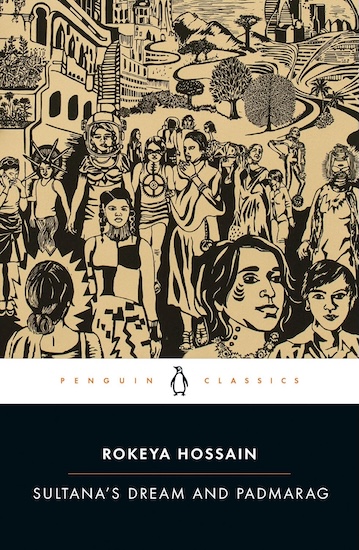
Sultana's Dream and Padmarag
What would the world look like if women held the power and men were confined to the home? In Sultana’s Dream, a pioneering feminist science-fiction story, Sultana discovers Ladyland, a peaceful, technologically advanced society where women lead scientific progress and men observe purdah. In Padmarag, a diverse community of women builds a refuge offering education, shelter, and independence to those constrained by marriage, poverty, and social prejudice. Written nearly a century before many contemporary feminist debates, these visionary works challenge patriarchy, religious and social conventions, and colonial power. Together, they imagine a world where women’s liberation begins not simply with equality, but with the freedom to shape society on their own terms.
Bangladesh
1905
2
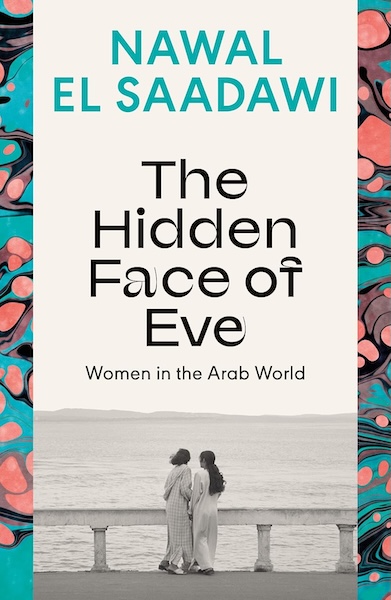
The Hidden Face of Eve
What lies beneath the traditions, laws, and social expectations that have shaped women’s lives for generations?
Drawing on her experience as a physician and feminist activist, Nawal El Saadawi examines the realities of women’s lives across the Arab world. She confronts subjects often pushed into silence, including female genital mutilation, sexual violence, honour killings, reproductive rights, and legal inequality.
Combining personal testimony, historical analysis, and cultural criticism, El Saadawi challenges the patriarchal structures used to justify women’s oppression. She also recovers the histories of women who resisted restrictive gender roles, questioning the boundaries between tradition, religion, and power.
First published in Arabic in 1977, this uncompromising work remains a landmark of Arab feminist writing and a powerful call for women’s freedom and equality.
Egypt
1977
3
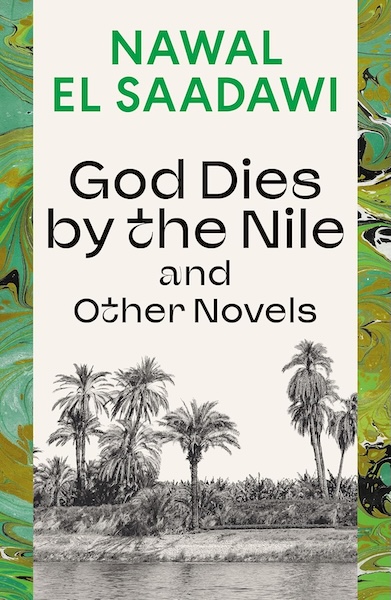
God Dies by the Nile and Other Novels
What lies beneath the traditions, laws, and social expectations that have shaped women’s lives for generations?
In The Hidden Face of Eve, Egyptian writer, physician, and feminist Nawal El Saadawi examines the realities of women’s lives across the Arab world, drawing on her medical work in rural Egypt and her experiences as a women’s rights activist. She confronts subjects often pushed into silence, including female genital mutilation, sexual violence, honour killings, reproductive rights, and legal inequality.
Moving between personal testimony, historical analysis, religion, and cultural criticism, El Saadawi challenges the social structures used to justify women’s oppression. She also explores the historical contributions of Arab women and the struggles of those who have resisted restrictive gender roles.
Passionate and uncompromising, this influential work asks readers to question the boundaries between tradition, faith, and patriarchal power. First published in Arabic in 1977, The Hidden Face of Eve remains a landmark of Arab feminist writing and a powerful call for women’s freedom and equality.
Egypt
1977
4
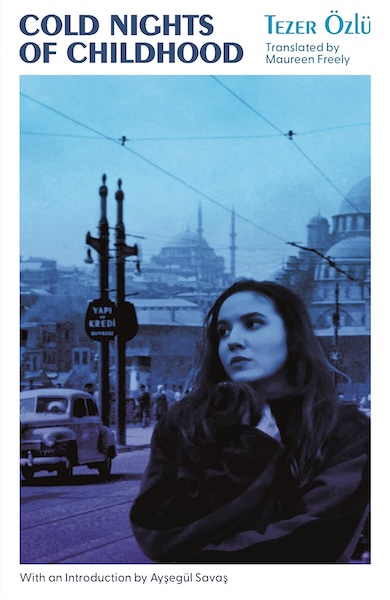
Cold Nights of Childhood
Growing up in 1950s Turkey, a young woman feels increasingly alienated by the conventional world surrounding her. In a society shaped by patriarchal expectations, nationalism, and rigid ideas of respectability, she longs for freedom, sensuality, and a life beyond the boundaries imposed on her. Childhood memories of family life and school follow her into adulthood, becoming inseparable from her search for independence.
As she moves between Istanbul, Berlin, and Paris, she pursues love and escape, yet finds herself struggling with depression and repeated stays in psychiatric institutions. There, she encounters treatments that threaten to suppress the very individuality she is fighting to preserve. Through fragmented memories, intimate reflections, and an unconventional narrative, she confronts the painful distance between the life society expects her to live and the one she desperately wants.
Part autobiographical novel and part intimate psychological portrait, Cold Nights of Childhood is a fearless exploration of female desire, alienation, and resistance. Tezer Özlü transforms personal suffering into a powerful meditation on what it means to remain true to oneself in a world determined to define who one should be.
Türkiye
1980
5
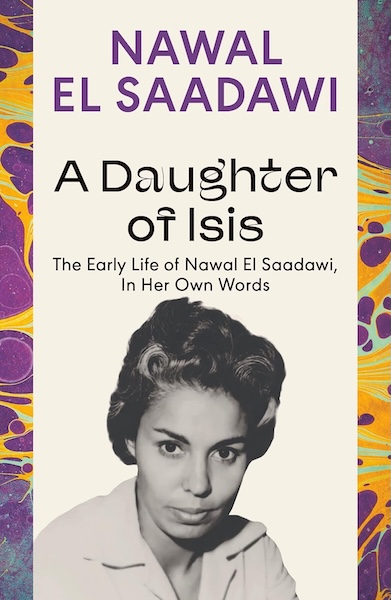
A Daughter of Isis
Long before she became one of the Arab world’s most outspoken feminist voices, Nawal El Saadawi was a young girl growing up in a village beside the Nile, questioning the rules that governed women’s lives.
In A Daughter of Isis, El Saadawi revisits her childhood and early adulthood, tracing the experiences that shaped her determination to challenge injustice. She recalls her family, her education, the restrictions imposed on girls, and her growing awareness of the contradictions between religious teachings, social expectations, and women’s lived realities.
With characteristic candour, she recounts the beginnings of her journey as a physician, writer, and activist, revealing how personal rebellion gradually became a lifelong commitment to equality. Her story is also a portrait of twentieth-century Egypt, where changing political and social landscapes shaped the possibilities available to women.
Intimate, defiant, and deeply reflective, this memoir illuminates the experiences behind El Saadawi’s revolutionary ideas and celebrates the courage required to forge an independent life.
Egypt
1999
6
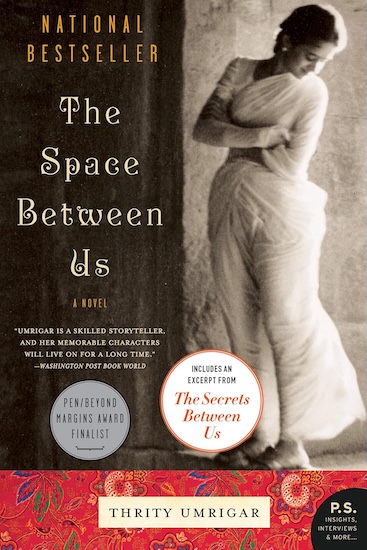
The Space Between Us (#1 Between Us)
In Mumbai, the lives of two women from vastly different social worlds become intertwined through a relationship shaped by affection, dependence, and inequality. Bhima, an impoverished domestic worker, has spent decades serving Sera Dubash, a middle-class Parsi woman living in relative comfort. Both women have endured painful marriages and personal tragedies, yet the privileges available to Sera remain far beyond Bhima’s reach. When Bhima’s granddaughter Maya becomes pregnant outside marriage, the fragile balance between the two households is threatened, exposing the prejudices and unspoken rules that govern their relationship. As secrets emerge and loyalties are tested, the women must confront the boundaries imposed by class, gender, and social expectations. Set against the vivid backdrop of contemporary Mumbai, The Space Between Us is a moving exploration of female friendship, domestic labour, and the unequal ways society distributes dignity and opportunity.
India
2006
7
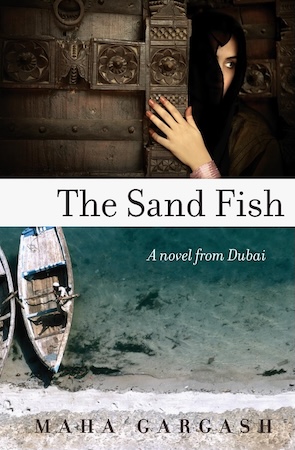
The Sand Fish
In 1950s Dubai, seventeen-year-old Noora dreams of a life beyond the traditions that dictate her future. After her mother’s death and her father’s descent into madness, her brother arranges her marriage to a wealthy pearl merchant many years her senior. Trapped in an unfamiliar household alongside his two other wives, Noora struggles to find her place in a world where her choices are limited and her future depends on producing an heir. But an unexpected passion offers her a glimpse of another life—and leaves her with a dangerous secret that could cost her everything. Inspired by the image of a sand fish, a desert creature that injures itself desperately trying to escape its surroundings, Noora’s story is a poignant portrait of a woman caught between duty and desire. Against the backdrop of a society on the brink of transformation, The Sand Fish explores female independence, forbidden love, and the courage to seek freedom when every path seems closed.
United Arab Emirates
2009
8
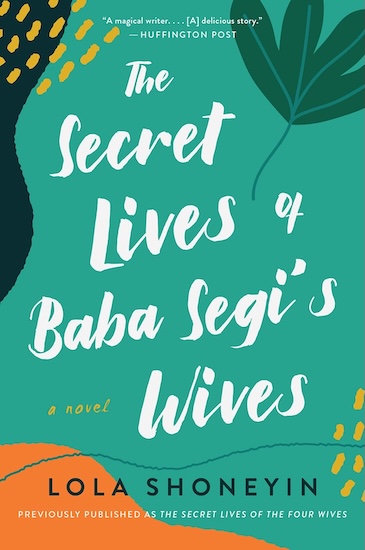
The Secret Lives of Baba Segi's Wives
Set in contemporary Ibadan, Nigeria, The Secret Lives of Baba Segi’s Wives explores the complicated dynamics of a polygamous household where jealousy, ambition, and long-buried secrets threaten to destroy the family’s carefully maintained balance.
Bolanle, a young university graduate, becomes the fourth wife of Baba Segi, a wealthy businessman whose large family is a source of pride and proof of his masculinity. Hoping to find security and acceptance, she enters a household already governed by three wives, each with her own personality, ambitions, and strategies for survival. However, Bolanle’s education and independence make her a source of suspicion and resentment, particularly when she offers to teach the other wives to read.
When Bolanle struggles to conceive, Baba Segi takes her to the hospital to discover the reason for her childlessness. The investigation threatens to expose a secret that the other wives have carefully protected for years. As the truth begins to emerge, the family must confront the consequences of deception and the fragile foundations upon which their relationships have been built.
Told through the perspectives of Baba Segi and his wives, Shoneyin’s novel combines dark humour with an incisive examination of marriage, motherhood, female rivalry, and patriarchal expectations. Beneath its entertaining portrayal of domestic life lies a deeper exploration of the ways women navigate restrictive social structures, compete for security, and find agency within a system that often measures their worth by their ability to bear children.
Nigeria
2010
9
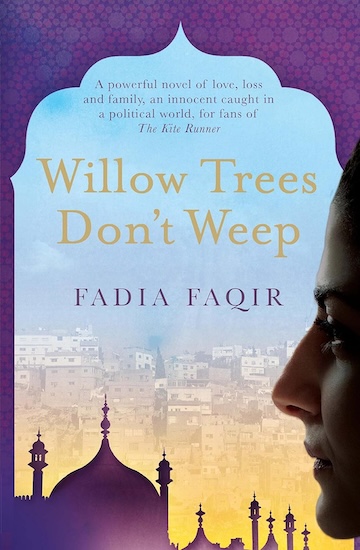
Willow Trees Don't Weep
When Najwa’s mother dies, the young Jordanian woman finds herself facing a future she has never been prepared for. In the conservative society of Amman, an unmarried woman without a male guardian has few options. Her father, Omar, abandoned the family when she was a child to join a radical Islamist movement, leaving Najwa to grow up with unanswered questions about his disappearance and the beliefs that drove him away.
Determined to find him, Najwa sets out on a dangerous journey from Jordan to Afghanistan, following the trail of a man she barely remembers. But the father she imagines is not the man she discovers. Her search eventually takes her to Britain, where she must confront painful truths about her family, her father’s ideology, and her own place in the world. As she crosses borders and encounters unfamiliar cultures, Najwa begins to understand that finding her father may be less important than discovering who she wants to become.
Moving between the Middle East, Afghanistan, and Britain, Willow Trees Don’t Weep explores the consequences of political extremism through the intimate story of a daughter left behind. Fadia Faqir examines patriarchal expectations, religious identity, and the struggle for female independence in a world where women are often forced to live with the consequences of men’s decisions.
Afghanistan
Jordan
United Kingdom
2014
10
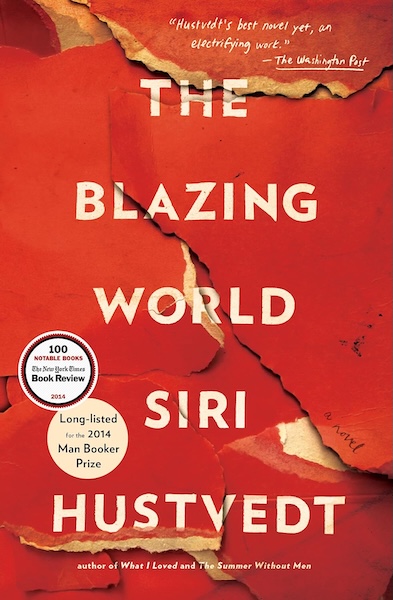
The Blazing World
What if your art were celebrated only when people believed it had been created by a man?
Harriet Burden is a fiercely intelligent artist who has spent years watching the New York art world overlook her work. After the death of her husband, she decides to conduct an audacious experiment: she secretly recruits three men to present her artwork as their own, concealing her identity behind their names. When the exhibitions receive the recognition she has long been denied, Harriet finally reveals the truth. But instead of winning acclaim, she encounters disbelief—and her final collaborator, the enigmatic artist Rune, refuses to acknowledge her role.
Told through diaries, interviews, reviews, and conflicting recollections assembled after Harriet’s death, The Blazing World becomes a literary puzzle in which the truth depends on who is telling the story. As the relationship between Harriet and Rune grows increasingly dangerous, questions of authorship, gender, power, and perception take centre stage.
Intellectually playful and psychologically intense, Siri Hustvedt’s novel challenges the assumptions that determine whose creativity is valued and whose voice is believed. Longlisted for the Booker Prize and winner of the 2014 Los Angeles Times Book Prize for Fiction, it is a provocative exploration of what it means to be seen—and what happens when recognition comes too late.
United States
2014
11
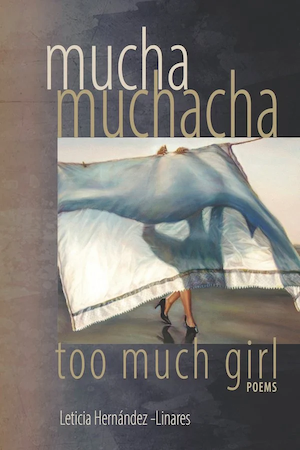
Mucha Muchacha, Too Much Girl
A vibrant celebration of Salvadoran-American womanhood, cultural memory, and the power of finding your voice. Through poems that move between English, Spanish, and the rhythms of oral storytelling, Leticia Hernández-Linares explores the lives of women in her family and community—their struggles, silences, spirituality, and everyday acts of resistance. Rooted in the experiences of the Central American diaspora, these poems challenge restrictive expectations of femininity while embracing the beauty of cultural hybridity. Lyrical, musical, and unapologetically expressive, this collection celebrates women who refuse to be diminished and insists that their stories deserve to be heard.
El Salvador
2015
12
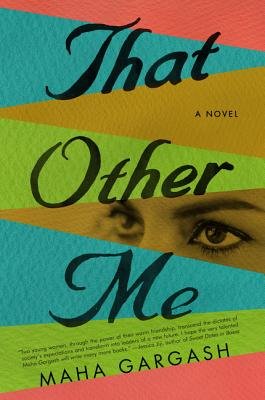
That Other Me
In mid-1990s Dubai, the secrets of a wealthy Emirati family threaten to destroy the lives of those bound by its name. Majed Naseemy, a powerful businessman, has built his reputation on wealth and respectability while concealing betrayals that haunt him. In Cairo, his niece Mariam pursues an education and dreams of escaping his control, until an unexpected romance threatens to derail her plans. Meanwhile, Dalal, Majed’s rebellious daughter from a secret second marriage, dreams of becoming a singer—a career that could bring her fame but disgrace her family in the eyes of society. As both young women challenge the authority imposed upon them, buried resentments and family secrets begin to surface. Moving between the glittering worlds of Dubai and Cairo, That Other Me explores the tensions between tradition and independence, the price of social respectability, and the courage it takes for women to claim ownership of their lives.
United Arab Emirates
2016
About this theme
- Books
- 50
- Countries
- 23
Countries with this theme
Afghanistan
Asia
Bangladesh
Asia
Barbados
North America
China
Asia
Egypt
Africa
El Salvador
North America
India
Asia
Iraq
Asia
Ireland
Europe
Jordan
Asia
Lebanon
Asia
Nigeria
Africa
Pakistan
Asia
Palestine
Asia
Saudi Arabia
Asia
Singapore
Asia
Sweden
Europe
Tanzania
Africa
Türkiye
Asia
Uganda
Africa
United Arab Emirates
Asia
United Kingdom
Europe
United States
North America