Spirituality & Faith
Journeys of faith, meaning, and transcendence.
All countries
Argentina
Austria
Bhutan
Brazil
Colombia
Denmark
Djibouti
Germany
Japan
Lebanon
Nigeria
Poland
Portugal
Rwanda
Sudan
United Kingdom
United States
Uzbekistan
1
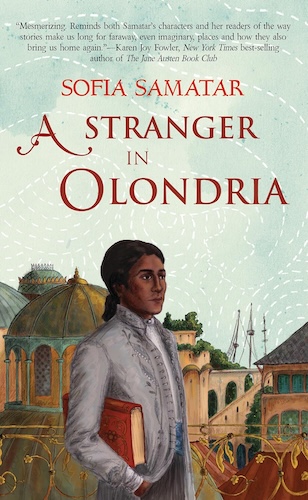
A Stranger in Olondria
Jevick, the son of a pepper merchant, grows up listening to stories about Olondria, a distant land where books are abundant and literacy is prized. When his father dies, Jevick takes over the family’s annual trading journey and finally visits the country he has long imagined. Enchanted by its cities, literature, and elaborate traditions, he feels he has entered a dream. But his happiness is shattered when the ghost of an illiterate young woman begins to haunt him.
Desperate to escape the apparition, Jevick seeks help from Olondria’s religious authorities, only to become entangled in a conflict between rival religious factions. To find freedom, he must uncover the dead woman’s story and confront the boundaries between the living and the dead, belief and knowledge, and personal experience and inherited tradition.
Blending lyrical prose, immersive world-building, and philosophical reflection, Sofia Samatar’s award-winning debut is both an intricate fantasy adventure and a meditation on the transformative power of literature. It explores how stories shape our understanding of other people—and how reading can become an act of wonder, possession, and liberation.
United States
2013
2
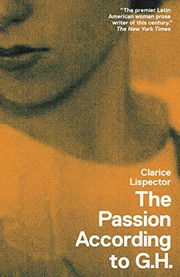
The Passion According to G.H.
In The Passion According to G.H., a wealthy sculptor in Rio de Janeiro experiences a profound existential crisis after entering her former maid’s room and encountering a cockroach. What begins as an ordinary domestic moment transforms into a disturbing confrontation with her identity, humanity, and understanding of existence. Through an intense stream of consciousness, Clarice Lispector explores the boundaries between self and other, human and animal, and the sacred and the material. As G.H.’s familiar sense of self begins to dissolve, she confronts the unsettling possibility that true understanding requires abandoning the illusions that define human identity. The novel is a challenging philosophical exploration of consciousness, transformation, and the search for meaning beyond conventional beliefs.
Brazil
2012
3
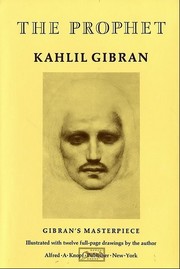
The Prophet
The Prophet is a book of 26 poetic essays written in English in 1923 by the Lebanese-American artist, philosopher and writer Khalil Gibran. In the book, the prophet Almustafa who has lived in the foreign city of Orphalese for 12 years is about to board a ship which will carry him home. He is stopped by a group of people, with whom he discusses many issues of life and the human condition. The book is divided into chapters dealing with love, marriage, children, giving, eating and drinking, work, joy and sorrow, houses, clothes, buying and selling, crime and punishment, laws, freedom, reason and passion, pain, self-knowledge, teaching, friendship, talking, time, good and evil, prayer, pleasure, beauty, religion, and death.
Lebanon
2007
4
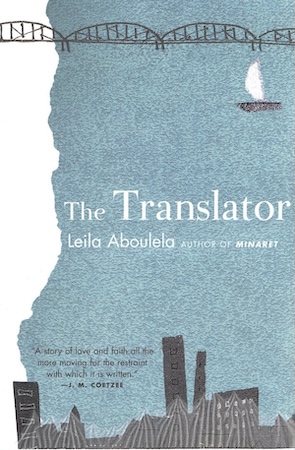
The Translator
Alone in the grey streets of Aberdeen, Sudanese widow Sammar struggles to find meaning after losing her husband and being separated from her young son. Her quiet, isolated life begins to change when she falls in love with Rae, a Scottish academic whose intellectual curiosity about Islam cannot bridge the gap between understanding a faith and truly believing in it. As their relationship deepens, Sammar faces an impossible choice between the man she loves and the spiritual convictions that give her life meaning. Moving between Scotland and Sudan, The Translator is a tender exploration of love, grief, and the search for belonging, asking whether two people can build a life together when their deepest beliefs pull them in different directions.
Sudan
1999
5
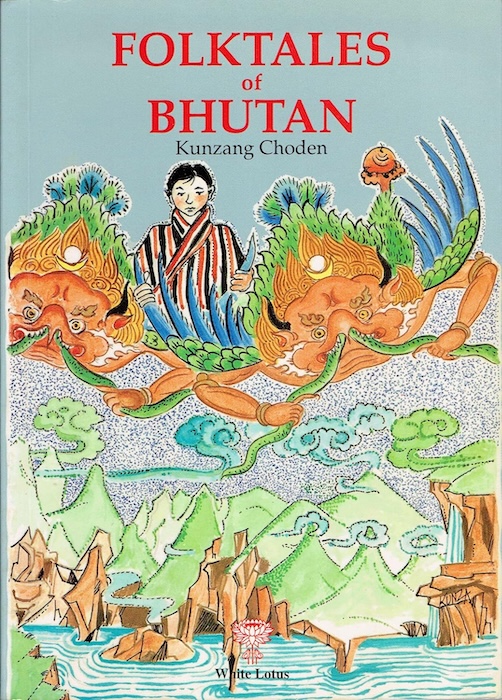
Folktales of Bhutan
Folktales of Bhutan is a collection of 38 traditional tales and legends gathered from Bhutan’s rich oral storytelling heritage. Drawing on stories she heard as a child growing up in Bumthang, central Bhutan, Kunzang Choden preserves narratives passed down through generations, offering readers a glimpse into the country’s cultural beliefs, values, and imagination.
The collection features a diverse range of stories involving animals, spirits, ghosts, demons, legendary figures, and the unseen forces believed to inhabit the natural world. Shaped by Buddhist beliefs, ideas about karma and rebirth, and Bhutan’s close relationship with its mountainous environment, these tales reflect how communities have understood life’s mysteries and their place in the world.
Illustrated by Bhutanese artists, the book combines traditional storytelling with distinctive visual interpretations inspired by Bhutanese and Buddhist art. Beyond entertaining readers, it serves as an important record of a cultural heritage that Choden sought to preserve as Bhutan underwent social change and modernisation.
Bhutan
1994
6
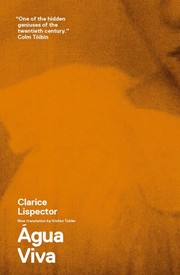
Água Viva
Água Viva is an experimental novel narrated by an unnamed woman, an artist who attempts to capture the fleeting experience of being alive through a continuous flow of thoughts, sensations, and reflections. Addressing an unnamed listener, she moves between memories, observations of nature, artistic inspiration, and philosophical questions, seeking to express what she calls the present moment—the elusive instant in which life is experienced before it becomes memory.
Rather than following a conventional plot, Clarice Lispector creates an intensely intimate meditation on consciousness, language, time, and existence. The narrator struggles with the limitations of words, searching for a form of expression that can convey the raw immediacy of experience. Images of flowers, animals, music, and water recur throughout the text, connecting the physical world with questions about the mysterious nature of being. Both poetic and challenging, Água Viva invites readers to experience life as something fluid, unpredictable, and impossible to fully explain.
Brazil
1973
7
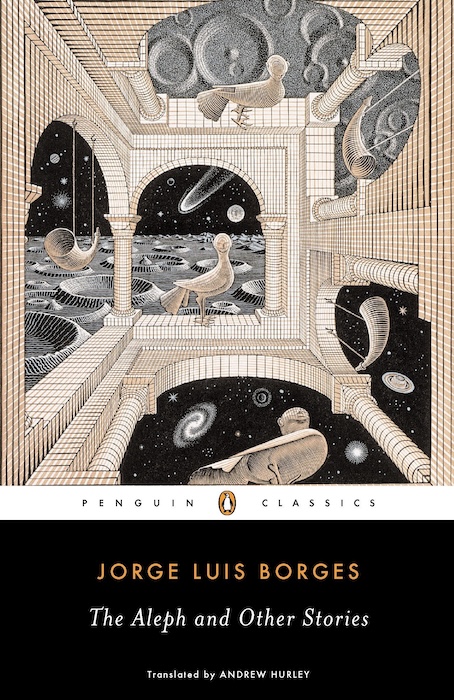
The Aleph
The Aleph is a collection of short stories that explores infinity, memory, identity, and the limits of human understanding. In the title story, a narrator discovers a point in space containing every other point in the universe, allowing him to perceive all things simultaneously without distortion or concealment. Other stories examine imaginary worlds, mysterious objects, labyrinthine histories, and the unsettling possibility that reality may be far stranger than it appears. Borges combines philosophical speculation with elements of fantasy, detective fiction, and literary scholarship, creating narratives that often feel like intellectual puzzles. His characters encounter knowledge that promises to reveal everything but frequently leaves them more uncertain than before. The collection asks whether human beings can ever comprehend the totality of existence or whether some mysteries must remain beyond the boundaries of language and reason.
Argentina
1949
8
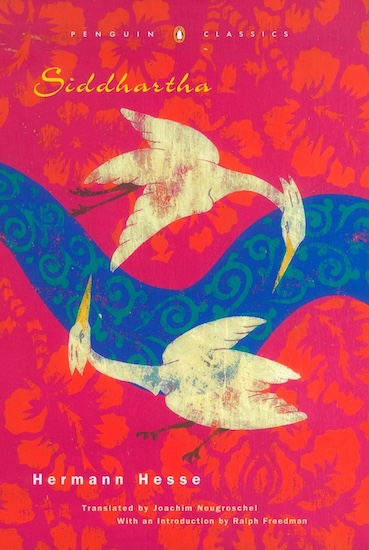
Siddhartha
Siddhartha follows a young man in ancient India who leaves his privileged life in search of spiritual understanding. Dissatisfied with the religious teachings and ascetic practices available to him, Siddhartha travels with his friend Govinda and eventually encounters the Buddha. Although he respects the Buddha’s wisdom, Siddhartha believes that enlightenment cannot simply be learned from another person. He therefore pursues his own experiences, exploring sensual pleasure, wealth, love, and the suffering that accompanies attachment. After years of disillusionment, he finds guidance in the quiet presence of a ferryman and begins to understand the interconnectedness of existence. Hesse draws on Indian religious and philosophical traditions to explore self-discovery, desire, and the limitations of intellectual knowledge. The novel suggests that wisdom emerges not through rigid doctrine but through attentive experience, acceptance, and an understanding of life’s constantly changing nature.
Germany
1922
9
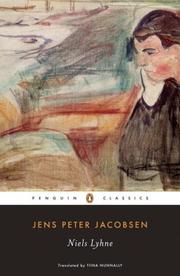
Niels Lyhne
Niels Lyhne follows a young Danish man who grows up dreaming of becoming a poet and struggles to reconcile his artistic ambitions with the realities of adult life. Raised in a world shaped by religious traditions, Niels gradually develops a sceptical worldview, rejecting Christianity in favour of a belief in human reason and the possibility of living without religious faith. Yet his intellectual convictions offer little protection against the emotional turmoil, disappointments, and losses that shape his life.
Through Niels’s relationships, artistic aspirations, and encounters with suffering, Jens Peter Jacobsen explores the tension between idealism and reality. The novel examines love, mortality, the limits of human understanding, and the search for meaning in a universe that offers no clear answers. Considered an important work of European naturalism, Niels Lyhne challenges traditional religious beliefs while questioning whether rational thought alone can provide comfort in times of crisis. Its deeply introspective protagonist embodies the struggle to live authentically without relying on spiritual certainty.
Denmark
1880
About this theme
- Books
- 21
- Countries
- 18
Countries with this theme
Argentina
South America
Austria
Europe
Bhutan
Asia
Brazil
South America
Colombia
South America
Denmark
Europe
Djibouti
Africa
Germany
Europe
Japan
Asia
Lebanon
Asia
Nigeria
Africa
Poland
Europe
Portugal
Europe
Rwanda
Africa
Sudan
Africa
United Kingdom
Europe
United States
North America
Uzbekistan
Asia