Society & Class
Examinations of class, power, and the structures we live within.
All countries
Austria
Bangladesh
Belarus
Benin
Bhutan
Bosnia and Herzegovina
Brazil
Bulgaria
Burundi
Cabo Verde
Cameroon
Chile
China
Congo, Democratic Republic
Costa Rica
Côte d’Ivoire (Ivory Coast)
Czech Republic
Denmark
Dominican Republic
Egypt
Fiji
France
Georgia
Germany
Ghana
Greece
India
Iraq
Ireland
Italy
Jamaica
Japan
Jordan
Kuwait
Lithuania
Mexico
Morocco
Nigeria
Pakistan
Palestine
Russia
Saudi Arabia
Senegal
South Africa
South Korea
Spain
Sudan
Sweden
Türkiye
Ukraine
United Kingdom
United States
Uzbekistan
Zambia
1
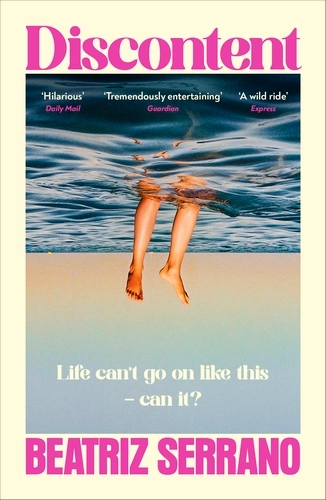
Discontent
Marisa appears to have everything she should want: a beautiful apartment in central Madrid, a promising career at an advertising agency, and a convenient arrangement with her attractive neighbour. In reality, she despises her job, finds her colleagues unbearable, and struggles to discover any meaning in her carefully constructed life. She spends her working hours hiding from coworkers, watching YouTube videos, and taking tranquillizers to cope with the relentless monotony of corporate existence. Her carefully maintained professional image, built partly on lies and other people’s work, begins to crumble when she is forced to attend a company team-building retreat. Surrounded by manipulative bosses, irritating colleagues, and artificial attempts at bonding, Marisa approaches a personal breaking point. Through biting humour and uncomfortable honesty, Beatriz Serrano captures the alienation of a generation that followed society’s promises of success only to find itself exhausted and unfulfilled. Discontent is a darkly comic exploration of workplace burnout, loneliness, and the desperate desire to escape a life that looks successful from the outside but feels empty within.
Spain
2023
2
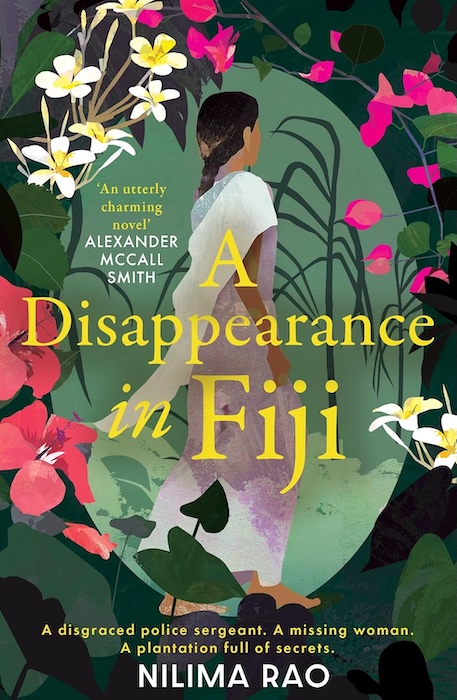
A Disappearance in Fiji
Set in Fiji in 1914, A Disappearance in Fiji follows Akal Singh, a 25-year-old Indian police sergeant whose promising career in Hong Kong has been derailed by a professional mistake. Transferred to the British colonial outpost of Fiji as punishment, Akal feels isolated and longs to return to India or Hong Kong. His prospects change when an Indian woman named Kunti disappears from a sugarcane plantation, prompting accusations of kidnapping and attracting unwanted public attention.
Assigned to investigate, Akal encounters conflicting accounts from plantation owners, Indian indentured labourers, and Indigenous Fijians. As he uncovers inconsistencies in their stories, he begins to suspect that the disappearance reveals something far more troubling than a simple missing-persons case.
Blending historical mystery with social commentary, Rao explores colonial racism, caste prejudice, and the exploitation of indentured Indian workers. Through Akal’s investigation, the novel reveals the inequalities underpinning colonial Fiji while examining how a detective’s understanding of justice can change when he confronts the realities of those living under oppressive systems.
Fiji
2023
3
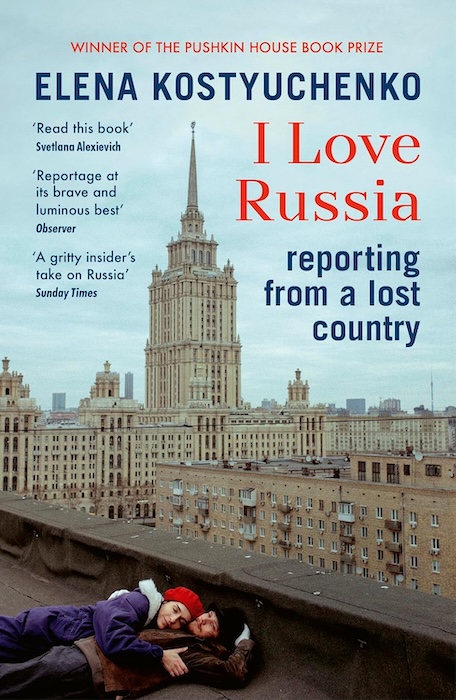
I Love Russia
I Love Russia brings together investigative reporting and personal essays to portray a country through the lives of people often excluded from its official narrative. Journalist Elena Kostyuchenko writes about sex workers, LGBTQ+ people, residents of neglected institutions, and communities affected by violence and political repression. Her reporting also follows the consequences of Russia’s invasion of Ukraine, examining the human realities behind state propaganda and military aggression. Rather than presenting Russia as a single, uniform society, Kostyuchenko reveals its contradictions through the experiences of individuals whose stories challenge dominant political narratives. The book explores the complicated relationship between love for one’s country and the responsibility to criticise its government, presenting journalism as an act of witnessing, resistance, and moral commitment.
Russia
2023
4
Colony
In The Colony, Emelie, exhausted by her demanding urban life, escapes to the Swedish countryside, where she encounters a mysterious group of seven people living together outside conventional society. Each member carries personal wounds, disappointments, or a desire to escape the expectations of the modern world. Their unusual community offers the possibility of a different way of living, built around shared responsibilities and distance from mainstream life. Yet as Emelie becomes more involved, the boundaries between freedom, belonging, and dependence grow increasingly complicated. Norlin examines the human longing for connection and the temptation to create an alternative society when existing structures feel unbearable. The novel asks whether a community can truly escape the inequalities and conflicts of the world it leaves behind.
Sweden
2023
5
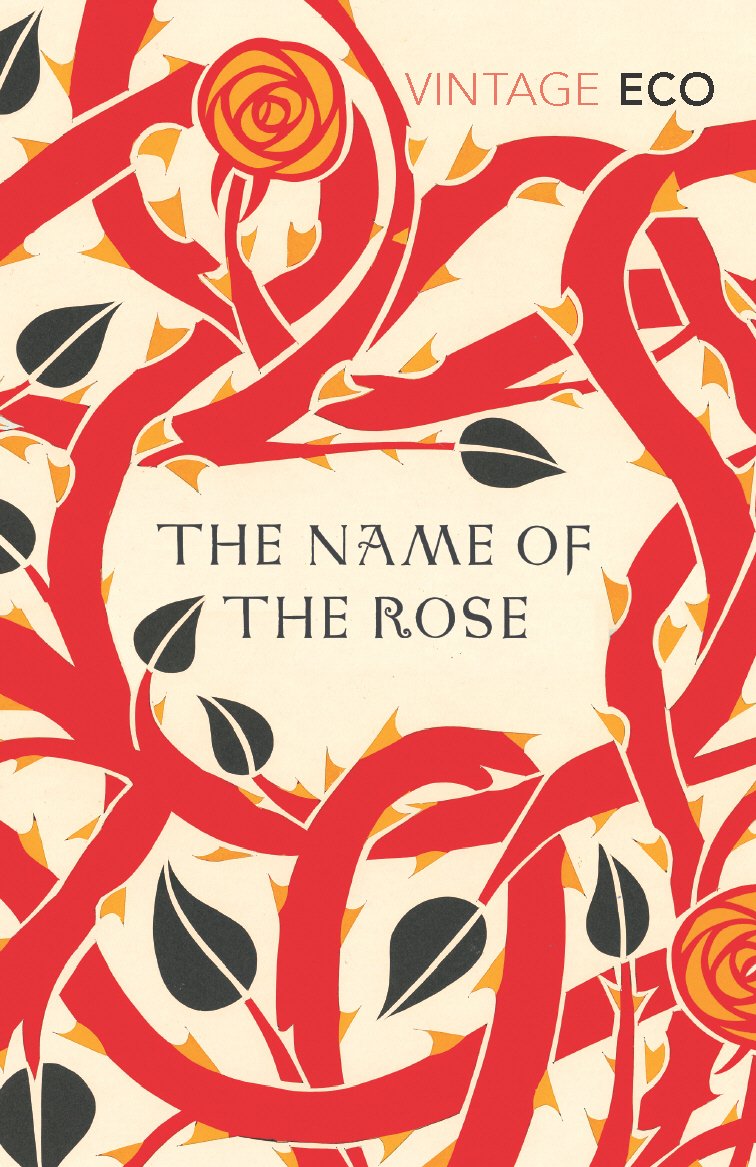
Name of the Rose
The Name of the Rose is a historical mystery set in an Italian Benedictine abbey in 1327. William of Baskerville, a Franciscan friar with a sharp analytical mind, arrives with his young assistant Adso of Melk just as a series of mysterious deaths begins to trouble the monastery. As William investigates, he discovers that the abbey’s extraordinary library contains forbidden knowledge and that disagreements over religious doctrine have created dangerous rivalries among the monks. The investigation becomes a struggle over the relationship between faith, reason, and the control of information. Eco combines medieval history, detective fiction, and philosophical debate to explore censorship, institutional authority, and the power of books. The novel asks whether knowledge can remain free when institutions fear the consequences of questioning established beliefs, revealing how the pursuit of truth can become dangerous in a world governed by rigid authority.
Italy
2023
6
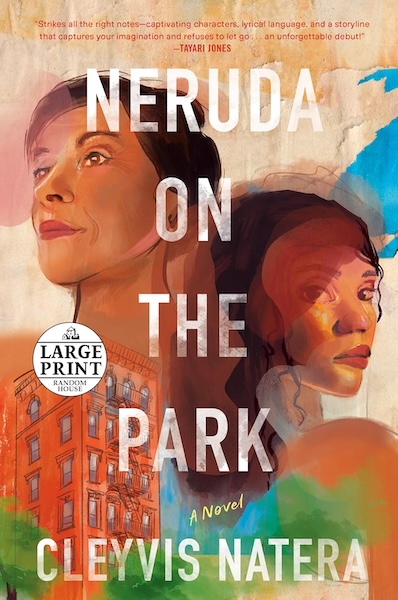
Neruda on the Park
For twenty years, the Guerrero family has called Nothar Park, a predominantly Dominican neighbourhood in New York City, home. But when a neighbouring tenement is demolished to make way for luxury condominiums, the threat of gentrification pushes the community toward a breaking point. Eusebia Guerrero, determined to protect the neighbourhood and the people who shaped her life, begins organising increasingly risky schemes to frighten developers away. Her daughter, Luz, has very different ambitions: a successful career in corporate law and the comfortable lifestyle her immigrant parents worked hard to provide.
When Luz loses her job and falls into a passionate relationship with a wealthy property developer connected to the very project her mother opposes, the conflict between them becomes deeply personal. Meanwhile, Luz’s father secretly plans their retirement in the Dominican Republic, reopening old tensions about home and belonging.
With humour and emotional depth, Neruda on the Park explores gentrification, generational conflict, immigrant identity, and the difficult choices families face when the place they call home begins to disappear.
Dominican Republic
United States
2022
7
The Republic of False Truths
Cairo, 2011. After decades under a repressive regime, tensions are rising in the city streets. No one is out of reach of the revolution. There is General Alwany, a high-ranking member of the government's security agency, a pious man who loves his family yet won't hesitate to torture enemies of the state; Asma, a young teacher who chafes against the brazen corruption at her school; Ashraf, an out-of-work actor who is having an affair with his maid and who gets pulled into Tahrir Square through a chance encounter; Nourhan, a television personality who loyally defends those in power; and many more.
As these lives collide, a new generation finds a voice, love blossoms across class divides, and the revolution gains strength. Even the general finds himself at a crossroads as his own daughter joins the protests. Yet the old regime will not give up without a fight.
With an unforgettably vivid cast of characters and a heart-pounding narrative banned across much of the region, Alaa Al Aswany gives us a deeply human portrait of the Egyptian Revolution, and an impassioned retelling of his country's turbulent recent history.
Egypt
2022
8
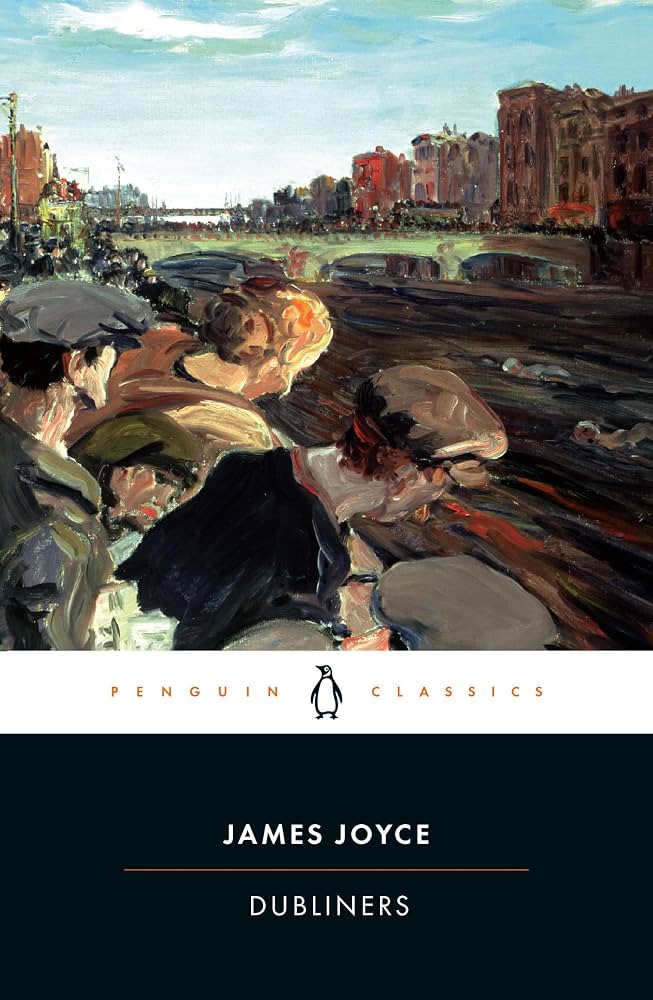
Dubliners
Dubliners is a collection of fifteen short stories portraying the lives of ordinary people in Dublin at the beginning of the twentieth century. The stories follow children, adolescents, adults, and elderly characters as they confront family obligations, unfulfilled ambitions, religious expectations, and the limitations of their social environment. Some experience moments of sudden insight that reveal the compromises and disappointments shaping their lives, while others remain trapped by fear, habit, or economic necessity. Joyce presents Dublin as a city where political stagnation, social conventions, and the influence of the Catholic Church affect even the most private decisions. His restrained prose captures the significance of everyday encounters and seemingly minor events. The collection explores paralysis, longing, and the desire for escape, offering a powerful portrait of individuals who recognise the possibility of change but often struggle to act upon it.
Ireland
2022
9
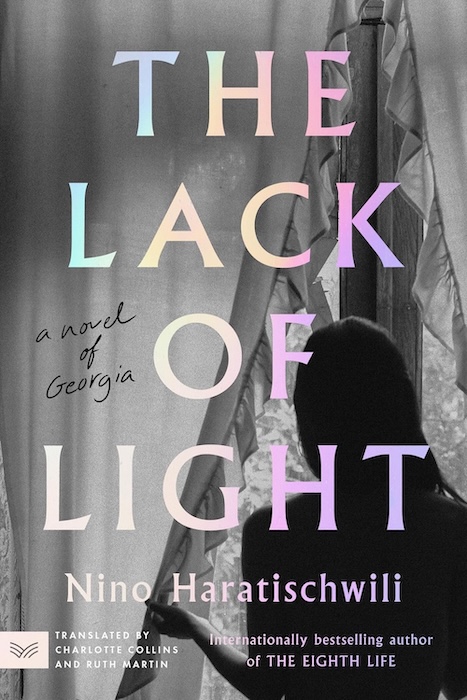
Lack of Light
The Lack of Light follows four women—Nene, Ira, Dina, and Keto—whose friendship begins in a Tbilisi courtyard during the final years of the Soviet Union. As they grow up, Georgia undergoes dramatic political and social transformations, including independence, civil conflict, and the rise of criminal networks. Each woman pursues a different future, but their lives remain bound together by shared memories, personal loyalties, and the consequences of choices made during their youth. Years later, a photographic exhibition devoted to Dina prompts Keto to revisit their intertwined histories and reconsider the events that shaped their friendship. Haratischwili portrays a generation coming of age amid uncertainty, where private hopes collide with political violence and social instability. The novel explores friendship, memory, loss, and the lasting impact of a society struggling to define itself after the collapse of an empire.
Georgia
2022
10
The Hacienda
Set in Mexico in the aftermath of the War of Independence, The Hacienda follows Beatriz, a young woman whose father was executed and whose family home was destroyed during political upheaval. When wealthy landowner Don Rodolfo Solórzano proposes marriage, she accepts, hoping to secure a safe home and a fresh start. However, after moving to his remote estate, Hacienda San Isidro, Beatriz begins experiencing terrifying visions and unexplained disturbances. As she investigates the property’s dark history, she seeks help from Padre Andrés, a young priest hiding secrets of his own. Blending Gothic horror, historical fiction, and forbidden romance, Isabel Cañas explores women’s vulnerability within patriarchal society, the lingering effects of colonialism, and the struggle for independence in a world shaped by power and superstition.
Mexico
2022
11
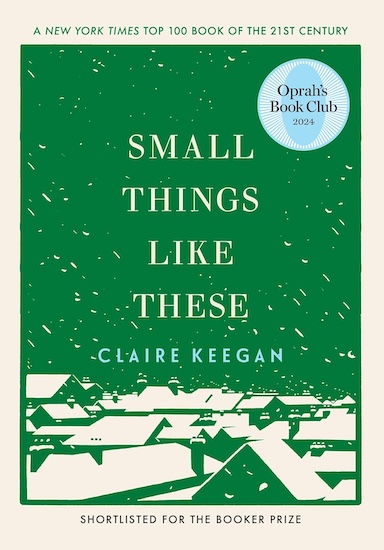
Small Things Like These
It is 1985 in a small Irish town, and coal merchant Bill Furlong is preparing for the busiest weeks of the year. A devoted husband and father of five daughters, he has built a modest but stable life through hard work. Yet as Christmas approaches, a delivery to the local convent reveals something deeply troubling: girls are being confined there under the authority of the Catholic Church, their suffering concealed behind respectable walls.
The discovery forces Bill to confront uncomfortable memories of his own childhood and the kindness that once helped him survive. In a community where the Church holds enormous power and silence protects those in authority, speaking out could jeopardise his livelihood and his family’s security. With remarkable economy and emotional depth, Small Things Like These explores complicity, moral courage, and the quiet choices that define a person’s character. It is a powerful story about the cost of doing what is right when looking away would be easier.
Ireland
2021
12
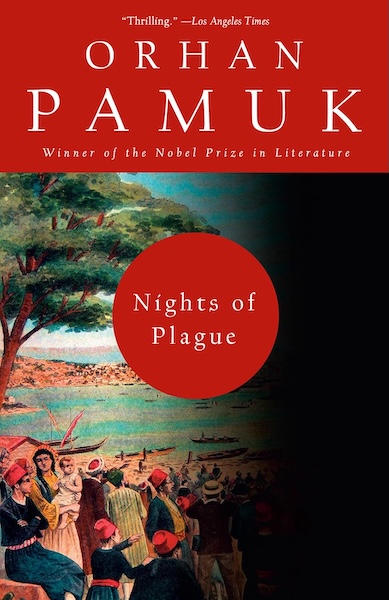
Nights of Plague
In 1901, a deadly plague reaches Mingheria, a fictional island in the eastern Mediterranean and the twenty-ninth province of the declining Ottoman Empire. Home to both Muslim and Greek Orthodox communities, the island is already divided by religious tensions and political rivalries. As the epidemic spreads, the Ottoman authorities send experts to impose quarantine measures, but suspicion, resistance, and competing loyalties threaten to undermine every attempt to contain the disease.
When a mysterious murder complicates the crisis, the island descends into a struggle involving religious leaders, government officials, scientists, and ordinary people desperate to survive. As the Ottoman administration loses control, the epidemic becomes a catalyst for rebellion and the emergence of a new national identity.
Blending historical epic, detective story, and political satire, Nights of Plague explores how fear reshapes societies and how crises expose the fragility of authority. Through an imagined history of an Ottoman island, Pamuk examines nationalism, religious conflict, scientific reasoning, and the human tendency to choose ideology over evidence.
Türkiye
2021
About this theme
- Books
- 140
- Countries
- 54
Countries with this theme
Austria
Europe
Bangladesh
Asia
Belarus
Europe
Benin
Africa
Bhutan
Asia
Bosnia and Herzegovina
Europe
Brazil
South America
Bulgaria
Europe
Burundi
Africa
Cabo Verde
Africa
Cameroon
Africa
Chile
South America
China
Asia
Congo, Democratic Republic
Africa
Costa Rica
North America
Côte d’Ivoire (Ivory Coast)
Africa
Czech Republic
Europe
Denmark
Europe
Dominican Republic
North America
Egypt
Africa
Fiji
Oceania
France
Europe
Georgia
Asia
Germany
Europe
Ghana
Africa
Greece
Europe
India
Asia
Iraq
Asia
Ireland
Europe
Italy
Europe
Jamaica
North America
Japan
Asia
Jordan
Asia
Kuwait
Asia
Lithuania
Europe
Mexico
North America
Morocco
Africa
Nigeria
Africa
Pakistan
Asia
Palestine
Asia
Russia
Europe
Saudi Arabia
Asia
Senegal
Africa
South Africa
Africa
South Korea
Asia
Spain
Europe
Sudan
Africa
Sweden
Europe
Türkiye
Asia
Ukraine
Europe
United Kingdom
Europe
United States
North America
Uzbekistan
Asia
Zambia
Africa