Society & Class
Examinations of class, power, and the structures we live within.
All countries
Austria
Bangladesh
Belarus
Benin
Bhutan
Bosnia and Herzegovina
Brazil
Bulgaria
Burundi
Cabo Verde
Cameroon
Chile
China
Congo, Democratic Republic
Costa Rica
Côte d’Ivoire (Ivory Coast)
Czech Republic
Denmark
Dominican Republic
Egypt
Fiji
France
Georgia
Germany
Ghana
Greece
India
Iraq
Ireland
Italy
Jamaica
Japan
Jordan
Kuwait
Lithuania
Mexico
Morocco
Nigeria
Pakistan
Palestine
Russia
Saudi Arabia
Senegal
South Africa
South Korea
Spain
Sudan
Sweden
Türkiye
Ukraine
United Kingdom
United States
Uzbekistan
Zambia
1
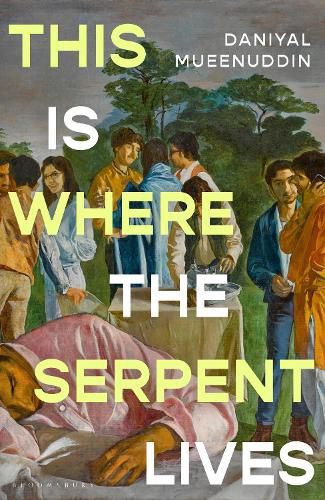
This is Where the Serpent Lives
Spanning six decades, This Is Where the Serpent Lives is an expansive portrait of contemporary Pakistan, where wealth, privilege and inherited social hierarchies shape the destinies of generations. At its centre is Yazid, an orphan who rises from poverty on the streets of Rawalpindi to become a trusted chauffeur in the household of a powerful landowning family. Around him, the lives of aristocrats, servants, ambitious farmers and young lovers intersect across Pakistan’s chaotic cities and feudal countryside. Saqib, the son of a poor gardener, receives an opportunity to manage a new agricultural enterprise, but his determination to improve his position leads him into dangerous territory. Meanwhile, rivalries, romantic entanglements and political corruption threaten the fragile order maintained by the wealthy elite. Through a richly interconnected cast of characters, Mueenuddin examines the price of ambition and the ways class, money and power perpetuate inequality. The novel offers an intimate, unsparing view of a society caught between changing aspirations and deeply entrenched traditions.
Pakistan
2026
2
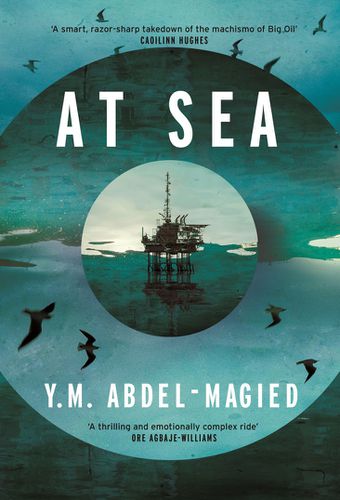
At Sea
Zainab is an expert driller accustomed to working in an industry where women must constantly prove their competence. When she is offered the opportunity to oversee a high-stakes offshore oil rig operation, she leaves behind her pregnant sister and heads out to sea, determined to demonstrate that she has earned her place at the top. But the assignment quickly becomes a test of both her professional abilities and her moral convictions. She is the only woman among a crew of hardened men who resent her authority, and the rig itself is teetering on the edge of disaster.
As Zainab investigates the technical problems threatening the operation, she discovers that the danger extends beyond the machinery. Corporate greed, careless decision-making, and the crew’s determination to complete the job as cheaply and quickly as possible threaten everyone’s lives. With her warnings repeatedly dismissed, she must decide how far she is willing to go to prevent a catastrophe.
Drawing on the author’s own experience as a drilling engineer, this gripping literary thriller explores sexism, ambition, environmental responsibility, and the human cost of unchecked capitalism. Against the vast and unpredictable power of the ocean, Zainab confronts a world in which professional authority and ethical responsibility are constantly at odds. The novel asks what it means to stand by one’s principles when the people in power refuse to listen.
Sudan
2026
3

The Final Problem
In June 1960, a violent storm traps nine travelers on the secluded Greek island of Utakos, where they are staying at the island’s only hotel. Their isolation takes a sinister turn when Edith Mander, a quiet British tourist, is found dead in a beach pavilion. Although her death initially appears to be suicide, the circumstances suggest something far more mysterious. With the island cut off from the outside world, the guests find themselves trapped in a classic locked-room mystery, and everyone becomes a potential suspect.
Their unlikely investigator is Ormond Basil, a once-famous actor whose most celebrated role was Sherlock Holmes. Although Basil has spent his career portraying the legendary detective rather than solving real crimes, his familiarity with Holmes’s methods may be the group’s only hope. When another body is discovered, the mystery deepens into a deadly game involving literary clues, carefully staged murders, and a killer who seems to understand detective fiction as intimately as Basil himself.
A witty homage to the golden age of crime fiction, the novel explores the boundaries between fiction and reality, the nature of storytelling, and the intellectual duel between a detective and a murderer—and between an author and a reader.
Spain
2026
4

Rimini
Set during the summer of 1983, Rimini brings together the lives of seven people in the bustling seaside resort on Italy’s Adriatic coast. At the center is Marco Bauer, a young journalist sent from Rome to manage his newspaper’s summer edition. Hoping to establish his reputation, he becomes involved in a story that leads him into a world of political corruption, professional rivalries, and unexpected relationships.
Around him, other lives unfold: a German woman searches for her missing younger sister, two aspiring filmmakers struggle to finance their ambitions, a lonely musician seeks connection among the coastal nightclubs, and a struggling hotel owner faces financial ruin. Their stories intersect against a backdrop of crowded beaches, neon lights, discos, and the restless energy of Italy in the 1980s.
With vivid characters and a cinematic atmosphere, Tondelli transforms Rimini into a portrait of contemporary Italian society, exposing the tensions beneath its image of carefree summer pleasures. The novel explores ambition, desire, loneliness, and the pursuit of happiness in a world increasingly shaped by money, spectacle, and fleeting connections.
Italy
2026
5
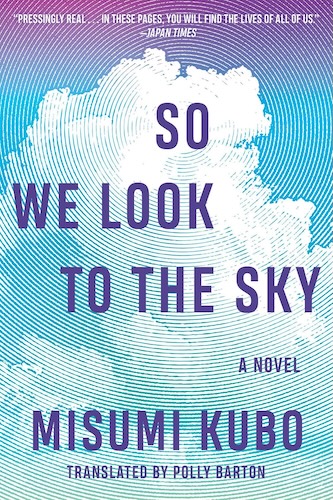
So We Look to the Sky
In contemporary Japan, one scandal connects the lives of five people struggling with desire, shame, loneliness, and the expectations placed upon them. When a young man’s affair with an older woman is exposed online, the fallout ripples through the lives of teenagers navigating first love, a married couple facing infertility, a young man caring for his grandmother with dementia, and a single mother working as a midwife. Through these interconnected stories, Misumi Kubo explores the intimate realities often hidden behind the surface of everyday life: the pressures on women’s bodies, the stigma surrounding sexuality, poverty, family obligations, and the desperate need for human connection. Unflinching yet deeply compassionate, this award-winning Japanese novel finds hope in the fragile, stubborn force of life itself.
Japan
2027
6
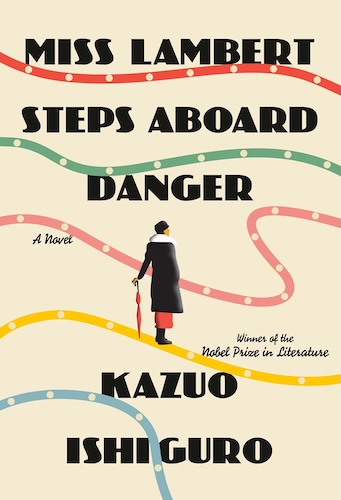
Miss Lambert Steps Aboard Danger
London, 1938. After a music hall performance, Richard Hadley encounters the mysterious Miss Lambert, a woman who seems to have attracted the attention of dangerous forces. Intrigued and determined to protect her, Richard follows her to a secretive gathering in the English countryside and eventually boards a train bound for Scotland. As old acquaintances, political figures, and suspicious strangers enter the picture, he finds himself caught up in a puzzling adventure whose true stakes he can barely comprehend. Blending espionage, eccentric characters, music, and understated humour, Nobel laureate Kazuo Ishiguro delivers a playful period mystery in which nothing is quite as it seems.
United Kingdom
2027
7
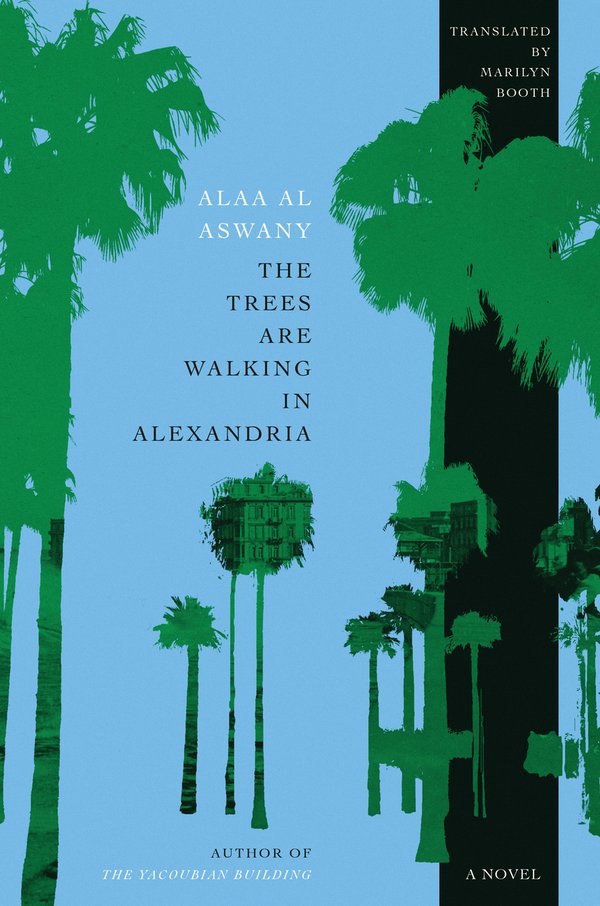
The Trees Are Walking in Alexandria
Alexandria, 1964. Under President Gamal Abdel Nasser, Egypt is undergoing a political transformation that threatens the city’s cosmopolitan spirit. At the elegant waterfront restaurant Artinos, a diverse circle of friends gathers each evening to discuss art, love, justice, and the future of their country. Among them are Lyda, the restaurant’s owner; Carlo, a charismatic Italian bartender; Anas, a painter; Abbas, a liberal lawyer; and Chantal, the owner of Alexandria’s most popular French bookshop. United by their affection for the city they call home, they struggle to reconcile their ideals with a regime that increasingly demands obedience and suppresses individual freedoms. As businesses are nationalised, suspicions deepen, and political pressure intensifies, their friendships and convictions face an unprecedented test. Through the intertwined lives of these characters, Alaa Al Aswany captures the twilight of a multicultural world, exploring how authoritarianism transforms society and how ordinary people navigate the painful collision between personal loyalties and political power.
Egypt
2027
8

The Mail Carrier
In a small French village, a postman knows everyone’s secrets—and cannot resist uncovering more. Joigneau begins his daily rounds with a bag full of letters, bills, telegrams, and summonses, but delivering the mail is only part of his business. Curious, calculating, and shamelessly intrusive, he opens envelopes, delays deliveries, and invents excuses to enter people’s homes. As he moves from one household to another, the private ambitions, petty rivalries, hidden anxieties, and quiet hypocrisies of the village come into view. A baker cheats his customers, a café owner plots to acquire a neighbour’s property, and superstition shapes everyday decisions. Over the course of a single day, Roger Martin du Gard constructs a vivid portrait of provincial French life, revealing how much drama can hide beneath an apparently peaceful surface. Observant, gently satirical, and rich in human detail, this short novel is a reminder that even the smallest communities contain entire worlds of secrets.
France
2027
About this theme
- Books
- 140
- Countries
- 54
Countries with this theme
Austria
Europe
Bangladesh
Asia
Belarus
Europe
Benin
Africa
Bhutan
Asia
Bosnia and Herzegovina
Europe
Brazil
South America
Bulgaria
Europe
Burundi
Africa
Cabo Verde
Africa
Cameroon
Africa
Chile
South America
China
Asia
Congo, Democratic Republic
Africa
Costa Rica
North America
Côte d’Ivoire (Ivory Coast)
Africa
Czech Republic
Europe
Denmark
Europe
Dominican Republic
North America
Egypt
Africa
Fiji
Oceania
France
Europe
Georgia
Asia
Germany
Europe
Ghana
Africa
Greece
Europe
India
Asia
Iraq
Asia
Ireland
Europe
Italy
Europe
Jamaica
North America
Japan
Asia
Jordan
Asia
Kuwait
Asia
Lithuania
Europe
Mexico
North America
Morocco
Africa
Nigeria
Africa
Pakistan
Asia
Palestine
Asia
Russia
Europe
Saudi Arabia
Asia
Senegal
Africa
South Africa
Africa
South Korea
Asia
Spain
Europe
Sudan
Africa
Sweden
Europe
Türkiye
Asia
Ukraine
Europe
United Kingdom
Europe
United States
North America
Uzbekistan
Asia
Zambia
Africa