Society & Class
Examinations of class, power, and the structures we live within.
All countries
Austria
Bangladesh
Belarus
Benin
Bhutan
Bosnia and Herzegovina
Brazil
Bulgaria
Burundi
Cabo Verde
Cameroon
Chile
China
Congo, Democratic Republic
Costa Rica
Côte d’Ivoire (Ivory Coast)
Czech Republic
Denmark
Dominican Republic
Egypt
Fiji
France
Georgia
Germany
Ghana
Greece
India
Iraq
Ireland
Italy
Jamaica
Japan
Jordan
Kuwait
Lithuania
Mexico
Morocco
Nigeria
Pakistan
Palestine
Russia
Saudi Arabia
Senegal
South Africa
South Korea
Spain
Sudan
Sweden
Türkiye
Ukraine
United Kingdom
United States
Uzbekistan
Zambia
1
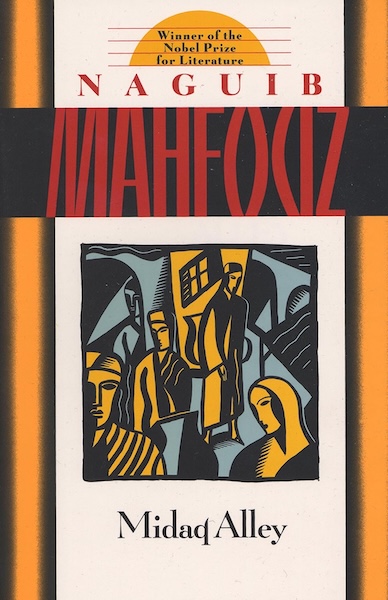
Midaq Alley
Midaq Alley portrays life in a small, crowded alley in Cairo during the Second World War, where shopkeepers, barbers, café owners, and residents struggle to survive amid poverty and social change. At the centre of the story is Hamida, a beautiful and ambitious young woman who dreams of escaping the limitations of her neighbourhood and achieving wealth and independence. Her desire for a different life brings her into conflict with Abbas, a humble barber who hopes to marry her and build a future together.
As Hamida becomes increasingly attracted to the promises of modernity and material success, her choices lead her toward a darker world shaped by exploitation and disillusionment. Meanwhile, the other residents pursue their own ambitions, revealing the contradictions, humour, and hardships of everyday life. Through this interconnected portrait of a Cairo community, Naguib Mahfouz explores class inequality, gender expectations, ambition, and the impact of historical change on ordinary people. The alley becomes a microcosm of Egyptian society, where dreams of escape coexist with the powerful forces that keep people trapped in familiar circumstances.
Egypt
1947
2
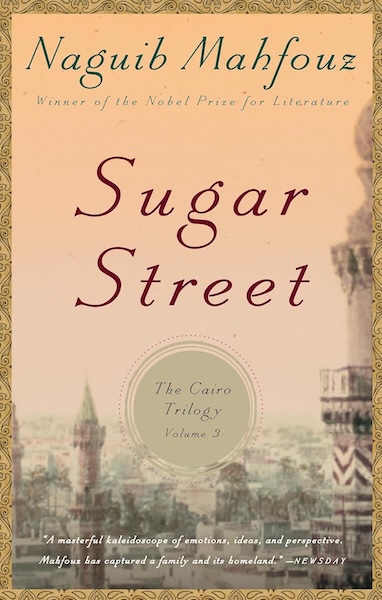
Sugar Street
Sugar Street is the final novel in Naguib Mahfouz’s Cairo Trilogy, following the al-Sayyid family into the 1930s and the political and social changes that reshape Egypt. As the country moves toward greater independence, a new generation emerges with different ideas about religion, politics, and personal freedom. The family patriarch, Ahmad Abd al-Jawad, is now ageing, while his children and grandchildren navigate a world increasingly distant from the traditions that once governed their lives.
The novel focuses on the consequences of these generational shifts, particularly as family members become involved in competing political movements and question established beliefs. Kamal, now a teacher, struggles with disillusionment and the loss of the ideals that once shaped his youth. Through the family’s experiences, Mahfouz examines the rise of nationalism, the appeal of secular thought, and the tensions between religious conservatism and modernity. Set against the lively streets and changing social landscape of Cairo, Sugar Street explores how political transformation influences private lives and how each generation must negotiate the relationship between inherited traditions and an uncertain future.
Egypt
1957
3
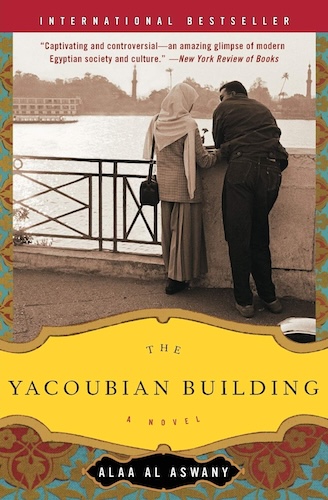
The Yacoubian Building
Behind the elegant façade of a once-grand Cairo apartment building lies a society fractured by corruption, poverty, and unfulfilled dreams. Its residents include a disillusioned journalist, a young man whose ambition to become a police officer is crushed by class prejudice, a wealthy businessman pursuing forbidden pleasures, and an ageing aristocrat haunted by a vanished past. As their lives intersect, the building becomes a microcosm of modern Egypt, exposing the hypocrisies of its ruling class and the quiet desperation of those struggling to escape their circumstances. Bold and provocative, The Yacoubian Building offers an unforgettable portrait of a nation caught between tradition, repression, and the desire for change.
Egypt
2006
4
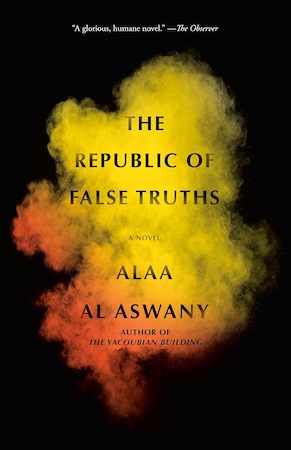
The Republic of False Truths
Cairo, 2011. After decades under a repressive regime, tensions are rising in the city streets. No one is out of reach of the revolution. There is General Alwany, a high-ranking member of the government's security agency, a pious man who loves his family yet won't hesitate to torture enemies of the state; Asma, a young teacher who chafes against the brazen corruption at her school; Ashraf, an out-of-work actor who is having an affair with his maid and who gets pulled into Tahrir Square through a chance encounter; Nourhan, a television personality who loyally defends those in power; and many more.
As these lives collide, a new generation finds a voice, love blossoms across class divides, and the revolution gains strength. Even the general finds himself at a crossroads as his own daughter joins the protests. Yet the old regime will not give up without a fight.
With an unforgettably vivid cast of characters and a heart-pounding narrative banned across much of the region, Alaa Al Aswany gives us a deeply human portrait of the Egyptian Revolution, and an impassioned retelling of his country's turbulent recent history.
Egypt
2022
5
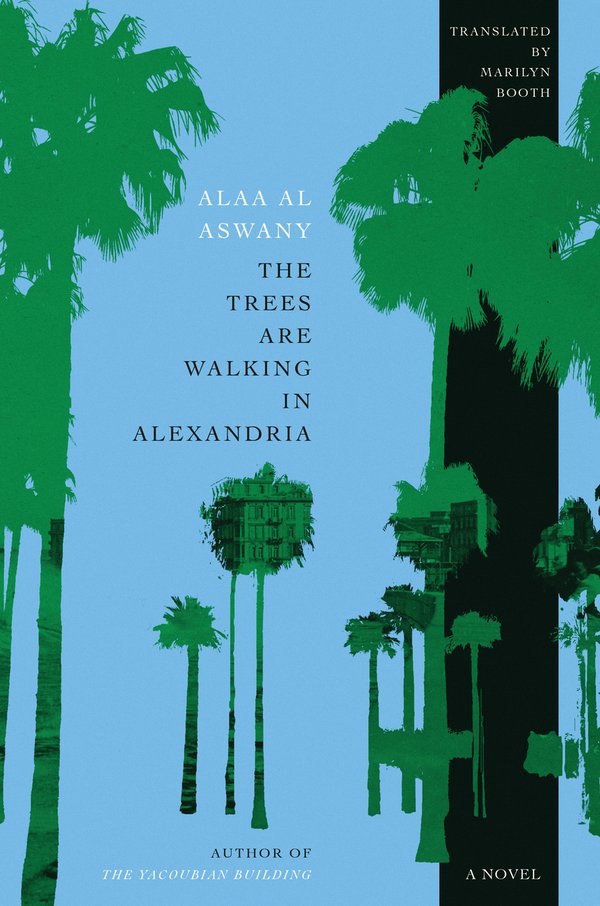
The Trees Are Walking in Alexandria
Alexandria, 1964. Under President Gamal Abdel Nasser, Egypt is undergoing a political transformation that threatens the city’s cosmopolitan spirit. At the elegant waterfront restaurant Artinos, a diverse circle of friends gathers each evening to discuss art, love, justice, and the future of their country. Among them are Lyda, the restaurant’s owner; Carlo, a charismatic Italian bartender; Anas, a painter; Abbas, a liberal lawyer; and Chantal, the owner of Alexandria’s most popular French bookshop. United by their affection for the city they call home, they struggle to reconcile their ideals with a regime that increasingly demands obedience and suppresses individual freedoms. As businesses are nationalised, suspicions deepen, and political pressure intensifies, their friendships and convictions face an unprecedented test. Through the intertwined lives of these characters, Alaa Al Aswany captures the twilight of a multicultural world, exploring how authoritarianism transforms society and how ordinary people navigate the painful collision between personal loyalties and political power.
Egypt
2027
About this theme
- Books
- 5
- Countries
- 54
Countries with this theme
Austria
Europe
Bangladesh
Asia
Belarus
Europe
Benin
Africa
Bhutan
Asia
Bosnia and Herzegovina
Europe
Brazil
South America
Bulgaria
Europe
Burundi
Africa
Cabo Verde
Africa
Cameroon
Africa
Chile
South America
China
Asia
Congo, Democratic Republic
Africa
Costa Rica
North America
Côte d’Ivoire (Ivory Coast)
Africa
Czech Republic
Europe
Denmark
Europe
Dominican Republic
North America
Egypt
Africa
Fiji
Oceania
France
Europe
Georgia
Asia
Germany
Europe
Ghana
Africa
Greece
Europe
India
Asia
Iraq
Asia
Ireland
Europe
Italy
Europe
Jamaica
North America
Japan
Asia
Jordan
Asia
Kuwait
Asia
Lithuania
Europe
Mexico
North America
Morocco
Africa
Nigeria
Africa
Pakistan
Asia
Palestine
Asia
Russia
Europe
Saudi Arabia
Asia
Senegal
Africa
South Africa
Africa
South Korea
Asia
Spain
Europe
Sudan
Africa
Sweden
Europe
Türkiye
Asia
Ukraine
Europe
United Kingdom
Europe
United States
North America
Uzbekistan
Asia
Zambia
Africa