Coming of Age
Stories of growing up, first experiences, and transformation.
All countries
Antigua and Barbuda
Armenia
Australia
Azerbaijan
Bahamas
Belize
Bosnia and Herzegovina
Brunei
Burundi
Cabo Verde
Central African Republic
Finland
France
Greece
India
Indonesia
Ireland
Italy
Japan
Morocco
Netherlands
Norway
Palestine
Romania
Slovenia
Sweden
Tanzania
United Kingdom
United States
Zambia
1
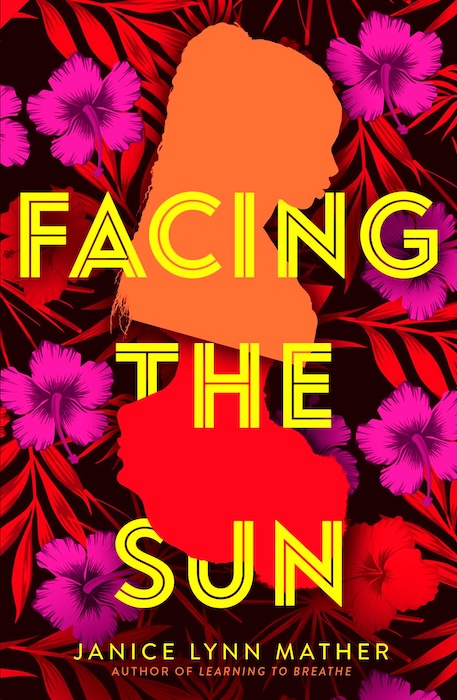
Facing the Sun
Facing the Sun follows Shani, a teenage girl growing up in the Bahamas, whose life changes after she becomes pregnant. As she navigates the physical and emotional realities of impending motherhood, she must confront the expectations of her family and community, along with her own fears about the future. Her story unfolds alongside those of other young people whose lives are shaped by questions of identity, responsibility, and belonging.
Set against the beauty of the Bahamian landscape, the novel explores the challenges facing young women in a society where cultural traditions and social expectations can strongly influence personal choices. Through Shani’s experiences, Mather examines teenage pregnancy, family relationships, friendship, and the difficult transition from adolescence to adulthood.
The novel offers a nuanced portrayal of young people navigating uncertainty while trying to imagine different possibilities for their lives. It explores how confronting difficult circumstances can become an opportunity for self-discovery, resilience, and growth.
Bahamas
2023
2
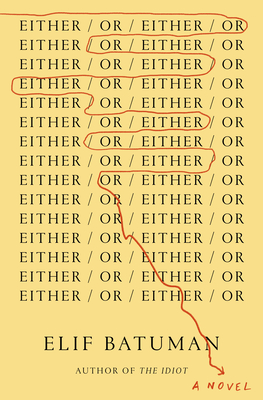
Either/Or
It’s 1996, and Harvard sophomore Selin Karadağ is determined to turn her life into something worthy of a novel. Still trying to make sense of her complicated feelings for Ivan, the elusive Hungarian student she fell for the previous year, Selin turns to literature and philosophy for answers about love, desire, and how to live. Inspired by her reading of Kierkegaard and guided by the messy experiences of university life, she experiments with sex, relationships, parties, and independence. When she travels to Turkey, the country of her family’s heritage, her understanding of herself begins to shift. Witty, thoughtful, and painfully relatable, Either/Or captures the exhilarating uncertainty of becoming an adult and learning to write your own story.
United States
2022
3
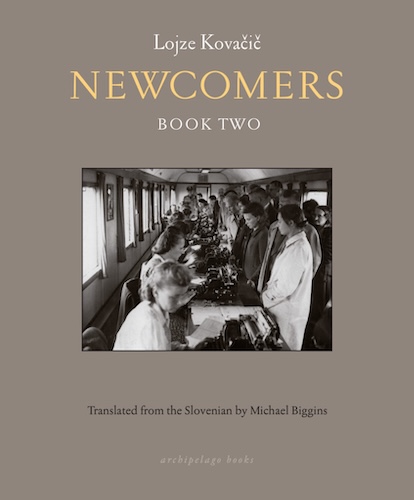
Newcomers: Book Two
The second installment of Lojze Kovačič’s Slovenian masterpiece begins with our hero, Bubi, once again making mischief in the labyrinthine streets, rooftops, bridges, abandoned butcher shops, and cinemas of wartime Ljubljana, with a coterie of scrappy sidekicks. Scenes of first sexual encounters – which are more mimicry than acts of desire – are interspersed with hijinks that replicate the violence raging across Europe. From the goofy, heady plots of childhood, Bubi emerges as a determined student of art, trading his handmade comic books for scraps of food and working day and night on a mural of Snow White for a nearby orphanage.
Kovačič’s control of language, and Michael Biggins’s expert translation, form a remarkable fidelity to a time in which a thirteen-year-old Swiss kid, exiled and yet protected from the worst horrors of the Holocaust, envisions Nazi Germany as “a gigantic, black, marble block filled with Hitler Youth brats with whom I would have to stand at attention, striking some drum.” Book Two is so packed with arresting historical detail, so attentive to the intricate material world of 1940s Ljubljana, as to render the contemporary moment flimsy in comparison.
Slovenia
2020
4
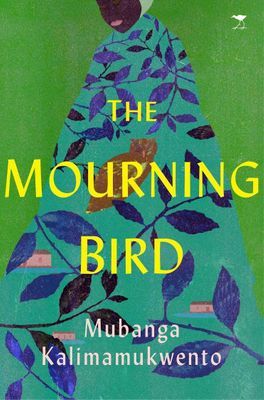
The Mourning Bird
Set in Zambia during the turbulent 1990s, The Mourning Bird follows eleven-year-old Chimuka and her younger brother, Ali, whose lives are shattered by a series of family tragedies. After their father dies and their mother’s struggle to keep the family together ends in further heartbreak, the siblings are left facing an uncertain future. Rejected by their abusive extended family, they escape to the streets of Lusaka, where survival means navigating poverty, violence, drugs, and police brutality.
As Chimuka grows into adolescence, she confronts the limited choices available to vulnerable girls in a society where poverty and gender inequality expose them to exploitation. Meanwhile, Ali becomes increasingly entangled in crime and addiction. Their struggle unfolds against a backdrop of political instability, economic decline, and the devastating impact of HIV/AIDS on Zambian families.
Unflinching yet deeply compassionate, Kalimamukwento’s debut novel examines childhood, grief, and resilience while revealing the hidden suffering of those living on the margins of society. It is both an intimate story of two siblings fighting to survive and a portrait of a nation grappling with profound social upheaval.
Zambia
2019
5
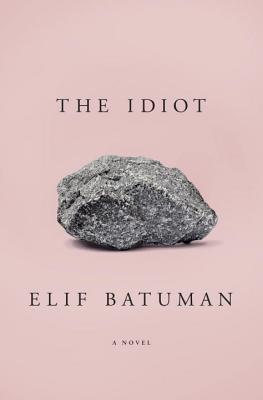
The Idiot
It’s 1995, email is new, and Harvard freshman Selin Karadağ is trying to figure out how language, love, and life actually work. The daughter of Turkish immigrants, she befriends a charismatic Serbian classmate and begins exchanging increasingly mysterious emails with Ivan, an older Hungarian mathematics student. When their ambiguous relationship follows her from university to the Hungarian countryside, Selin finds herself navigating first love, cultural misunderstandings, and the bewildering transition to adulthood. Witty, intellectually curious, and quietly moving, The Idiot captures the awkward beauty of becoming yourself when you have no idea who that person might be. A finalist for the Pulitzer Prize for Fiction, it is a coming-of-age story for readers who think too much and feel more than they can explain.
United States
2017
6
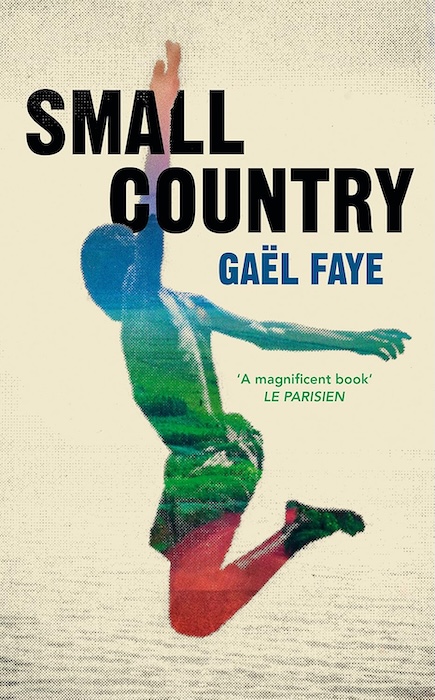
Small Country
Set in Burundi in the early 1990s, Petit pays follows Gabriel, a ten-year-old boy growing up in Bujumbura, the country’s capital. Living with his French father, Rwandan mother, and younger sister, Gabriel enjoys an idyllic childhood filled with adventures with his friends, bicycle rides, and the simple pleasures of everyday life. But as his parents’ relationship begins to unravel, political tensions intensify, and the approaching civil war threatens the peaceful world he has always known.
Through Gabriel’s innocent yet increasingly troubled perspective, Gaël Faye portrays the devastating impact of conflict on childhood, family, and belonging. As violence spreads through Burundi and the 1994 genocide against the Tutsi unfolds in neighbouring Rwanda, Gabriel is forced to confront his own mixed heritage and the painful realities of a divided society.
Blending nostalgia with the brutality of history, the novel explores the loss of innocence, the fragility of home, and the lasting scars of displacement. Inspired by the author’s own experiences, Petit pays is a moving reflection on childhood interrupted by violence and the struggle to preserve one’s identity amid historical upheaval.
Burundi
2016
7
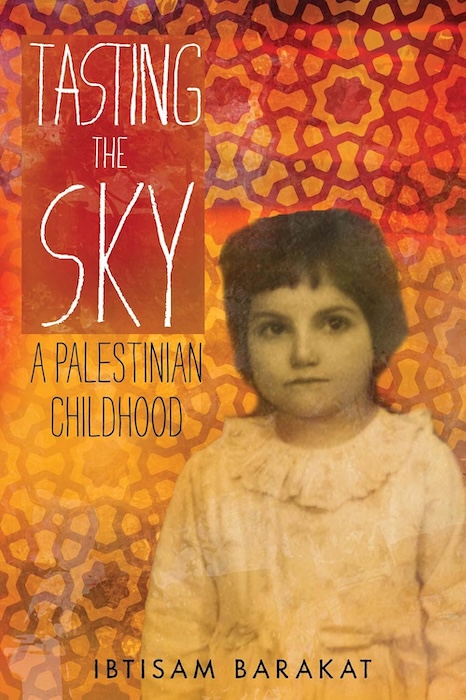
Tasting the Sky
Tasting the Sky: A Palestinian Childhood is a memoir recounting Ibtisam Barakat’s childhood during and after the 1967 Six-Day War. Growing up in Ramallah in the occupied West Bank, Barakat experiences the fear and confusion of war as her family flees their home, leaving behind the familiar world of her early years. Through the eyes of a young girl, she describes the uncertainty of displacement, the separation of families, and the emotional challenges of growing up amid political conflict. Despite the hardship surrounding her, Barakat discovers refuge in language, reading, and education, gradually finding ways to understand and express her experiences. Written in lyrical, accessible prose, the memoir captures how a child makes sense of violence and loss while holding on to curiosity and hope. It offers an intimate perspective on Palestinian history, exploring the relationship between memory, identity, language, and belonging, and demonstrating how storytelling can become a means of survival and self-discovery.
Palestine
2016
8
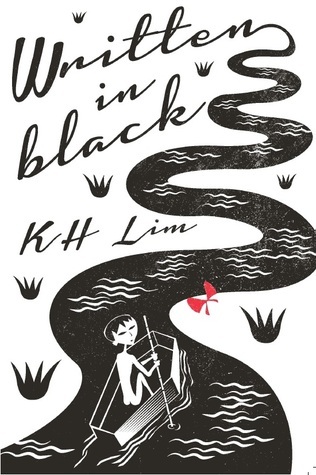
Written in Black
Set in Brunei on the island of Borneo, Written in Black is a darkly humorous coming-of-age novel following ten-year-old Jonathan Lee, a boy from a Chinese family navigating grief, family conflict, and the uncertainties of childhood. As he prepares to attend his grandfather’s funeral, Jonathan is already struggling with his mother’s departure for Australia and his older brother’s expulsion from the family home.
Frustrated by his father’s anger and desperate to understand what has happened to his family, Jonathan escapes the funeral wake inside an empty coffin. His impulsive decision leads him on an unexpected journey through Brunei, where he encounters teenage delinquents, eccentric strangers, mysterious places, and unfamiliar aspects of the country around him. Along the way, he hopes to find his estranged brother and uncover the truth about his absent mother.
Blending comedy, adventure, and moments of sadness, the novel explores childhood vulnerability, family loyalty, and the search for belonging. Jonathan’s journey becomes an opportunity to discover courage and develop a deeper understanding of himself and the complicated adults in his life.
Brunei
2014
9
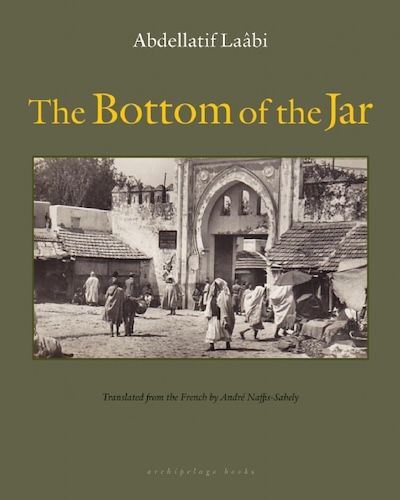
The Bottom of the Jar
Set in Fez during the 1950s, as Morocco struggles to free itself from French colonial rule, The Bottom of the Jar is a richly textured portrait of childhood, family, and a city on the threshold of transformation. Through the eyes of a young boy discovering the world around him, Abdellatif Laâbi evokes the bustling streets of the old medina, the colourful characters who inhabit them, and the intimate dramas unfolding behind closed doors. At the centre of this world is the boy’s family: a generous father, a formidable mother whose passionate prayers and sharp wit fill their home, and an eccentric uncle whose love of hashish and storytelling turns him into a kind of Homer after dark. Humorous, tender, and occasionally heartbreaking, the novel captures the contradictions of a society caught between inherited traditions and the promise of independence. Drawing on the author’s own childhood, it celebrates the imagination and resilience of ordinary people while exploring how political change reshapes private lives.
Morocco
2013
10
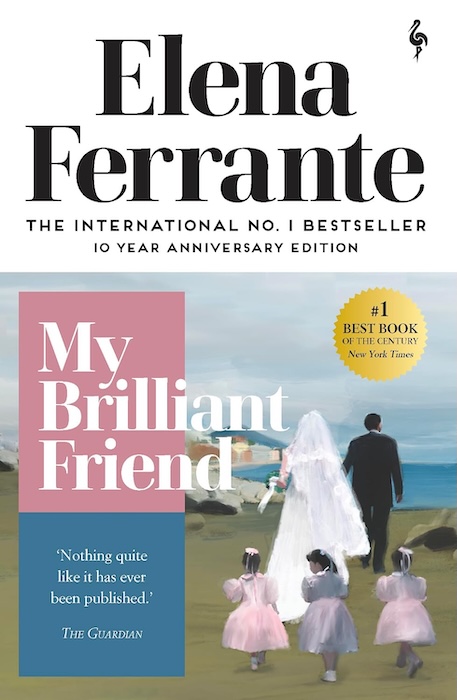
My Brilliant Friend
My Brilliant Friend follows Elena Greco and Raffaella Cerullo, known as Lila, two intelligent and ambitious girls growing up in a poor neighborhood of Naples in the 1950s. Despite their contrasting personalities, they develop a complex friendship shaped by admiration, rivalry, jealousy, and affection. As they navigate childhood and adolescence, both confront the limitations imposed by poverty, gender expectations, and a society marked by violence and rigid social hierarchies. While Elena continues her education, Lila’s opportunities are increasingly restricted, creating a tension that follows them as their lives take different directions. Through their evolving relationship, Ferrante explores female friendship, ambition, identity, and the transformative power of education. The novel is the first installment of the Neapolitan series, offering an intimate portrait of growing up and discovering oneself in a changing Italy.
Italy
2011
11
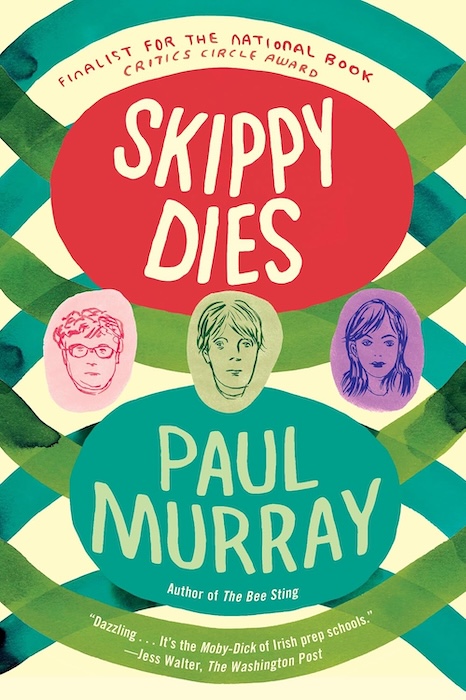
Skippy Dies
Skippy Dies begins with a shocking event at Seabrook College, a prestigious Catholic boarding school in Dublin: fourteen-year-old Daniel “Skippy” Juster collapses and dies in a doughnut shop. His death sets off a chain of revelations that expose the hidden struggles of the students and adults around him.
Before this tragedy, Skippy had been falling in love with Lori, a girl from a neighboring school, while trying to navigate adolescence, bullying, and the pressures of school life. His roommate, Ruprecht Van Doren, a brilliant but socially awkward teenager obsessed with theoretical physics, becomes increasingly determined to understand what happened to his friend. Meanwhile, the school’s teachers wrestle with their own disappointments, secrets, and moral failures.
Combining dark comedy, heartbreak, and social satire, Murray’s novel explores teenage loneliness, first love, addiction, institutional hypocrisy, and the difficulties of growing up. Beneath its humorous surface lies a moving portrait of young people searching for connection in a world that often fails to protect them.
Ireland
2010
12
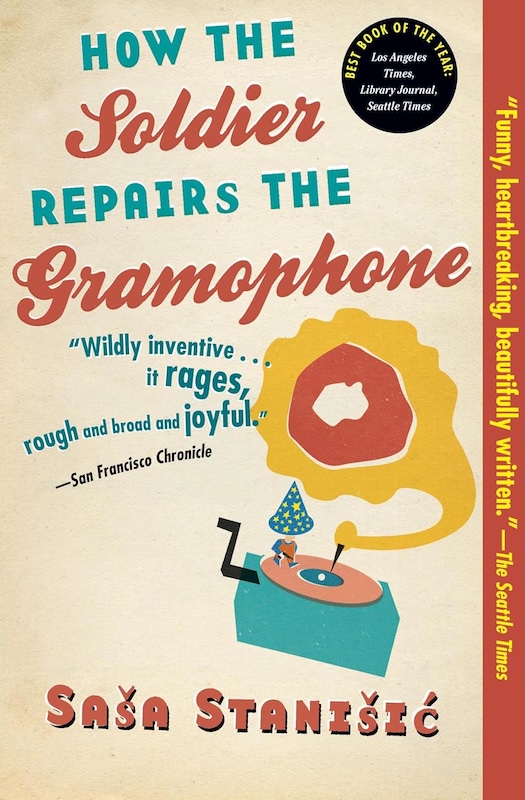
How The Soldier Repairs The Gramophone
Set during the Bosnian War and its aftermath, How the Soldier Repairs the Gramophone follows Aleksandar Krsmanović, a young boy growing up in the small Bosnian town of Višegrad. When war destroys the familiar world of his childhood, Aleksandar is forced to leave his home and seek refuge in Germany. Through his vivid imagination, memories, and storytelling, he attempts to make sense of violence, displacement, and the loss of people and places he once knew.
Blending humour, fantasy, and painful recollection, the novel captures the way a child experiences war without fully understanding its political and historical complexities. As Aleksandar grows older, storytelling becomes a way to preserve his past and reconnect with a homeland that has been irrevocably changed. Saša Stanišić’s novel explores memory, exile, identity, and the fragile boundary between lived experience and imagination.
Bosnia and Herzegovina
2009
About this theme
- Books
- 39
- Countries
- 30
Countries with this theme
Antigua and Barbuda
North America
Armenia
Asia
Australia
Oceania
Azerbaijan
Asia
Bahamas
North America
Belize
North America
Bosnia and Herzegovina
Europe
Brunei
Asia
Burundi
Africa
Cabo Verde
Africa
Central African Republic
Africa
Finland
Europe
France
Europe
Greece
Europe
India
Asia
Indonesia
Asia
Ireland
Europe
Italy
Europe
Japan
Asia
Morocco
Africa
Netherlands
Europe
Norway
Europe
Palestine
Asia
Romania
Europe
Slovenia
Europe
Sweden
Europe
Tanzania
Africa
United Kingdom
Europe
United States
North America
Zambia
Africa