Non-Fiction
All countries
Albania
Algeria
Belarus
Bhutan
Bosnia and Herzegovina
Botswana
Burkina Faso
Cambodia
China
Congo, Democratic Republic
Cuba
Cyprus
Egypt
France
Ghana
India
Iran
Ireland
Jamaica
Japan
Pakistan
Palestine
Russia
Taiwan
Tanzania
Türkiye
Turkmenistan
Ukraine
United Kingdom
United States
Yemen
Zambia
1
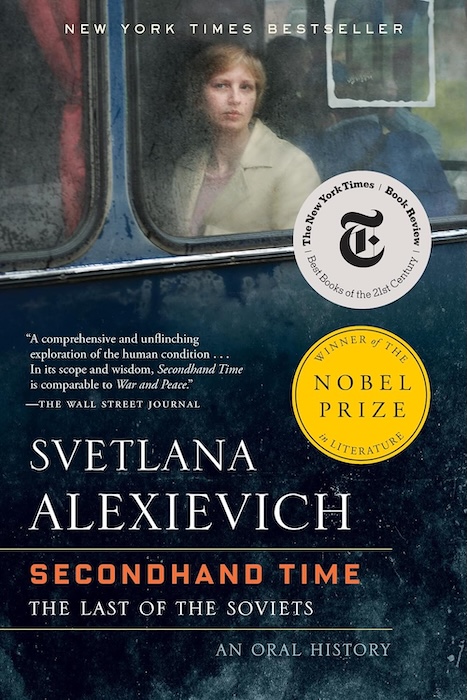
Secondhand Time
Secondhand Time is a documentary work by Nobel Prize-winning Belarusian writer Svetlana Alexievich that captures the emotional and psychological aftermath of the collapse of the Soviet Union. Through hundreds of interviews with ordinary people across the former Soviet republics, Alexievich assembles a collective portrait of a society struggling to understand the end of an entire political and cultural world. Her subjects include former Soviet idealists, disillusioned workers, survivors of political repression, and younger generations searching for meaning in a transformed society. Their testimonies reveal conflicting memories of communism, nostalgia for a lost sense of belonging, and the difficulties of adapting to new economic and social realities. Moving between intimate personal experiences and major historical events, the book explores how ideology shapes identity and how political change reverberates through private lives. Rather than presenting a single interpretation of the Soviet collapse, Alexievich allows contradictory voices to coexist, revealing the complexity of collective memory and the enduring human desire for dignity, security, and meaning.
Belarus
2013
2
Kissing the Sword: A Prison Memoir
In Kissing the Sword, Iranian writer Shahrnush Parsipur recounts her experiences as a political prisoner in post-revolutionary Iran. Following the 1979 Iranian Revolution, the new authorities began detaining people associated with opposing political views. Parsipur herself was imprisoned without formal charges, experiencing the fear, uncertainty, and psychological strain of incarceration.
Through vivid personal recollections, she describes life inside Iranian prisons, including encounters with fellow prisoners, interrogations, ideological disputes, and the harsh treatment of detainees. Her memoir also explores the restrictions imposed on women, particularly debates surrounding religious authority, dress, and individual autonomy.
Combining painful memories with moments of dark humour and reflection, Parsipur examines the relationship between political power and personal freedom. The book is both a record of her own experiences and a broader meditation on censorship, resistance, and the resilience required to preserve one’s voice under repression.
Iran
2013
3
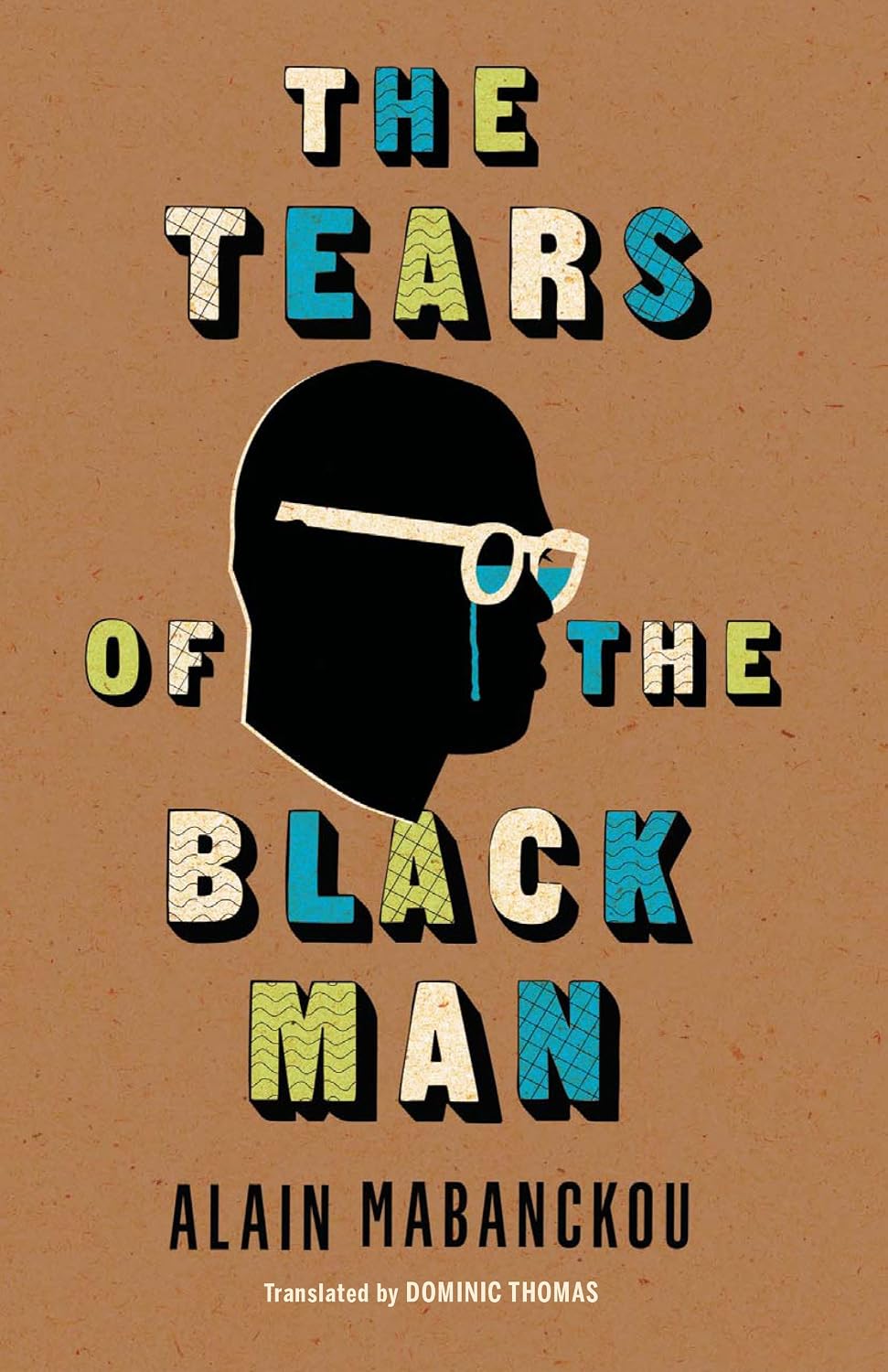
Tears of the Black Man
In Tears of the Black Man, Congolese writer Alain Mabanckou examines the complex relationship between Africa and the West, exploring how colonial history, migration, and racial stereotypes continue to shape perceptions of Black identity. Drawing on personal experiences, literature, and cultural observations, Mabanckou challenges simplified narratives that portray Africans solely as victims of colonialism or racism.
The book reflects on the expectations placed on Black people in Europe, the contradictions within contemporary African societies, and the ways historical grievances can influence individual and collective identities. Mabanckou also questions the tendency to explain present-day difficulties exclusively through the legacy of slavery and colonial rule, encouraging readers to consider the role of personal agency and contemporary political realities.
Blending memoir, cultural criticism, and social commentary, the work offers a provocative reflection on race, belonging, and the ongoing dialogue between Africa and the wider world.
Congo, Democratic Republic
2012
4
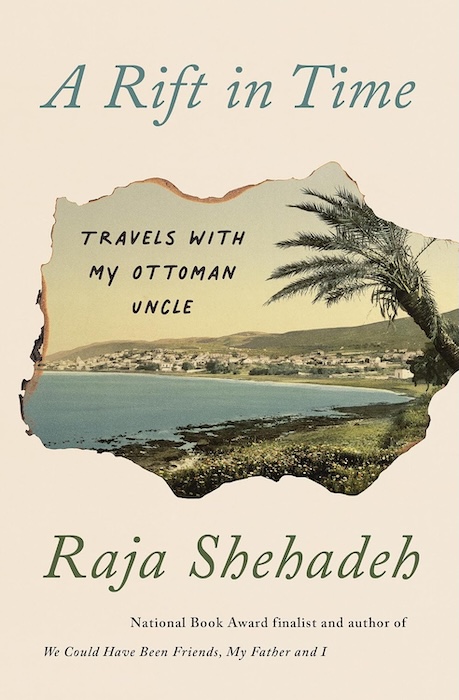
A Rift in Time: Travels with My Ottoman Uncle
In A Rift in Time: Travels with My Ottoman Uncle, Palestinian writer and human rights lawyer Raja Shehadeh explores the connections between family history, national identity, and the changing political landscape of the Middle East. Inspired by the life of his great-uncle Najib Nassar, a Palestinian journalist who lived during the final decades of the Ottoman Empire, Shehadeh traces the journey of a man who witnessed the collapse of an empire and the emergence of a new political order. Moving between historical research, personal reflection, and travel writing, the author examines how the experiences of earlier generations continue to shape contemporary Palestinian life. Through his uncle’s story, Shehadeh reflects on the meaning of belonging, the fragility of historical memory, and the ways political borders transform people’s relationships with their homeland. The book offers an intimate exploration of the past, revealing how an individual’s life can illuminate the wider forces that shape a nation’s history and collective identity.
Palestine
2010
5
The Naive and the Sentimental Novelist
The Naive and the Sentimental Novelist explores how novels work and why reading fiction can transform our understanding of ourselves and the world. Drawing on his experience as a novelist and his lifelong engagement with literature, Orhan Pamuk examines the relationship between writers, readers, and the fictional worlds they create. Inspired by Friedrich Schiller’s distinction between naive and sentimental poetry, Pamuk considers two approaches to storytelling: one that emerges naturally from experience and another that consciously reflects on its own methods and meanings.
Through examples from writers such as Tolstoy, Dostoevsky, and Thomas Mann, Pamuk discusses character, plot, setting, symbolism, and the delicate balance between imagination and observation. He also explores the pleasure readers find in entering a novel’s world, visualising its landscapes, and identifying with its characters. Blending literary criticism with personal reflection, the book offers an intimate account of the novelist’s craft and the reader’s experience. Ultimately, Pamuk suggests that the power of fiction lies in its ability to make imagined worlds feel as vivid and meaningful as reality itself.
Türkiye
2010
6
Dead Aid: Why Aid Is Not Working and How There Is Another Way for Africa
In Dead Aid, Zambian economist Dambisa Moyo challenges one of the most widely accepted assumptions about international development: that financial aid from wealthy countries is an effective way to combat poverty in Africa. Drawing on economic research and historical examples, she argues that decades of government-to-government assistance have often failed to deliver sustainable growth, while contributing to corruption, political dependency, and weakened local markets.
Rather than calling for an end to all forms of assistance, Moyo focuses on long-term development aid and proposes alternative ways for African countries to finance their economies. Her recommendations include attracting foreign investment, expanding trade, accessing international capital markets, and strengthening domestic financial systems.
Provocative and controversial, the book challenges readers to reconsider the relationship between wealthy nations and developing countries. Moyo calls for African governments to pursue greater economic independence and for policymakers to rethink the mechanisms through which development is financed. Whether readers agree with her conclusions or not, Dead Aid raises important questions about accountability, sovereignty, and the effectiveness of international development policy.
Zambia
2009
7
Palestinian Walks
Palestinian Walks is a lyrical memoir in which Palestinian lawyer and writer Raja Shehadeh recounts years of walking through the hills and valleys of the West Bank. Through six walks taken over several decades, Shehadeh explores a landscape he has known since childhood, documenting its natural beauty, ancient paths, wildflowers, and rocky hillsides. As he returns to familiar places, he witnesses how expanding settlements, roads, and political restrictions transform the countryside and limit access to land that once felt open and familiar. Combining personal reflection, nature writing, and historical observation, Shehadeh examines the relationship between landscape, memory, and belonging. His walks become both a way of reconnecting with the natural world and a means of understanding the changes reshaping Palestinian life. The book offers an intimate portrait of a threatened environment, revealing how the loss of familiar places can also mean the erosion of cultural memory, personal freedom, and a sense of home.
Palestine
2008
8
The Selected Works of Edward Said, 1966 - 2006
How do literature, culture, and politics shape the way we understand the world? And whose voices are missing from the stories history tells?
The Selected Works of Edward Said brings together key writings from four decades of one of the most influential intellectuals of the twentieth century. Edited by Moustafa Bayoumi and Andrew Rubin, this expanded collection traces Said’s thinking across subjects ranging from colonialism and Palestinian identity to literature, music, media, and the responsibilities of intellectuals.
Featuring selections from Orientalism, Culture and Imperialism, and Out of Place, alongside important essays and later writings, the collection offers an overview of Said’s evolving ideas about power, representation, and cultural identity.
Essential for understanding Said’s intellectual legacy, this volume reveals how cultural narratives influence political realities—and why questioning dominant perspectives remains vital.
Palestine
United States
2007
9
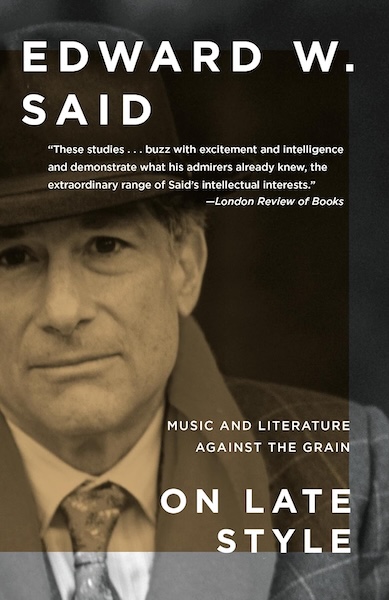
On Late Style: Music and Literature Against the Grain
What happens when great artists approach the end of their lives—and begin creating works that refuse to offer comfort, harmony, or easy answers?
In On Late Style, Edward W. Said explores the final works of celebrated composers, writers, and artists, including Beethoven, Mozart, Thomas Mann, and Jean Genet. He challenges the assumption that artistic maturity naturally leads to wisdom and reconciliation, arguing instead that some creators produce their most challenging work late in life, embracing contradiction, resistance, and unresolved tensions.
Drawing on music, literature, opera, and film, Said examines how artists confront their own mortality while remaining at odds with the cultural expectations of their time. The result is a compelling reflection on creativity, ageing, and the courage to resist conventional ideas of artistic perfection.
Published posthumously in 2006, this unfinished final work reflects Said’s own lifelong commitment to intellectual independence and the power of art to challenge established assumptions.
Palestine
United States
2006
10
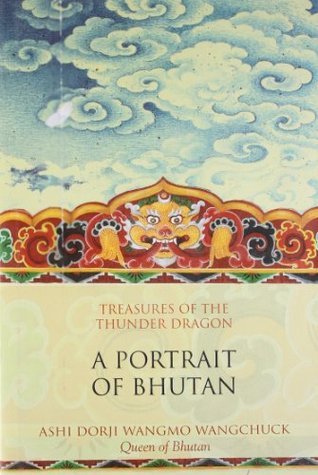
Treasures of the Thunder Dragon
Treasures of the Thunder Dragon: A Portrait of Bhutan offers an intimate portrait of Bhutan, a Himalayan kingdom renowned for its Buddhist traditions, dramatic landscapes, and distinctive cultural heritage. Written by Queen Mother Ashi Dorji Wangmo Wangchuck, the book combines personal memoir, history, folklore, and travel writing to explore the country beyond its familiar image as a remote mountain paradise.
Drawing on her journeys throughout Bhutan, the author introduces readers to isolated villages, sacred monasteries, ancient fortresses, mountain valleys, and communities whose traditions have endured across generations. She also explores Bhutanese customs, religious beliefs, festivals, architecture, and the relationship between people and the natural world.
Enriched with photographs from the royal family’s personal collection and illustrations by Bhutanese artists, the book celebrates the country’s cultural and environmental treasures. It offers a personal perspective on a nation balancing its traditional values with the changes brought by modernisation, inviting readers to discover Bhutan through the eyes of someone deeply connected to its history and people.
Bhutan
2006
11
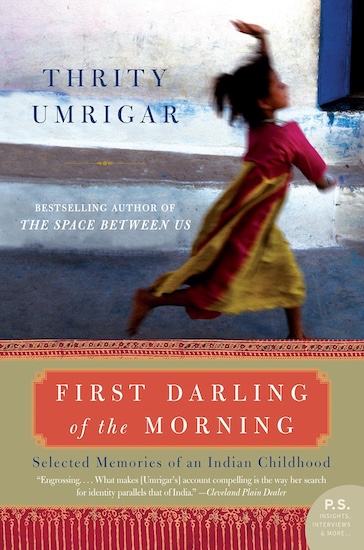
First Darling of the Morning: Selected Memories of an Indian Childhood
Growing up in 1960s and 1970s Bombay, Thrity Umrigar navigates the contradictions of childhood in a middle-class Parsi family. Attending a Catholic school in a predominantly Hindu city, she becomes increasingly aware of the cultural, religious, and economic divisions that shape the world around her. At home, she experiences both the warmth of her father’s affection and the painful consequences of her mother’s harsh discipline. As she grows older, Umrigar begins questioning the expectations imposed on her and confronting the complicated truths of her family. Through intimate memories of childhood, adolescence, and her eventual departure for America at twenty-one, she reflects on identity, belonging, family secrets, and the inequalities of Indian society. First Darling of the Morning is a deeply personal memoir about growing up between cultures and finding the courage to imagine a life beyond the boundaries of one’s upbringing.
India
2004
12
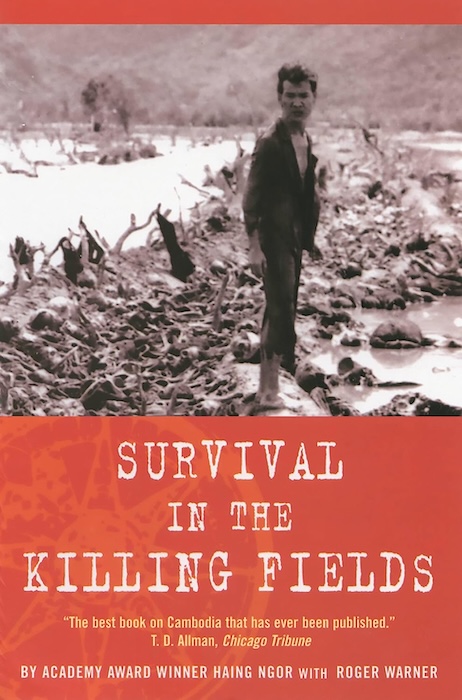
Survival in the Killing Fields
Survival in the Killing Fields is the harrowing memoir of Haing S. Ngor, a Cambodian doctor who survived the brutal rule of the Khmer Rouge between 1975 and 1979. Before the regime took power, Ngor worked as a physician and lived with his wife in Phnom Penh. Under the new government, educated professionals were persecuted, cities were emptied, and millions of Cambodians were forced into labour camps, where starvation, disease, torture, and execution became part of everyday life.
Ngor recounts his experiences of forced labour, imprisonment, and the desperate struggle to stay alive while concealing his medical training. He also describes the devastating loss of his wife and the collapse of the life he had once known. After the Khmer Rouge regime fell, he eventually escaped Cambodia and resettled in the United States.
His memoir offers a firsthand account of one of the darkest periods in Cambodian history. It is both a testimony to the suffering inflicted on ordinary people and a reflection on the resilience required to survive war, persecution, and profound personal loss.
Cambodia
2003