Magical Realism
All countries
Argentina
Armenia
Chile
China
Cyprus
Dominican Republic
Ecuador
Guatemala
Iceland
India
Indonesia
Iran
Iraq
Italy
Japan
Kenya
Mexico
New Zealand
Pakistan
Poland
Portugal
Russia
Spain
Sri Lanka
Türkiye
1
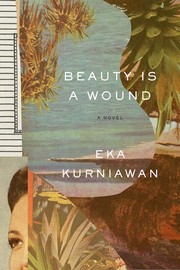
Beauty Is a Wound
In Beauty Is a Wound, Eka Kurniawan tells the extraordinary story of Dewi Ayu, a beautiful Indonesian woman who rises from the dead after twenty-one years in her grave. Set against the turbulent history of Indonesia, from Dutch colonial rule through the Japanese occupation and the political violence that followed independence, the novel follows Dewi Ayu and her four daughters as their lives become entangled in cycles of violence, desire, and revenge. Combining magical realism, dark humor, folklore, and historical fiction, Kurniawan explores the lasting consequences of colonialism, the brutality of war, and the oppression of women in a patriarchal society. Through grotesque imagery and fantastical events, the novel reveals how personal tragedies reflect a nation’s traumatic past, examining the ways violence and historical injustice shape generations of families.
Indonesia
2002
2
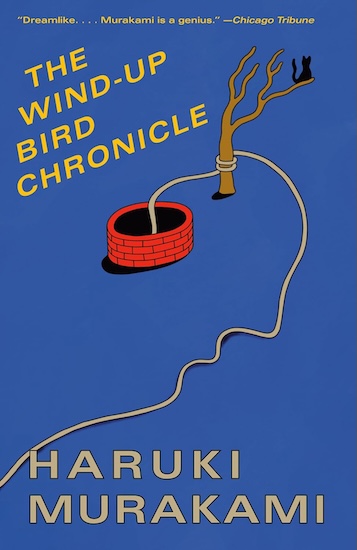
The Wind-up Bird Chronicle
The Wind-Up Bird Chronicle follows Toru Okada, an unemployed man whose ordinary life begins to unravel when his wife disappears and a series of increasingly strange events takes place in his Tokyo neighbourhood. His search leads him into encounters with enigmatic strangers, disturbing memories, and stories connected to Japan’s wartime history. As Toru investigates his wife’s disappearance, he finds himself drawn into a hidden world where dreams, violence, and psychological experience overlap. The novel gradually reveals the emotional distance within his marriage and the unresolved histories that shape the people around him. Murakami blends surrealism with historical reflection, examining alienation, power, and the difficulty of understanding one’s own life. Toru’s journey becomes an exploration of the hidden forces that influence human relationships and the fragile boundary between the familiar world and the unknown.
Japan
1994
3
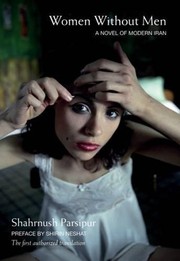
Women Without Men
Set in Iran against the backdrop of the 1953 coup d’état, Women Without Men follows the interconnected lives of five women whose experiences reflect the restrictions placed on women by family, marriage, and society. Among them are Munis, a woman longing to escape her brother’s control; Faizeh, her friend who dreams of marriage; Mahdokht, a woman troubled by conventional expectations of femininity; Farrokhlaqa, a wealthy housewife seeking a different life; and Zarrinkolah, a sex worker who begins to question the world around her.
Their individual journeys eventually lead them to a garden on the outskirts of Tehran, where they attempt to create a life beyond the rules that have governed them. Blending magical realism, mysticism, and historical events, Parsipur explores female autonomy, sexuality, and the search for identity. Through surreal transformations and symbolic storytelling, the novella imagines the possibility of women reclaiming their bodies, choices, and futures.
Iran
1989
4
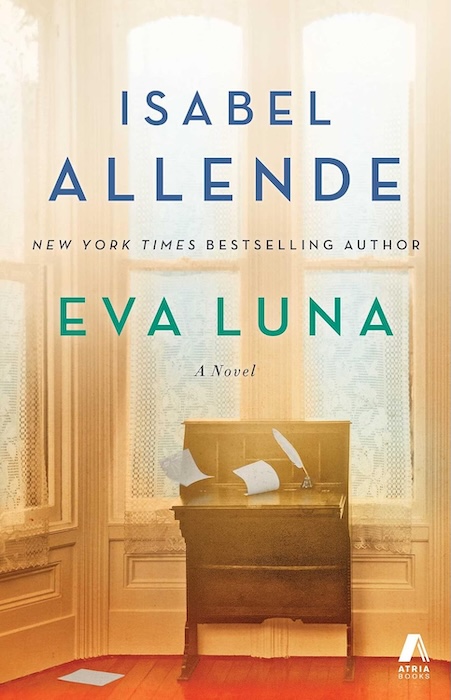
Eva Luna
Eva Luna follows the life of Eva, an imaginative young woman who discovers early on that storytelling can become both a refuge and a means of survival. Orphaned as a child, she grows up among people from different social backgrounds in an unnamed Latin American country marked by political unrest and inequality. Through her relationships, adventures, and encounters with revolutionaries, artists, and ordinary people, Eva gradually shapes her own destiny. Her ability to invent stories becomes a source of power, allowing her to reinterpret painful experiences and challenge the limitations imposed on her. Blending magical realism, romance, and political history, Allende explores the relationship between imagination and freedom. Eva’s journey celebrates resilience, female independence, and the transformative power of storytelling.
Chile
1987
5
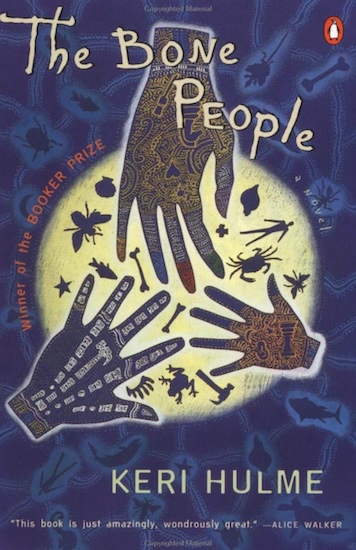
The Bone People
The Bone People is a powerful, unconventional novel set on the rugged coast of New Zealand, exploring the complicated relationships between three isolated individuals: Kerewin Holmes, a reclusive artist; Simon, a mysterious mute child; and Joe, his Māori foster father. When their lives become intertwined, they form an unconventional family shaped by loneliness, affection, violence, and the desire for connection. Through experimental storytelling and elements of Māori mythology, Keri Hulme examines the tensions between Māori and Pākehā identities, the legacy of colonialism, and the possibility of healing after trauma. The novel challenges traditional ideas of family and belonging, portraying human relationships as both deeply destructive and potentially transformative. It won the Booker Prize in 1985.
New Zealand
1986
6
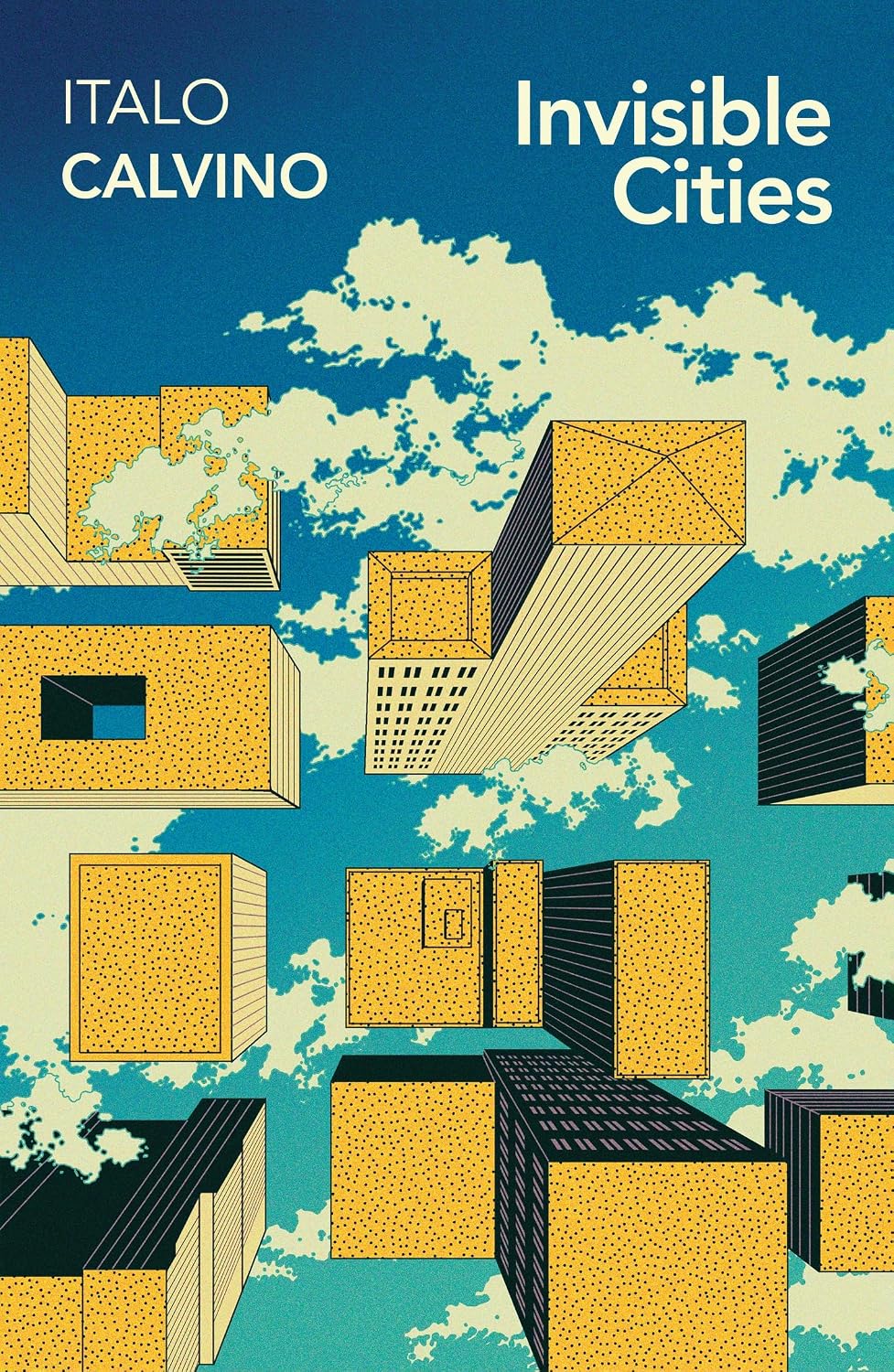
Invisible Cities
Invisible Cities imagines a series of conversations between the Venetian traveller Marco Polo and the Mongol emperor Kublai Khan. Polo describes extraordinary cities he claims to have visited, each possessing distinctive customs, architecture, memories, and relationships with time. Some cities seem suspended between life and death; others are organised around desire, exchange, or the endless accumulation of objects. Gradually, the descriptions become less like conventional travel accounts and more like meditations on human experience. Khan attempts to understand the vastness of his empire through Polo’s stories, while the traveller uses language to explore places that may reflect aspects of Venice itself. Calvino combines fantasy, philosophy, and poetic imagery to examine memory, communication, urban life, and the relationship between imagination and reality. The book invites readers to consider how cities express the hopes, fears, and contradictions of the people who inhabit them.
Italy
1972
7
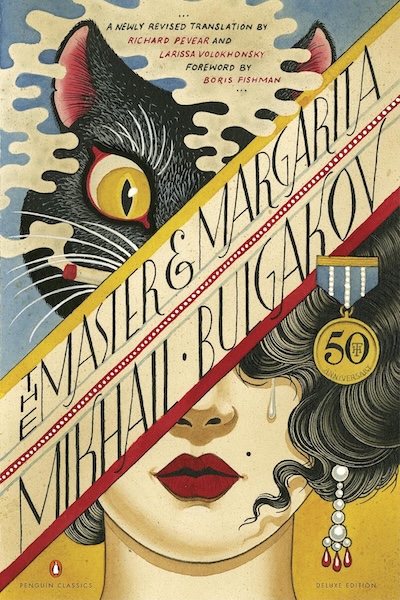
The Master and Margarita
The Master and Margarita is a surreal, satirical novel in which the Devil arrives in Moscow accompanied by a bizarre entourage, including a giant talking black cat. Their supernatural antics expose the hypocrisy, greed, cowardice, and corruption of Soviet society, throwing the city’s literary establishment and ordinary citizens into chaos.
Alongside this fantastical story, the novel follows the Master, a writer whose novel about Pontius Pilate has brought him persecution, and Margarita, the woman who loves him and refuses to abandon him. Desperate to find the Master, Margarita enters a dangerous bargain that leads her into the Devil’s extraordinary world. Interwoven with their story are chapters retelling the trial and execution of Jesus through the perspective of Pontius Pilate, who struggles with fear, conscience, and moral responsibility.
Blending fantasy, political satire, romance, and philosophical reflection, Bulgakov’s masterpiece explores the conflict between truth and authority, the power of love, artistic freedom, and the enduring struggle between good and evil.
Russia
1966
8
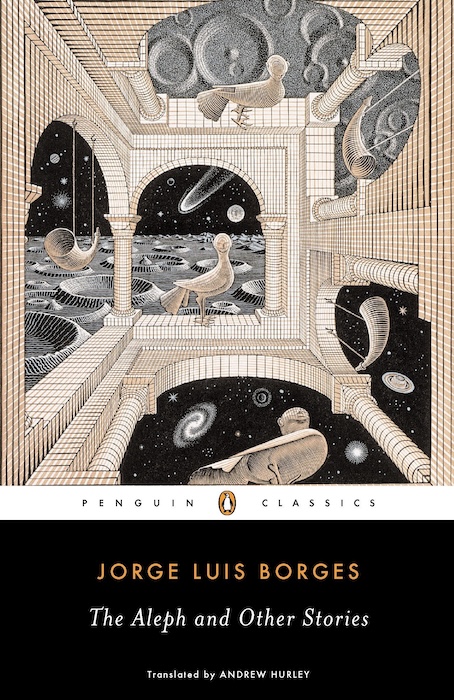
The Aleph
The Aleph is a collection of short stories that explores infinity, memory, identity, and the limits of human understanding. In the title story, a narrator discovers a point in space containing every other point in the universe, allowing him to perceive all things simultaneously without distortion or concealment. Other stories examine imaginary worlds, mysterious objects, labyrinthine histories, and the unsettling possibility that reality may be far stranger than it appears. Borges combines philosophical speculation with elements of fantasy, detective fiction, and literary scholarship, creating narratives that often feel like intellectual puzzles. His characters encounter knowledge that promises to reveal everything but frequently leaves them more uncertain than before. The collection asks whether human beings can ever comprehend the totality of existence or whether some mysteries must remain beyond the boundaries of language and reason.
Argentina
1949