Magical Realism
All countries
Argentina
Armenia
Chile
China
Cyprus
Dominican Republic
Ecuador
Guatemala
Iceland
India
Indonesia
Iran
Iraq
Italy
Japan
Kenya
Mexico
New Zealand
Pakistan
Poland
Portugal
Russia
Spain
Sri Lanka
Türkiye
1
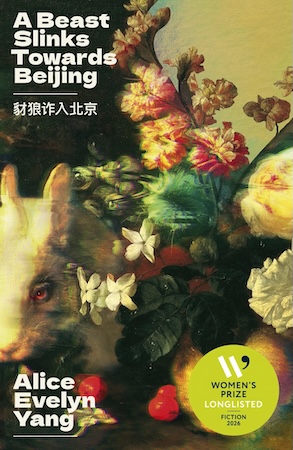
A Beast Slinks Towards Beijing
Spanning three generations and moving between Japanese-occupied Manchuria, the Cultural Revolution, and contemporary America, A Beast Slinks Towards Beijing is a dark, magical-realist family saga about inherited trauma, historical violence, and the stories families carry across generations.
Twenty-five-year-old Qianze has not seen her father, Weihong, since he abandoned her on the night of her fourteenth birthday. Eleven years later, he reappears at her childhood home in Virginia, aged beyond recognition and struggling with dementia and alcoholism. Haunted by a half-forgotten prophecy, he begins recounting his past, including his violent experiences as a Red Guard during the Cultural Revolution and the hardships endured by his mother under Japanese occupation. As Qianze listens, she discovers a family history far more disturbing than she imagined. Strange visions begin to invade her everyday life: fox spirits follow her through the city, and a terrifying mythical creature stalks her nightmares.
Blending Chinese and Japanese folklore with historical fiction and supernatural horror, Yang explores how colonialism, political violence, and family secrets shape successive generations. The novel asks whether understanding the past can offer a path toward forgiveness—or whether some histories continue to haunt the living.
China
2026
2

Electric Shamans at the Festival of the Sun
Set in a near-future Ecuador, Electric Shamans at the Festival of the Sun follows Noa and her best friend, Nicole, as they leave the violence and decay of Guayaquil behind to attend Solar Noise, an experimental music festival held in the remote Andean highlands near an active volcano. Amid psychedelic music, ritualistic dances, and a gathering of young people searching for transcendence, the festival becomes a space where the boundaries between the physical and spiritual worlds begin to dissolve.
Noa has a personal reason for making the journey: she hopes to find her father, who abandoned her when she was a child. But after arriving at the festival, she begins experiencing strange transformations, speaking in a voice that seems not to belong to her. As Nicole tries to understand what is happening to her friend, both young women confront their histories of abandonment, violence, and emotional pain.
Blending speculative fiction, psychological horror, Andean mythology, and experimental music culture, Ojeda explores the search for belonging and the relationship between trauma, identity, and transcendence. The novel’s hallucinatory atmosphere evokes a world where ancient spiritual traditions collide with futuristic subcultures, offering a haunting meditation on the desire to escape the past and imagine a different future.
Ecuador
2026
3
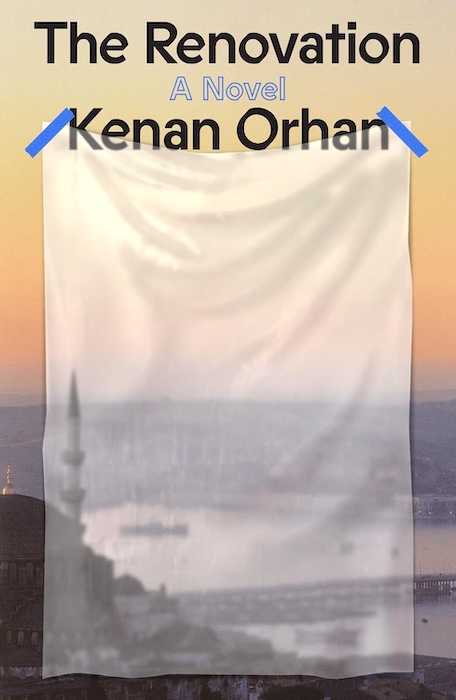
The Renovation
Dilara, a Turkish exile living in a small Italian town, is struggling to care for her father, whose memories are gradually disappearing as dementia takes hold. Preparing to welcome him into her home, she commissions a renovation to make the apartment more comfortable. But when the builders finish, she discovers that her new bathroom has been transformed into a Turkish prison cell, complete with guards and prisoners.
What initially seems like an absurd mistake soon becomes a mysterious connection to the homeland Dilara left behind. Through the cell, she encounters echoes of Istanbul, her family’s painful past, and the political violence that forced them into exile. As her domestic life begins to unravel, the prison becomes an unexpected gateway to memories she can neither fully recover nor escape.
Blending surrealism, dark humour, and political allegory, The Renovation explores exile, belonging, family, and the ways political oppression and personal grief can imprison us long after we have crossed borders.
Türkiye
2026
4
Ghost-Eye
In Ghost-Eye, Amitav Ghosh weaves together reincarnation, family secrets, and environmental concerns across two generations. In 1969 Calcutta, three-year-old Varsha Gupta begins describing memories of a previous life, including a different mother and a home beside a river. Her unusual claims lead her family to Dr. Shoma Bose, a psychiatrist investigating cases of apparent reincarnation. Decades later, Varsha’s case file attracts the attention of environmental activists, drawing Shoma’s nephew Dinu into a search that brings buried memories and unexpected connections to light. Moving between India and contemporary Brooklyn, the novel blends magical realism, mystery, and ecological fiction to explore the relationship between human identity, memory, and the natural world. It raises questions about how lives are interconnected and how humanity’s relationship with the environment shapes both personal histories and collective futures.
India
2026
5
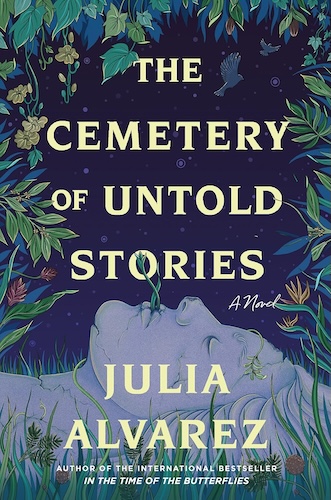
The Cemetery of Untold Stories
What happens to the stories we never tell? When celebrated novelist Alma Cruz retires, she returns to her family’s homeland, the Dominican Republic, and creates an unusual resting place for her unfinished manuscripts: a cemetery where forgotten characters can finally be laid to rest. But the stories refuse to remain buried. As their characters begin speaking back to their creator, hidden histories, family secrets, and forgotten lives emerge from the pages. Blending magical realism with Dominican history, Julia Alvarez explores who gets to tell a story, whose voices are silenced, and whether we ever truly own the stories we create. A moving celebration of the power of storytelling, this novel reminds us that even the tales we try to bury can find their way into the light.
Dominican Republic
2025
6
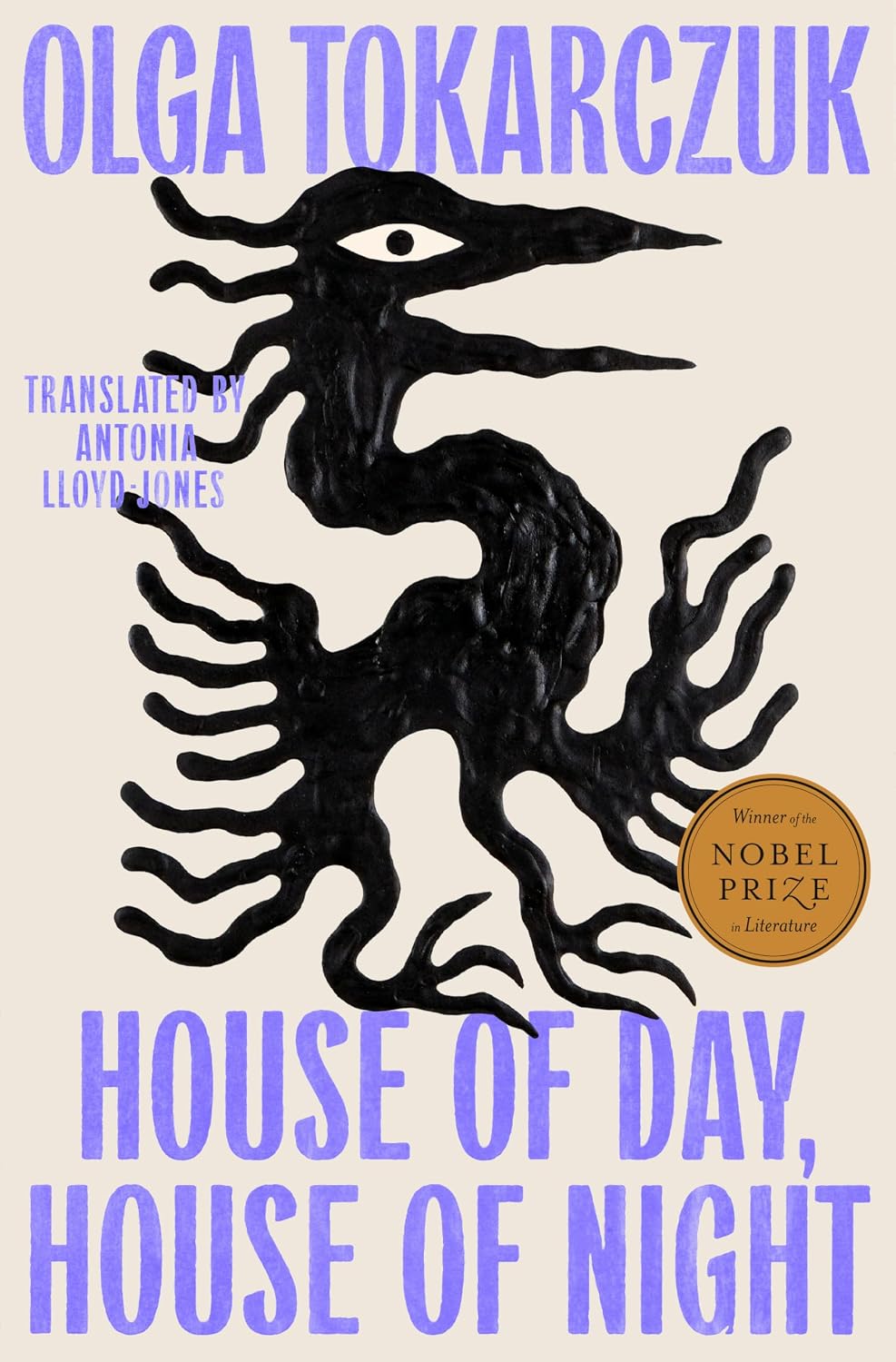
House of Day, House of Night
House of Day, House of Night is a fragmentary, dreamlike novel set in a small village near the Polish-Czech border, where everyday life intertwines with folklore, history, dreams, and the supernatural. Through a series of interconnected stories, memories, recipes, local legends, and reflections, Olga Tokarczuk explores the lives of the village’s inhabitants and the mysterious forces that shape their existence. The narrative moves between past and present, blending the ordinary with the uncanny and revealing how individual lives become woven into a larger tapestry of collective memory. Among its recurring subjects are the boundaries between life and death, the fluidity of identity, the relationship between humans and nature, and the spiritual dimensions of seemingly mundane experiences. Rather than following a conventional plot, Tokarczuk creates a mosaic of voices and perspectives that invites readers to discover connections between seemingly unrelated events. The novel transforms a remote borderland into a place where personal stories, forgotten histories, and myth coexist, questioning the limits of rational understanding and the nature of belonging.
Poland
2025
7
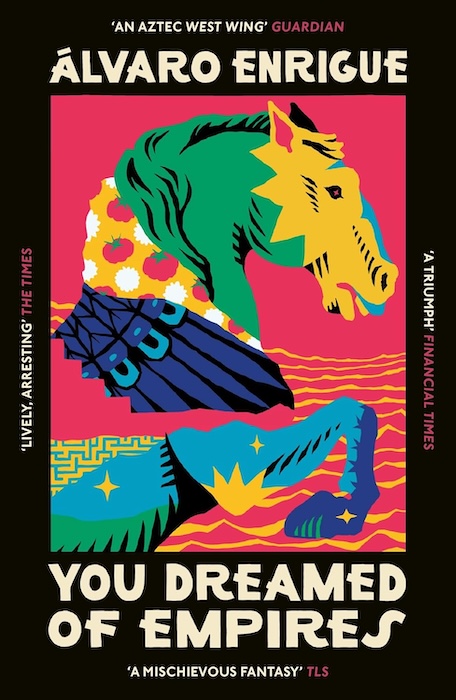
You Dreamed of Empires
Set in 1519, You Dreamed of Empires imagines the encounter between Spanish conquistador Hernán Cortés and Aztec ruler Moctezuma in the magnificent city of Tenochtitlan. Rather than presenting the conquest as a straightforward story of European victory, Enrigue focuses on the political manoeuvring, cultural misunderstandings, and competing ambitions surrounding this pivotal meeting. Through shifting perspectives and dark humour, the novel portrays the Spanish as vulnerable outsiders entering a sophisticated civilisation whose inhabitants have their own political struggles and visions of the future. Its dreamlike atmosphere unsettles familiar historical narratives, exposing the uncertainty and violence beneath the language of conquest. Enrigue reimagines a defining moment in Mexican history while questioning how empires construct stories about power, civilisation, and inevitable victory.
Mexico
2024
8
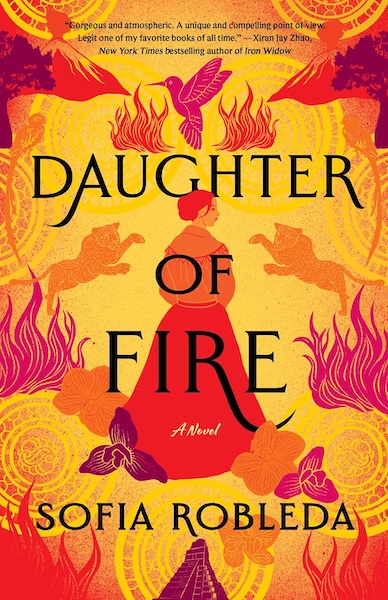
Daughter of Fire
Set in Guatemala in 1551, Daughter of Fire follows Catalina Cerrato, the daughter of a powerful Spanish landowner and a Maya noblewoman. Growing up between two cultures in the aftermath of the Spanish conquest, Catalina struggles to reconcile her father’s expectations with her mother’s legacy. Before her death, her mother entrusted her with preserving the sacred history of the K’iche’ people, recorded in the Popol Vuh. Determined to protect this endangered heritage, Catalina embarks on a dangerous journey to recover and preserve its stories. Along the way, she encounters Juan de Rojas, a Maya nobleman whose life has also been transformed by the conquest. Blending historical fiction, romance, and Maya mythology, the novel explores cultural identity, colonial oppression, love, and the struggle to preserve Indigenous traditions in the face of erasure.
Guatemala
2024
9
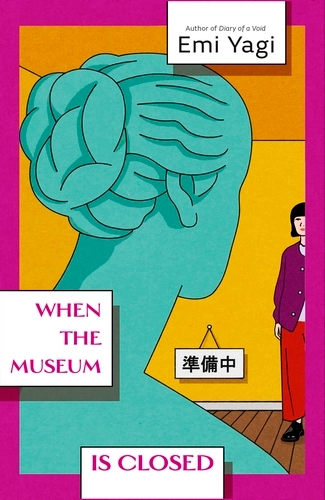
When the Museum is Closed
Rika Horauchi has spent much of her life hiding from the world behind an invisible yellow raincoat, an imaginary barrier that protects her from unwanted attention and human interaction. Working in a frozen-food warehouse and spending her evenings watching livestreams, she leads a quiet, isolated existence. Everything changes when she accepts an unusual part-time job at a museum: conversing in Latin with a statue of Venus on Mondays, when the museum is closed. Initially intimidated by the goddess’s beauty, Rika gradually discovers a surprising connection with her. As their conversations deepen, Venus becomes a companion who challenges Rika’s assumptions about beauty, desire, and the way women are perceived by others. Their relationship develops into an unconventional love story that opens up new possibilities for Rika, encouraging her to reconsider her isolation and imagine a different kind of freedom. Blending surrealism, dark humour, and feminist commentary, Emi Yagi’s novel explores loneliness, queer desire, and the transformative power of being understood. Beneath its whimsical premise lies a thoughtful examination of how society shapes women’s identities and how intimacy can help us break free from expectations.
Japan
2023
10
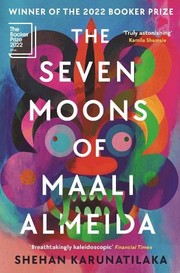
The Seven Moons of Maali Almeida
The Seven Moons of Maali Almeida follows Maali, a war photographer and gambler who awakens after his death in a mysterious afterlife. Set against the backdrop of Sri Lanka’s violent civil conflict in the 1980s, the novel gives Maali seven moons—or seven days—to discover who killed him and to help the people he loves find a collection of photographs that could expose atrocities committed during the war. As he navigates a bureaucratic and chaotic realm of the dead, he encounters other spirits and gradually confronts the dangers he faced while alive. Karunatilaka combines supernatural fiction, dark humour, and political satire to examine violence, corruption, and the struggle to preserve truth in a society marked by fear. The novel explores the responsibilities of witnessing, the power of evidence, and the difficulty of achieving justice when the dead have been denied a voice.
Sri Lanka
2022
11
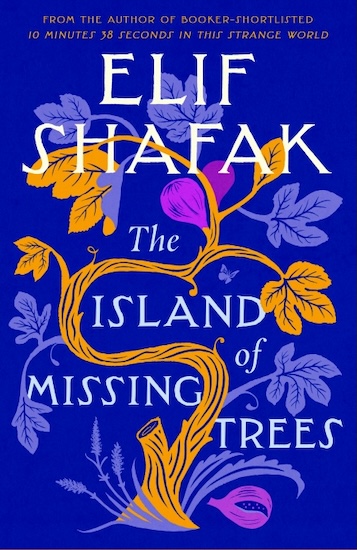
The Island of Missing Trees
A Greek Cypriot boy and a Turkish Cypriot girl fall in love in 1970s Cyprus, meeting secretly beneath a fig tree in a tavern as ethnic tensions threaten to tear their world apart. Decades later, in London, their daughter Ada struggles with grief and a past her parents have never fully revealed. As family secrets emerge, a fig tree growing in their garden becomes a living connection to a homeland left behind. Narrated partly through the tree itself, this moving novel explores displacement, inherited trauma, forbidden love, and the fragile bonds between people, nature, and memory.
Cyprus
2021
12
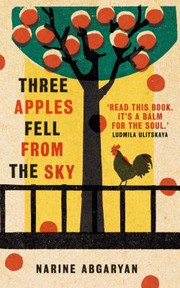
Three Apples Fell from the Sky
Set in the remote Armenian mountain village of Maran, Three Apples Fell from the Sky follows a close-knit community whose inhabitants live according to longstanding traditions, local legends, and a shared understanding of the world. When Anatolia, an elderly woman who has spent her life in the village, becomes convinced that she is about to die, an unexpected visit brings the possibility of a new beginning. Her story unfolds alongside those of other villagers, revealing old rivalries, unexpected affection, and the quiet resilience that sustains their community. Blending humour, folklore, and magical realism, Abgaryan portrays a place where hardship exists alongside everyday tenderness. The novel celebrates the strength of human connection, the importance of preserving cultural traditions, and the small miracles that can transform lives even in a community seemingly forgotten by the outside world.
Armenia
2021