Magical Realism
All countries
Argentina
Armenia
Chile
China
Cyprus
Dominican Republic
Ecuador
Guatemala
Iceland
India
Indonesia
Iran
Iraq
Italy
Japan
Kenya
Mexico
New Zealand
Pakistan
Poland
Portugal
Russia
Spain
Sri Lanka
Türkiye
1
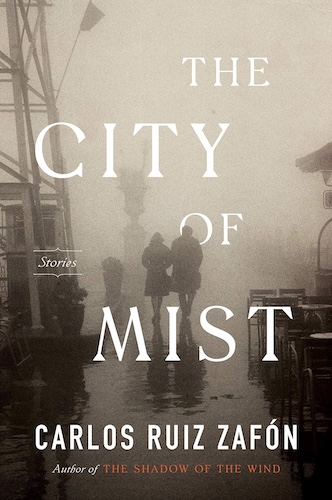
The City of Mist: Stories
In The City of Mist, Carlos Ruiz Zafón returns to the shadowy, enchanting Barcelona of his celebrated Cemetery of Forgotten Books series. This posthumous collection brings together eleven stories filled with mysterious characters, forgotten histories, supernatural encounters, and the irresistible magic of literature. Some stories expand the universe of Zafón’s bestselling novels, while others explore new corners of his richly imagined world.
A young boy discovers that writing can win the attention of the girl he loves. A labyrinth maker escapes plague-stricken Constantinople to build a library designed to withstand the destruction of time. Miguel de Cervantes encounters a mysterious stranger who offers him an extraordinary literary bargain, while the celebrated architect Antoni Gaudí embarks on a journey to New York that could determine the fate of one of his greatest creations.
Throughout the collection, Zafón blends Gothic mystery, historical imagination, dark humour, and a profound love of books. His stories transform cities into labyrinths of secrets and libraries into places where the past remains alive. Both a celebration of storytelling and a farewell to one of Spain’s most beloved modern novelists, The City of Mist invites readers to lose themselves once more in a world where every book conceals another mystery.
Spain
2020
2
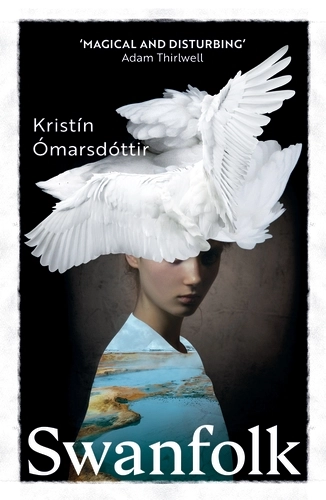
Swanfolk
Set in a strange, unsettling future, Swanfolk follows Elísabet Eva, a young intelligence agent whose life begins to unravel after a traumatic assignment in Paris. Seeking solitude, she takes long walks beside a lake, where she encounters mysterious creatures that are half-woman and half-swan. Fascinated by these beings, she gradually enters their hidden world and becomes entangled in their obsessive, sometimes violent struggle to exist alongside humans. As her involvement deepens, Elísabet begins to question her own perceptions and the reliability of her memories. Blending surrealism, dark fantasy, and psychological fiction, Kristín Ómarsdóttir’s novel explores the fragile boundaries between reality and imagination, belonging and alienation, and the human desire to escape one’s past. Strange, lyrical, and unsettling, Swanfolk uses its mythical creatures to examine the complexities of identity and the difficulty of understanding oneself.
Iceland
2019
3
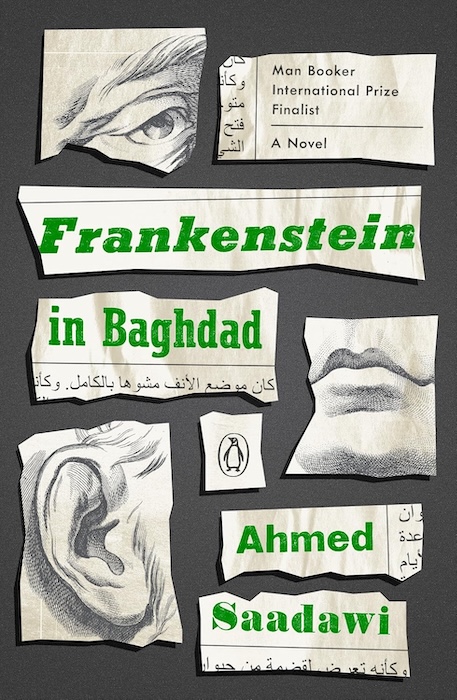
Frankenstein in Baghdad
Set in Baghdad after the 2003 invasion of Iraq, Frankenstein in Baghdad follows Hadi, an eccentric junk dealer who collects body parts left behind by bombings and other acts of violence. Hoping to ensure that the dead receive proper recognition, he stitches the remains together into a single body. When the assembled corpse mysteriously disappears, a series of gruesome murders begins, and rumours spread about a creature that cannot be killed. As the authorities and local residents attempt to understand the violence, the creature becomes a disturbing symbol of a society overwhelmed by revenge and injustice. Blending horror, dark humour, and political satire, Saadawi explores the human cost of war and the difficulty of assigning responsibility when violence produces an endless cycle of retaliation. The novel asks whether a society fractured by conflict can distinguish justice from revenge.
Iraq
2018
4
Exit West: A Novel
Exit West follows Nadia and Saeed, two young people who fall in love in an unnamed country descending into civil war. As violence spreads through their city, everyday life becomes increasingly dangerous, and the couple begins searching for a way to escape. They hear rumours of mysterious doors that can transport people to distant countries, offering a possible route to safety. After passing through one of these doors, Nadia and Saeed find themselves navigating the uncertainties of refugee life in unfamiliar places, including Greece, London, and California. Their relationship changes as they adapt to new communities and confront the emotional costs of displacement. Blending realism with speculative fiction, Hamid explores migration, borders, belonging, and the resilience required to build a future after leaving home. The novel also asks how movement across borders transforms individuals and societies.
Pakistan
2017
5
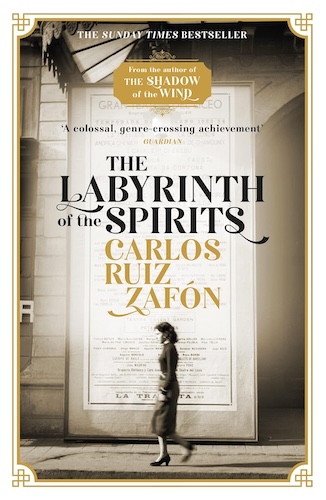
The Labyrinth of the Spirits
In post-war Barcelona, where the shadows of Francisco Franco’s dictatorship linger over everyday life, a young investigator named Alicia Gris is drawn into a dangerous mystery involving one of Spain’s most powerful political figures. Working for a secretive government agency, Alicia is tasked with locating a missing minister, but what begins as a straightforward investigation soon reveals a far-reaching conspiracy involving political corruption, kidnapping, and murder.
As Alicia follows the trail of clues, her investigation brings her into contact with the Sempere family, whose lives have been intertwined with the mysteries of the Cemetery of Forgotten Books for decades. Daniel Sempere, still haunted by questions surrounding his mother’s death, finds himself drawn into a final confrontation with the secrets that have shaped his family. Together, Alicia and Daniel uncover a disturbing history of violence, betrayal, and buried truths.
The fourth and final novel in Zafón’s Cemetery of Forgotten Books series, The Labyrinth of the Spirits brings together characters and mysteries from the previous books in an intricate literary puzzle. Combining Gothic atmosphere, historical fiction, suspense, and a profound love of books, Zafón creates a sweeping portrait of a city haunted by its past. At its heart, the novel explores how literature preserves memory, how authoritarian power attempts to control truth, and how courage and friendship can help people emerge from the darkest chapters of history.
Spain
2016
6
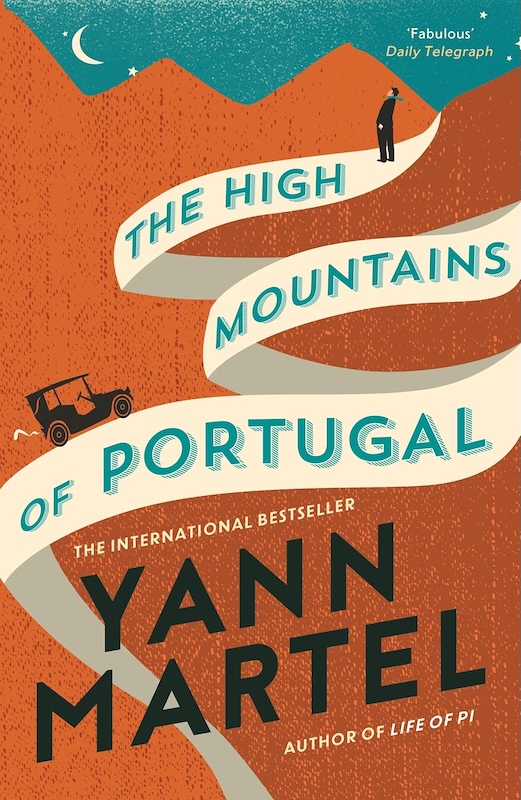
The High Mountains of Portugal
The High Mountains of Portugal weaves together three interconnected stories spanning nearly a century, exploring grief, faith, and the mysteries of human existence. In 1904, a young Portuguese archivist named Tomás discovers an ancient religious artifact and embarks on a journey through the countryside in search of its meaning. Thirty-five years later, a Portuguese pathologist confronts a personal tragedy that challenges his understanding of love and belief. In the final story, a Canadian senator living in contemporary Portugal finds himself drawn into an unexpected relationship with a chimpanzee, prompting him to reconsider the boundaries between humans and animals. Through these unusual narratives, Yann Martel explores the ways people respond to loss and search for meaning in a world that resists easy explanations. Blending philosophical reflection, historical fiction, and elements of the surreal, the novel examines faith, mortality, love, and humanity’s connection to the natural world.
Portugal
2016
7
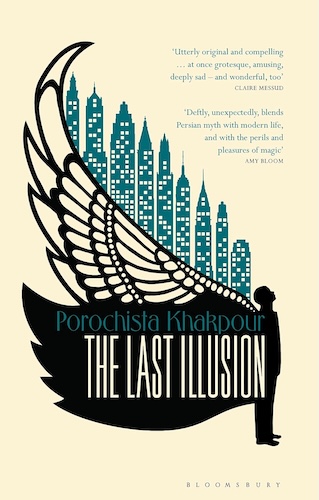
The Last Illusion
Born in a remote Iranian village, Zal spends the first ten years of his life imprisoned in a birdcage, his mother convinced that his unusually pale appearance marks him as a demon. Rescued and brought to New York, he must learn how to live among humans while struggling to understand who he is. Inspired by an ancient Persian myth, this imaginative novel weaves Iranian folklore into contemporary American life, exploring the boundaries between belonging and alienation, myth and reality, and the difficult journey toward selfhood.
Iran
2014
8
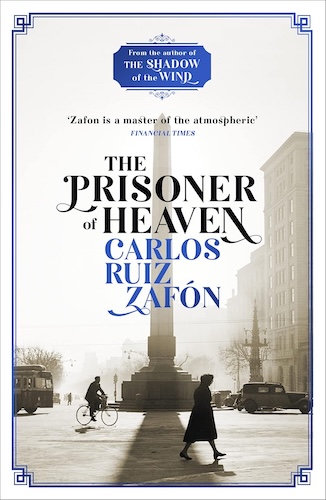
Prisoner Of Heaven
Barcelona, 1957. At the Sempere & Sons bookshop, Daniel Sempere seems to have finally found happiness. Married to Bea and the father of a young son, he shares his days with his devoted friend Fermín Romero de Torres, who is preparing for his own wedding. But their peaceful life is disrupted when a mysterious stranger enters the shop and purchases a rare, beautifully illustrated edition of The Count of Monte Cristo. Before leaving, he writes a disturbing dedication addressed to Fermín, hinting at a secret buried deep in the past.
Daniel soon discovers that his friend’s history is far darker than he imagined. The mystery leads back to the brutal years of Francisco Franco’s dictatorship, revealing a story of imprisonment, betrayal, revenge, and survival. As buried memories resurface, Daniel and Fermín must confront the consequences of secrets that could endanger everything they hold dear.
The third novel in Zafón’s Cemetery of Forgotten Books series, The Prisoner of Heaven brings together characters and mysteries from The Shadow of the Wind and The Angel’s Game. Blending Gothic suspense, historical fiction, and the enduring magic of books, the novel explores how the past refuses to remain buried—and how friendship and loyalty can survive even the darkest chapters of history.
Spain
2011
9
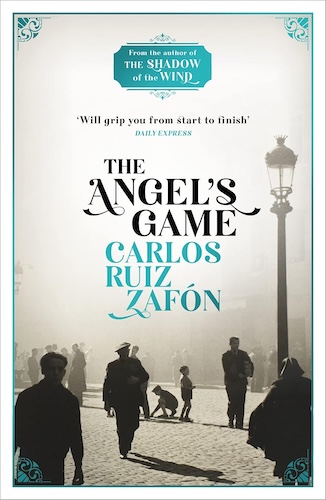
The Angel’s Game
In the dark, atmospheric streets of 1920s Barcelona, David Martín makes his living writing sensational crime stories under a pseudonym. Haunted by a troubled childhood and an impossible love, he finds refuge in literature and in a decaying mansion whose sinister history gradually begins to consume him. When a mysterious French publisher named Andreas Corelli offers him an extraordinary sum of money to write a book unlike any other, David accepts, believing the commission could transform his life.
But as he begins his work, unsettling connections emerge between the book he is writing, the secrets hidden within his mansion, and the strange events unfolding around him. What initially appears to be a dream opportunity becomes an increasingly dangerous mystery, blurring the boundaries between fiction and reality, faith and deception, and creation and destruction.
Returning to the shadowy literary universe of the Cemetery of Forgotten Books, Zafón crafts a Gothic thriller filled with secret passages, forbidden knowledge, obsessive love, and supernatural menace. Beneath its intricate mysteries lies a meditation on the power of storytelling and the price of artistic ambition. The Angel’s Game asks whether a writer can truly control the stories he creates—or whether some stories have the power to control their creators.
Spain
2008
10
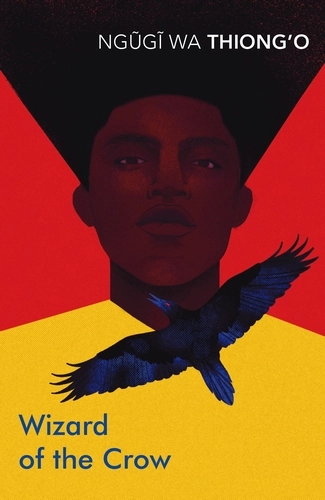
Wizard of the Crow
Set in the fictional African nation of Aburiria, Wizard of the Crow is a sprawling political satire about dictatorship, corruption, resistance, and the absurdities of absolute power. The country is ruled by a megalomaniacal leader known simply as the Ruler, whose grandiose ambitions and paranoia shape every aspect of public life. When the government announces plans to construct a monumental project called Marching to Heaven, it seeks financial support from international lenders, exposing the regime’s vanity and dependence on foreign approval.
At the center of the story are Kamĩtĩ, an unemployed university graduate who becomes known as the Wizard of the Crow, and Nyawĩra, a courageous activist involved in the underground resistance. Their lives become entangled with the Ruler’s increasingly bizarre court, where ministers compete for influence and ordinary citizens struggle to survive the consequences of political repression.
Combining magical realism, folklore, grotesque humor, and political allegory, Ngũgĩ examines how authoritarian regimes manipulate fear, language, religion, and superstition to maintain control. The novel also celebrates the resourcefulness of ordinary people and their capacity to challenge oppressive systems. Both a comic epic and a fierce critique of postcolonial power, it explores the struggle for dignity and freedom in a society ruled by absurdity and terror.
Kenya
2006
11
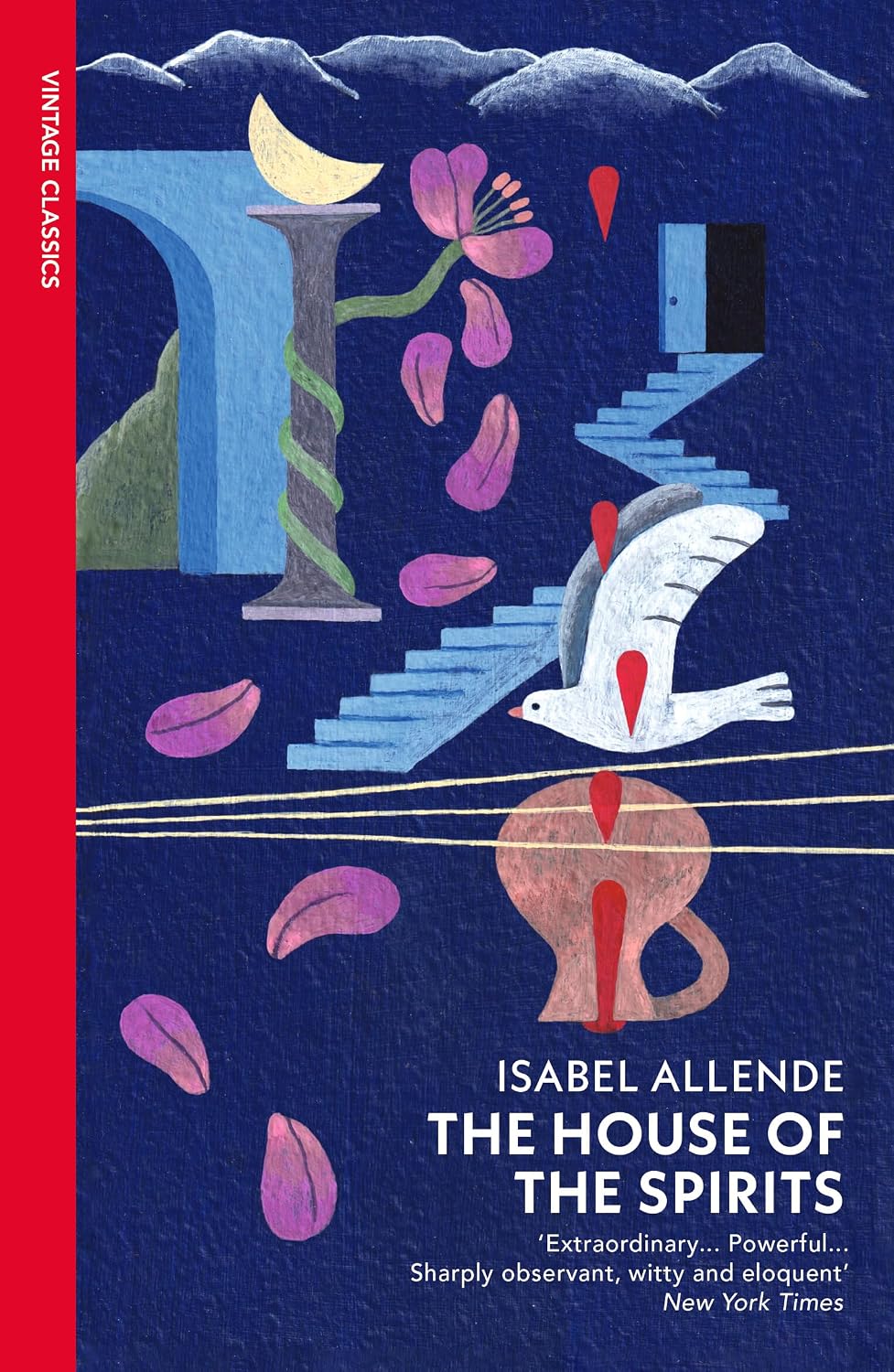
The House of the Spirits
The House of the Spirits chronicles several generations of the Trueba family in an unnamed Latin American country closely resembling Chile. At its centre are Clara, a woman with supernatural abilities, and Esteban Trueba, a powerful landowner whose ambition and authoritarian beliefs shape the lives of those around him. As the family experiences love, betrayal, political upheaval, and personal tragedy, their private struggles become intertwined with the country’s transformation. Allende blends magical realism with historical and political fiction, allowing spirits and supernatural events to coexist with the realities of class divisions and dictatorship. The novel explores how family secrets and inherited patterns of violence can persist across generations, while also suggesting the possibility of reconciliation and renewal.
Chile
2005
12
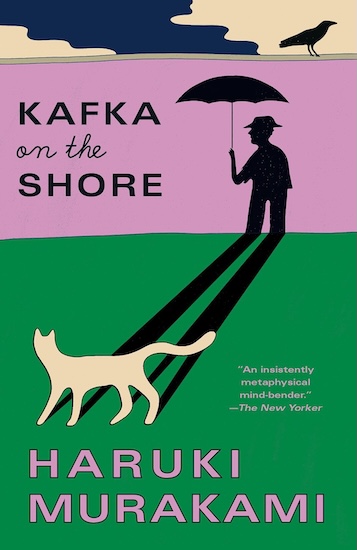
Kafka on the Shore
Kafka on the Shore weaves together the stories of Kafka Tamura, a fifteen-year-old boy who runs away from home, and Nakata, an elderly man whose unusual abilities emerged after a mysterious childhood incident. Kafka travels to a quiet library in Takamatsu, where he encounters people who help him confront questions about his family, his memories, and his destiny. Meanwhile, Nakata embarks on a journey of his own, following strange events that seem to connect him to Kafka’s life. As their stories unfold, dreams, myths, talking animals, and supernatural occurrences blur the boundaries between reality and imagination. Murakami explores fate, memory, loneliness, and the search for identity, creating a mysterious narrative in which the characters must confront aspects of themselves that resist ordinary explanation.
Japan
2002