Contemporary Fiction
All countries
Argentina
Armenia
Bahamas
Bosnia and Herzegovina
Botswana
Brunei
Bulgaria
Cameroon
China
Dominican Republic
Egypt
France
Germany
Ghana
India
Iran
Iraq
Italy
Jamaica
Japan
Libya
Mexico
Nigeria
Pakistan
Palestine
Panama
Philippines
Russia
Saudi Arabia
South Korea
Spain
Sweden
Switzerland
Syria
Taiwan
Türkiye
United Arab Emirates
United Kingdom
United States
1
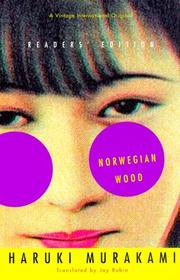
Norwegian Wood
Norwegian Wood follows Toru Watanabe, a university student in Tokyo who looks back on his youth and the relationships that shaped him. Haunted by the suicide of his closest friend, Kizuki, Toru becomes emotionally involved with Naoko, Kizuki’s former girlfriend, whose own grief makes intimacy difficult. At the same time, he meets Midori, an outspoken and independent young woman whose warmth and vitality offer a different vision of life. Torn between the past and the possibility of a new beginning, Toru struggles to understand love, loss, and responsibility. Set against the social changes of late-1960s Japan, Murakami explores loneliness, mental suffering, and the fragile connections that help people endure difficult periods. The novel captures the uncertainty of growing up and the lasting influence of relationships that cannot always be preserved.
Japan
1987
2

Simple Passion
Simple Passion is a concise, intensely personal account of a woman’s consuming affair with a married man. The narrator, an educated French woman, describes how her relationship gradually takes over her existence, shaping her thoughts, routines, and sense of time. Waiting for her lover’s phone calls and anticipating their meetings become the organising principles of her life, while ordinary activities lose their significance in comparison with the possibility of seeing him again.
Drawing on her own experiences, Annie Ernaux examines desire with remarkable honesty and emotional precision, refusing to romanticise or condemn the narrator’s obsession. She explores the vulnerability of surrendering oneself to another person, as well as the ways passion can disrupt independence and alter one’s perception of reality. Blending autobiography with detached observation, the book challenges conventional ideas about female desire, dignity, and romantic love. Its direct, unembellished prose transforms a deeply private experience into a broader reflection on the power of longing and the consuming nature of passion.
France
1991
3

White Teeth
Set in multicultural London, White Teeth follows the intertwined lives of two families whose histories reflect the complexities of immigration, colonialism, and cultural belonging in modern Britain. Archie Jones, a disillusioned Englishman, and Samad Iqbal, a Bangladeshi Muslim immigrant, become unlikely friends during the Second World War. Decades later, their families remain connected as their children grow up navigating questions of heritage, religion, and identity in a rapidly changing society.
Samad struggles to preserve his cultural traditions while raising twin sons, Magid and Millat, whose opposing paths challenge his expectations. Meanwhile, Archie’s daughter, Irie, searches for a sense of belonging amid conflicting ideas about race, beauty, and family history. Their lives become entangled with the Chalfens, a liberal, intellectually confident British family whose influence exposes the contradictions within multicultural society.
Combining sharp humor, memorable characters, and intergenerational storytelling, Smith’s debut novel explores the tension between tradition and modernity, the lasting effects of colonial history, and the ways family legacies shape individual identity. White Teeth is a vibrant portrait of contemporary Britain and its many overlapping cultures.
United Kingdom
2000
4
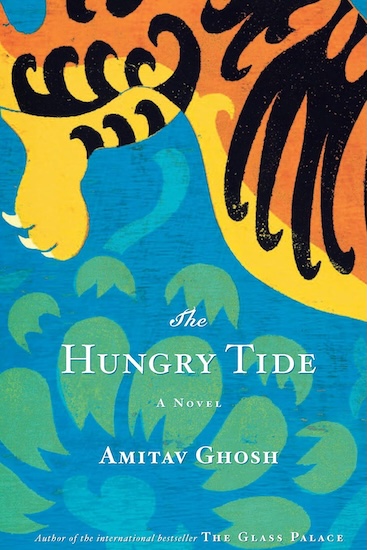
The Hungry Tide
Set in the Sundarbans, a vast archipelago of mangrove forests and tidal rivers on the eastern coast of India, The Hungry Tide brings together three people from different worlds. Piya Roy, an American marine biologist of Indian descent, arrives to study the endangered Irrawaddy dolphins. She meets Fokir, a local fisherman whose intimate knowledge of the waterways makes him an invaluable guide, and Kanai Dutt, a translator and businessman visiting his aunt on the islands. As their lives become intertwined, they encounter the region’s dangerous wildlife, political tensions, and precarious relationship between humans and nature. Through this richly layered story, Amitav Ghosh explores environmental conservation, cultural differences, displacement, and the struggle of vulnerable communities to survive in an unforgiving landscape. The novel examines the complex relationship between people and the natural world, questioning whether scientific knowledge, local traditions, and human ambition can coexist.
India
2004
5

On Beauty
On Beauty is a witty, richly layered novel about family, cultural identity, and intellectual life, set between a fictional university town near Boston and London. The story centers on Howard Belsey, a British art historian teaching at Wellington College, and his American wife, Kiki, whose marriage is strained by infidelity, ideological disagreements, and diverging personal ambitions. Their three children—Jerome, Zora, and Levi—are each searching for their own place in a world shaped by race, class, and competing cultural values.
The Belseys’ lives become increasingly entangled with those of the Kipps family, led by Monty Kipps, a conservative Caribbean-born academic whose views sharply oppose Howard’s liberal convictions. As the two families collide, their rivalries expose the contradictions between public beliefs and private behavior.
Inspired in part by E. M. Forster’s Howards End, Smith’s novel explores the complicated relationship between beauty and morality, the limits of intellectual certainty, and the tensions between tradition and change. Both humorous and emotionally perceptive, On Beauty offers a portrait of contemporary multicultural society and the fragile bonds that hold families together.
United Kingdom
2005
6
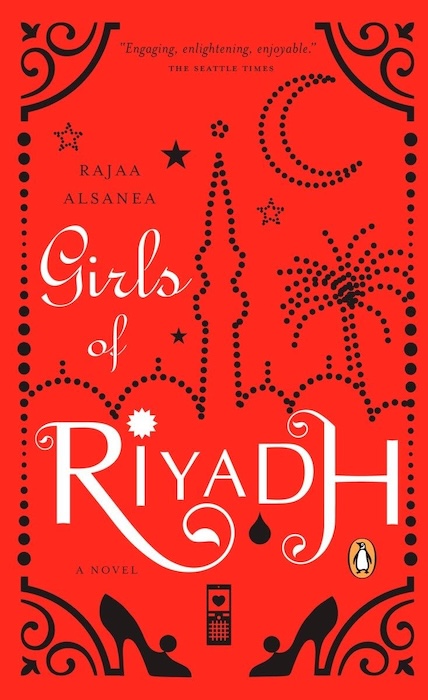
Girls of Riyadh
Girls of Riyadh follows the lives of four young Saudi women—Gamrah, Sadeem, Michelle, and Lamees—as they navigate love, friendship, marriage, and social expectations in contemporary Riyadh. Told through a series of anonymous email messages sent by a mysterious narrator, the novel reveals the private struggles of women balancing personal desires with the traditions and restrictions of a conservative society. Each woman faces different challenges in her pursuit of romantic happiness, from arranged marriages and heartbreak to questions of independence and belonging. Through candid storytelling, humor, and social commentary, Rajaa Alsanea examines the tensions between tradition and modernity in Saudi Arabia, exposing the double standards surrounding gender and relationships. The novel offers a glimpse into the changing aspirations of young Saudi women as they seek to define their own identities and determine the course of their lives.
Saudi Arabia
2005
7
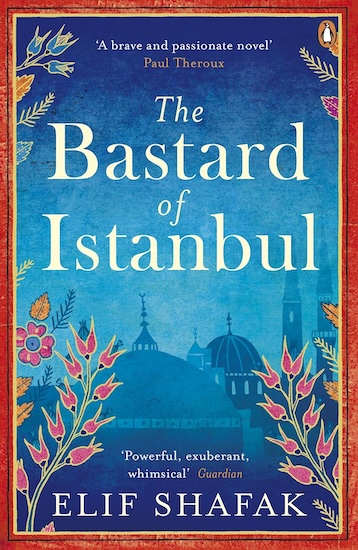
The Bastard of Istanbul
The Bastard of Istanbul centres on two young women whose lives connect through a complicated family history shaped by Turkish and Armenian experiences. Asya Kazancı grows up in Istanbul in a household dominated by women, surrounded by family secrets and conflicting interpretations of the past. Meanwhile, Armanoush, an Armenian American teenager, travels secretly to Istanbul in search of her cultural roots and a better understanding of her family’s history. When the two meet, their friendship brings buried memories and long-suppressed truths to the surface, particularly those connected to the Armenian genocide and its legacy. Through humour, food, family relationships, and competing memories, Shafak examines the relationship between personal identity and collective history. The novel explores how silence and denial can shape generations, while asking whether individuals can build meaningful connections across cultural and historical divisions.
Türkiye
2006
8
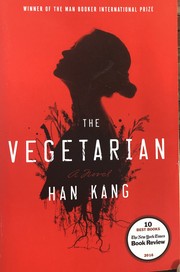
The Vegetarian
The Vegetarian tells the story of Yeong-hye, an ordinary South Korean woman whose decision to stop eating meat after experiencing disturbing dreams sets off a chain of increasingly unsettling events. Her husband initially sees her refusal as an inconvenience, while her family responds with anger and attempts to force her back into conformity. As Yeong-hye withdraws from conventional expectations, her behaviour becomes increasingly radical, challenging the roles imposed on her as a wife, daughter, and woman. Told through the perspectives of her husband, brother-in-law, and sister, the novel gradually reveals the psychological and emotional pressures beneath her transformation. Han Kang explores bodily autonomy, violence, desire, and the struggle to resist a society that demands obedience. The novel raises unsettling questions about whether rejecting social conventions can become an act of liberation, even when that resistance carries devastating consequences.
South Korea
2007
9
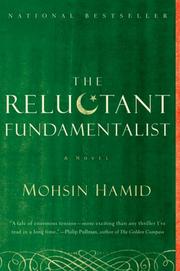
The Reluctant Fundamentalist
The Reluctant Fundamentalist follows Changez, a young Pakistani man who achieves professional success in New York after graduating from Princeton University. Recruited by an elite financial firm, he embraces the promise of the American dream and begins a relationship with Erica, a wealthy American woman struggling with grief. However, the attacks of September 11, 2001, transform the way Changez experiences life in the United States. Increasingly aware of the suspicion and hostility directed towards him because of his Pakistani identity, he begins to question his professional ambitions and his place in American society. Years later, he recounts his experiences to an American visitor in Lahore, leaving the reader uncertain about the encounter’s true nature. Hamid explores belonging, nationalism, prejudice, and the psychological consequences of living between cultures in a world divided by political fear.
Pakistan
2007
10

The Thing Around Your Neck
The Thing Around Your Neck is a collection of twelve short stories exploring the experiences of Nigerians living both at home and abroad, particularly in the United States. Adichie portrays characters negotiating cultural expectations, family obligations, gender inequality, political instability, and the complicated realities of immigration. In the title story, a young Nigerian woman moves to America, where her hopes for a better life are challenged by loneliness, financial insecurity, and the feeling of being misunderstood. Other stories examine strained marriages, religious divisions, family secrets, and the gap between how people perceive Nigeria and how Nigerians experience their own country. With emotional precision and understated humour, Adichie explores the tension between tradition and modernity, revealing how migration and cultural encounters can transform people’s understanding of themselves and their relationships.
Nigeria
2010
11
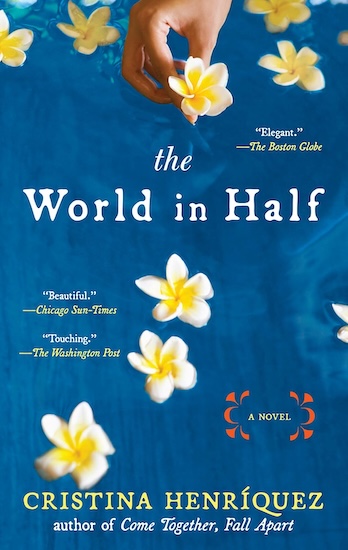
The world in half
The World in Half follows Miraflores, a young woman living in Chicago who discovers that the father she has never known may still be alive in Panama. Determined to uncover the truth about her family’s past, she travels to the country her mother left behind, hoping to understand her own identity and the circumstances surrounding her parents’ relationship. As she explores Panama, Miraflores encounters unfamiliar landscapes, complicated family histories, and unexpected connections that challenge her assumptions about where she belongs. Through her journey, Cristina Henríquez examines the immigrant experience, cultural belonging, and the ways family secrets shape personal identity. The novel explores the emotional distance between generations and the search for a place to call home.
Panama
2010
12

The Mountain and the Wall
In The Mountain and the Wall, Shamil, a young journalist in Dagestan’s capital, Makhachkala, hears rumours that the Russian government intends to build a wall separating the Muslim regions of the North Caucasus from the rest of the country. As anxiety and unrest spread, Shamil finds himself confronting the political and religious divisions shaping his community. What begins as distant speculation gradually becomes an urgent personal and social crisis, forcing him to reconsider his own passivity. Ganieva portrays a region caught between competing ideologies, traditional beliefs, and the pressures of modern political life. Through Shamil’s experiences, the novel explores how intolerance and extremism can fracture communities and how ordinary people respond when the society around them begins to unravel.
Russia
2012