Classics
All countries
Antigua and Barbuda
Argentina
Armenia
Australia
Austria
Azerbaijan
Bangladesh
Barbados
Belgium
Bosnia and Herzegovina
Brazil
Chile
China
Colombia
Czech Republic
Denmark
Dominica
Dominican Republic
Egypt
Finland
France
Germany
Greece
Hungary
Iceland
India
Indonesia
Iran
Ireland
Italy
Japan
Kenya
Kyrgyzstan
Lebanon
Lithuania
Mexico
Netherlands
Norway
Pakistan
Palestine
Peru
Portugal
Romania
Russia
Saudi Arabia
Spain
Sudan
Sweden
Switzerland
Taiwan
Türkiye
Ukraine
United Kingdom
United States
1
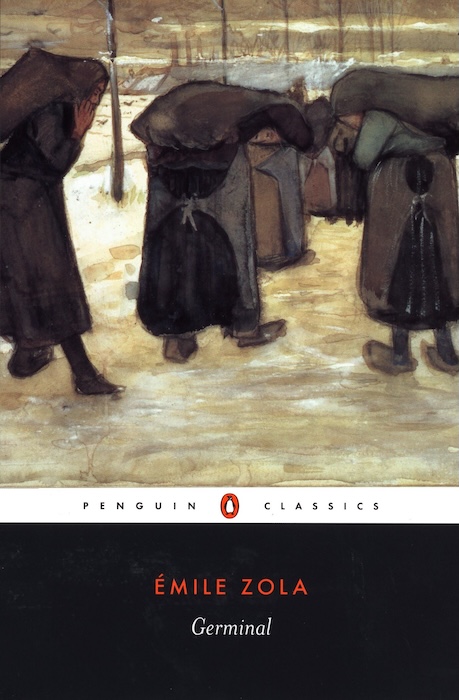
Germinal
Germinal follows Étienne Lantier, an unemployed railway worker who finds work in a coal mine in northern France. There he witnesses the brutal conditions endured by miners, whose dangerous labour and inadequate wages leave their families trapped in poverty. As tensions between workers and mine owners intensify, Étienne becomes involved in efforts to organise a strike demanding better pay and working conditions. Initially united by hope and solidarity, the miners face hunger, repression, and growing divisions as the conflict continues. Zola portrays the physical dangers of industrial labour alongside the social structures that perpetuate inequality. Through vivid descriptions of the mining community, he examines class struggle, exploitation, and collective resistance. The novel’s title evokes the beginning of new growth, suggesting that although the strike suffers a devastating defeat, the desire for social transformation may continue to develop beneath the surface.
France
1885
2
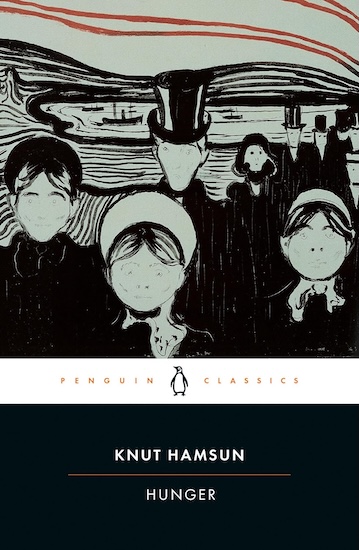
Hunger
Hunger follows an unnamed young writer wandering the streets of Kristiania, the city now known as Oslo, as he struggles with poverty and starvation. Determined to preserve his dignity and independence, he refuses to accept assistance even as his physical condition deteriorates. His hunger intensifies his emotional instability, leading to moments of grandiosity, shame, generosity, and irrational behaviour. Through his fragmented thoughts and unpredictable actions, Hamsun portrays the inner life of an individual whose desperate circumstances make ordinary social interactions increasingly difficult. The narrator’s pride becomes both a source of resistance and an obstacle to survival, revealing the psychological costs of extreme deprivation. The novel explores isolation, artistic ambition, and the fragile relationship between body and mind, offering an influential early example of psychological fiction that focuses on subjective experience rather than conventional plot.
Norway
1890
3
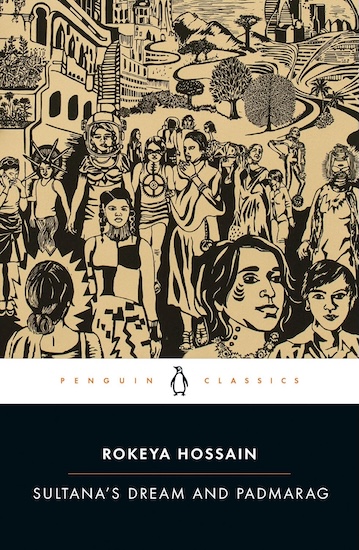
Sultana's Dream and Padmarag
What would the world look like if women held the power and men were confined to the home? In Sultana’s Dream, a pioneering feminist science-fiction story, Sultana discovers Ladyland, a peaceful, technologically advanced society where women lead scientific progress and men observe purdah. In Padmarag, a diverse community of women builds a refuge offering education, shelter, and independence to those constrained by marriage, poverty, and social prejudice. Written nearly a century before many contemporary feminist debates, these visionary works challenge patriarchy, religious and social conventions, and colonial power. Together, they imagine a world where women’s liberation begins not simply with equality, but with the freedom to shape society on their own terms.
Bangladesh
1905
4

The Metamorphosis
The Metamorphosis follows Gregor Samsa, a travelling salesman who wakes one morning to discover that he has transformed into a gigantic insect. Unable to continue working or communicate normally with his family, Gregor becomes increasingly isolated inside his bedroom. Initially, his family attempts to accommodate his strange condition, but their sympathy gradually gives way to fear, resentment, and exhaustion. As Gregor loses his ability to participate in ordinary life, the family must confront the financial and emotional consequences of his transformation. Kafka combines the fantastic with the mundane to examine alienation, family obligation, and the relationship between personal worth and economic productivity. Gregor’s physical transformation exposes the conditional nature of familial affection and the cruelty of a society that values people primarily for their usefulness. The novella explores the fragility of identity and the devastating consequences of being treated as an outsider.
Czech Republic
1915
5
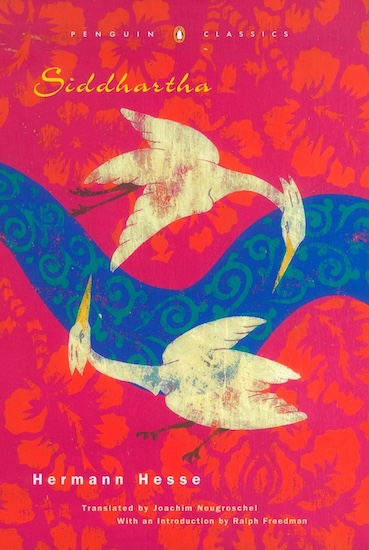
Siddhartha
Siddhartha follows a young man in ancient India who leaves his privileged life in search of spiritual understanding. Dissatisfied with the religious teachings and ascetic practices available to him, Siddhartha travels with his friend Govinda and eventually encounters the Buddha. Although he respects the Buddha’s wisdom, Siddhartha believes that enlightenment cannot simply be learned from another person. He therefore pursues his own experiences, exploring sensual pleasure, wealth, love, and the suffering that accompanies attachment. After years of disillusionment, he finds guidance in the quiet presence of a ferryman and begins to understand the interconnectedness of existence. Hesse draws on Indian religious and philosophical traditions to explore self-discovery, desire, and the limitations of intellectual knowledge. The novel suggests that wisdom emerges not through rigid doctrine but through attentive experience, acceptance, and an understanding of life’s constantly changing nature.
Germany
1922
6
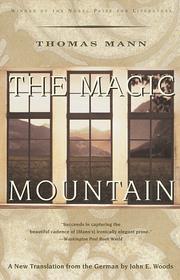
The Magic Mountain
The Magic Mountain follows Hans Castorp, a young German engineer who visits his cousin at a tuberculosis sanatorium in the Swiss Alps. Initially intending to stay for only three weeks, Hans becomes absorbed in the institution’s unusual atmosphere and eventually remains there for seven years. Removed from the routines of ordinary society, he encounters patients and intellectuals whose conversations explore competing ideas about politics, philosophy, science, love, and human progress. The sanatorium becomes a miniature version of pre-war Europe, where debates about rationalism, humanism, nationalism, and radical ideology reveal the tensions shaping the continent. Through Hans’s gradual transformation, Mann examines the relationship between time, illness, and intellectual development. The novel explores the attraction of isolation and the difficulty of understanding a society approaching catastrophe, ultimately reflecting on the cultural and moral crises that preceded the First World War.
Germany
1924
7

The Trial
The Trial follows Josef K., a bank employee who is unexpectedly arrested one morning without being told what crime he has committed. Although he is allowed to continue his daily life, he becomes increasingly consumed by a mysterious legal process governed by inaccessible authorities and incomprehensible rules. As he attempts to defend himself, he encounters officials, lawyers, and other individuals who offer little clarity about the accusations against him. His efforts to understand the system only deepen his sense of helplessness. Published after Kafka’s death, the novel presents a disturbing vision of a world in which individuals are trapped within institutions they cannot comprehend or challenge. Kafka explores guilt, bureaucracy, power, and alienation, revealing how uncertainty itself can become a form of oppression. Josef K.’s struggle captures the anxiety of confronting an authority that demands obedience while refusing to explain its actions.
Czech Republic
1925
8
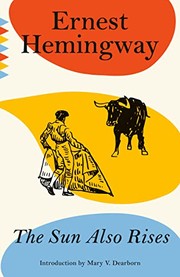
Sun Also Rises
The Sun Also Rises follows a group of American and British expatriates living in Europe after the First World War. Its narrator, Jake Barnes, is a journalist whose war injury has left him unable to pursue a conventional romantic relationship with Lady Brett Ashley, a charismatic woman whose independence and restlessness affect everyone around her. Their circle travels from Paris to the Spanish countryside, where fishing trips and the festivities of Pamplona’s bullfighting season offer temporary escape from emotional uncertainty. Beneath the characters’ drinking, flirtation, and restless movement lies a profound sense of disillusionment. Hemingway captures a generation struggling to find meaning after war, exploring unfulfilled desire, damaged masculinity, and the loneliness that can persist even among friends.
United States
1926
9
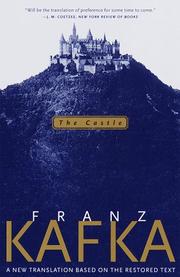
The Castle
The Castle follows a man known as K., who arrives in a remote village claiming to have been hired as a land surveyor by the authorities of a mysterious castle. However, the villagers question his appointment, and K. soon discovers that gaining access to the institution is far more difficult than he imagined. He attempts to establish his legitimacy through conversations with officials, messengers, and residents, but every encounter produces new obstacles and contradictory explanations. The castle remains physically visible yet effectively unreachable, representing an authority that governs people’s lives without making itself accountable. Kafka explores bureaucracy, exclusion, and the human desire for recognition and belonging. The unfinished novel portrays a world where rules seem endlessly complex and acceptance is perpetually deferred, capturing the frustration of individuals attempting to find meaning within systems that resist understanding.
Czech Republic
1926
10

Steppenwolf
Steppenwolf follows Harry Haller, a middle-aged intellectual who feels profoundly alienated from bourgeois society and believes himself divided between two opposing natures: the civilised human being and the solitary wolf. Disillusioned with conventional life, Harry becomes increasingly withdrawn and struggles with thoughts of despair. His encounter with Hermine, a lively and unconventional woman, introduces him to new experiences, including music, dancing, and forms of pleasure he has long rejected. Through these encounters, he begins to question his rigid understanding of identity and the assumption that human beings can be divided into simple opposing parts. Hesse blends psychological exploration with surreal and philosophical episodes to examine loneliness, social conformity, and the possibility of personal transformation. The novel asks whether people can learn to embrace the contradictions within themselves rather than remain imprisoned by a fixed image of who they are.
Germany
1927
11
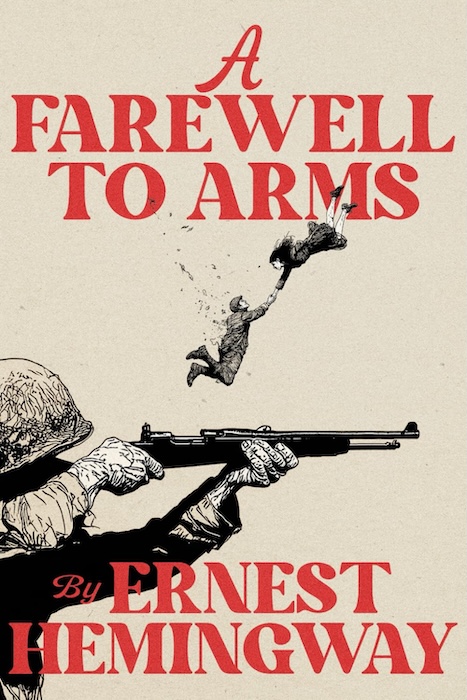
A Farewell to Arms
A Farewell to Arms follows Frederic Henry, an American ambulance officer serving with the Italian army during the First World War. While stationed near the front, he falls in love with Catherine Barkley, a British nurse whose emotional support offers him an escape from the brutality surrounding them. Their relationship deepens as the war intensifies, and Frederic becomes increasingly disillusioned with military duty and patriotic rhetoric. After a chaotic retreat from the front, he deserts the army and attempts to build a peaceful life with Catherine. However, their hopes for a future together are threatened by circumstances beyond their control. Hemingway explores love as a refuge from violence, while revealing its vulnerability in a world governed by chance and loss. The novel examines disillusionment, sacrifice, and the difficulty of finding lasting meaning in a time of war.
United States
1929
12

All Quiet on the Western Front
All Quiet on the Western Front follows Paul Bäumer, a young German soldier who enlists in the First World War alongside his school friends after being encouraged by patriotic teachers. Once at the front, the young men discover that the heroic ideals used to recruit them bear little resemblance to the reality of trench warfare. Constant bombardment, hunger, exhaustion, and the loss of comrades gradually destroy their innocence and their faith in the society that sent them to fight. When Paul returns home on leave, he finds himself unable to reconnect with civilians who cannot understand his experiences. Remarque portrays war as a force that damages not only bodies but also the emotional and moral foundations of a generation. The novel explores trauma, disillusionment, and the devastating distance between military rhetoric and the human cost of conflict.
Germany
1929