Classics
All countries
Antigua and Barbuda
Argentina
Armenia
Australia
Austria
Azerbaijan
Bangladesh
Barbados
Belgium
Bosnia and Herzegovina
Brazil
Chile
China
Colombia
Czech Republic
Denmark
Dominica
Dominican Republic
Egypt
Finland
France
Germany
Greece
Hungary
Iceland
India
Indonesia
Iran
Ireland
Italy
Japan
Kenya
Kyrgyzstan
Lebanon
Lithuania
Mexico
Netherlands
Norway
Pakistan
Palestine
Peru
Portugal
Romania
Russia
Saudi Arabia
Spain
Sudan
Sweden
Switzerland
Taiwan
Türkiye
Ukraine
United Kingdom
United States
1
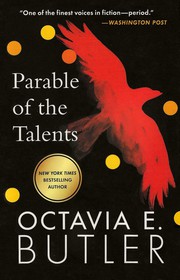
Parable of the Talents
Set in a dystopian America in the early twenty-first century, Parable of the Talents continues the story of Lauren Olamina, founder of the Earthseed movement, which teaches that humanity’s destiny is to shape change and eventually travel beyond Earth. As Lauren works to build a community based on cooperation, equality, and spiritual transformation, a Christian fundamentalist government rises to power, bringing persecution and violence. The novel is narrated partly through the perspective of Lauren’s estranged daughter, who struggles to understand her mother’s beliefs and legacy. Through their intertwined stories, Octavia E. Butler examines religious extremism, authoritarianism, racial injustice, and the struggle to preserve freedom in a society shaped by fear. The novel offers a powerful reflection on the dangers of political fanaticism and the resilience required to imagine a different future.
United States
1998
2
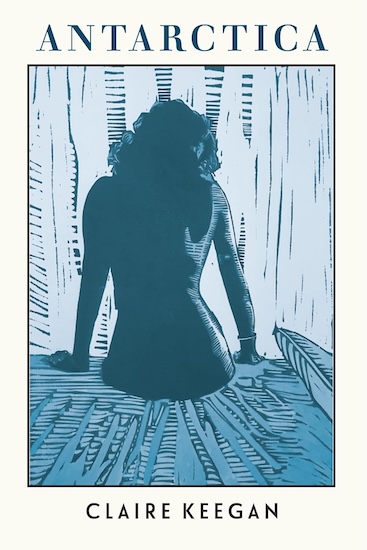
Antarctica
In her debut short-story collection, Claire Keegan examines the fragile boundaries between desire, loyalty, and betrayal. The opening story follows a married woman who travels away from home to discover what it might feel like to sleep with another man. Other stories introduce characters whose lives are unsettled by obsession, revenge, loneliness, and the sudden return of people from their past. A missing child, a long-awaited meeting between former lovers, and the uneasy dynamics within families reveal how quickly familiar worlds can become strange.
Moving between Ireland and the United States, these stories capture people at moments when their private desires collide with the expectations of others. Keegan writes with striking precision, balancing compassion with an unsparing eye for human weakness. Her characters are neither entirely innocent nor entirely cruel; instead, they inhabit the complicated territory between longing and consequence. Antarctica announced Keegan as a distinctive literary voice, exploring the unsettling truth that even ordinary lives can conceal extraordinary emotional danger.
Ireland
1999
3
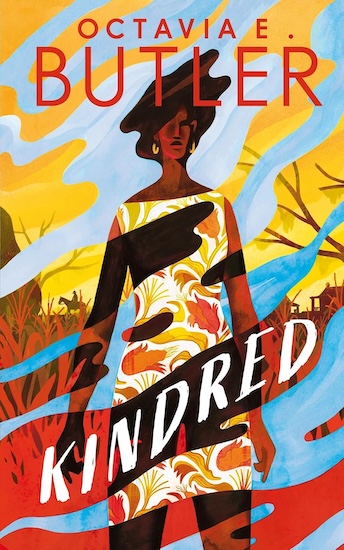
Kindred
In Kindred, Dana, a young Black writer living in California in 1976, is unexpectedly transported through time to an antebellum Maryland plantation. Each time she arrives in the past, she encounters Rufus Weylin, the white son of a plantation owner whose survival becomes mysteriously linked to her own. As Dana is repeatedly pulled between her modern life and the brutal realities of slavery, she must navigate a world where her freedom and safety are constantly threatened. Her relationship with Rufus grows increasingly complicated as she struggles to protect her ancestors while preserving her own identity and humanity. Blending historical fiction and science fiction, Octavia E. Butler explores slavery, racism, power, and the enduring consequences of historical violence. The novel offers a deeply personal examination of how the past shapes the present and challenges our understanding of freedom, survival, and belonging.
United States
2003
4
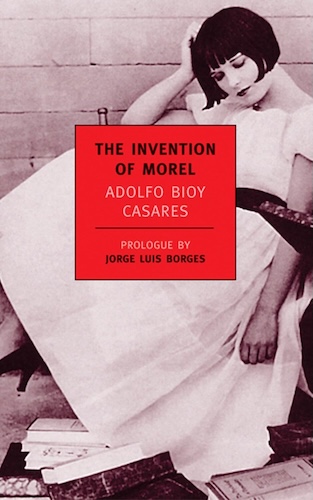
The Invention of Morel
The Invention of Morel follows a fugitive who seeks refuge on a seemingly deserted island, where he discovers a group of people behaving as though he does not exist. Among them is Faustine, a woman whose presence fascinates him, though she remains unaware of him. As he investigates the mysterious inhabitants, he uncovers a strange invention that challenges the boundaries between reality, memory, and illusion. Blending philosophical speculation with elements of science fiction and mystery, Adolfo Bioy Casares explores the human desire to overcome mortality and preserve love beyond the limits of physical existence. The novel raises unsettling questions about consciousness, the nature of reality, and the price of eternal life.
Argentina
2003
5
The House of the Spirits
The House of the Spirits chronicles several generations of the Trueba family in an unnamed Latin American country closely resembling Chile. At its centre are Clara, a woman with supernatural abilities, and Esteban Trueba, a powerful landowner whose ambition and authoritarian beliefs shape the lives of those around him. As the family experiences love, betrayal, political upheaval, and personal tragedy, their private struggles become intertwined with the country’s transformation. Allende blends magical realism with historical and political fiction, allowing spirits and supernatural events to coexist with the realities of class divisions and dictatorship. The novel explores how family secrets and inherited patterns of violence can persist across generations, while also suggesting the possibility of reconciliation and renewal.
Chile
2005
6
Walk the Blue Fields
In this collection of short stories, Claire Keegan explores the hidden tensions beneath ordinary lives in rural Ireland. In the title story, a Catholic priest stands at the altar on a wedding day, haunted by memories of a love affair that continues to challenge his faith and his sense of duty. Elsewhere, a writer seeking solitude finds her retreat disrupted by an unwelcome visitor, while farmers, lovers, and families confront disappointments and desires they struggle to articulate.
Keegan’s characters often find themselves caught between the lives they have chosen and the lives they secretly wish they could lead. Their private longings unfold against a changing Ireland, where tradition, religion, and social expectations exert a powerful influence. With spare, precise prose, she reveals the emotional weight hidden in everyday gestures and conversations. Walk the Blue Fields is a quietly penetrating collection about love, regret, faith, and the compromises people make in the hope of finding happiness.
Ireland
2007
7
Foucault's Pendulum
Foucault’s Pendulum follows three Italian editors who work for a small publishing house specialising in obscure historical and occult manuscripts. As a private intellectual game, they begin inventing an elaborate conspiracy theory that connects secret societies, the Knights Templar, and centuries of hidden knowledge. Their fictional pattern gradually becomes more elaborate, drawing in real-world enthusiasts who believe the invented conspiracy reveals the truth about history. What begins as a playful exercise becomes increasingly dangerous as the editors lose control of the story they have created. Eco explores the human tendency to search for patterns and hidden meanings, showing how the desire to explain the world can lead people into irrational beliefs. Blending historical references, intellectual satire, and suspense, the novel examines conspiracy thinking, interpretation, and the dangers of confusing imaginative connections with evidence.
Italy
2007
8
The Prophet
The Prophet is a book of 26 poetic essays written in English in 1923 by the Lebanese-American artist, philosopher and writer Khalil Gibran. In the book, the prophet Almustafa who has lived in the foreign city of Orphalese for 12 years is about to board a ship which will carry him home. He is stopped by a group of people, with whom he discusses many issues of life and the human condition. The book is divided into chapters dealing with love, marriage, children, giving, eating and drinking, work, joy and sorrow, houses, clothes, buying and selling, crime and punishment, laws, freedom, reason and passion, pain, self-knowledge, teaching, friendship, talking, time, good and evil, prayer, pleasure, beauty, religion, and death.
Lebanon
2007
9
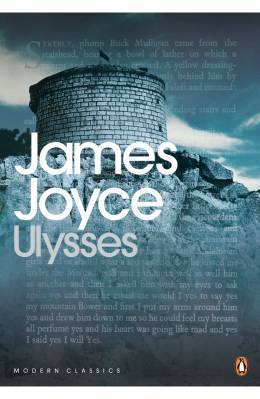
Ulysses
Ulysses follows a single day in the lives of Leopold Bloom, an advertising canvasser, and Stephen Dedalus, a young writer, as they move through Dublin on 16 June 1904. Their ordinary activities—walking through the city, eating, working, attending a funeral, and visiting a maternity hospital—become the basis for an extraordinary exploration of consciousness and urban life. Bloom’s wanderings are interwoven with Stephen’s intellectual struggles and the experiences of Molly Bloom, whose final extended monologue offers an intimate portrait of memory, desire, and marriage. Joyce draws parallels between the characters’ experiences and episodes from Homer’s Odyssey, transforming an ancient epic into a modern story about everyday existence. Through experimental language, shifting narrative styles, and detailed observations, the novel explores identity, belonging, sexuality, and the complexity of human thought.
Ireland
2008
10
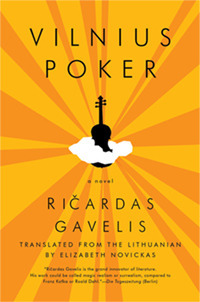
Vilnius Poker
Set in Soviet-occupied Vilnius during the 1970s, Vilnius Poker is a dark, surreal exploration of life under totalitarian rule. The novel follows Vytautas Vargalys, an intellectual working as a cataloguer in a public library, who becomes obsessed with uncovering a mysterious organisation known as “Them.” He believes this hidden force controls society, manipulating people’s thoughts, behaviour, and destinies. His growing paranoia intertwines with his relationship with Lolita, a mysterious woman whose fate becomes central to his increasingly fractured understanding of reality.
The story unfolds through four different narrators, each offering a conflicting account of events. As their perspectives overlap and contradict one another, the distinction between truth, memory, fantasy, and delusion begins to collapse. Vilnius itself emerges as a living presence: a labyrinthine city haunted by historical trauma, political oppression, and the psychological damage inflicted by Soviet rule.
Combining psychological horror, political satire, and postmodern experimentation, Gavelis challenges official historical narratives and exposes the ways authoritarian systems infiltrate people’s inner lives. The novel also questions whether individuals can ever fully escape the structures of power surrounding them. Published in 1989, as Lithuania approached independence, Vilnius Poker became a landmark of modern Lithuanian literature and a powerful literary reckoning with the Soviet experience.
Lithuania
2009
11
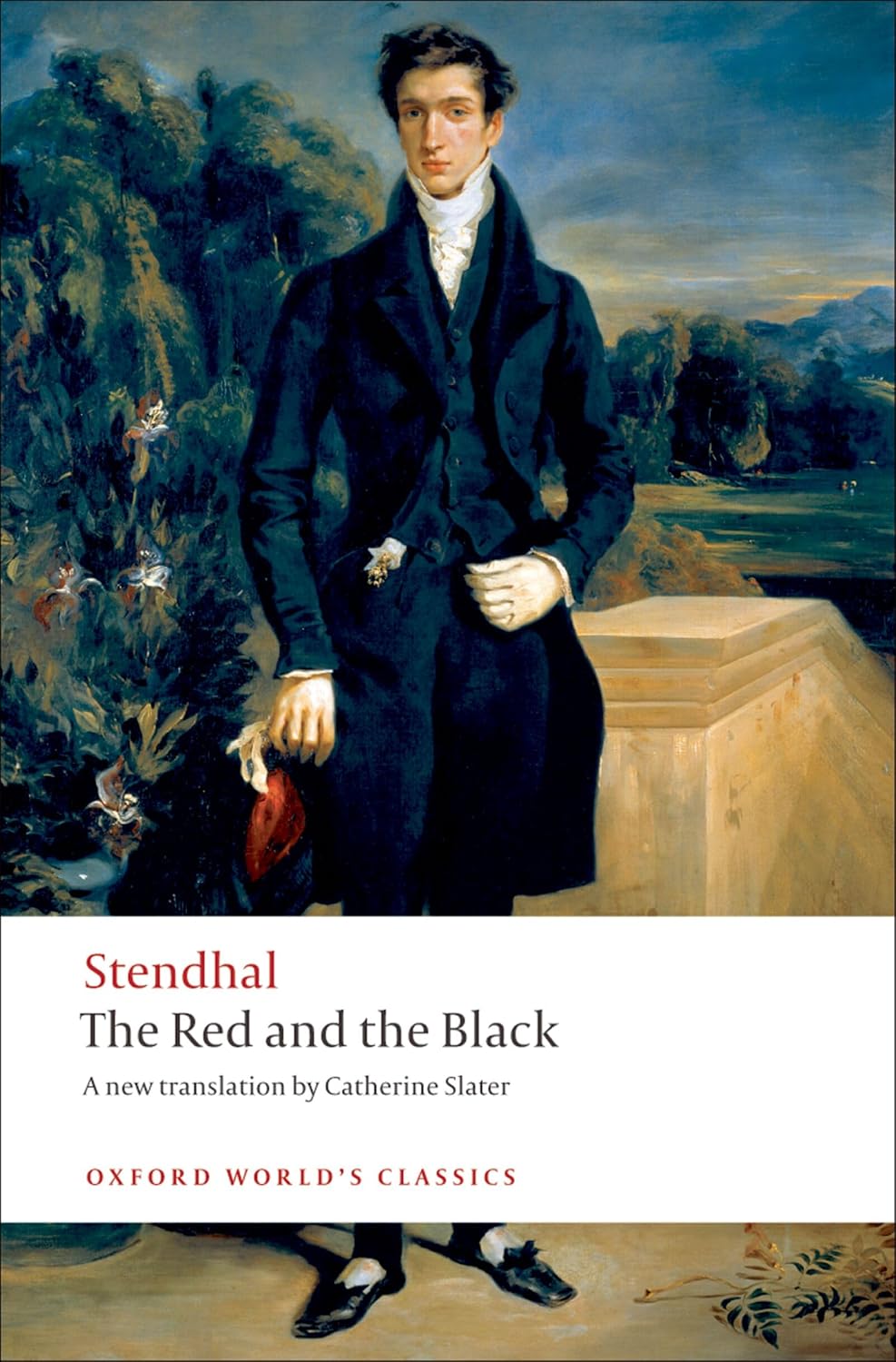
The Red and the Black
The Red and the Black follows Julien Sorel, an ambitious young man from a poor provincial family who dreams of rising through French society. Intelligent and determined, Julien sees the Church and the military as possible routes to power, studying religious doctrine while secretly admiring the military glory associated with Napoleon. His relationships with Madame de Rênal, the wife of his employer, and Mathilde de La Mole, the daughter of an aristocrat, become entangled with his social ambitions. As Julien moves between different social environments, he struggles to reconcile genuine feelings with his desire for status and recognition. Stendhal uses his story to examine class divisions, hypocrisy, and the limitations imposed by nineteenth-century French society. The novel portrays a talented individual attempting to overcome the circumstances of his birth, revealing how ambition can both challenge and reproduce the inequalities of the world he hopes to conquer.
France
2009
12
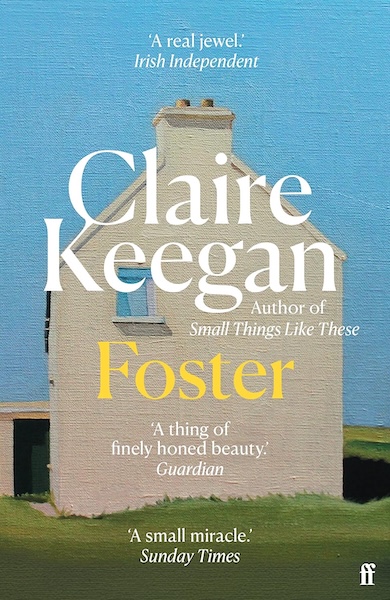
Foster
During the summer of 1981, an unnamed young girl is sent from her crowded family home to live with relatives in rural County Wexford while her mother prepares to give birth. Quiet and observant, she arrives at the Kinsellas’ farm uncertain of what awaits her. But unlike the home she has left behind, this household offers her tenderness, attention, and a sense of belonging she has never experienced before.
As the summer unfolds, the girl discovers the transformative power of being cared for. Yet beneath the peaceful routines of farm life lies a grief the Kinsellas rarely discuss. Through small gestures, unspoken truths, and the child’s growing awareness of the adult world, Claire Keegan creates a moving portrait of childhood and the complicated bonds between parents and children. Foster is a beautifully restrained novella about the families we are born into, the love we find unexpectedly, and the lasting impact of being seen and valued.
Ireland
2010