Classics
All countries
Antigua and Barbuda
Argentina
Armenia
Australia
Austria
Azerbaijan
Bangladesh
Barbados
Belgium
Bosnia and Herzegovina
Brazil
Chile
China
Colombia
Czech Republic
Denmark
Dominica
Dominican Republic
Egypt
Finland
France
Germany
Greece
Hungary
Iceland
India
Indonesia
Iran
Ireland
Italy
Japan
Kenya
Kyrgyzstan
Lebanon
Lithuania
Mexico
Netherlands
Norway
Pakistan
Palestine
Peru
Portugal
Romania
Russia
Saudi Arabia
Spain
Sudan
Sweden
Switzerland
Taiwan
Türkiye
Ukraine
United Kingdom
United States
1
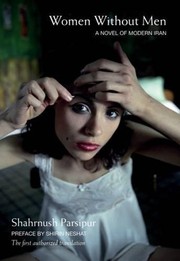
Women Without Men
Set in Iran against the backdrop of the 1953 coup d’état, Women Without Men follows the interconnected lives of five women whose experiences reflect the restrictions placed on women by family, marriage, and society. Among them are Munis, a woman longing to escape her brother’s control; Faizeh, her friend who dreams of marriage; Mahdokht, a woman troubled by conventional expectations of femininity; Farrokhlaqa, a wealthy housewife seeking a different life; and Zarrinkolah, a sex worker who begins to question the world around her.
Their individual journeys eventually lead them to a garden on the outskirts of Tehran, where they attempt to create a life beyond the rules that have governed them. Blending magical realism, mysticism, and historical events, Parsipur explores female autonomy, sexuality, and the search for identity. Through surreal transformations and symbolic storytelling, the novella imagines the possibility of women reclaiming their bodies, choices, and futures.
Iran
1989
2
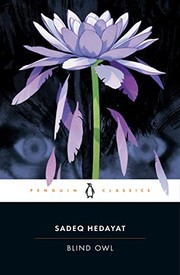
Blind Owl
The Blind Owl is a landmark of modern Persian literature, exploring obsession, alienation, and the fragile boundary between reality and imagination. The novella follows an unnamed narrator, a reclusive artist who paints pen cases and becomes consumed by the image of a mysterious, beautiful woman. After an unsettling encounter with her, he recounts a series of disturbing events in a fragmented, dreamlike narrative that gradually dissolves into hallucination, violence, and psychological torment.
Divided into two interconnected sections, the story moves between seemingly different realities, repeating images and experiences in ways that make it difficult to distinguish memory from fantasy. The narrator’s isolation deepens as he becomes trapped in cycles of obsession and despair, addressing his thoughts to a shadow resembling an owl.
Through surreal imagery and an unreliable narrator, Hedayat explores loneliness, mortality, and the disintegration of identity. Dark and unsettling, the novella remains a powerful examination of the human mind and the impossibility of escaping one’s inner world.
Iran
1937