Classics
All countries
Antigua and Barbuda
Argentina
Armenia
Australia
Austria
Azerbaijan
Bangladesh
Barbados
Belgium
Bosnia and Herzegovina
Brazil
Chile
China
Colombia
Czech Republic
Denmark
Dominica
Dominican Republic
Egypt
Finland
France
Germany
Greece
Hungary
Iceland
India
Indonesia
Iran
Ireland
Italy
Japan
Kenya
Kyrgyzstan
Lebanon
Lithuania
Mexico
Netherlands
Norway
Pakistan
Palestine
Peru
Portugal
Romania
Russia
Saudi Arabia
Spain
Sudan
Sweden
Switzerland
Taiwan
Türkiye
Ukraine
United Kingdom
United States
1

The Metamorphosis
The Metamorphosis follows Gregor Samsa, a travelling salesman who wakes one morning to discover that he has transformed into a gigantic insect. Unable to continue working or communicate normally with his family, Gregor becomes increasingly isolated inside his bedroom. Initially, his family attempts to accommodate his strange condition, but their sympathy gradually gives way to fear, resentment, and exhaustion. As Gregor loses his ability to participate in ordinary life, the family must confront the financial and emotional consequences of his transformation. Kafka combines the fantastic with the mundane to examine alienation, family obligation, and the relationship between personal worth and economic productivity. Gregor’s physical transformation exposes the conditional nature of familial affection and the cruelty of a society that values people primarily for their usefulness. The novella explores the fragility of identity and the devastating consequences of being treated as an outsider.
Czech Republic
1915
2
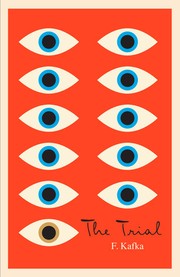
The Trial
The Trial follows Josef K., a bank employee who is unexpectedly arrested one morning without being told what crime he has committed. Although he is allowed to continue his daily life, he becomes increasingly consumed by a mysterious legal process governed by inaccessible authorities and incomprehensible rules. As he attempts to defend himself, he encounters officials, lawyers, and other individuals who offer little clarity about the accusations against him. His efforts to understand the system only deepen his sense of helplessness. Published after Kafka’s death, the novel presents a disturbing vision of a world in which individuals are trapped within institutions they cannot comprehend or challenge. Kafka explores guilt, bureaucracy, power, and alienation, revealing how uncertainty itself can become a form of oppression. Josef K.’s struggle captures the anxiety of confronting an authority that demands obedience while refusing to explain its actions.
Czech Republic
1925
3
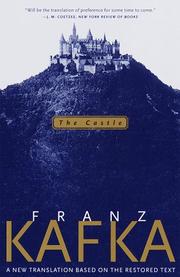
The Castle
The Castle follows a man known as K., who arrives in a remote village claiming to have been hired as a land surveyor by the authorities of a mysterious castle. However, the villagers question his appointment, and K. soon discovers that gaining access to the institution is far more difficult than he imagined. He attempts to establish his legitimacy through conversations with officials, messengers, and residents, but every encounter produces new obstacles and contradictory explanations. The castle remains physically visible yet effectively unreachable, representing an authority that governs people’s lives without making itself accountable. Kafka explores bureaucracy, exclusion, and the human desire for recognition and belonging. The unfinished novel portrays a world where rules seem endlessly complex and acceptance is perpetually deferred, capturing the frustration of individuals attempting to find meaning within systems that resist understanding.
Czech Republic
1926
4
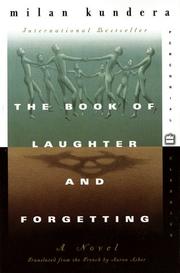
The Book of Laughter and Forgetting
The Book of Laughter and Forgetting is a fragmented, philosophical novel that explores the relationship between personal memory, political power, and the struggle to preserve individual identity. Set primarily in Czechoslovakia after the 1968 Soviet invasion, the book weaves together several interconnected stories about people whose lives are shaped by exile, betrayal, love, and the deliberate manipulation of history. One story follows Tamina, a widow living in exile who desperately tries to recover the letters and memories of her deceased husband, while others examine how political regimes erase inconvenient figures from photographs, public records, and collective consciousness. Kundera moves between fiction, autobiography, historical reflection, and philosophical commentary, using humour and irony to expose the absurdities of authoritarianism and human behaviour. Laughter becomes both a form of resistance and a weapon of conformity, while forgetting emerges as a deeply political act. The novel questions whether individuals can protect their memories and identities when those in power attempt to control the past, revealing the intimate connection between remembering, freedom, and the right to define one’s own life.
Czech Republic
1979
5
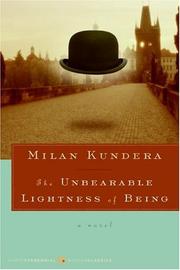
The Unbearable Lightness of Being
Set in Prague during the 1960s and the Soviet-led invasion of Czechoslovakia in 1968, The Unbearable Lightness of Being explores the intertwined lives of four characters struggling with love, freedom, and the meaning of existence. Tomas, a surgeon and womaniser, finds himself torn between his desire for independence and his deep attachment to Tereza, a sensitive photographer who longs for emotional security. Their relationship unfolds alongside the passionate affair between Sabina, an artist who rejects convention, and Franz, a married academic drawn to ideals of political commitment. Against the backdrop of historical upheaval, Milan Kundera examines the tension between personal freedom and responsibility, questioning whether life’s fleeting nature makes our choices meaningless or profoundly significant. Through philosophical reflections, irony, and intimate storytelling, the novel explores betrayal, memory, political oppression, and the contradictions of human desire. It invites readers to consider how the decisions we make shape our identities in a world where nothing can ever be repeated exactly.
Czech Republic
1984
6
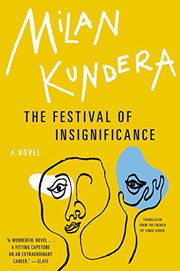
The Festival of Insignificance
The Festival of Insignificance is a playful, philosophical novel in which Milan Kundera explores the absurdity of human existence through the conversations and encounters of four friends in Paris. Alain, Ramón, Charles, and Caliban navigate everyday life while reflecting on vanity, ageing, politics, and the seemingly trivial details that shape human relationships. Their discussions range from the meaning of the human navel to Stalin’s peculiar anecdotes, blending absurd humour with reflections on history, mortality, and the performance of identity. Rather than following a conventional plot, the novel unfolds as a series of interconnected episodes that question humanity’s tendency to assign excessive importance to personal grievances, ambitions, and public events. Kundera suggests that recognising the insignificance underlying much of human life can become a source of freedom, allowing people to approach the world with greater lightness and less resentment. Through irony and philosophical wit, the novel offers a meditation on the fragile boundary between the meaningful and the trivial, inviting readers to reconsider what truly deserves their attention.
Czech Republic
2014