Books from United States
Suggest a book
All genres
Historical Fiction
Literary Fiction
Fantasy
Romance
Horror
Thriller
Non-Fiction
Mystery
Memoir
Classics
History
Sci-Fi
Contemporary Fiction
Science Fiction
Fiction
Poetry
Essays
Family Saga
Magical Realism
Family Drama
Dark Academia
Psychological Fiction
Dark Comedy
Political Writing
Feminist Fiction
Satire
Campus Fiction
Cultural Studies
Biography
Philosophy
Comedy
Drama
Young Adult
Gothic
Dystopia
Crime
Children's Books
Short Stories
Mythology
Cozy
Retellings
Humour
Adventure
All themes
Love & Passion
Adventure & Journey
Identity & Belonging
War & Conflict
Freedom & Resistance
Family & Heritage
Nature & Landscape
Society & Class
Spirituality & Faith
Solitude & Exile
Coming of Age
Revolution & Change
Friendship
History
Immigration
Myths and Retellings
Colonialism
Women & Society
Mental Health
Motherhood
1
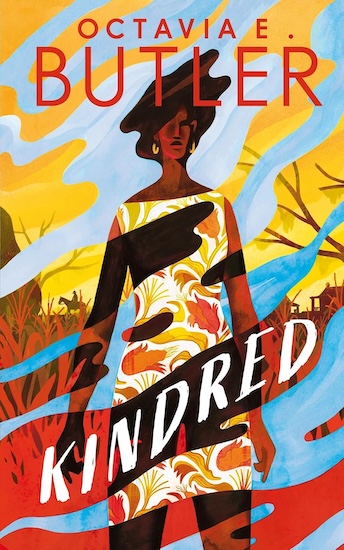
Kindred
In Kindred, Dana, a young Black writer living in California in 1976, is unexpectedly transported through time to an antebellum Maryland plantation. Each time she arrives in the past, she encounters Rufus Weylin, the white son of a plantation owner whose survival becomes mysteriously linked to her own. As Dana is repeatedly pulled between her modern life and the brutal realities of slavery, she must navigate a world where her freedom and safety are constantly threatened. Her relationship with Rufus grows increasingly complicated as she struggles to protect her ancestors while preserving her own identity and humanity. Blending historical fiction and science fiction, Octavia E. Butler explores slavery, racism, power, and the enduring consequences of historical violence. The novel offers a deeply personal examination of how the past shapes the present and challenges our understanding of freedom, survival, and belonging.
2003
2
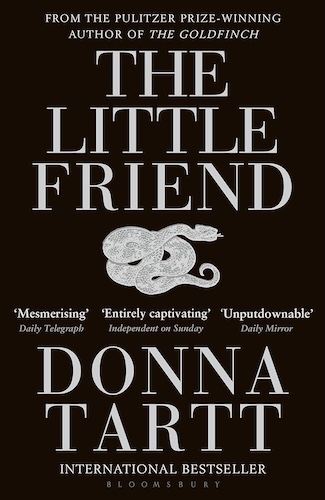
The Little Friend
In the sweltering American South, twelve-year-old Harriet Dufresnes becomes determined to solve the mysterious murder of her older brother, Robin, who was killed when she was still a baby. Driven by grief, imagination, and a fierce sense of justice, she ventures into a world of family secrets, dangerous people, and unsettling discoveries. A dark Southern Gothic novel about childhood, vengeance, and the stories we tell ourselves to make sense of loss.
2002
3
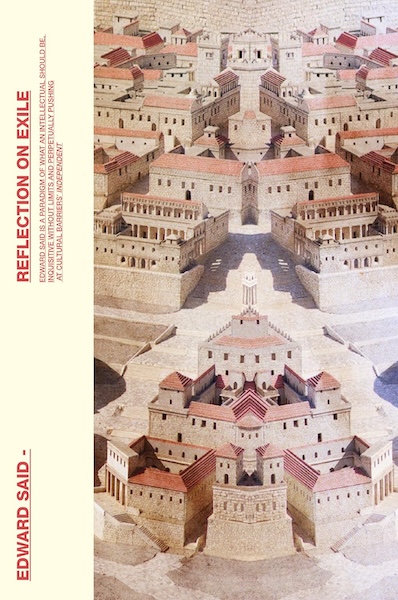
Reflections On Exile: And Other Literary And Cultural Essays
What does it mean to live between worlds—to belong to a place through memory while remaining separated from it by distance, politics, or history?
In Reflections on Exile, Edward W. Said brings together essays written over more than three decades, exploring literature, culture, politics, and the experience of displacement. The collection reflects his lifelong engagement with Palestinian identity and his own experience of exile, while examining how writers and artists respond to the societies that shape them.
Said moves between close readings of literary works and broader reflections on imperialism, cultural identity, and intellectual responsibility. He considers figures such as Joseph Conrad, George Orwell, and Naguib Mahfouz, revealing how art can illuminate the tensions between personal experience and historical forces.
At the heart of the collection is the idea that exile is more than physical separation: it can transform how people see home, belonging, and themselves. Both intellectually searching and deeply personal, the book explores the creative possibilities and emotional costs of living between cultures.
2000
4
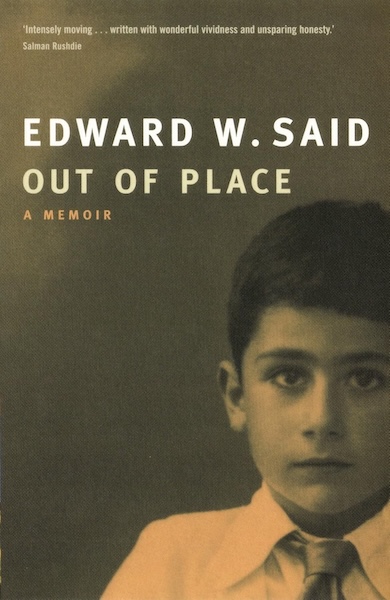
Out Of Place: A Memoir
What does it mean to belong when home is never quite one place?
In Out of Place, Edward W. Said recounts his childhood and early adulthood across Jerusalem, Cairo, and the United States. Born into a Palestinian family in 1935, he grew up moving between cultures, languages, and expectations, often feeling that he did not fully belong anywhere.
With candour and introspection, Said revisits his complicated relationships with his family, his education, and the competing identities that shaped him. His memories reveal the intimate experience behind his later work on exile, culture, and displacement, offering a personal perspective on the historical upheavals of the twentieth century.
More than a conventional autobiography, Out of Place is a meditation on memory and belonging—and on the enduring experience of living between worlds.
1999
5
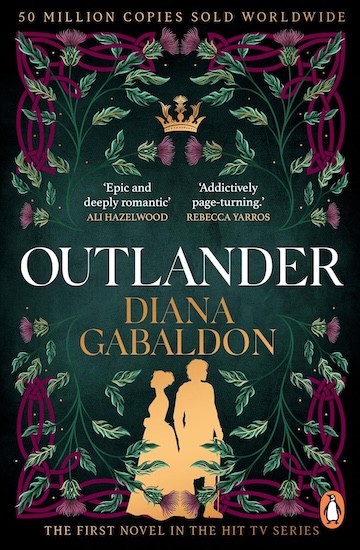
Outlander
Outlander follows Claire Randall, a former Second World War nurse who, while visiting the Scottish Highlands in 1945, mysteriously travels back in time to 1743. Stranded in a world of political unrest and clan rivalries, Claire must navigate unfamiliar customs and dangerous circumstances while searching for a way to return to her own time. She becomes entangled with Jamie Fraser, a young Scottish warrior whose courage and compassion challenge her loyalties and transform her life. As their relationship deepens, Claire faces an impossible choice between the husband she left behind in the twentieth century and the love she discovers in the past. Blending historical fiction, romance, adventure, and time travel, Gabaldon explores love, loyalty, survival, and the ways personal choices become intertwined with the course of history.
1998
6
Parable of the Talents
Set in a dystopian America in the early twenty-first century, Parable of the Talents continues the story of Lauren Olamina, founder of the Earthseed movement, which teaches that humanity’s destiny is to shape change and eventually travel beyond Earth. As Lauren works to build a community based on cooperation, equality, and spiritual transformation, a Christian fundamentalist government rises to power, bringing persecution and violence. The novel is narrated partly through the perspective of Lauren’s estranged daughter, who struggles to understand her mother’s beliefs and legacy. Through their intertwined stories, Octavia E. Butler examines religious extremism, authoritarianism, racial injustice, and the struggle to preserve freedom in a society shaped by fear. The novel offers a powerful reflection on the dangers of political fanaticism and the resilience required to imagine a different future.
1998
7
Representations of the Intellectual
Should intellectuals challenge those in power, even when doing so threatens their careers, reputations, or personal safety?
Based on his 1993 BBC Reith Lectures, Representations of the Intellectual explores the role of the thinker in public life. Edward W. Said argues that intellectuals have a responsibility to question accepted wisdom, resist political and institutional pressure, and speak honestly about injustice—even when their views are unpopular.
Drawing on figures such as Theodor Adorno and Jonathan Swift, as well as contemporary political events, Said examines the dangers of allowing expertise, ambition, nationalism, or financial interests to silence independent thought. He presents the intellectual as an outsider who must remain willing to challenge authority rather than simply serve it.
Passionate and provocative, this short collection asks what it means to preserve intellectual independence in a world shaped by powerful institutions and competing interests. It remains a compelling reflection on the relationship between knowledge, conscience, and public responsibility.
1994
8
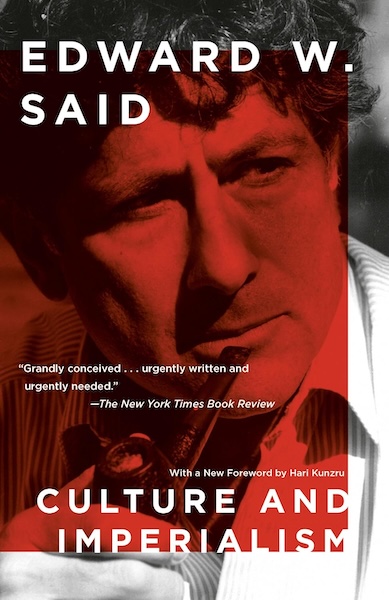
Culture and Imperialism
What if some of the world’s most celebrated literary works also reveal the hidden structures of empire?
In Culture and Imperialism, Edward W. Said examines how novels, music, and other cultural works have reflected—and sometimes reinforced—the expansion of European and American power. Building on the ideas developed in Orientalism, he explores how imperial assumptions appear in literature by writers such as Jane Austen, Joseph Conrad, and Rudyard Kipling.
Said also highlights the voices and resistance of people living under colonial rule, showing how culture can become a space for both domination and opposition. By connecting artistic expression with historical power, he invites readers to reconsider familiar literary classics and recognise the imperial histories that shaped them.
1993
9
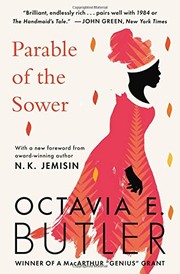
Parable of the Sower
In 2025, with the world descending into madness and anarchy, one woman begins a fateful journey toward a better future.
Lauren Olamina and her family live in one of the only safe neighborhoods remaining on the outskirts of Los Angeles. Behind the walls of their defended enclave, Lauren’s father, a preacher, and a handful of other citizens try to salvage what remains of a culture that has been destroyed by drugs, disease, war, and chronic water shortages. While her father tries to lead people on the righteous path, Lauren struggles with hyperempathy, a condition that makes her extraordinarily sensitive to the pain of others.
When fire destroys their compound, Lauren’s family is killed and she is forced out into a world that is fraught with danger. With a handful of other refugees, Lauren must make her way north to safety, along the way conceiving a revolutionary idea that may mean salvation for all mankind.
1993
10
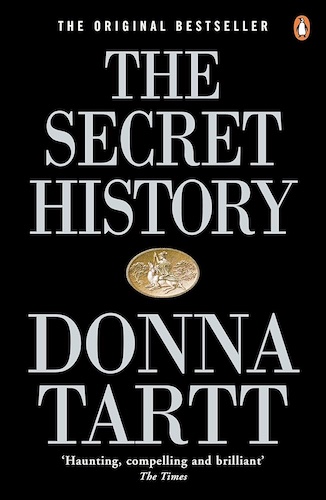
The Secret History
At an elite Vermont college, a tight-knit group of classics students becomes consumed by beauty, intellectual obsession, and the darker side of ancient philosophy. When their pursuit of an extraordinary experience leads to murder, their carefully constructed world begins to unravel. An atmospheric psychological novel about guilt, privilege, and the dangerous allure of belonging.
1992
11
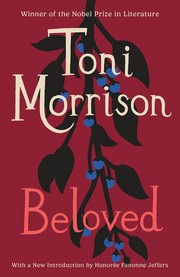
Beloved
Set in the years following the American Civil War, Beloved follows Sethe, a formerly enslaved woman living in Cincinnati with her daughter, Denver. Their home is haunted by a mysterious presence connected to a devastating event in Sethe’s past. When a young woman named Beloved arrives, painful memories begin to resurface, forcing Sethe to confront the experiences she has tried to bury. Through supernatural elements and shifting perspectives, Morrison explores the enduring psychological wounds of slavery, the sacrifices of motherhood, and the struggle to reclaim personal identity. The novel examines how individual and collective trauma can haunt future generations, while also revealing the extraordinary strength required to survive and remember.
1987
12
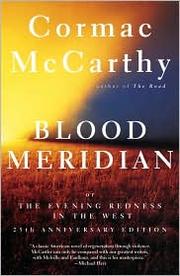
Blood Meridian
Set in the American Southwest and northern Mexico during the 1840s, Blood Meridian follows a nameless teenager known as the Kid as he joins a violent band of scalp hunters operating along the frontier. The group, led by the ruthless Captain Glanton and accompanied by the enigmatic Judge Holden, travels through landscapes marked by poverty, conflict, and brutality. Their journey exposes the violence underpinning territorial expansion and the mythology of the American West. McCarthy’s stark, biblical prose transforms the frontier into a world where cruelty seems almost elemental and human life is treated as expendable. The novel challenges romantic ideas of conquest and civilisation, exploring violence as both a historical force and a disturbing aspect of human existence.
1985