Books from United States
Suggest a book
All genres
Historical Fiction
Literary Fiction
Fantasy
Romance
Horror
Thriller
Non-Fiction
Mystery
Memoir
Classics
History
Sci-Fi
Contemporary Fiction
Science Fiction
Fiction
Poetry
Essays
Family Saga
Magical Realism
Family Drama
Dark Academia
Psychological Fiction
Dark Comedy
Political Writing
Feminist Fiction
Satire
Campus Fiction
Cultural Studies
Biography
Philosophy
Comedy
Drama
Young Adult
Gothic
Dystopia
Crime
Children's Books
Short Stories
Mythology
Cozy
Retellings
Humour
Adventure
All themes
Love & Passion
Adventure & Journey
Identity & Belonging
War & Conflict
Freedom & Resistance
Family & Heritage
Nature & Landscape
Society & Class
Spirituality & Faith
Solitude & Exile
Coming of Age
Revolution & Change
Friendship
History
Immigration
Myths and Retellings
Colonialism
Women & Society
Mental Health
Motherhood
1
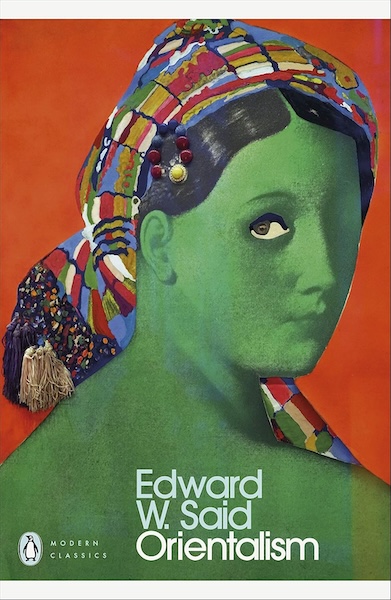
Orientalism
What if the way we see another culture tells us more about ourselves than about the people we are observing?
In Orientalism, literary critic and intellectual Edward W. Said examines how Western writers, scholars, artists, and political authorities constructed an image of the “Orient”—particularly the Arab and Islamic world—as exotic, irrational, backward, and fundamentally different from the West. He argues that these representations were not simply misunderstandings or harmless stereotypes: they became intertwined with imperial power, helping Europe justify its domination of Eastern societies.
Drawing on literature, history, art, and political thought, Said reveals how descriptions of other cultures can shape public opinion and influence the exercise of power. He challenges readers to question who has the authority to represent a people, whose voices are excluded, and how supposedly objective knowledge can reinforce existing hierarchies.
First published in 1978, Orientalism transformed postcolonial studies and continues to influence debates about cultural representation, racism, and the relationship between knowledge and power. It invites us to reconsider not only how the East has been portrayed, but also how these inherited images continue to shape the world today.
1978
2
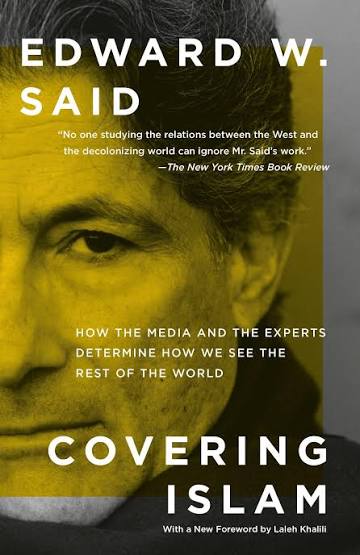
Covering Islam
How does the media shape what the world believes about Islam?
In Covering Islam, Edward W. Said investigates how Western news organisations, academics, and political commentators represent Islam and Muslim societies. He argues that media coverage often reduces diverse communities to simplified images associated with extremism, conflict, and political threat, obscuring the complexity of their histories and everyday lives.
Said explores the relationship between knowledge, media institutions, and political power, asking readers to question who gets to define another culture and whose perspectives are excluded. The book remains an important study of representation, stereotyping, and the influence of public narratives on international understanding.
1981
3
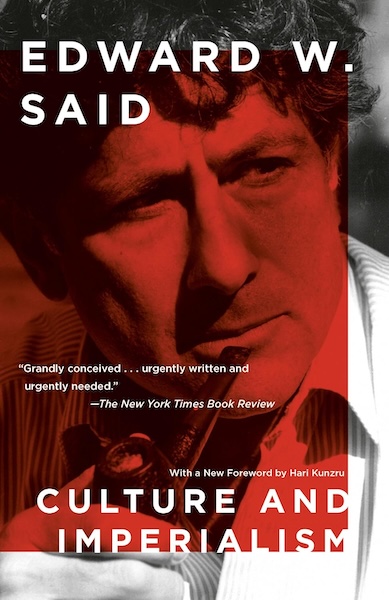
Culture and Imperialism
What if some of the world’s most celebrated literary works also reveal the hidden structures of empire?
In Culture and Imperialism, Edward W. Said examines how novels, music, and other cultural works have reflected—and sometimes reinforced—the expansion of European and American power. Building on the ideas developed in Orientalism, he explores how imperial assumptions appear in literature by writers such as Jane Austen, Joseph Conrad, and Rudyard Kipling.
Said also highlights the voices and resistance of people living under colonial rule, showing how culture can become a space for both domination and opposition. By connecting artistic expression with historical power, he invites readers to reconsider familiar literary classics and recognise the imperial histories that shaped them.
1993
4
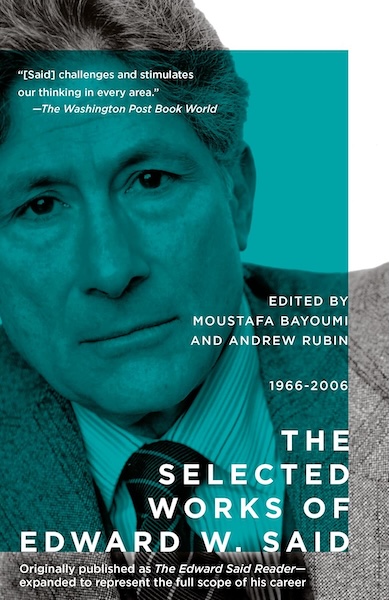
The Selected Works of Edward Said, 1966 - 2006
How do literature, culture, and politics shape the way we understand the world? And whose voices are missing from the stories history tells?
The Selected Works of Edward Said brings together key writings from four decades of one of the most influential intellectuals of the twentieth century. Edited by Moustafa Bayoumi and Andrew Rubin, this expanded collection traces Said’s thinking across subjects ranging from colonialism and Palestinian identity to literature, music, media, and the responsibilities of intellectuals.
Featuring selections from Orientalism, Culture and Imperialism, and Out of Place, alongside important essays and later writings, the collection offers an overview of Said’s evolving ideas about power, representation, and cultural identity.
Essential for understanding Said’s intellectual legacy, this volume reveals how cultural narratives influence political realities—and why questioning dominant perspectives remains vital.
2007
5
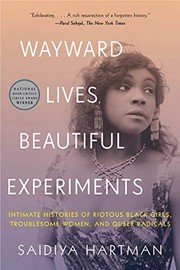
Wayward Lives, Beautiful Experiments
At the dawn of the twentieth century, black women in the US were carving out new ways of living. The first generations born after emancipation, their struggle was to live as if they really were free.
These women refused to labour like slaves. Wrestling with the question of freedom, they invented forms of love and solidarity outside convention and law. These were the pioneers of free love, common-law and transient marriages, queer identities, and single motherhood - all deemed scandalous, even pathological, at the dawn of the twentieth century, though they set the pattern for the world to come.
In Wayward Lives, Beautiful Experiments, Saidiya Hartman deploys both radical scholarship and profound literary intelligence to examine the transformation of intimate life that they instigated. With visionary intensity, she conjures their worlds, their dilemmas, their defiant brilliance.
2020
6
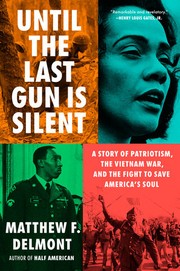
Until the Last Gun Is Silent
Until the Last Gun Is Silent examines the role of Black Americans in the Vietnam War and the movement to bring the conflict to an end. Historian Matthew F. Delmont traces the experiences of Black servicemen, veterans, activists, and peace protesters who confronted both the violence of war abroad and racial injustice at home. Their stories reveal the contradictions of fighting for democracy overseas while experiencing discrimination within the United States. The book also explores how Black communities challenged official narratives about military service, patriotism, and the purpose of the war. By connecting battlefield experiences with political activism and the struggle for civil rights, Delmont presents a broader account of the forces that helped end American involvement in Vietnam and reshape debates about citizenship, equality, and national responsibility.
2026
7
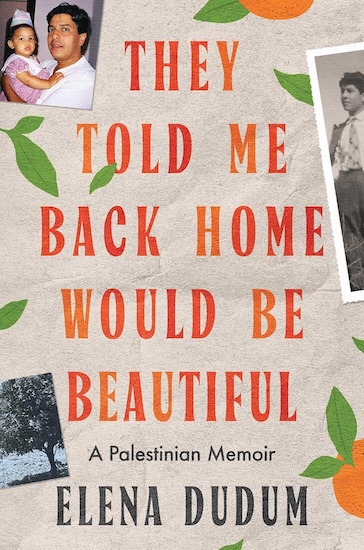
They Told Me Back Home Would Be Beautiful
Raised in a Palestinian Christian family in San Francisco, Elena Dudum grows up surrounded by her father’s stories of a homeland her grandparents were forced to leave. For years, she resists this inheritance, trying to fit into American life and escape the weight of a history she struggles to claim. But a visit to Palestine brings the realities of occupation, displacement, and her family’s past into sharp focus. Weaving together family memories, archival discoveries, and political reflection, this intimate memoir traces one woman’s journey from estrangement to belonging—and her determination to reclaim a heritage that cannot be erased.
2027