Books from Türkiye
Suggest a book
All genres
Historical Fiction
Literary Fiction
Fantasy
Romance
Horror
Thriller
Non-Fiction
Mystery
Memoir
Classics
History
Sci-Fi
Contemporary Fiction
Science Fiction
Fiction
Poetry
Essays
Family Saga
Magical Realism
Family Drama
Dark Academia
Psychological Fiction
Dark Comedy
Political Writing
Feminist Fiction
Satire
Campus Fiction
Cultural Studies
Biography
Philosophy
Comedy
Drama
Young Adult
Gothic
Dystopia
Crime
Children's Books
Short Stories
Mythology
Cozy
Retellings
Humour
Adventure
All themes
Love & Passion
Adventure & Journey
Identity & Belonging
War & Conflict
Freedom & Resistance
Family & Heritage
Nature & Landscape
Society & Class
Spirituality & Faith
Solitude & Exile
Coming of Age
Revolution & Change
Friendship
History
Immigration
Myths and Retellings
Colonialism
Women & Society
Mental Health
Motherhood
1
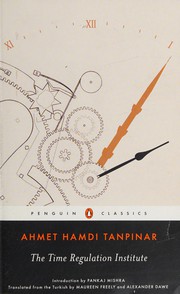
The Time Regulation Institute
The Time Regulation Institute is a satirical novel about a fictional institution established to ensure that everyone in Turkey follows the correct time. Its narrator, Hayri İrdal, recounts his life and the circumstances that lead him to become involved with the institute under the leadership of the charismatic Halit Ayarcı. As the organisation grows, its elaborate procedures and absurd regulations expose the contradictions of a society attempting to modernise rapidly while remaining attached to older traditions. Through bureaucratic absurdities and eccentric characters, Tanpınar explores the tension between Westernisation and cultural heritage in twentieth-century Turkey. The novel questions whether progress can be achieved through administrative reforms alone and whether institutions sometimes create problems merely to justify their own existence. Blending humour with philosophical reflection, it offers a critique of social conformity, bureaucracy, and the human tendency to confuse outward appearances with meaningful change.
1954
2
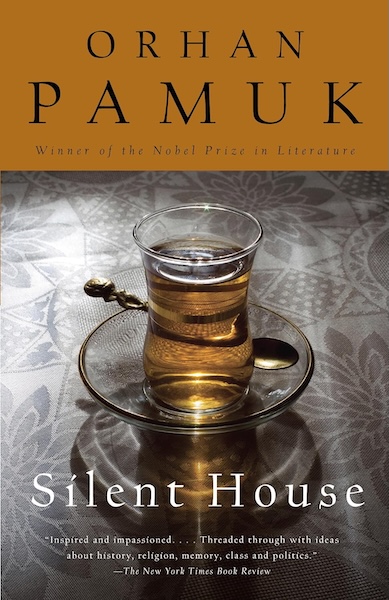
Silent House
Every summer, three siblings travel to a coastal town near Istanbul to visit their elderly grandmother, Fatma, who lives in a house filled with memories of a vanished world. Their grandfather, a doctor and idealist, built the house decades earlier, but his ambitions and radical ideas left painful marks on the family.
During their visit, the siblings reveal contrasting visions of Turkey’s future. Faruk, a disillusioned historian, struggles with his sense of purpose; Nilgün, a politically engaged young woman, dreams of a more egalitarian society; and Metin longs for wealth and the opportunities he associates with the West. Meanwhile, Fatma’s memories return to a past shaped by resentment, regret, and family secrets.
Set against the political polarisation of late-1970s Turkey, Silent House examines the tensions between generations, social classes, and competing ideologies. Through the voices of its deeply different characters, Pamuk reveals how a family’s private conflicts can mirror the divisions of an entire nation.
1983
3
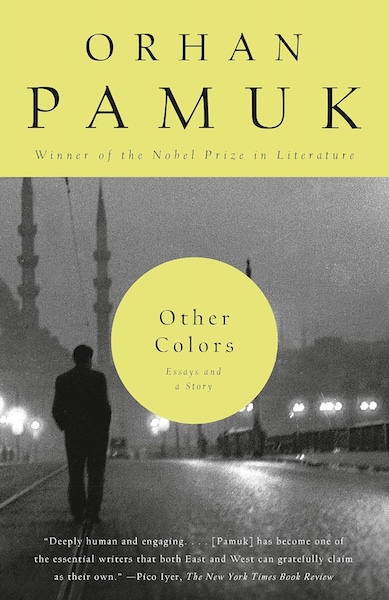
Other Colors: Essays and a Story
What does it mean to be a writer, to belong to a city, or to live between different cultural worlds? In Other Colors, Orhan Pamuk opens a window into his creative life through a collection of essays, interviews, diary entries, literary reflections, and personal recollections written over more than two decades.
Pamuk writes about his childhood in Istanbul, the pleasures and anxieties of everyday life, his relationship with his daughter, and the books and writers who shaped his imagination. He reflects on the art of writing novels, the relationship between Eastern and Western literary traditions, and the political and cultural tensions that have influenced modern Turkey. The collection also includes the short story Looking Out the Window, offering a glimpse of his fiction through a different lens.
Intimate, curious, and often provocative, Other Colors reveals the ideas and experiences behind Pamuk’s celebrated novels. It is both a portrait of a writer at work and a meditation on literature, memory, politics, and the complexities of belonging.
1999
4
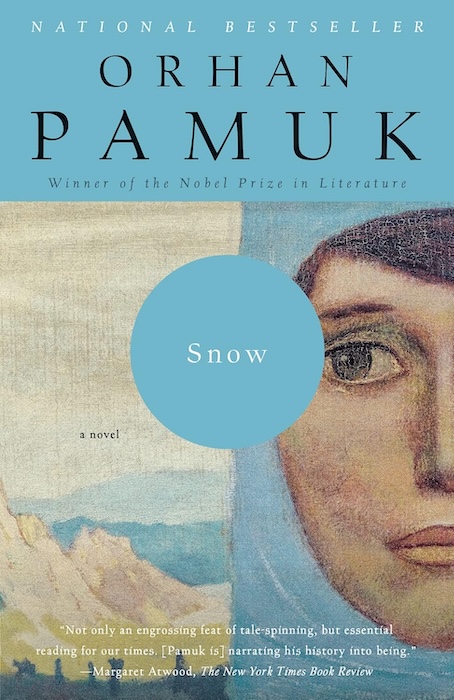
Snow
Snow follows Ka, a Turkish poet returning from political exile in Germany to the remote city of Kars. Officially, he is investigating a series of young women’s suicides, but he is also drawn into the city’s complicated political and religious tensions. As a severe snowstorm isolates Kars from the outside world, Ka becomes entangled with secular intellectuals, Islamists, Kurdish activists, and military authorities. His renewed feelings for İpek, a woman he once knew, offer the possibility of personal happiness amid the surrounding instability. However, a theatrical performance and a military coup intensify the conflict between competing ideological groups. Pamuk examines secularism, religious belief, censorship, and the difficulties of individual freedom in a deeply divided society. Through Ka’s experiences, the novel explores how political convictions shape private lives and how difficult it can be to remain independent when every side demands allegiance.
2005
5
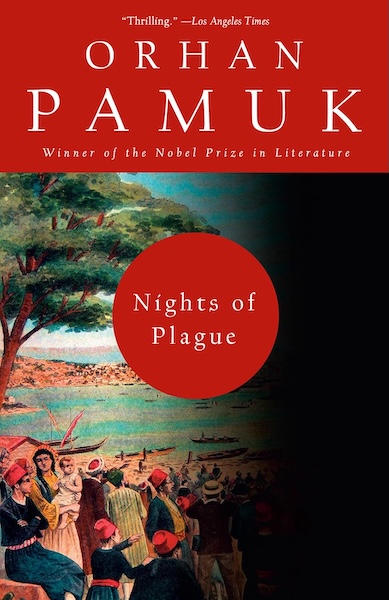
Nights of Plague
In 1901, a deadly plague reaches Mingheria, a fictional island in the eastern Mediterranean and the twenty-ninth province of the declining Ottoman Empire. Home to both Muslim and Greek Orthodox communities, the island is already divided by religious tensions and political rivalries. As the epidemic spreads, the Ottoman authorities send experts to impose quarantine measures, but suspicion, resistance, and competing loyalties threaten to undermine every attempt to contain the disease.
When a mysterious murder complicates the crisis, the island descends into a struggle involving religious leaders, government officials, scientists, and ordinary people desperate to survive. As the Ottoman administration loses control, the epidemic becomes a catalyst for rebellion and the emergence of a new national identity.
Blending historical epic, detective story, and political satire, Nights of Plague explores how fear reshapes societies and how crises expose the fragility of authority. Through an imagined history of an Ottoman island, Pamuk examines nationalism, religious conflict, scientific reasoning, and the human tendency to choose ideology over evidence.
2021