
Türkiye

Asia
Türkiye
39
books
15
authors

Books from Türkiye

1
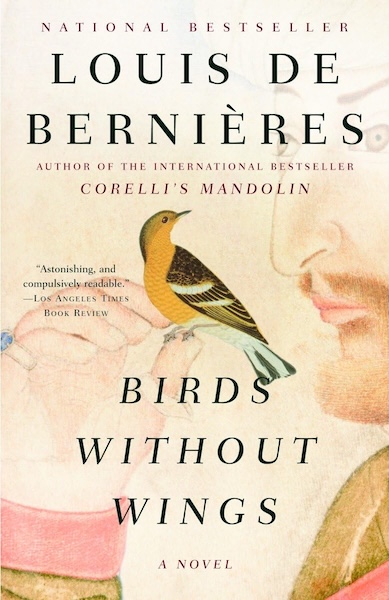
Birds Without Wings
Birds Without Wings
In the small Anatolian village of Eskibahçe, Muslims and Christians have lived side by side for generations, sharing a language, traditions, friendships, and everyday life. At the heart of this close-knit community is the tender love between Philothei, a beautiful Greek Christian girl, and Ibrahim, a Muslim goatherd who has loved her since childhood. Their future seems possible—until the forces of history begin to tear their world apart. As the Ottoman Empire collapses and modern Turkey emerges, the villagers are swept into the First World War, the rise of nationalism, and the brutal Greek-Turkish conflict. Through the voices of ordinary people, de Bernières creates an expansive portrait of a society destroyed by religious divisions, political ambition, and forced displacement. Both heartbreaking and darkly humorous, Birds Without Wings explores how people who once lived as neighbours can become enemies—and how love and humanity endure even amid extraordinary cruelty.
2004
2
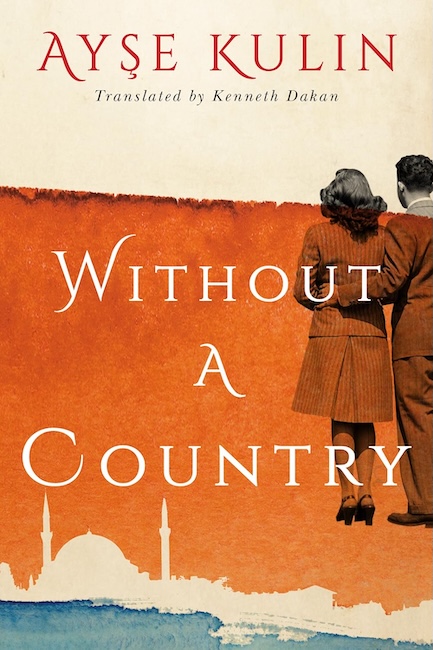
Without a Country
Without a Country
As Hitler’s persecution of Jews intensifies in 1930s Germany, medical professor Gerhard Schliemann and his wife, Elsa, face an impossible choice: remain in the country they call home or flee to protect their family. Their escape leads them to Turkey, where German Jewish academics are offered positions at universities and hospitals as the young republic works to modernise its institutions. Although the Schliemanns find refuge and the opportunity to rebuild their lives, safety does not guarantee belonging. Across four generations, their descendants navigate political upheaval, military coups, interfaith relationships, and renewed antisemitism. As Turkey itself changes, the family must confront difficult questions about identity, loyalty, and what it means to belong to a country that may never fully accept them. Spanning nearly a century, Without a Country is a multigenerational saga inspired by the real history of German-speaking Jewish academics who found refuge in Turkey during the Nazi era. Ayşe Kulin explores the complicated relationship between displacement and belonging, showing how the search for a safe home can shape a family’s destiny long after the original refugees are gone.
2016
3
Love in Exile
Love in Exile
In 1920s Turkey, Sabahat is a bright, determined young Muslim woman who dreams of an education and a life beyond the traditional expectations placed on women. Persuading her family to let her pursue her studies, she begins to imagine a future shaped by her own ambitions rather than an arranged marriage. But her plans take an unexpected turn when she falls in love with Aram, an Armenian Christian student. Their feelings deepen despite the religious and cultural divisions separating their families. In a society where interfaith relationships challenge deeply rooted traditions, their love becomes a source of both hope and conflict. As family loyalties and social pressures threaten to tear them apart, Sabahat and Aram must decide how much they are willing to sacrifice to remain together. Inspired by Ayşe Kulin’s own family history, Love in Exile is a sweeping romance set during a period of profound transformation in Turkish society. It explores forbidden love, women’s independence, religious difference, and the painful choices people face when personal happiness conflicts with family expectations.
2016
4
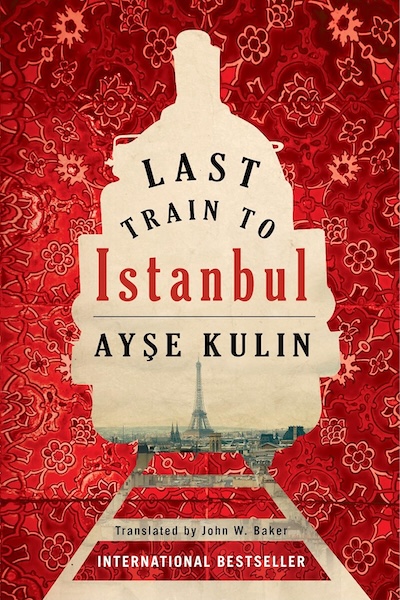
Last Train to Istanbul
As the Second World War threatens to engulf Europe, Selva, the daughter of a prominent Ottoman family, falls in love with Rafael Alfandari, a young Jewish man. Their relationship defies the expectations of both families, forcing them to leave Turkey and begin a new life together in France. But when the Nazis occupy the country, their happiness is overshadowed by the growing danger facing Jewish communities across Europe. As persecution intensifies, Selva and Rafael find themselves trapped in a hostile world where their love and their young family may not be enough to keep them safe. Meanwhile, Turkish diplomats work behind the scenes to rescue Jewish people stranded in occupied Europe, arranging a perilous journey towards freedom. With time running out, the fate of Selva and Rafael becomes intertwined with the courage of those willing to risk their lives to save strangers. Moving between Ankara, Istanbul, Paris, and other wartime cities, Last Train to Istanbul combines an intimate family story with a little-known chapter of Holocaust history. Inspired by accounts of Turkish diplomats who helped rescue Jews during the war, the novel explores love across cultural boundaries, moral courage, and the extraordinary acts of humanity that can emerge in the darkest times.
2002
5
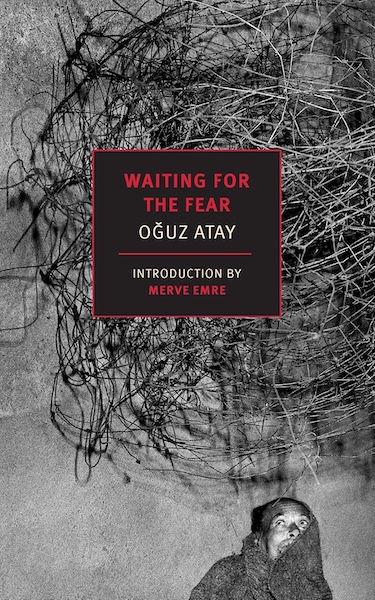
Waiting for the Fear
What happens when an ordinary letter makes you question everything you thought you knew? In the title story of Waiting for the Fear, an isolated man receives a mysterious message written in a language he cannot understand. As he struggles to decipher its meaning, suspicion gradually takes over his life, transforming his home into a place of dread and his everyday existence into an increasingly surreal nightmare. Across eight stories, Oğuz Atay introduces a cast of outsiders, misfits, and troubled souls struggling to connect with a society that seems determined to misunderstand them. A woman confronts unsettling memories after discovering her former lover’s body; lonely storytellers sell invented tales to passengers at a remote railway station; other characters find themselves trapped between their private fantasies and an indifferent world. Blending dark humour, psychological unease, absurdity, and experimental storytelling, Waiting for the Fear explores the fragile boundary between reality and imagination. Atay’s characters are haunted not only by external threats but also by their own thoughts, revealing the loneliness of people who can no longer trust the world—or themselves.
1975

Famous authors from Türkiye

About Türkiye

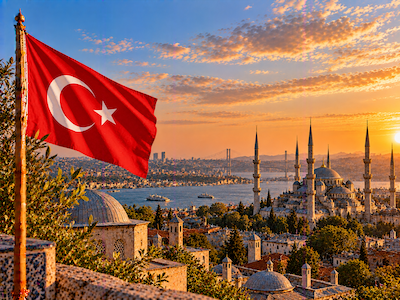
Türkiye is a transcontinental country connecting southeastern Europe and western Asia, with coastlines along the Mediterranean, Aegean, Black, and Marmara seas. Its landscapes range from the dramatic rock formations of Cappadocia and the mountains of eastern Anatolia to the turquoise beaches of the southwest and the fertile plains of the interior. Istanbul, once the capital of the Byzantine and Ottoman empires, remains a cultural crossroads where historic mosques, Byzantine monuments, bustling bazaars, and modern neighborhoods reflect centuries of exchange between Europe and Asia. Türkiye’s heritage brings together Anatolian civilizations, Greek and Roman influences, Byzantine history, and Ottoman traditions. Turkish is the official language, while Kurdish, Arabic, Armenian, and other languages are also spoken by communities across the country.

Region
Asia
Literary Context

Turkish literature stretches from ancient oral epics and folk poetry to the sophisticated traditions of Ottoman court literature and contemporary novels. Classical works often drew on Persian and Arabic poetic forms, while folk traditions celebrated traveling storytellers, heroic figures, love, and everyday life. The transition from the Ottoman Empire to the modern Turkish Republic brought major changes to literary language and identity. Modern writers have explored tensions between tradition and modernity, rural and urban life, secularism and religion, political repression, and the search for belonging. Among Türkiye’s most celebrated authors is Orhan Pamuk, the 2006 Nobel Prize laureate, whose novels—including My Name Is Red and Snow—examine memory, identity, and the meeting of Eastern and Western cultural worlds. Yaşar Kemal, known for Memed, My Hawk, drew on Anatolian oral storytelling to portray rural life, injustice, and resistance. Nazım Hikmet, one of the country’s most influential poets, became internationally known for his socially engaged verse and innovative poetic style. Elif Shafak, author of The Bastard of Istanbul and The Island of Missing Trees, explores multicultural identity, history, and the experiences of women. Ahmet Hamdi Tanpınar, whose novel A Mind at Peace captures Istanbul during a period of transformation, remains an important voice on the relationship between past and present. Together, these writers reveal the depth and diversity of Türkiye’s literary heritage.

Asia