Books from Türkiye
Suggest a book
All genres
Historical Fiction
Literary Fiction
Fantasy
Romance
Horror
Thriller
Non-Fiction
Mystery
Memoir
Classics
History
Sci-Fi
Contemporary Fiction
Science Fiction
Fiction
Poetry
Essays
Family Saga
Magical Realism
Family Drama
Dark Academia
Psychological Fiction
Dark Comedy
Political Writing
Feminist Fiction
Satire
Campus Fiction
Cultural Studies
Biography
Philosophy
Comedy
Drama
Young Adult
Gothic
Dystopia
Crime
Children's Books
Short Stories
Mythology
Cozy
Retellings
Humour
Adventure
All themes
Love & Passion
Adventure & Journey
Identity & Belonging
War & Conflict
Freedom & Resistance
Family & Heritage
Nature & Landscape
Society & Class
Spirituality & Faith
Solitude & Exile
Coming of Age
Revolution & Change
Friendship
History
Immigration
Myths and Retellings
Colonialism
Women & Society
Mental Health
Motherhood
1
The White Castle
In the seventeenth century, a young Italian scholar travelling from Venice is captured by pirates and taken to Constantinople, where he becomes a slave. His new master, Hoja, is an Ottoman scholar fascinated by Western science and technology. But their relationship becomes increasingly strange when they discover that they look almost exactly alike.
As the Italian teaches Hoja everything he knows about astronomy, medicine, and engineering, their intellectual partnership develops into a psychological struggle. Each man becomes obsessed with understanding the other, probing his memories, fears, and deepest secrets. Gradually, the boundaries between master and slave begin to blur, raising an unsettling question: if two people know everything about each other, can they exchange identities?
Set against the grandeur and brutality of the Ottoman Empire, The White Castle is a philosophical tale about selfhood, cultural differences, and the fragile boundaries separating East from West.
1985
2
The Black Book
On a snowy day in Istanbul, lawyer Galip discovers that his wife, Rüya, has disappeared. Unable to understand why she has left, he begins searching the city’s crowded streets, old neighbourhoods, and hidden corners for clues. His investigation becomes even more mysterious when he discovers that Rüya’s half-brother, Celâl, a famous newspaper columnist, has vanished too.
As Galip follows the traces they have left behind, he becomes immersed in Celâl’s newspaper columns, which explore Istanbul’s history, its forgotten stories, and the secrets concealed beneath everyday life. The search gradually transforms into something more profound: a journey through the city’s collective memory and Galip’s own uncertain identity.
Blending mystery, philosophical reflection, and a vivid portrait of Istanbul, The Black Book explores the desire to become someone else and the difficulty of knowing who we really are. Pamuk transforms the city into a labyrinth of stories in which the search for a missing person becomes a search for the self.
1990
3
The New Life
“One day I read a book, and my whole life changed.”
With this extraordinary declaration, university student Osman begins a journey that will pull him away from everything familiar. After reading a mysterious book, he becomes convinced that its pages contain the promise of another existence—a hidden world waiting just beyond the boundaries of ordinary life. Captivated by its message, Osman abandons his studies and sets out to discover the transformation it promises.
He is joined in his search by Canan, a fellow student who has also been profoundly affected by the book. Their journey takes them across Turkey on endless bus rides through provincial towns and anonymous highways, where strange encounters and sudden accidents blur the line between reality and illusion. As Osman searches for the book’s secrets, his quest becomes increasingly entangled with love, obsession, and the possibility that his old identity is disappearing.
Part philosophical mystery and part surreal road novel, The New Life explores the power of literature to transform—and sometimes consume—the lives of its readers. Pamuk questions whether we can truly escape our former selves or whether the search for a new life is itself another form of illusion.
1994
4
My Name Is Red
Set in sixteenth-century Istanbul during the Ottoman Empire, My Name Is Red follows a group of miniature painters commissioned to create an illustrated book for the sultan. Their work becomes controversial because it incorporates European artistic techniques that challenge traditional Islamic approaches to representation. When one of the artists is murdered, the investigation exposes rivalries, jealousy, and competing ideas about art, religion, and cultural identity. The story unfolds through multiple narrators, including artists, objects, and even a corpse, creating a complex picture of a society caught between established traditions and new influences. Pamuk explores the relationship between artistic expression and political authority, asking whether adopting foreign ideas represents progress or the loss of cultural heritage. The novel combines a murder mystery with a philosophical examination of how people understand themselves through art and tradition.
2002
5
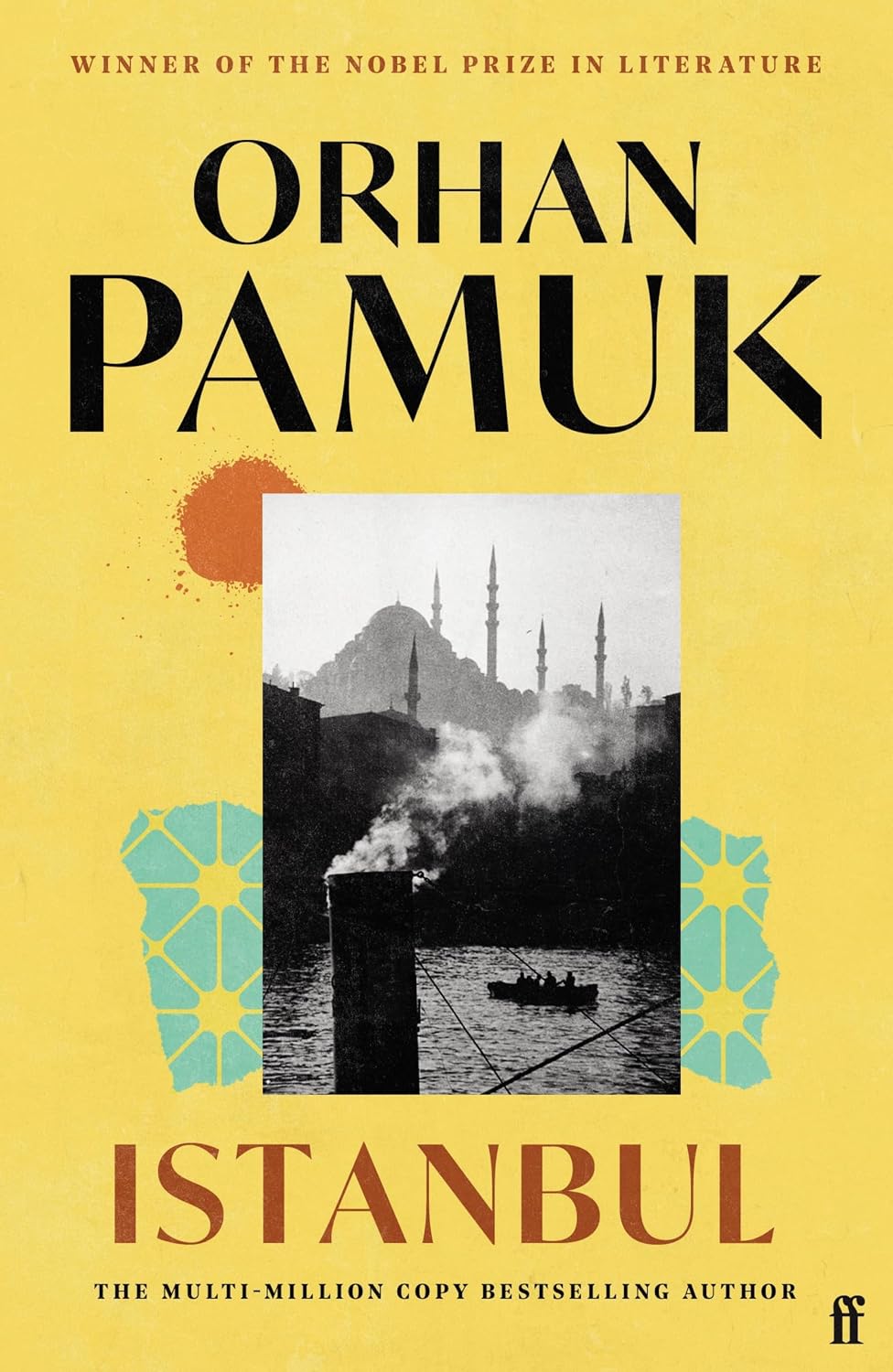
Istanbul: Memories and the City
Istanbul: Memories and the City is a memoir in which Orhan Pamuk reflects on his childhood, his family, and his lifelong relationship with Istanbul. Blending personal recollections with historical observations and literary reflections, he portrays a city shaped by the fading grandeur of the Ottoman Empire and the uncertainties of modernisation. Pamuk describes the melancholy that permeates Istanbul’s streets, abandoned mansions, waterfronts, and neighbourhoods, connecting this atmosphere to the Turkish concept of hüzün, a collective sense of sorrow and loss. His memories of family life, artistic ambition, and the changing urban landscape reveal how individual identity becomes inseparable from the place in which it develops. The book explores belonging, cultural memory, and the relationship between past and present, offering both an intimate portrait of the author and a meditation on a city searching for its place between East and West.
2003
6
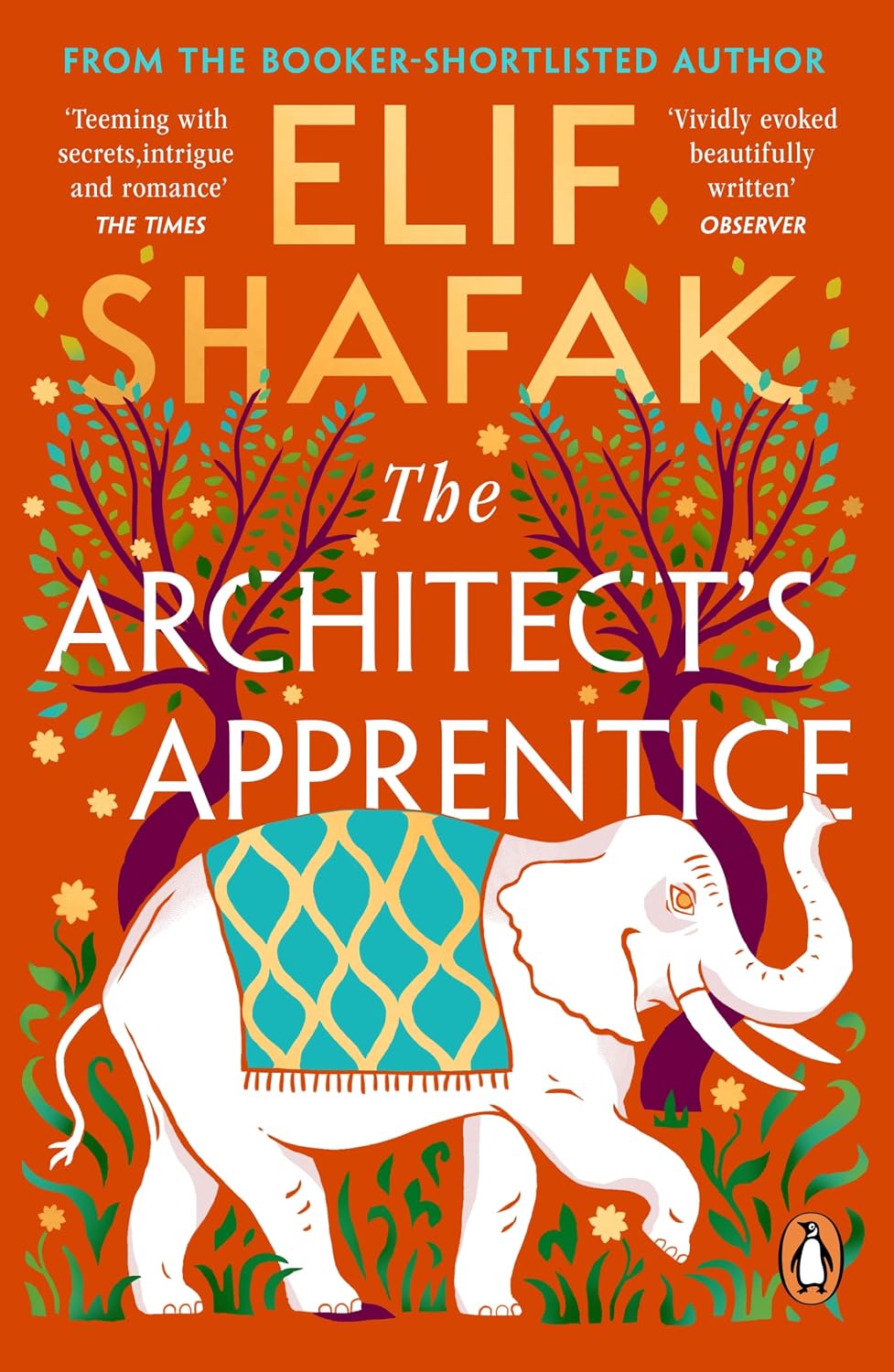
Architect's Apprentice
Set in the sixteenth-century Ottoman Empire, The Architect’s Apprentice follows Jahan, a twelve-year-old boy who arrives in Istanbul with Chota, an extraordinary white elephant intended for the sultan’s menagerie. As Jahan becomes involved in palace life, he encounters the celebrated imperial architect Mimar Sinan, who eventually takes him under his wing. Jahan enters a world of magnificent buildings, political intrigue, artistic ambition, and dangerous rivalries among the architect’s apprentices. As he grows older, his experiences expose him to the contradictions of an empire where beauty and intellectual achievement coexist with cruelty, jealousy, and the struggle for power. Shafak combines historical detail with an imaginative coming-of-age story, exploring loyalty, creativity, and the desire to find one’s place in the world. The novel celebrates architecture as both an artistic achievement and a lasting expression of human imagination.
2006
7
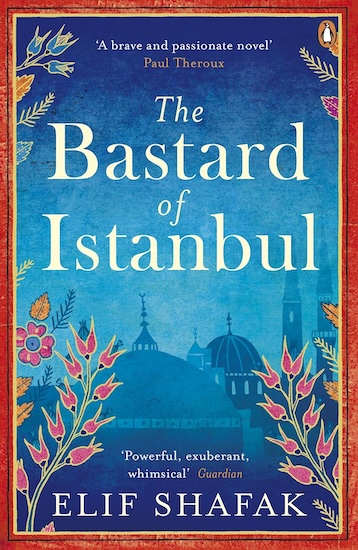
The Bastard of Istanbul
The Bastard of Istanbul centres on two young women whose lives connect through a complicated family history shaped by Turkish and Armenian experiences. Asya Kazancı grows up in Istanbul in a household dominated by women, surrounded by family secrets and conflicting interpretations of the past. Meanwhile, Armanoush, an Armenian American teenager, travels secretly to Istanbul in search of her cultural roots and a better understanding of her family’s history. When the two meet, their friendship brings buried memories and long-suppressed truths to the surface, particularly those connected to the Armenian genocide and its legacy. Through humour, food, family relationships, and competing memories, Shafak examines the relationship between personal identity and collective history. The novel explores how silence and denial can shape generations, while asking whether individuals can build meaningful connections across cultural and historical divisions.
2006
8
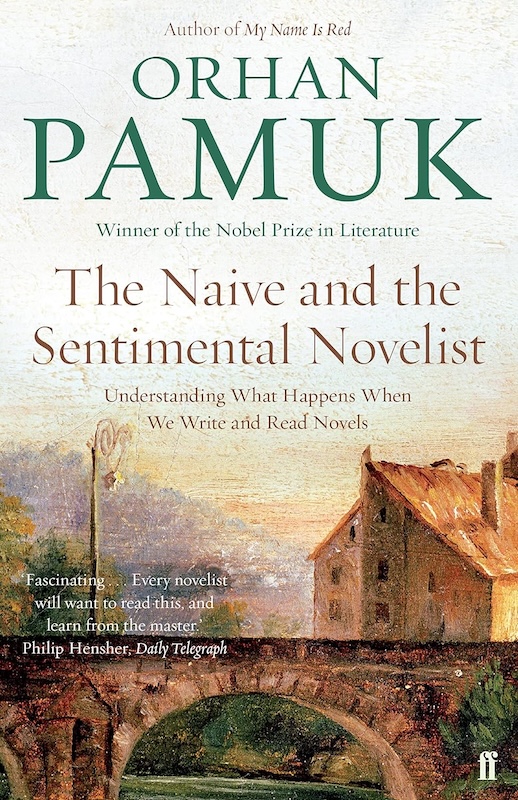
The Naive and the Sentimental Novelist
The Naive and the Sentimental Novelist explores how novels work and why reading fiction can transform our understanding of ourselves and the world. Drawing on his experience as a novelist and his lifelong engagement with literature, Orhan Pamuk examines the relationship between writers, readers, and the fictional worlds they create. Inspired by Friedrich Schiller’s distinction between naive and sentimental poetry, Pamuk considers two approaches to storytelling: one that emerges naturally from experience and another that consciously reflects on its own methods and meanings.
Through examples from writers such as Tolstoy, Dostoevsky, and Thomas Mann, Pamuk discusses character, plot, setting, symbolism, and the delicate balance between imagination and observation. He also explores the pleasure readers find in entering a novel’s world, visualising its landscapes, and identifying with its characters. Blending literary criticism with personal reflection, the book offers an intimate account of the novelist’s craft and the reader’s experience. Ultimately, Pamuk suggests that the power of fiction lies in its ability to make imagined worlds feel as vivid and meaningful as reality itself.
2010
9
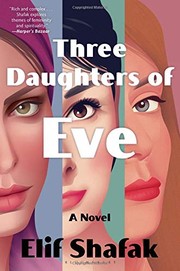
Three Daughters of Eve
Three Daughters of Eve follows Peri, a wealthy Turkish woman whose apparently comfortable life in Istanbul conceals unresolved questions about faith, identity, and personal responsibility. During a dinner party years after her university studies at Oxford, a photograph unexpectedly brings back memories of her time there in the 1990s. As a student, Peri became involved with a charismatic professor who encouraged his pupils to debate religion and belief. Her friendships with two fellow students—one deeply religious and the other firmly atheist—exposed her to conflicting ideas about spirituality, feminism, and freedom. Their relationships eventually culminated in an incident that Peri has struggled to understand ever since. Shafak explores the tension between faith and doubt, the influence of family and culture, and the difficulty of forming an independent worldview in a politically divided society.
2019
10
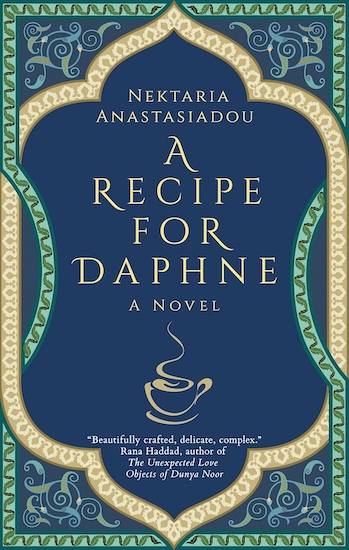
A Recipe for Daphne
In contemporary Istanbul, Fanis Paleologos is a charming widower and a respected member of the city’s dwindling Rum community, Greek Orthodox Christians whose families have lived in Istanbul for centuries. His quiet routines are disrupted when Daphne, an American-born woman of Greek and Ottoman heritage, arrives in search of her roots. Her presence awakens old memories of the woman Fanis once loved and lost during the devastating 1955 Istanbul pogrom. Meanwhile, Kosmas, a talented pastry chef hoping to find a suitable wife within his community, also falls for Daphne and attempts to win her heart through his culinary skills. As romantic rivalries unfold amid afternoon tea, traditional pastries, and lively neighbourhood gatherings, long-buried family secrets threaten to complicate their hopes for happiness. Blending humour, romance, and history, Nektaria Anastasiadou’s novel explores cultural identity, the meaning of home, and the resilience of a community determined to preserve its traditions despite decades of discrimination and upheaval.
2021
11
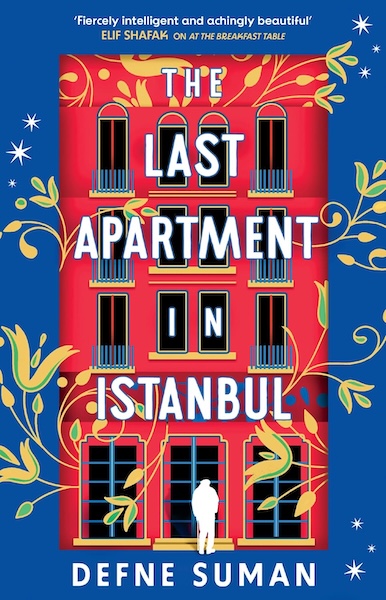
The Last Apartment in Istanbul
Pericles Drakos has lived his entire seventy-five years in Istanbul’s elegant Circle Building, watching the city transform around him. Once home to a thriving, multicultural community, his neighbourhood has gradually changed, its old inhabitants pushed aside by political tensions and gentrification. When the COVID-19 pandemic deepens his isolation, Pericles finds an unexpected connection with Leyla, a younger woman who moves into the building and happens to be a writer.
Drawn to Leyla, Pericles begins writing down the story of his life—not the version others remember, but the complicated truth of the man he once was. Through memories of love, jealousy, betrayal, and loss, he revisits the experiences of a Greek man living in Turkey, where political oppression and hostility have shaped both his personal history and his sense of belonging.
Spanning decades of Istanbul’s turbulent history, The Last Apartment in Istanbul is a poignant exploration of memory, identity, and the fragile coexistence of different communities. Defne Suman brings to life a city where private lives are inseparable from public history, asking what remains of a person when the world they knew disappears.
2022
12
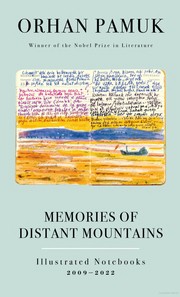
Memories of Distant Mountains
Memories of Distant Mountains is a collection of illustrated notebooks and personal reflections by Nobel Prize-winning author Orhan Pamuk, offering an intimate glimpse into his creative and everyday life. Combining handwritten notes, sketches, paintings, and observations, Pamuk moves between memories of his childhood in Istanbul, reflections on his family, and thoughts about the places, people, and experiences that have shaped his imagination.
The book reveals the relationship between writing and visual art in Pamuk’s creative process, showing how drawings and brief observations can capture moments that conventional storytelling might overlook. His notebooks also explore solitude, memory, urban life, and the passage of time, often returning to Istanbul as both a physical place and an enduring source of inspiration. Blending autobiography, travel writing, and artistic meditation, the collection offers readers access to the private world behind Pamuk’s novels. It is a reflection on how creativity emerges from paying attention to ordinary experiences and transforming fleeting impressions into lasting forms of expression.
2022