Books from Palestine
Suggest a book
All genres
Historical Fiction
Literary Fiction
Fantasy
Romance
Horror
Thriller
Non-Fiction
Mystery
Memoir
Classics
History
Sci-Fi
Contemporary Fiction
Science Fiction
Fiction
Poetry
Essays
Family Saga
Magical Realism
Family Drama
Dark Academia
Psychological Fiction
Dark Comedy
Political Writing
Feminist Fiction
Satire
Campus Fiction
Cultural Studies
Biography
Philosophy
Comedy
Drama
Young Adult
Gothic
Dystopia
Crime
Children's Books
Short Stories
Mythology
Cozy
Retellings
Humour
Adventure
All themes
Love & Passion
Adventure & Journey
Identity & Belonging
War & Conflict
Freedom & Resistance
Family & Heritage
Nature & Landscape
Society & Class
Spirituality & Faith
Solitude & Exile
Coming of Age
Revolution & Change
Friendship
History
Immigration
Myths and Retellings
Colonialism
Women & Society
Mental Health
Motherhood
1
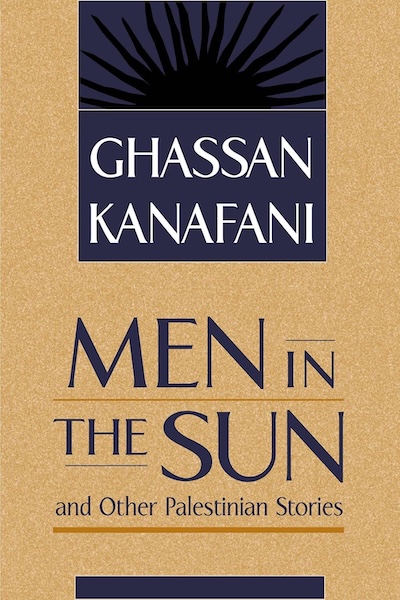
Men in the Sun and Other Palestinian Stories
Men in the Sun and Other Palestinian Stories brings together some of Ghassan Kanafani’s most powerful works of fiction, exploring the lives of Palestinians displaced by the creation of Israel in 1948 and the subsequent loss of their homes and homeland. The collection’s central novella, Men in the Sun, follows three Palestinian men of different generations who attempt to escape the poverty and desperation of refugee life by travelling illegally from Iraq to Kuwait in search of work. Entrusting their fate to a smuggler, they place their hopes in the possibility of a better future, only to confront the devastating consequences of their journey.
Through stories of exile, poverty, political oppression, and shattered aspirations, Kanafani portrays the psychological and material realities of displacement. His characters struggle not only with survival but also with questions of identity, dignity, and collective responsibility. Written with stark realism and symbolic depth, the collection examines the human cost of dispossession and the longing for a place to call home. It remains a significant work of Palestinian literature, giving voice to the experiences of a people shaped by exile and resistance.
1962
2
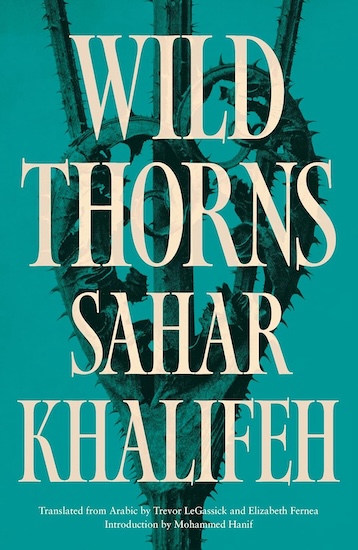
Wild Thorns
After five years working in the Gulf, Usama returns to the occupied West Bank determined to join the Palestinian resistance. He is shocked to discover that life in his hometown of Nablus has changed dramatically. Many Palestinians now work in Israel to support their families, navigating military checkpoints and economic dependence while enduring the daily humiliations of occupation. Frustrated by what he sees as resignation, Usama plans to sabotage buses transporting Palestinian workers into Israel. Yet his encounters with family members, former friends, and fellow Palestinians force him to confront the difficult choices people face between resistance and survival. Through a vivid portrait of ordinary lives under military occupation, Sahar Khalifeh explores political resistance, economic hardship, family loyalty, and the moral complexities of living under oppression. First published in Arabic in 1976, Wild Thorns is a landmark of Palestinian literature that examines the psychological and social consequences of occupation without reducing its characters to simple heroes or victims.
1976
3
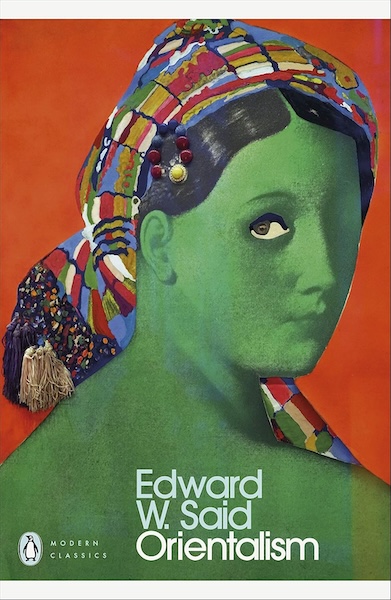
Orientalism
What if the way we see another culture tells us more about ourselves than about the people we are observing?
In Orientalism, literary critic and intellectual Edward W. Said examines how Western writers, scholars, artists, and political authorities constructed an image of the “Orient”—particularly the Arab and Islamic world—as exotic, irrational, backward, and fundamentally different from the West. He argues that these representations were not simply misunderstandings or harmless stereotypes: they became intertwined with imperial power, helping Europe justify its domination of Eastern societies.
Drawing on literature, history, art, and political thought, Said reveals how descriptions of other cultures can shape public opinion and influence the exercise of power. He challenges readers to question who has the authority to represent a people, whose voices are excluded, and how supposedly objective knowledge can reinforce existing hierarchies.
First published in 1978, Orientalism transformed postcolonial studies and continues to influence debates about cultural representation, racism, and the relationship between knowledge and power. It invites us to reconsider not only how the East has been portrayed, but also how these inherited images continue to shape the world today.
1978
4
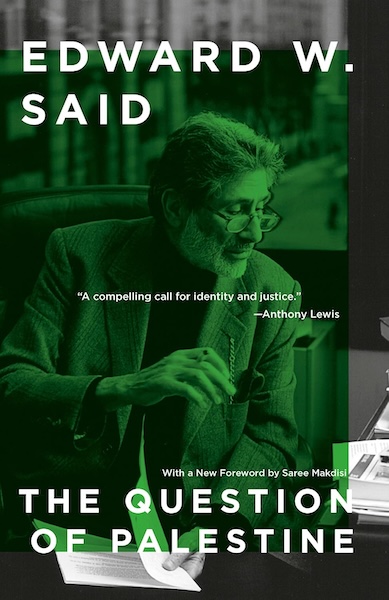
The Question of Palestine
In The Question of Palestine, Edward W. Said examines the history of Palestinian displacement, the development of Zionism, and the struggle for Palestinian national identity and self-determination. Combining historical analysis with personal insight, Said challenges dominant Western narratives that often marginalise Palestinian experiences and perspectives.
First published in 1979, this influential work explores how competing historical claims, political power, and cultural representation have shaped the Palestinian question. Said calls for Palestinians to be recognised not as abstractions in a political conflict, but as a people with their own history, identity, and aspirations.
1979
5
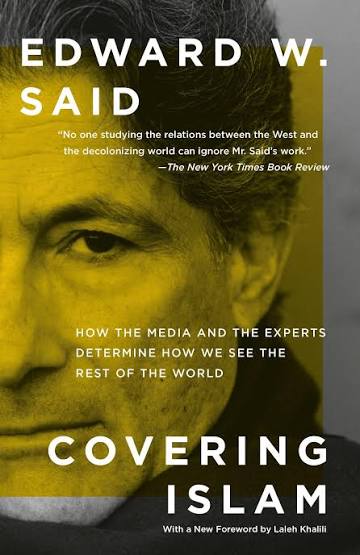
Covering Islam
How does the media shape what the world believes about Islam?
In Covering Islam, Edward W. Said investigates how Western news organisations, academics, and political commentators represent Islam and Muslim societies. He argues that media coverage often reduces diverse communities to simplified images associated with extremism, conflict, and political threat, obscuring the complexity of their histories and everyday lives.
Said explores the relationship between knowledge, media institutions, and political power, asking readers to question who gets to define another culture and whose perspectives are excluded. The book remains an important study of representation, stereotyping, and the influence of public narratives on international understanding.
1981
6
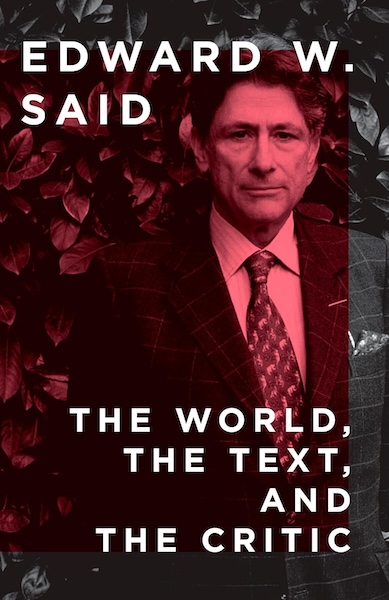
The World, the Text, and the Critic
Can literature ever be separated from the world in which it is created?
In The World, the Text, and the Critic, Edward W. Said challenges the idea that literary works should be understood independently of their historical and political contexts. Through a series of essays, he examines the relationship between literature, intellectual life, institutions, and social power.
Said introduces the idea of worldliness: texts are produced within particular historical circumstances and participate in the societies around them, whether their authors acknowledge it or not. He also considers the critic’s responsibility to question established assumptions rather than simply reinforce dominant ideas. This influential collection explores how literary criticism can become a form of intellectual independence and public engagement.
1983
7
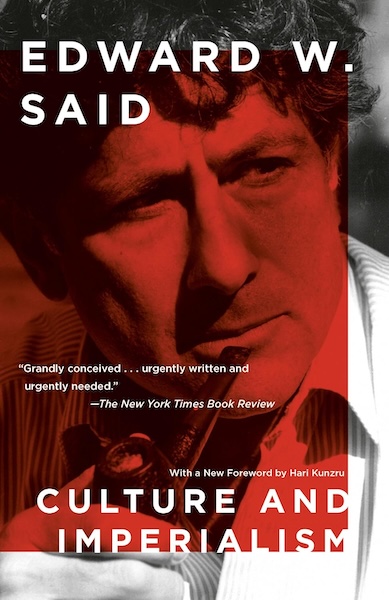
Culture and Imperialism
What if some of the world’s most celebrated literary works also reveal the hidden structures of empire?
In Culture and Imperialism, Edward W. Said examines how novels, music, and other cultural works have reflected—and sometimes reinforced—the expansion of European and American power. Building on the ideas developed in Orientalism, he explores how imperial assumptions appear in literature by writers such as Jane Austen, Joseph Conrad, and Rudyard Kipling.
Said also highlights the voices and resistance of people living under colonial rule, showing how culture can become a space for both domination and opposition. By connecting artistic expression with historical power, he invites readers to reconsider familiar literary classics and recognise the imperial histories that shaped them.
1993
8
Representations of the Intellectual
Should intellectuals challenge those in power, even when doing so threatens their careers, reputations, or personal safety?
Based on his 1993 BBC Reith Lectures, Representations of the Intellectual explores the role of the thinker in public life. Edward W. Said argues that intellectuals have a responsibility to question accepted wisdom, resist political and institutional pressure, and speak honestly about injustice—even when their views are unpopular.
Drawing on figures such as Theodor Adorno and Jonathan Swift, as well as contemporary political events, Said examines the dangers of allowing expertise, ambition, nationalism, or financial interests to silence independent thought. He presents the intellectual as an outsider who must remain willing to challenge authority rather than simply serve it.
Passionate and provocative, this short collection asks what it means to preserve intellectual independence in a world shaped by powerful institutions and competing interests. It remains a compelling reflection on the relationship between knowledge, conscience, and public responsibility.
1994
9
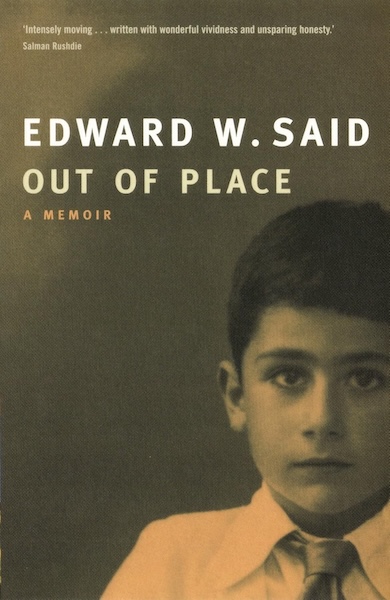
Out Of Place: A Memoir
What does it mean to belong when home is never quite one place?
In Out of Place, Edward W. Said recounts his childhood and early adulthood across Jerusalem, Cairo, and the United States. Born into a Palestinian family in 1935, he grew up moving between cultures, languages, and expectations, often feeling that he did not fully belong anywhere.
With candour and introspection, Said revisits his complicated relationships with his family, his education, and the competing identities that shaped him. His memories reveal the intimate experience behind his later work on exile, culture, and displacement, offering a personal perspective on the historical upheavals of the twentieth century.
More than a conventional autobiography, Out of Place is a meditation on memory and belonging—and on the enduring experience of living between worlds.
1999
10
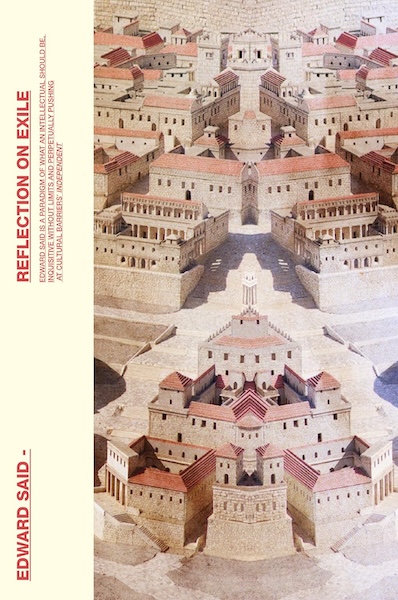
Reflections On Exile: And Other Literary And Cultural Essays
What does it mean to live between worlds—to belong to a place through memory while remaining separated from it by distance, politics, or history?
In Reflections on Exile, Edward W. Said brings together essays written over more than three decades, exploring literature, culture, politics, and the experience of displacement. The collection reflects his lifelong engagement with Palestinian identity and his own experience of exile, while examining how writers and artists respond to the societies that shape them.
Said moves between close readings of literary works and broader reflections on imperialism, cultural identity, and intellectual responsibility. He considers figures such as Joseph Conrad, George Orwell, and Naguib Mahfouz, revealing how art can illuminate the tensions between personal experience and historical forces.
At the heart of the collection is the idea that exile is more than physical separation: it can transform how people see home, belonging, and themselves. Both intellectually searching and deeply personal, the book explores the creative possibilities and emotional costs of living between cultures.
2000
11
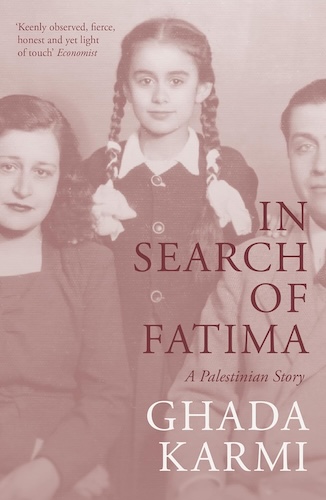
In Search of Fatima
What does it mean to lose your homeland—and spend the rest of your life searching for a place to belong? In this moving memoir, Ghada Karmi recounts her childhood in Jerusalem, her family’s forced displacement during the 1948 Nakba, and their eventual resettlement in England. Growing up between two worlds, she struggles with exile, cultural alienation, and the feeling of being a stranger in a country that is supposed to be home. As she reflects on her childhood and later returns to Palestine, Karmi explores the personal consequences of displacement alongside the political history that shaped her life. Both an intimate family story and a powerful account of Palestinian experience, this memoir examines how the loss of a homeland can shape identity across generations.
2002
12
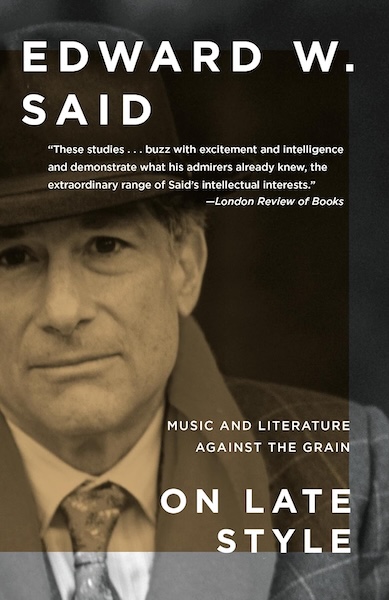
On Late Style: Music and Literature Against the Grain
What happens when great artists approach the end of their lives—and begin creating works that refuse to offer comfort, harmony, or easy answers?
In On Late Style, Edward W. Said explores the final works of celebrated composers, writers, and artists, including Beethoven, Mozart, Thomas Mann, and Jean Genet. He challenges the assumption that artistic maturity naturally leads to wisdom and reconciliation, arguing instead that some creators produce their most challenging work late in life, embracing contradiction, resistance, and unresolved tensions.
Drawing on music, literature, opera, and film, Said examines how artists confront their own mortality while remaining at odds with the cultural expectations of their time. The result is a compelling reflection on creativity, ageing, and the courage to resist conventional ideas of artistic perfection.
Published posthumously in 2006, this unfinished final work reflects Said’s own lifelong commitment to intellectual independence and the power of art to challenge established assumptions.
2006