Books from Palestine
Suggest a book
All genres
Historical Fiction
Literary Fiction
Fantasy
Romance
Horror
Thriller
Non-Fiction
Mystery
Memoir
Classics
History
Sci-Fi
Contemporary Fiction
Science Fiction
Fiction
Poetry
Essays
Family Saga
Magical Realism
Family Drama
Dark Academia
Psychological Fiction
Dark Comedy
Political Writing
Feminist Fiction
Satire
Campus Fiction
Cultural Studies
Biography
Philosophy
Comedy
Drama
Young Adult
Gothic
Dystopia
Crime
Children's Books
Short Stories
Mythology
Cozy
Retellings
Humour
Adventure
All themes
Love & Passion
Adventure & Journey
Identity & Belonging
War & Conflict
Freedom & Resistance
Family & Heritage
Nature & Landscape
Society & Class
Spirituality & Faith
Solitude & Exile
Coming of Age
Revolution & Change
Friendship
History
Immigration
Myths and Retellings
Colonialism
Women & Society
Mental Health
Motherhood
1
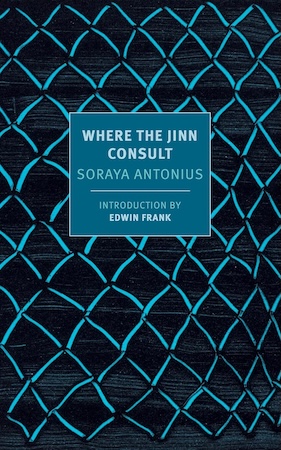
Where the Jinn Consult
In the final years of British-ruled Palestine, Jerusalem’s privileged elite continue to enjoy their comfortable lives while the world around them edges towards catastrophe. When Maliha al-Ghal’s husband, a prominent Palestinian politician, is deported by the British, her carefully ordered existence begins to unravel. Her friend Violet Dhaishi, meanwhile, remains absorbed in social gatherings, shopping, and a secret affair with a British officer, oblivious to the escalating violence threatening their society. As bombings multiply and political tensions intensify, the Palestinian upper classes cling to their privilege, reluctant to acknowledge the forces gathering against them. Through interwoven lives, personal betrayals, and political intrigue, Soraya Antonius exposes the dangerous complacency of a society unable to recognise its impending dispossession. Both an intimate portrait of pre-Nakba Palestine and a fierce critique of colonial power and social privilege, Where the Jinn Consult captures the tragic distance between a world people believe will endure and the one they are about to lose.
2027
2
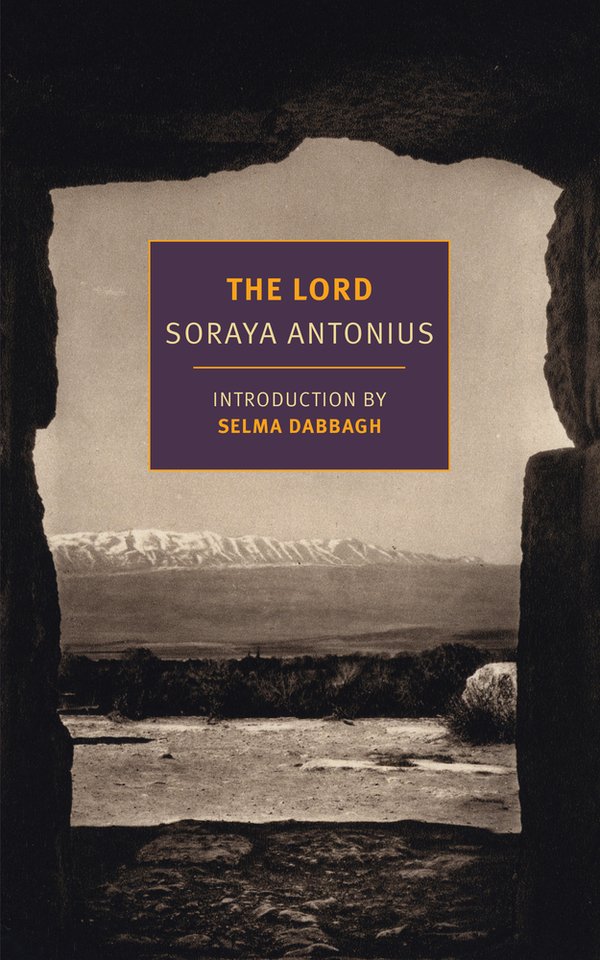
The Lord
In British-ruled Palestine, a charismatic young man named Tareq becomes a figure of mystery and resistance. After leaving school, he travels from village to village as a magician, performing astonishing feats that earn him a devoted following. But beneath his extraordinary reputation lies a growing defiance of British colonial authority. As unrest spreads across Palestine and the 1936 Arab Revolt approaches, Tareq’s influence attracts the attention of Challis, a ruthless British police chief determined to crush the resistance. Decades later, amid the Israeli invasion of Lebanon in 1982, an English missionary recalls the young man whose fate became intertwined with the history of a nation. Rich in historical detail and vivid depictions of Palestinian society before the Nakba, The Lord explores resistance, colonial power, and the lives of people caught in the struggle for their homeland.
2025
3
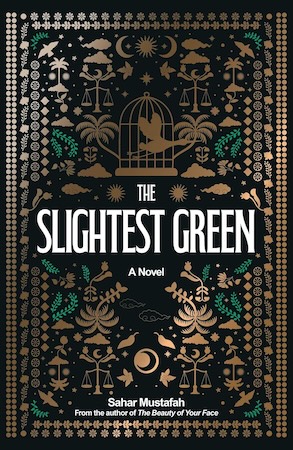
The Slightest Green
When Intisar Jaber receives news that her estranged father is dying, she leaves her life in Chicago behind and returns to Palestine, a land she barely remembers but has never entirely escaped. Her father, Hafez, abandoned her family decades earlier to join the resistance, only to spend the rest of his life imprisoned. Now, standing in her ancestral village, Intisar must confront the complicated legacy he left behind and the unfamiliar feeling of being a stranger in her own homeland. Meanwhile, her grandmother Sundus fights to protect the family home from those seeking to take it away. As the two women navigate grief, fractured family ties, and the enduring struggle to preserve their inheritance, Intisar faces a difficult choice between the life she has built in America and the history calling her back. The Slightest Green is a moving multigenerational novel about Palestinian identity, displacement, and the powerful connection between people and the land they call home.
2025
4
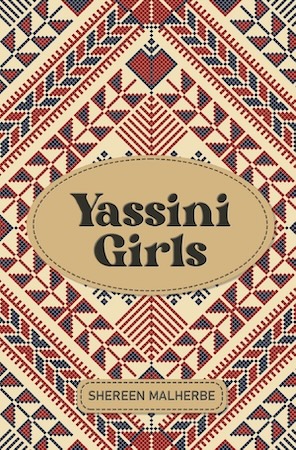
Yassini Girls
In the ancient streets of Jerusalem, Fatima receives an unexpected phone call that awakens memories she has spent years trying to bury. Thousands of miles away in the English countryside, Layla discovers a family heirloom hidden beneath her attic floor, setting her on a journey into the painful, long-silenced history of Palestine. As the two women’s stories begin to converge, family secrets reveal the enduring consequences of displacement and the fragile threads connecting generations to their homeland. Inspired by the author’s own discovery of her family’s history during a BBC documentary, Yassini Girls is a deeply personal novel about Palestinian identity, inherited trauma, and the power of storytelling to preserve what history threatens to erase. Through the traditions, memories, and resilience of Palestinian women, it explores how understanding the past can become an act of resistance and a way of safeguarding the future.
2024
5
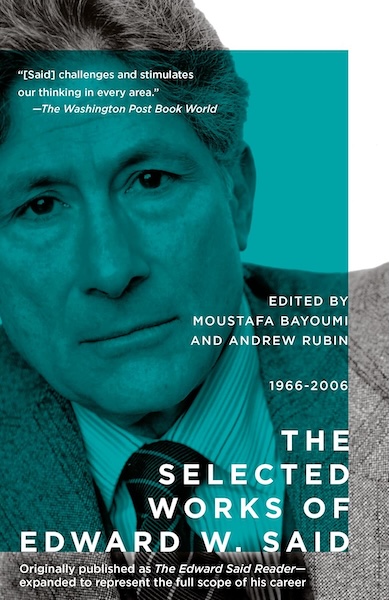
The Selected Works of Edward Said, 1966 - 2006
How do literature, culture, and politics shape the way we understand the world? And whose voices are missing from the stories history tells?
The Selected Works of Edward Said brings together key writings from four decades of one of the most influential intellectuals of the twentieth century. Edited by Moustafa Bayoumi and Andrew Rubin, this expanded collection traces Said’s thinking across subjects ranging from colonialism and Palestinian identity to literature, music, media, and the responsibilities of intellectuals.
Featuring selections from Orientalism, Culture and Imperialism, and Out of Place, alongside important essays and later writings, the collection offers an overview of Said’s evolving ideas about power, representation, and cultural identity.
Essential for understanding Said’s intellectual legacy, this volume reveals how cultural narratives influence political realities—and why questioning dominant perspectives remains vital.
2007
6
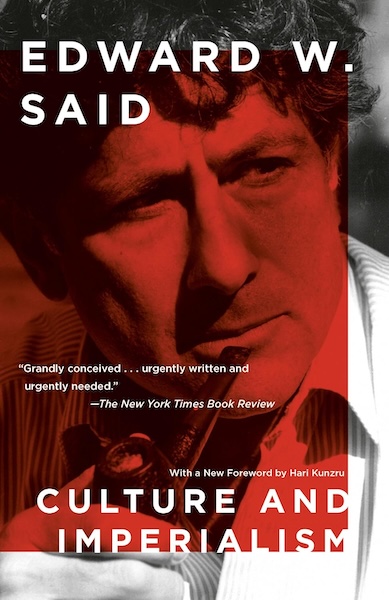
Culture and Imperialism
What if some of the world’s most celebrated literary works also reveal the hidden structures of empire?
In Culture and Imperialism, Edward W. Said examines how novels, music, and other cultural works have reflected—and sometimes reinforced—the expansion of European and American power. Building on the ideas developed in Orientalism, he explores how imperial assumptions appear in literature by writers such as Jane Austen, Joseph Conrad, and Rudyard Kipling.
Said also highlights the voices and resistance of people living under colonial rule, showing how culture can become a space for both domination and opposition. By connecting artistic expression with historical power, he invites readers to reconsider familiar literary classics and recognise the imperial histories that shaped them.
1993
7
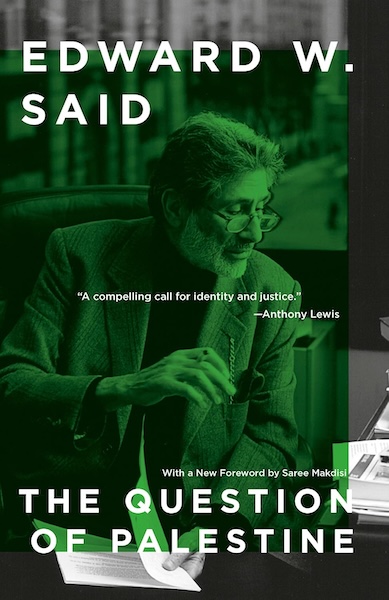
The Question of Palestine
In The Question of Palestine, Edward W. Said examines the history of Palestinian displacement, the development of Zionism, and the struggle for Palestinian national identity and self-determination. Combining historical analysis with personal insight, Said challenges dominant Western narratives that often marginalise Palestinian experiences and perspectives.
First published in 1979, this influential work explores how competing historical claims, political power, and cultural representation have shaped the Palestinian question. Said calls for Palestinians to be recognised not as abstractions in a political conflict, but as a people with their own history, identity, and aspirations.
1979
8
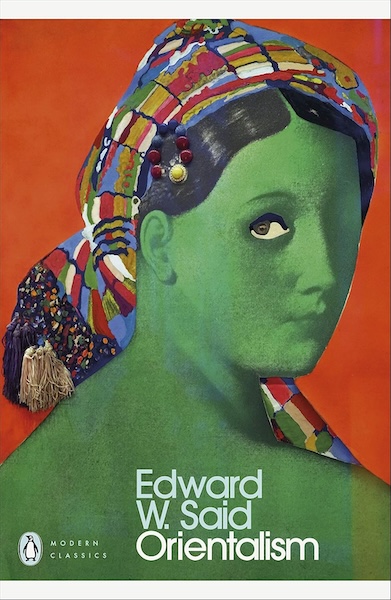
Orientalism
What if the way we see another culture tells us more about ourselves than about the people we are observing?
In Orientalism, literary critic and intellectual Edward W. Said examines how Western writers, scholars, artists, and political authorities constructed an image of the “Orient”—particularly the Arab and Islamic world—as exotic, irrational, backward, and fundamentally different from the West. He argues that these representations were not simply misunderstandings or harmless stereotypes: they became intertwined with imperial power, helping Europe justify its domination of Eastern societies.
Drawing on literature, history, art, and political thought, Said reveals how descriptions of other cultures can shape public opinion and influence the exercise of power. He challenges readers to question who has the authority to represent a people, whose voices are excluded, and how supposedly objective knowledge can reinforce existing hierarchies.
First published in 1978, Orientalism transformed postcolonial studies and continues to influence debates about cultural representation, racism, and the relationship between knowledge and power. It invites us to reconsider not only how the East has been portrayed, but also how these inherited images continue to shape the world today.
1978
9
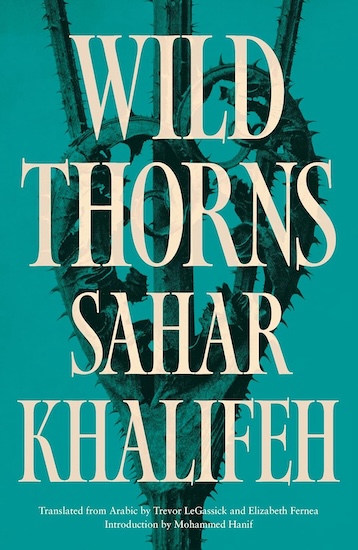
Wild Thorns
After five years working in the Gulf, Usama returns to the occupied West Bank determined to join the Palestinian resistance. He is shocked to discover that life in his hometown of Nablus has changed dramatically. Many Palestinians now work in Israel to support their families, navigating military checkpoints and economic dependence while enduring the daily humiliations of occupation. Frustrated by what he sees as resignation, Usama plans to sabotage buses transporting Palestinian workers into Israel. Yet his encounters with family members, former friends, and fellow Palestinians force him to confront the difficult choices people face between resistance and survival. Through a vivid portrait of ordinary lives under military occupation, Sahar Khalifeh explores political resistance, economic hardship, family loyalty, and the moral complexities of living under oppression. First published in Arabic in 1976, Wild Thorns is a landmark of Palestinian literature that examines the psychological and social consequences of occupation without reducing its characters to simple heroes or victims.
1976