Books from Morocco
Suggest a book
All genres
Historical Fiction
Literary Fiction
Fantasy
Romance
Horror
Thriller
Non-Fiction
Mystery
Memoir
Classics
History
Sci-Fi
Contemporary Fiction
Science Fiction
Fiction
Poetry
Essays
Family Saga
Magical Realism
Family Drama
Dark Academia
Psychological Fiction
Dark Comedy
Political Writing
Feminist Fiction
Satire
Campus Fiction
Cultural Studies
Biography
Philosophy
Comedy
Drama
Young Adult
Gothic
Dystopia
Crime
Children's Books
Short Stories
Mythology
Cozy
Retellings
Humour
Adventure
All themes
Love & Passion
Adventure & Journey
Identity & Belonging
War & Conflict
Freedom & Resistance
Family & Heritage
Nature & Landscape
Society & Class
Spirituality & Faith
Solitude & Exile
Coming of Age
Revolution & Change
Friendship
History
Immigration
Myths and Retellings
Colonialism
Women & Society
Mental Health
Motherhood
1
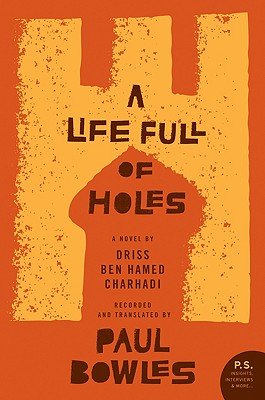
A Life Full of Holes
Set in Morocco during the mid-twentieth century, A Life Full of Holes follows Ahmed, a poor boy growing up in a society marked by poverty, inequality, and the lingering effects of colonialism. After his father disappears from his life and his mother remarries, Ahmed finds himself unwanted in his own home. Forced to fend for himself from an early age, he moves between jobs as a shepherd, labourer, baker’s assistant, and house servant, struggling to secure food, shelter, and a little dignity.
As Ahmed grows older, his experiences expose him to exploitation, police brutality, betrayal, and the harsh realities of life on the margins of Moroccan society. His journey is not a conventional story of triumph over adversity; instead, it presents survival as a daily struggle in a world where opportunities are scarce and power belongs to those who can exploit others.
The book is particularly distinctive because of its origins. Larbi Layachi dictated his life story in Moroccan Arabic to American writer Paul Bowles, who recorded and translated it into English. First published under the pseudonym Driss ben Hamed Charhadi, the narrative blurs the boundaries between autobiography and fiction, offering an intimate perspective on lives rarely represented in Western literature.
Through Ahmed’s experiences, the book explores childhood hardship, social exclusion, and the struggle to preserve one’s humanity in difficult circumstances. Its direct, unembellished storytelling gives readers a vivid portrait of everyday life in Morocco during a period of profound social and historical change.
1964
2
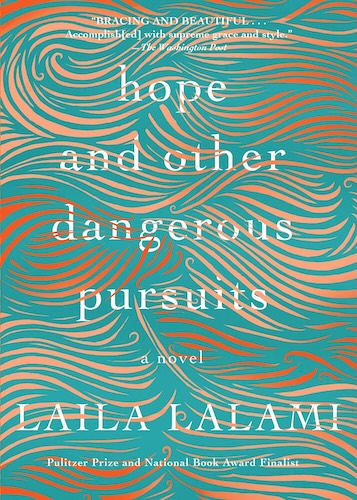
Hope and Other Dangerous Pursuits
Hope and Other Dangerous Pursuits follows four Moroccan migrants who attempt to cross the Strait of Gibraltar in a small inflatable boat, hoping to reach Spain and build better lives in Europe. Each has a different reason for leaving Morocco: unemployment, family responsibilities, personal dissatisfaction, or the desire to escape restrictive social expectations. Their dangerous journey ends with their interception by Spanish authorities, and the novel then traces the experiences that led each character to risk everything for an uncertain future.
Through interwoven narratives, Laila Lalami explores the economic inequalities, political frustrations, and social pressures that motivate migration. She reveals the difficult realities facing those who remain in Morocco, as well as the hopes and compromises of those who leave. The novel challenges simplistic ideas about immigration by presenting its characters as complex individuals with conflicting desires, private struggles, and understandable ambitions. Moving between Morocco and Spain, it examines belonging, identity, family, and the uncertain promise of a better life, asking what freedom means when the pursuit of opportunity requires risking everything.
2005
3
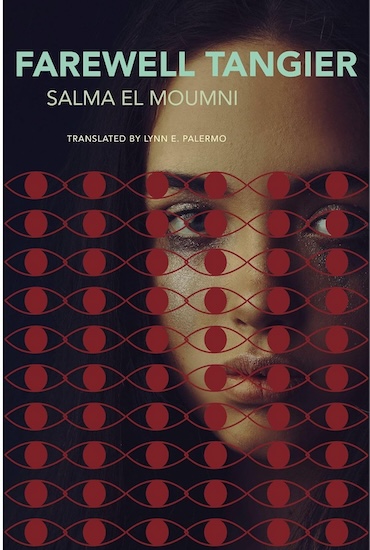
Farewell Tangier
Growing up in Tangier, Alia is constantly subjected to the unwanted attention of men who scrutinize her body, follow her, and invade her space. Desperate to understand the gaze that makes her feel both exposed and ashamed, she begins taking intimate photographs of herself in the privacy of her bedroom. When the images appear online without her consent, Alia faces the threat of punishment and is forced to flee to Lyon, France. But leaving Morocco cannot erase the shame, fear, and cultural expectations she carries with her. Intimate and unsettling, this powerful novel examines the policing of women’s bodies, sexual identity, and the complicated search for freedom between two cultures.
2026