Books from Libya
Suggest a book
All genres
Historical Fiction
Literary Fiction
Fantasy
Romance
Horror
Thriller
Non-Fiction
Mystery
Memoir
Classics
History
Sci-Fi
Contemporary Fiction
Science Fiction
Fiction
Poetry
Essays
Family Saga
Magical Realism
Family Drama
Dark Academia
Psychological Fiction
Dark Comedy
Political Writing
Feminist Fiction
Satire
Campus Fiction
Cultural Studies
Biography
Philosophy
Comedy
Drama
Young Adult
Gothic
Dystopia
Crime
Children's Books
Short Stories
Mythology
Cozy
Retellings
Humour
Adventure
All themes
Love & Passion
Adventure & Journey
Identity & Belonging
War & Conflict
Freedom & Resistance
Family & Heritage
Nature & Landscape
Society & Class
Spirituality & Faith
Solitude & Exile
Coming of Age
Revolution & Change
Friendship
History
Immigration
Myths and Retellings
Colonialism
Women & Society
Mental Health
Motherhood
1
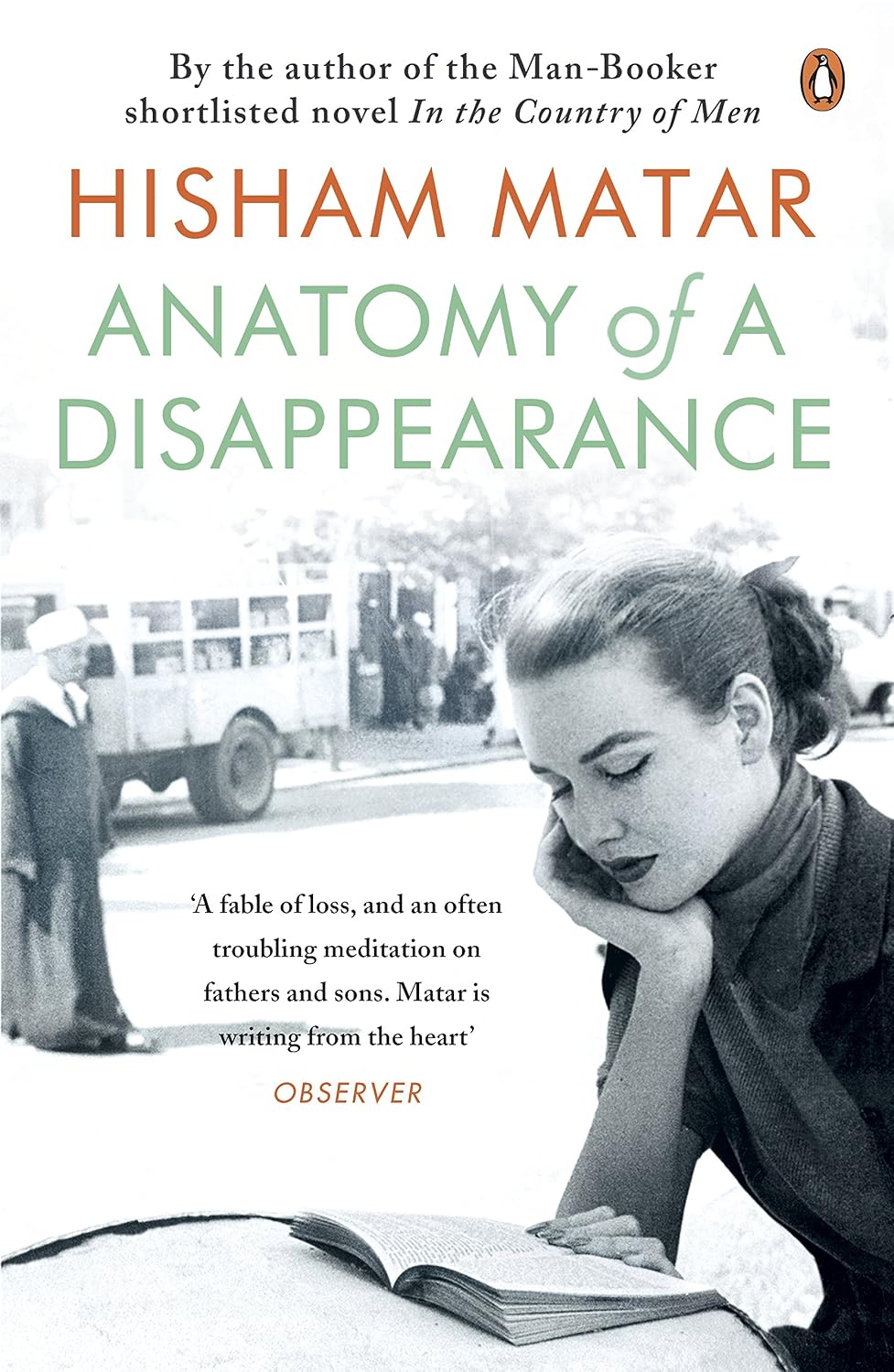
Anatomy of a Disappearance
Anatomy of a Disappearance follows Nuri el-Alfi, a young boy whose life is shaped by the mysterious disappearance of his father, Kamal, a wealthy Libyan exile and political dissident. After his mother’s death, Nuri becomes increasingly attached to Mona, his father’s second wife, whom he first encounters as a teenager while travelling with his father in England. When Kamal vanishes without explanation, Nuri is left struggling to understand the man he loved but never fully knew. As he grows older, he searches for clues about his father’s fate, confronting the silences, secrets, and uncertainties that surround his family’s past. Set against the backdrop of political repression and exile, the novel explores the fragile bonds between fathers and sons, the complexities of memory, and the ways absence can shape a person’s identity. Through restrained, lyrical prose, Hisham Matar examines how grief and longing transform our understanding of those we love, revealing how the search for a missing person can also become a search for oneself.
2011
2
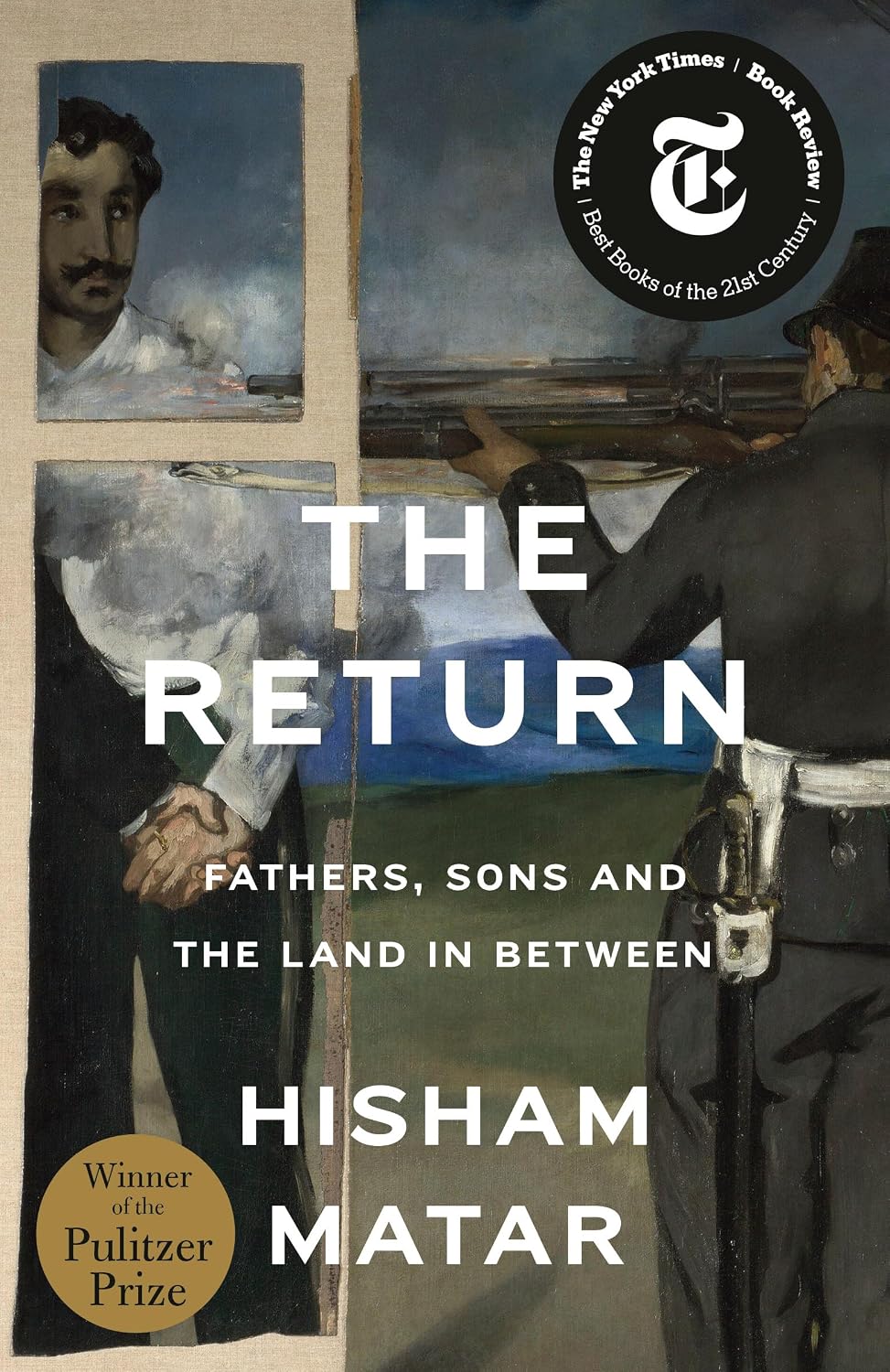
The Return
The Return is a memoir in which Hisham Matar recounts his search for his father, Jaballa Matar, a Libyan political dissident who disappeared in 1990 after being abducted in Egypt and taken to a prison in Libya. For years, Matar has lived with uncertainty about his father’s fate, holding on to memories and fragments of information while his family remains scattered by exile. Following the fall of Muammar Gaddafi’s regime in 2011, Matar returns to Libya for the first time in decades, hoping to discover what happened to his father and reconnect with the country he left behind as a child. His journey becomes both a personal investigation and a reflection on the lasting effects of dictatorship, political violence, and displacement. Through intimate recollections of family life, childhood, and loss, Matar explores the complex bonds between fathers and sons, the power of memory, and the emotional cost of living without answers. The memoir is a moving meditation on love, belonging, and the search for truth in the shadow of historical trauma.
2016
3
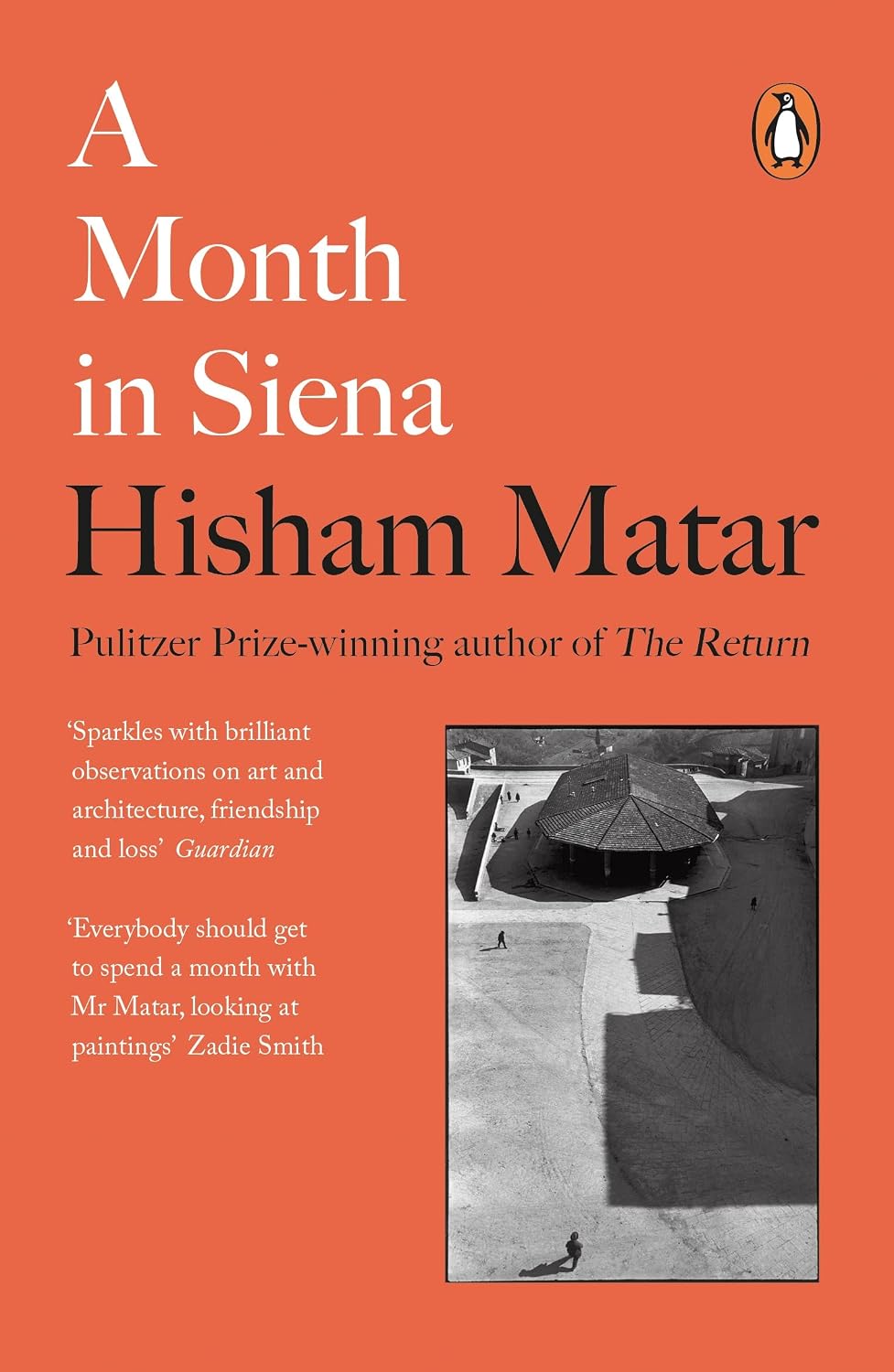
Month in Siena
A Month in Siena is a reflective memoir in which Hisham Matar explores the relationship between art, memory, and personal grief during a month spent in the Italian city of Siena. Drawn to the city’s extraordinary collection of Sienese paintings, Matar immerses himself in the works of medieval and Renaissance artists, seeking solace and understanding through their depictions of human suffering, devotion, and beauty. His observations become intertwined with reflections on his Libyan heritage, his father’s disappearance, and the emotional consequences of years spent searching for answers. Moving between the art galleries of Siena and memories of his own life, Matar considers how art can offer a form of companionship and provide a language for experiences that are otherwise difficult to express. Rather than presenting art history as a purely intellectual pursuit, he approaches painting as an intimate encounter capable of changing how we see ourselves and others. The book is a meditation on loss, exile, faith, and the quiet possibilities of healing through beauty and contemplation.
2019
4
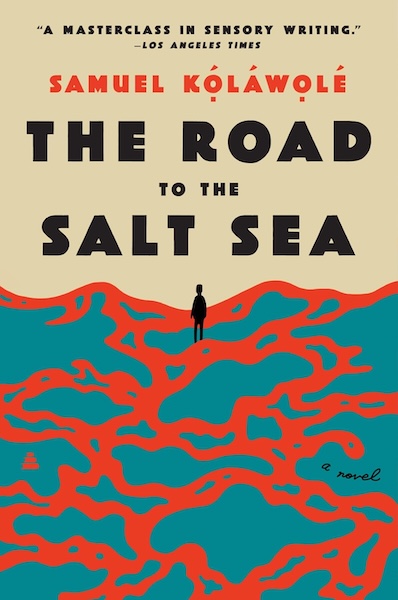
The Road to the Salt Sea
Able God is a bright young Nigerian man with an engineering degree, a love of chess, and hopes for a better future. But instead of building the life he imagined, he works long hours delivering room service at a luxury hotel, serving wealthy guests while struggling to make ends meet. When an encounter with a powerful and dangerous hotel guest turns violent, Able God finds himself caught in a situation that leaves him with few options. Fearing the consequences, he flees Nigeria and joins a group of migrants travelling across the Sahara toward Europe.
Led by a charismatic religious figure, the travellers embark on a perilous journey through Niger and Libya, hoping to reach a place where they can begin again. Instead, they encounter human traffickers, starvation, exploitation, and violence. As survival becomes his only priority, Able God is forced to question his beliefs about morality, faith, and the possibility of a better life. In The Road to the Salt Sea, Samuel Kolawole offers a powerful portrait of migration, exposing the human cost of inequality and the desperate choices made by those seeking safety and opportunity beyond their homeland.
2024
5
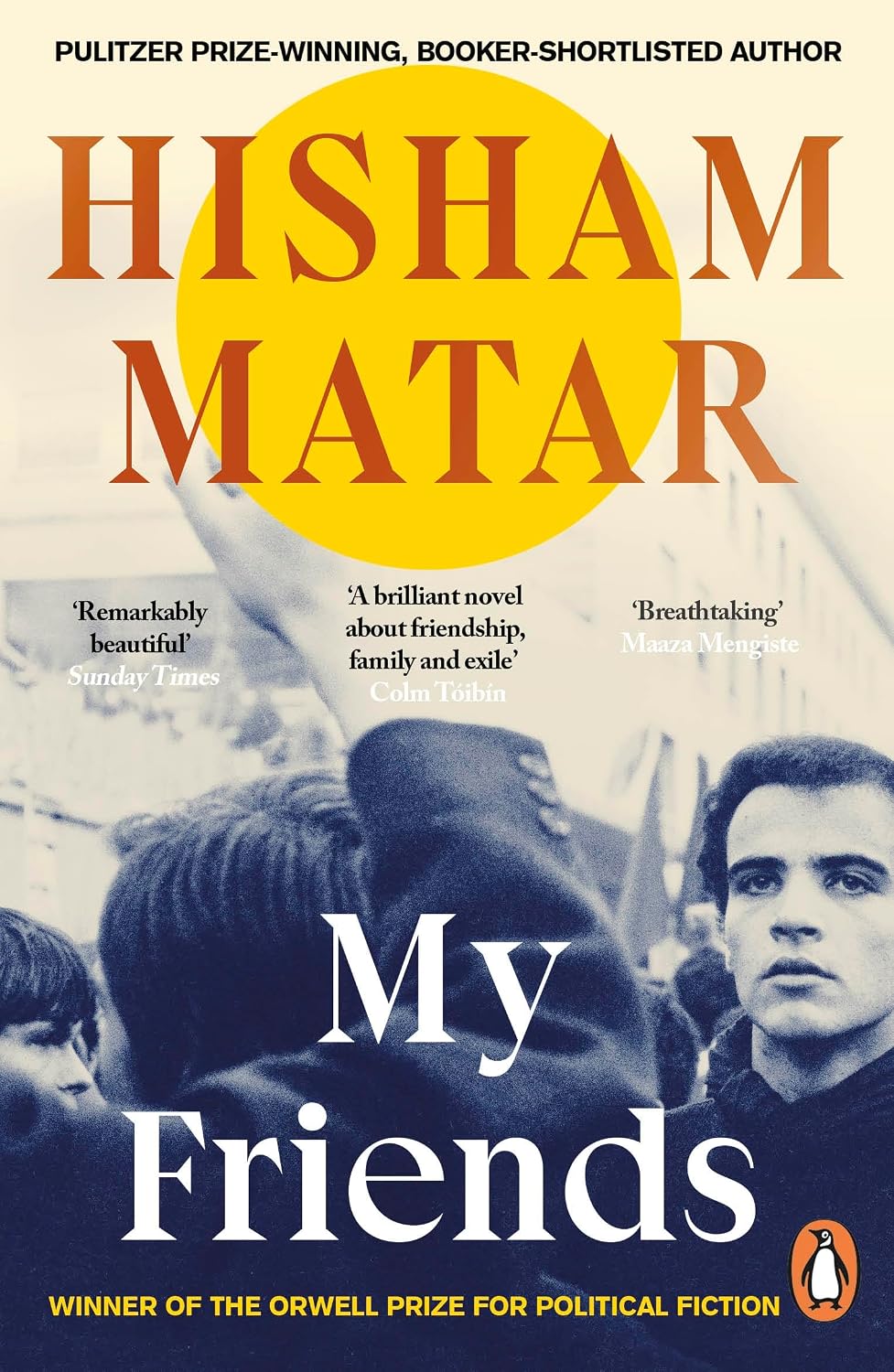
My Friends
My Friends follows Khaled, a Libyan man living in exile in London, whose life is shaped by friendship, political repression, and the enduring pull of his homeland. The story begins with a defining moment in 1984, when Khaled and his friend Mustafa attend a protest outside the Libyan embassy in London. The demonstration turns violent, and Khaled is wounded, an event that binds his personal fate to Libya’s political turmoil. Over the following decades, he navigates life far from home, confronting the distance between the country he remembers and the life he has built in exile. Through his relationships with Mustafa and other friends, Matar explores how political upheaval reshapes intimate bonds, influences personal identity, and leaves lasting emotional scars. Moving between past and present, the novel reflects on belonging, displacement, and the difficulty of returning to a place transformed by history. With quiet, introspective prose, My Friends examines the sacrifices of exile and the profound ways friendship can provide continuity, comfort, and meaning in a fractured world.
2024
6
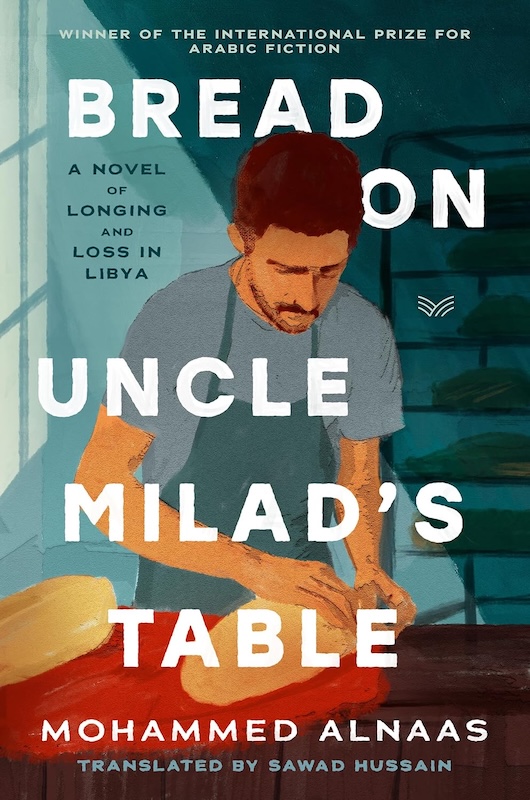
Bread on Uncle Milad's Table
Bread on Uncle Milad’s Table follows Milad al-Usta, a sensitive young man growing up in a Libyan village where masculinity is defined by rigid social expectations. Raised in a family of bakers, Milad learns to love the craft of making bread, but his father continually reminds him that he must become a man according to society’s standards. Despite his efforts to conform, Milad struggles to embody the toughness and authority expected of him.
After marrying his childhood sweetheart, Zainab, Milad finally embraces a different way of living. He takes responsibility for the household and domestic chores while Zainab becomes the family’s breadwinner. Although the arrangement brings them happiness, their unconventional roles attract ridicule and disapproval from the community.
Set against the social and political realities of modern Libya, the novel explores masculinity, gender roles, love, and the pressure to conform. Through Milad’s story, Alnaas questions the social conventions that determine how men and women should live, celebrating the individual’s struggle to define a meaningful life on their own terms. The novel won the 2022 International Prize for Arabic Fiction.
2026