Books from Japan
Suggest a book
All genres
Historical Fiction
Literary Fiction
Fantasy
Romance
Horror
Thriller
Non-Fiction
Mystery
Memoir
Classics
History
Sci-Fi
Contemporary Fiction
Science Fiction
Fiction
Poetry
Essays
Family Saga
Magical Realism
Family Drama
Dark Academia
Psychological Fiction
Dark Comedy
Political Writing
Feminist Fiction
Satire
Campus Fiction
Cultural Studies
Biography
Philosophy
Comedy
Drama
Young Adult
Gothic
Dystopia
Crime
Children's Books
Short Stories
Mythology
Cozy
Retellings
Humour
Adventure
All themes
Love & Passion
Adventure & Journey
Identity & Belonging
War & Conflict
Freedom & Resistance
Family & Heritage
Nature & Landscape
Society & Class
Spirituality & Faith
Solitude & Exile
Coming of Age
Revolution & Change
Friendship
History
Immigration
Myths and Retellings
Colonialism
Women & Society
Mental Health
Motherhood
1

Facing the Bridge
In Facing the Bridge, Yoko Tawada brings together three surreal, interconnected tales that challenge conventional ideas of identity, language, and belonging. Moving between Japan, Germany, Vietnam, and the Canary Islands, these stories follow characters whose lives are shaped by cultural displacement, unexpected encounters, and the strange instability of the world around them.
In one tale, Amo, an African boy kidnapped and brought to Europe, and Tamao, a Japanese exchange student in Germany, inhabit different historical periods yet find themselves pursued by the same mysterious shadow. Another follows Kazuko, a young Japanese woman whose journey to Vietnam begins with a mysterious postcard and develops into an unsettling exploration of identity. In the third, an unnamed translator retreats to the Canary Islands, where her attempt to interpret a text becomes entangled with banana groves, literary references, and strange encounters.
With dreamlike logic, playful language, and unexpected transformations, Tawada blurs the boundaries between cultures, histories, and realities. The collection explores what happens when familiar categories of nationality, language, and selfhood begin to dissolve. Rather than presenting identity as something fixed, these stories suggest that it is continually reshaped through encounters with other people, places, and languages.
2007
2
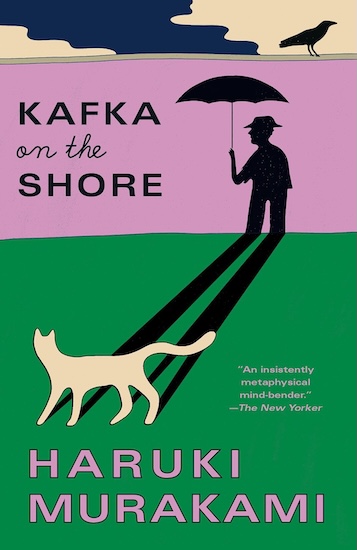
Kafka on the Shore
Kafka on the Shore weaves together the stories of Kafka Tamura, a fifteen-year-old boy who runs away from home, and Nakata, an elderly man whose unusual abilities emerged after a mysterious childhood incident. Kafka travels to a quiet library in Takamatsu, where he encounters people who help him confront questions about his family, his memories, and his destiny. Meanwhile, Nakata embarks on a journey of his own, following strange events that seem to connect him to Kafka’s life. As their stories unfold, dreams, myths, talking animals, and supernatural occurrences blur the boundaries between reality and imagination. Murakami explores fate, memory, loneliness, and the search for identity, creating a mysterious narrative in which the characters must confront aspects of themselves that resist ordinary explanation.
2002
3
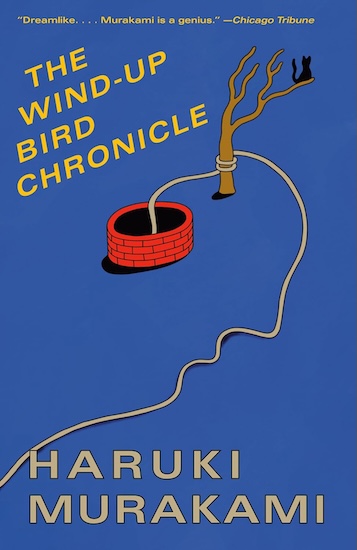
The Wind-up Bird Chronicle
The Wind-Up Bird Chronicle follows Toru Okada, an unemployed man whose ordinary life begins to unravel when his wife disappears and a series of increasingly strange events takes place in his Tokyo neighbourhood. His search leads him into encounters with enigmatic strangers, disturbing memories, and stories connected to Japan’s wartime history. As Toru investigates his wife’s disappearance, he finds himself drawn into a hidden world where dreams, violence, and psychological experience overlap. The novel gradually reveals the emotional distance within his marriage and the unresolved histories that shape the people around him. Murakami blends surrealism with historical reflection, examining alienation, power, and the difficulty of understanding one’s own life. Toru’s journey becomes an exploration of the hidden forces that influence human relationships and the fragile boundary between the familiar world and the unknown.
1994
4
The Memory Police
The Memory Police takes place on an unnamed island where objects, memories, and aspects of everyday life mysteriously disappear. When something vanishes, the inhabitants gradually lose the ability to remember it, and the Memory Police ensure that no one preserves what has been erased. Flowers, birds, photographs, and other familiar things disappear from existence, leaving the island’s residents increasingly disconnected from their past.
The novel follows an unnamed young novelist whose editor, R, retains memories of the things that have vanished. When she learns that the Memory Police may discover his secret, she risks her own safety to hide him in a concealed room beneath her house. As disappearances continue, the world around them becomes smaller, and the struggle to preserve memory turns into an act of resistance.
Through its quiet, unsettling atmosphere, Ogawa explores censorship, surveillance, identity, and the fragility of human memory. The novel asks what remains of a person when the experiences, objects, and words that shape their understanding of the world are systematically taken away.
1994
5
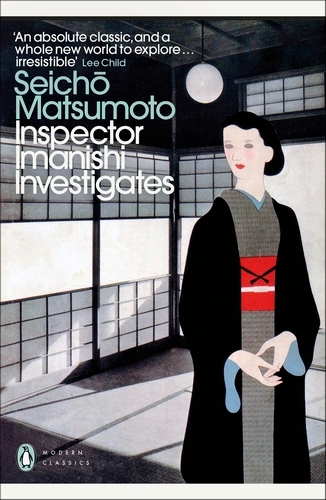
Inspector Imanishi Investigates
First published in 1961, Inspector Imanishi Investigates is a classic Japanese crime novel that follows Inspector Eitaro Imanishi as he investigates the mysterious murder of a man found dead beneath a train in Tokyo. What initially appears to be a straightforward case gradually unfolds into a complex investigation involving false identities, concealed pasts, and the social prejudices of postwar Japan. As Imanishi follows a trail of clues across the country, he encounters people whose lives have been shaped by ambition, discrimination, and the desire to escape their origins. Seichō Matsumoto combines the careful logic of a police procedural with a thoughtful examination of Japanese society, creating a mystery in which understanding human motivations is just as important as uncovering physical evidence.
1961
6
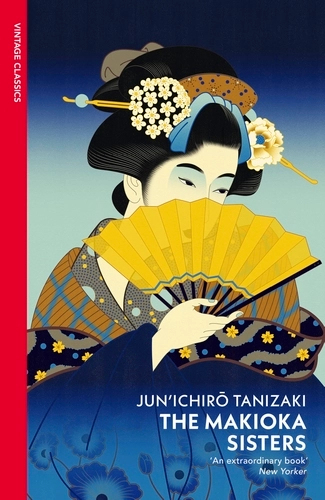
The Makioka Sisters
Set in Osaka and its surrounding areas during the years leading up to the Second World War, The Makioka Sisters follows four women from a once-prosperous merchant family struggling to preserve their social standing as Japanese society undergoes profound change. The story centers on the sisters’ efforts to arrange a suitable marriage for Yukiko, the quiet and reserved third daughter, whose future is complicated by family expectations, social conventions, and a series of unsuccessful matchmaking attempts. Meanwhile, the youngest sister, Taeko, pursues a more independent life, challenging the traditional values that govern her family’s decisions.
Through the sisters’ daily routines, seasonal celebrations, family gatherings, and romantic entanglements, Tanizaki captures the tensions between tradition and modernity in prewar Japan. Beneath the novel’s elegant descriptions of clothing, festivals, and landscapes lies a poignant portrait of a family confronting the gradual erosion of its privilege and influence. The novel explores the bonds between sisters, the pressures of social conformity, and the difficulty of adapting to a changing world. Rich in cultural detail and psychological insight, it is both an intimate family saga and an elegy for a disappearing way of life.
1957
7
Snow Country
Snow Country follows Shimamura, a wealthy Tokyo man who repeatedly visits a remote hot-spring town in Japan’s snowy mountains. There he develops a complicated relationship with Komako, a young geisha whose emotional commitment contrasts with his detached approach to life. Their encounters unfold against a landscape of snow-covered villages, quiet inns, and winter journeys that intensify the novel’s atmosphere of beauty and isolation. Shimamura is also fascinated by Yōko, another woman whose presence complicates his relationship with Komako. Through restrained dialogue and delicate descriptions of the natural world, Kawabata explores desire, loneliness, and the distance between people who cannot fully understand one another. The novel examines the tension between emotional attachment and detachment, revealing how beauty can coexist with sadness and how fleeting encounters can leave lasting impressions.美的に抽出されて描かれている。
1937