Books from Iran
Suggest a book
All genres
Historical Fiction
Literary Fiction
Fantasy
Romance
Horror
Thriller
Non-Fiction
Mystery
Memoir
Classics
History
Sci-Fi
Contemporary Fiction
Science Fiction
Fiction
Poetry
Essays
Family Saga
Magical Realism
Family Drama
Dark Academia
Psychological Fiction
Dark Comedy
Political Writing
Feminist Fiction
Satire
Campus Fiction
Cultural Studies
Biography
Philosophy
Comedy
Drama
Young Adult
Gothic
Dystopia
Crime
Children's Books
Short Stories
Mythology
Cozy
Retellings
Humour
Adventure
All themes
Love & Passion
Adventure & Journey
Identity & Belonging
War & Conflict
Freedom & Resistance
Family & Heritage
Nature & Landscape
Society & Class
Spirituality & Faith
Solitude & Exile
Coming of Age
Revolution & Change
Friendship
History
Immigration
Myths and Retellings
Colonialism
Women & Society
Mental Health
Motherhood
1
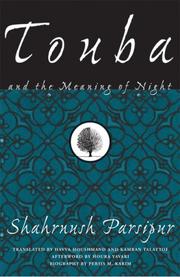
Touba and the Meaning of Night (Women Writing the Middle East)
Spanning eight decades of Iranian history, Touba and the Meaning of Night follows Touba, a thoughtful and independent-minded woman whose life unfolds amid profound political and social transformations. Educated by her father at a time when few women had access to learning, Touba struggles to preserve her intellectual curiosity and personal autonomy as she navigates marriage, motherhood, divorce, and financial uncertainty.
After two marriages end, she becomes the center of an ever-changing household, caring for her children and other family members while witnessing the upheavals that reshape Iran, from the Qajar dynasty’s decline to the 1979 Islamic Revolution. As historical events intersect with dreams, spiritual questions, and supernatural encounters, the boundary between reality and mysticism becomes increasingly fluid.
Blending historical fiction with magical realism, Parsipur explores women’s experiences, the tension between tradition and modernity, and the search for spiritual and intellectual freedom in a society undergoing radical change.
2006
2
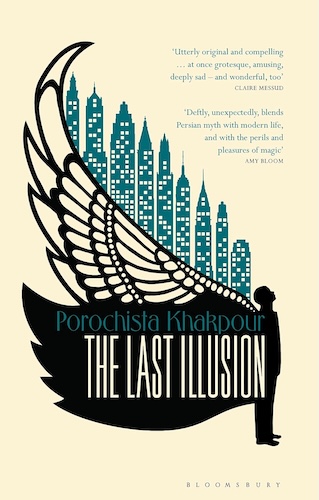
The Last Illusion
Born in a remote Iranian village, Zal spends the first ten years of his life imprisoned in a birdcage, his mother convinced that his unusually pale appearance marks him as a demon. Rescued and brought to New York, he must learn how to live among humans while struggling to understand who he is. Inspired by an ancient Persian myth, this imaginative novel weaves Iranian folklore into contemporary American life, exploring the boundaries between belonging and alienation, myth and reality, and the difficult journey toward selfhood.
2014
3
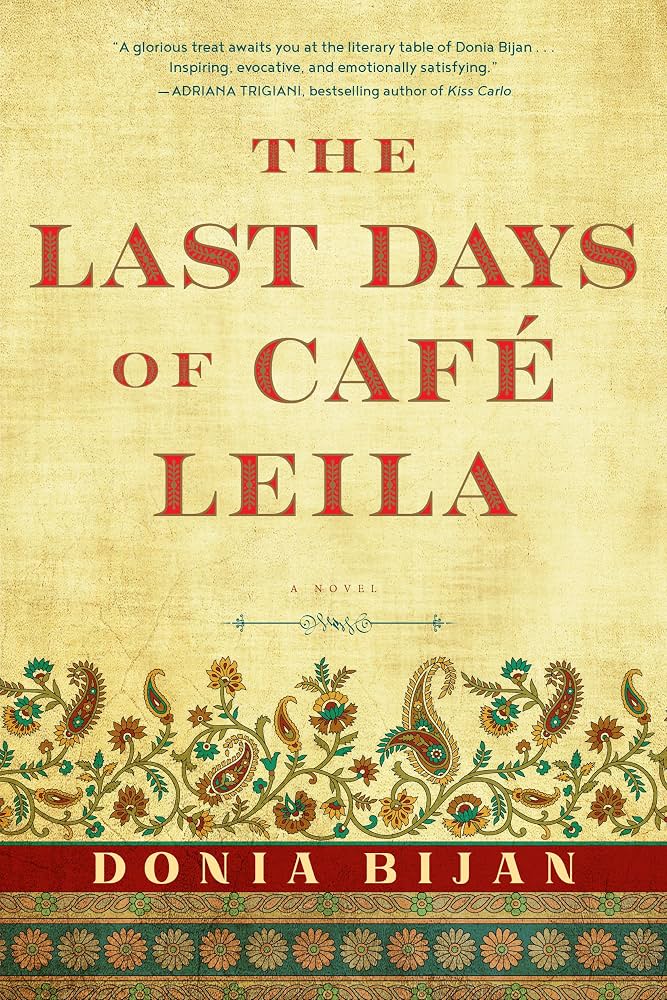
Last Days of Café Leila
The Last Days of Café Leila follows Noor, an Iranian-American woman who returns to Tehran with her young daughter, Lily, after years of living in the United States. She comes back to the family café, a beloved gathering place run by her father, Zod, whose cooking and hospitality have long brought people together. Although Noor hopes to find comfort and reconnect with her roots, returning home forces her to confront painful memories, unresolved family tensions, and the choices that led her to leave Iran.
As Noor and her father attempt to rebuild their relationship, the café becomes a symbol of belonging, cultural memory, and the traditions that bind generations together. Through food, family stories, and the changing atmosphere of Tehran, Donia Bijan explores the complexities of immigration, identity, and the meaning of home. The novel also examines the tensions between personal freedom and cultural expectations, revealing how family bonds can endure despite distance and disappointment. Warm and reflective, it celebrates the power of shared meals and inherited traditions to reconnect people with their past.
2018
4
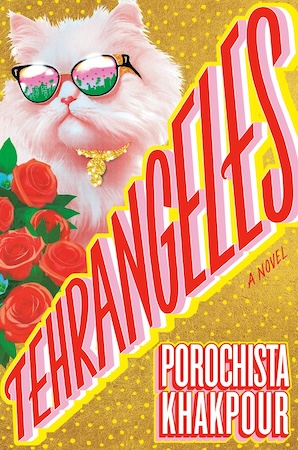
Tehrangeles
The Milanis have everything money can buy: a sprawling Los Angeles mansion, a successful frozen-food empire, and four daughters ready for their close-up. When the wealthy Iranian American family lands a reality television deal, each sister sees an opportunity to claim the spotlight. Violet, an aspiring model, longs for love and acceptance; Roxanna, an ambitious influencer, thrives on attention; Mina, a sharp-witted overachiever, guards secrets of her own; and teenage Haylee dreams of becoming a wellness sensation. Their parents, Ali and Homa, have secrets they would rather keep hidden, too. But just as the cameras prepare to roll, political tensions, family revelations, and the COVID-19 pandemic threaten to unravel their carefully curated lives. With biting humour and unexpected tenderness, Tehrangeles satirises celebrity culture, social media, and the pursuit of the American dream while exploring the complicated realities of growing up Iranian American. Beneath the glitter and extravagance lies a story about family, identity, and the difference between being seen and being truly understood.
2024
5
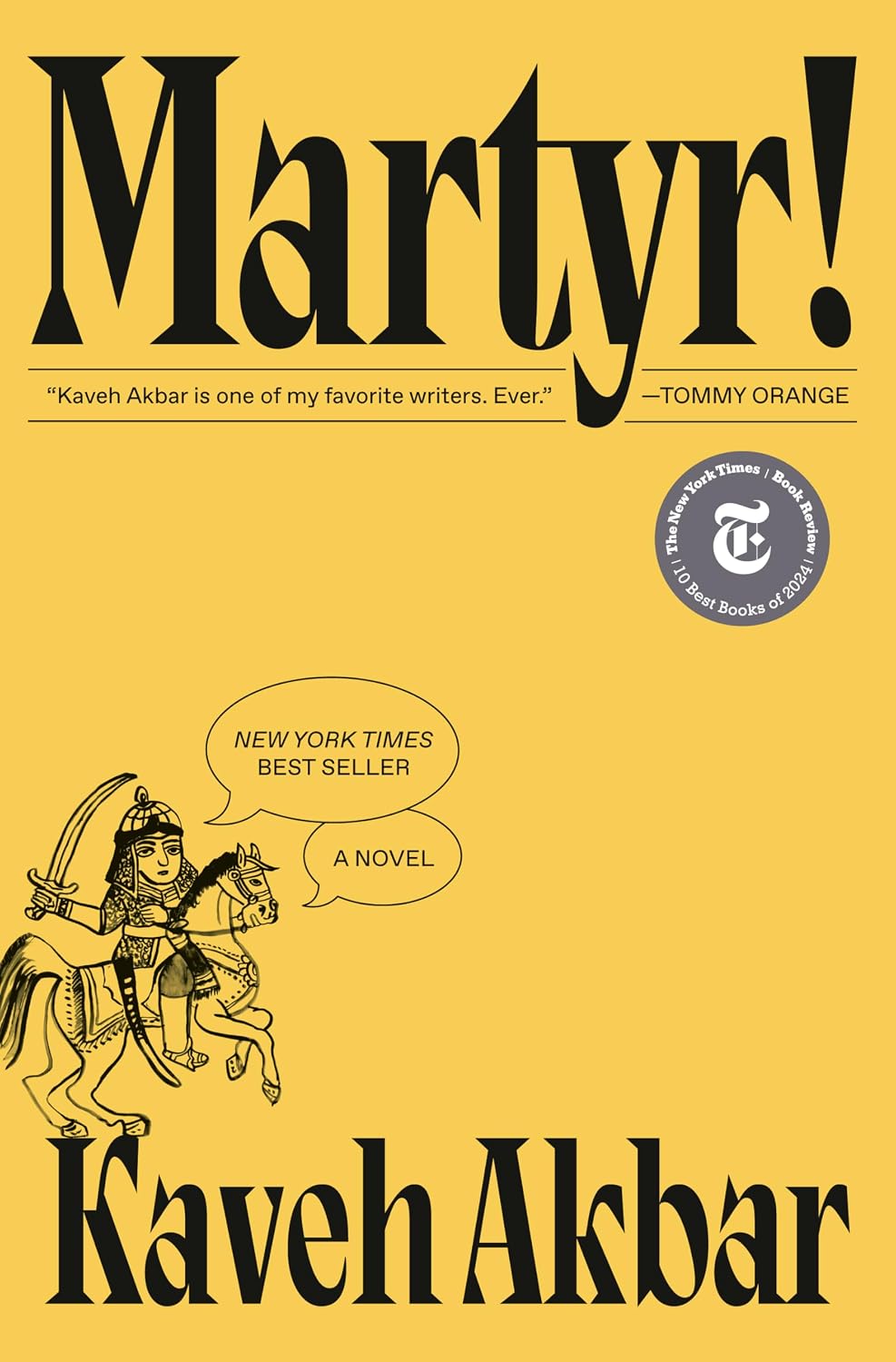
Martyr!
Martyr! follows Cyrus Shams, a young Iranian American poet struggling with addiction, grief, and questions about the meaning of life. Having grown up in the United States after his Iranian mother died when her passenger plane was shot down over the Persian Gulf, Cyrus feels disconnected from his heritage and uncertain about his place in the world. Newly sober, he becomes fascinated by martyrs throughout history, hoping to understand what makes a life meaningful and a death significant.
His search leads him to investigate his family’s past, including the experiences of an uncle who comforted dying soldiers during the Iran–Iraq War. When Cyrus discovers the story of an ailing artist whose final days are being transformed into a work of art at the Brooklyn Museum, he begins to uncover unexpected connections to his own history.
Blending humour, poetry, and philosophical reflection, Akbar’s novel explores cultural inheritance, addiction, faith, and the human desire to find purpose amid suffering and loss.
2024
6
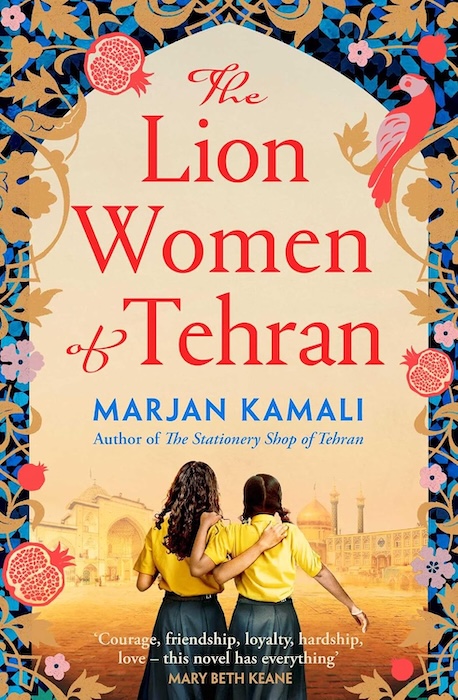
The Lion Women of Tehran
Set in Tehran across three transformative decades, The Lion Women of Tehran follows Ellie and Homa, two girls from different social backgrounds who form a close friendship in the 1950s. After her father’s death, Ellie moves with her mother to a poorer neighbourhood, where she meets Homa, an outspoken and ambitious girl who dreams of becoming a judge and fighting for women’s rights. The girls share their hopes for the future, but changing circumstances eventually separate them. When they reunite years later, their friendship is tested by political upheaval, personal ambition, and a devastating betrayal. Against the backdrop of Iran’s changing political landscape, Kamali explores female friendship, social inequality, and the consequences of choices made in moments of fear and uncertainty. The novel examines how childhood relationships shape adult identities and how forgiveness can become a path towards understanding and redemption.
2025