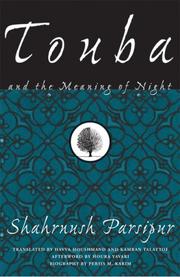
Touba and the Meaning of Night (Women Writing the Middle East)
Summary
Spanning eight decades of Iranian history, Touba and the Meaning of Night follows Touba, a thoughtful and independent-minded woman whose life unfolds amid profound political and social transformations. Educated by her father at a time when few women had access to learning, Touba struggles to preserve her intellectual curiosity and personal autonomy as she navigates marriage, motherhood, divorce, and financial uncertainty.
After two marriages end, she becomes the center of an ever-changing household, caring for her children and other family members while witnessing the upheavals that reshape Iran, from the Qajar dynasty’s decline to the 1979 Islamic Revolution. As historical events intersect with dreams, spiritual questions, and supernatural encounters, the boundary between reality and mysticism becomes increasingly fluid.
Blending historical fiction with magical realism, Parsipur explores women’s experiences, the tension between tradition and modernity, and the search for spiritual and intellectual freedom in a society undergoing radical change.
Reviews
Login to leave a review.
No reviews yet. Be the first!
You might also like


- Published
- 2006
- Author
- Shahrnush Parsipur