Books from Iraq
Suggest a book
All genres
Historical Fiction
Literary Fiction
Fantasy
Romance
Horror
Thriller
Non-Fiction
Mystery
Memoir
Classics
History
Sci-Fi
Contemporary Fiction
Science Fiction
Fiction
Poetry
Essays
Family Saga
Magical Realism
Family Drama
Dark Academia
Psychological Fiction
Dark Comedy
Political Writing
Feminist Fiction
Satire
Campus Fiction
Cultural Studies
Biography
Philosophy
Comedy
Drama
Young Adult
Gothic
Dystopia
Crime
Children's Books
Short Stories
Mythology
Cozy
Retellings
Humour
Adventure
All themes
Love & Passion
Adventure & Journey
Identity & Belonging
War & Conflict
Freedom & Resistance
Family & Heritage
Nature & Landscape
Society & Class
Spirituality & Faith
Solitude & Exile
Coming of Age
Revolution & Change
Friendship
History
Immigration
Myths and Retellings
Colonialism
Women & Society
Mental Health
Motherhood
1
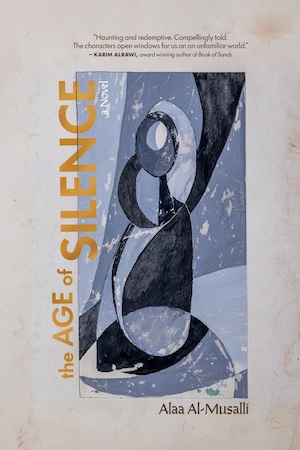
The Age of Silence
In Baghdad, under Saddam Hussein’s dictatorship, Bedria fights to hold her family together as war, political repression, and bitter rivalries threaten to destroy everything she loves. With one son missing in battle and a family fortune fuelling resentment among relatives, she faces struggles that extend far beyond the battlefield. Bound by the silence imposed by political power and cultural expectations, Bedria must navigate a world where women carry enormous burdens while their suffering remains largely unseen. Inspired by real events during the Iran–Iraq War and the Gulf War, The Age of Silence is a moving family saga about the hidden costs of conflict, the sacrifices of motherhood, and the wounds that survive long after the fighting ends. It is a tribute to the women who quietly endure war while fighting to preserve their families, their dignity, and their hope.
2026
2
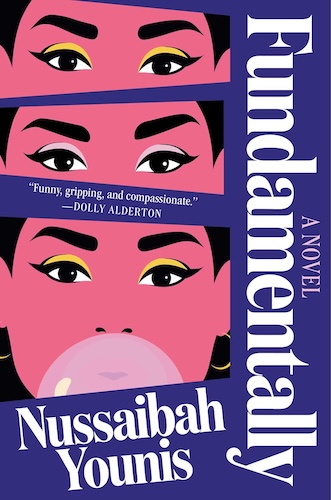
Fundamentally
Can you save someone else when you’re still trying to save yourself? When Nadia Amin, a sharp-witted academic, loses both her lover and her mother’s approval, she escapes to Iraq to lead a UN rehabilitation programme for women affiliated with ISIS. Armed with theories about deradicalisation and an uncertain sense of purpose, Nadia soon discovers that international aid is far messier than academic research suggests. Then she meets Sara, a rebellious young Londoner who joined ISIS at fifteen. Despite their radically different experiences, the two women recognise something of themselves in each other, forming an unlikely friendship that challenges Nadia’s assumptions about guilt, faith, and redemption. When Sara reveals a devastating secret, Nadia must confront the limits of her own idealism. Darkly funny and deeply compassionate, Fundamentally explores radicalisation, cultural identity, and the complicated human need to belong.
2025
3
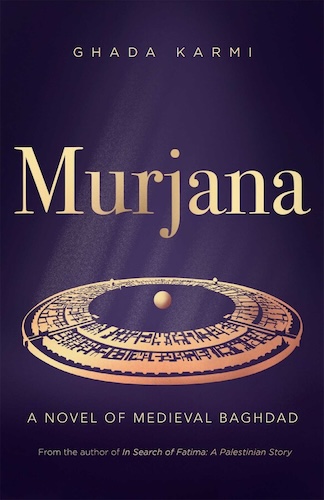
Murjana
Baghdad, 830 CE: a city of dazzling scholarship, artistic brilliance, and dangerous political divisions. When the Abbasid caliph falls gravely ill, his physician discovers that the cause is an overwhelming passion for Murjana, a beautiful young woman from a Shia family. Their marriage promises to unite two hearts, but threatens to ignite conflict in a society divided by religious loyalties and competing ambitions. As palace intrigue, jealousy, and vengeance gather around the couple, Ghada Karmi brings medieval Baghdad to life in a richly imagined historical novel about forbidden love and the destructive power of sectarian hatred. Inspired by the intellectual and cultural world of the Abbasid era, Murjana asks whether love can overcome the divisions that history keeps creating.
2025
4
Hyper
Hyper follows the Kermanj family, whose lives are shaped by migration, political upheaval, and the growing influence of global capitalism. After Rafiq Kermanj, a Kurdish communist activist, is forced to flee Tehran for London with his conservative wife and three children, the family struggles to adapt to life in exile. As the children grow up, each develops a different relationship with money and success. Siver escapes an unhappy marriage in Baghdad and raises her daughter in Dubai, Mohammed pursues a career in London’s financial sector, and Laika becomes immersed in the world of algorithmic trading near Wall Street. Their increasingly disconnected lives reveal how financial ambition can reshape personal relationships and cultural identity. Ismaïl examines the pressures of modern capitalism, the experience of statelessness, and the search for meaning in a world where economic success increasingly defines human worth.
2024
5
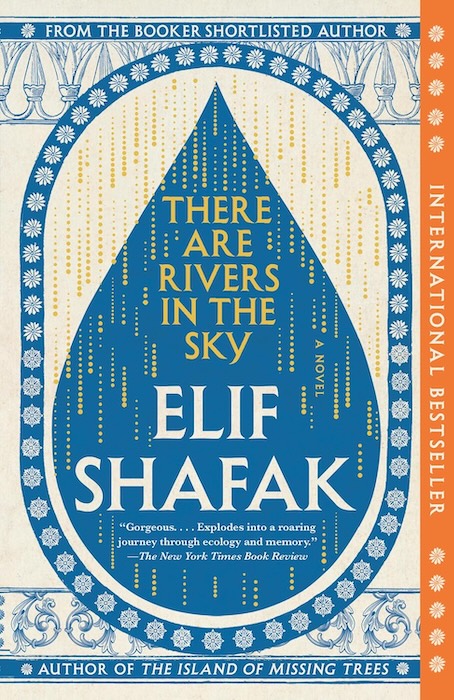
There Are Rivers in the Sky
In There Are Rivers in the Sky, Elif Shafak weaves together the lives of three characters connected by water, memory, and the ancient city of Nineveh. In Victorian London, Arthur, a gifted boy born into poverty, develops a fascination with the Epic of Gilgamesh. In nineteenth-century Ottoman Mesopotamia, Narin, a young Yazidi girl, faces the threat of displacement as her community’s traditions and homeland come under pressure. In contemporary London, Zaleekhah, a hydrologist struggling with personal loss, becomes drawn into the histories of the Tigris and its surrounding landscapes. Moving across centuries and continents, the novel explores the enduring connections between human lives, ancient civilizations, and the natural world. Through its interwoven narratives, Shafak examines environmental destruction, cultural heritage, religious persecution, and the transformative power of water as a source of life, memory, and renewal.
2024
6
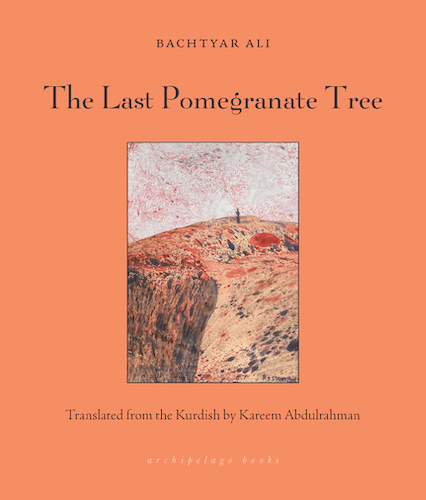
The Last Pomegranate Tree
After spending twenty-one years imprisoned in a remote desert prison, Muzafar-i Subhdam, a Kurdish peshmerga fighter, is finally released. His thoughts turn immediately to his son, Saryas, who was only a few days old when Muzafar was arrested. Determined to find the child he has spent decades imagining, he embarks on a journey through Iraqi Kurdistan, a land scarred by dictatorship, war, and political upheaval. But his search leads to a bewildering discovery: there may be three young men who share his son’s name, their lives intertwined by a history of violence and coincidence. Blending magical realism, dark fable, and historical fiction, Bachtyar Ali creates a dreamlike world in which memory and truth are difficult to separate. Beneath its fantastical narrative lies a devastating examination of how war destroys families and reshapes entire societies. Yet the novel also offers hope, suggesting that compassion, friendship, and love can endure even after extraordinary suffering.
2023
7
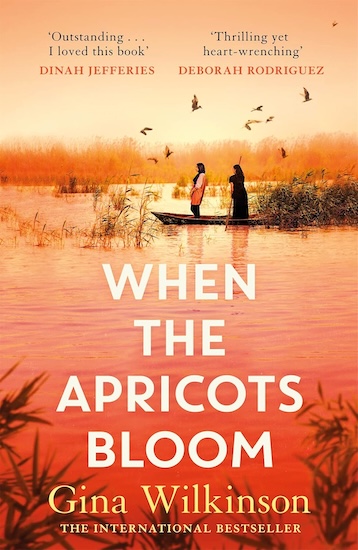
When the Apricots Bloom
Baghdad, 2002. Under Saddam Hussein’s dictatorship, three women find their lives entangled in a dangerous web of secrets, surveillance, and betrayal. Huda, a secretary at the Australian embassy, is ordered by Iraq’s secret police to befriend and spy on Ally Wilson, the wife of a Western diplomat. Refusing could endanger her teenage son, who faces the threat of forced recruitment into a brutal militia. Meanwhile, Rania, Huda’s estranged childhood friend and the daughter of a once-wealthy sheikh, struggles to protect her own daughter as her family’s fortunes collapse.
Ally, too, carries secrets connected to her mother’s past in Iraq, and as the women’s lives intersect, they discover that trust can be both dangerous and necessary. Forced to navigate a society where even friendships can become instruments of control, they must decide how much they are willing to risk to protect their children and reclaim their freedom. Inspired by the author’s experiences reporting from Iraq, When the Apricots Bloom is a suspenseful novel about female friendship, motherhood, survival, and the impossible choices people face under an oppressive regime.
2021
8
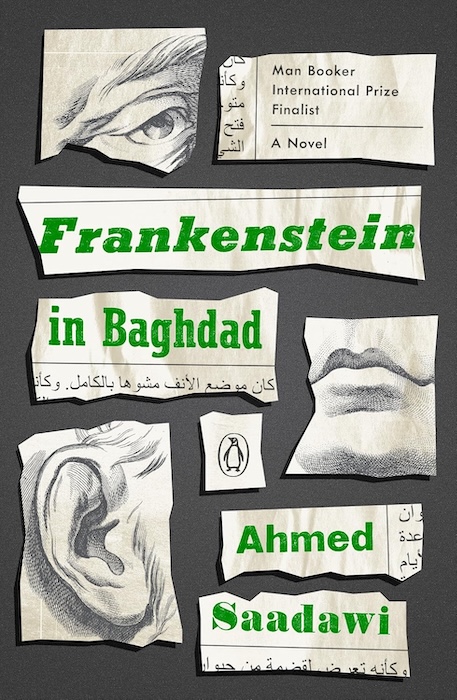
Frankenstein in Baghdad
Set in Baghdad after the 2003 invasion of Iraq, Frankenstein in Baghdad follows Hadi, an eccentric junk dealer who collects body parts left behind by bombings and other acts of violence. Hoping to ensure that the dead receive proper recognition, he stitches the remains together into a single body. When the assembled corpse mysteriously disappears, a series of gruesome murders begins, and rumours spread about a creature that cannot be killed. As the authorities and local residents attempt to understand the violence, the creature becomes a disturbing symbol of a society overwhelmed by revenge and injustice. Blending horror, dark humour, and political satire, Saadawi explores the human cost of war and the difficulty of assigning responsibility when violence produces an endless cycle of retaliation. The novel asks whether a society fractured by conflict can distinguish justice from revenge.
2018
9
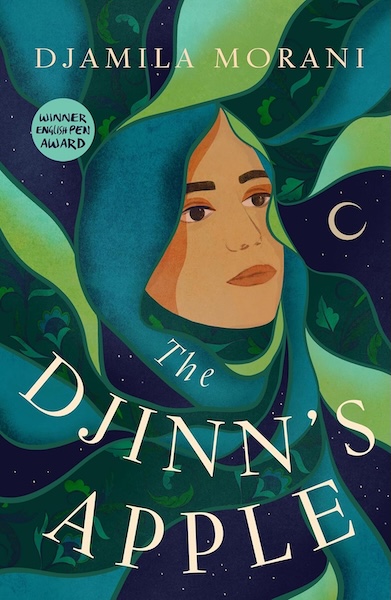
The Djinn's Apple
In the golden age of Baghdad, a young girl must transform her grief into the strength to uncover a deadly secret.
Twelve-year-old Nardeen Baramika dreams of becoming a doctor, an extraordinary ambition for a girl living in the Abbasid Caliphate. But when armed men storm her family home, she escapes while the rest of her family are murdered. Suddenly alone, Nardeen discovers that their deaths may be connected to a mysterious manuscript—and a powerful man determined to keep its secrets hidden.
Taken under the protection of a respected medical scholar, Nardeen begins studying medicine while secretly pursuing justice for her family. As she navigates a world of political intrigue, dangerous alliances, and shifting loyalties, she must decide whom she can trust and how far she is willing to go for revenge.
Blending historical mystery with the atmosphere of medieval Baghdad, The Djinn’s Apple follows a determined young heroine who refuses to let tragedy dictate her future. It explores knowledge, ambition, and the courage required to challenge the expectations imposed on women. Originally written in Arabic, the novel was translated into English by Sawad Hussain.
2017