India

Asia
India
51
books
32
authors

Books from India

1
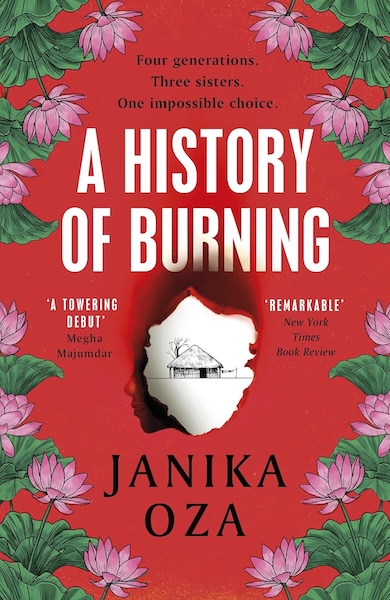
A History of Burning
In 1898, thirteen-year-old Pirbhai leaves his village in India, lured by the promise of work in East Africa. Instead, he is forced into labour on the British railway, where a desperate act committed in the name of survival becomes a secret that will haunt his descendants for generations. Years later, Pirbhai builds a family with Sonal in Uganda. Their children and grandchildren grow up amid the final years of British colonial rule, the country’s struggle for independence, and the political turmoil that follows. Among the next generation are three sisters, each with her own ambitions and understanding of what it means to belong. When Idi Amin orders Uganda’s Asian population to leave in 1972, the family is scattered across continents, carrying with them the memories, silences, and secrets of their past. Spanning more than a century and moving between India, East Africa, and Canada, A History of Burning traces how one act of survival reverberates through generations. Janika Oza weaves together colonial exploitation, political upheaval, family loyalty, and the search for home in an intimate multigenerational saga about the stories families preserve—and those they struggle to forget.
2023
2
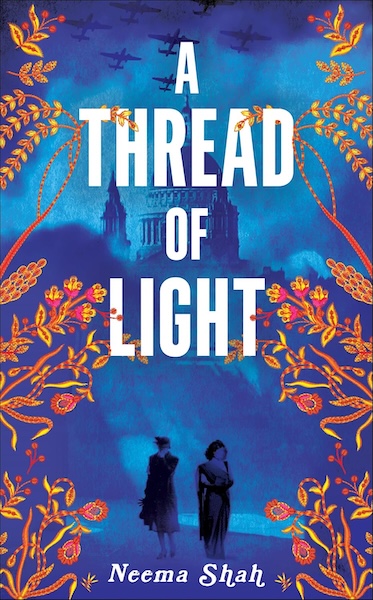
A Thread of Light
A Thread of Light
London, 1941. As German bombers descend on the city, two women find themselves caught in a different struggle: the fight for Indian independence from British rule. Ruby, a lonely air raid warden, becomes involved with the India Forum, a group campaigning for India’s freedom. She has her own reasons for joining the movement, but her growing attraction to Satyajit, a charismatic and potentially dangerous freedom fighter, forces her to question her loyalties. Meanwhile, Kitty, an Indian lawyer who has left her family in Bombay to build a life in Britain with the man she loves, risks everything to help Indian men challenge wartime conscription. As their lives intersect, political tensions, personal betrayals, and the threat of violence push both women towards decisions that could change their futures forever. Set against the Blitz and India’s independence movement, A Thread of Light uncovers a lesser-known chapter of British wartime history. Through its intertwined stories of love, sacrifice, and resistance, the novel explores the complicated relationship between colonial power and freedom, asking what people are willing to risk for their beliefs and the people they love.
2025
3
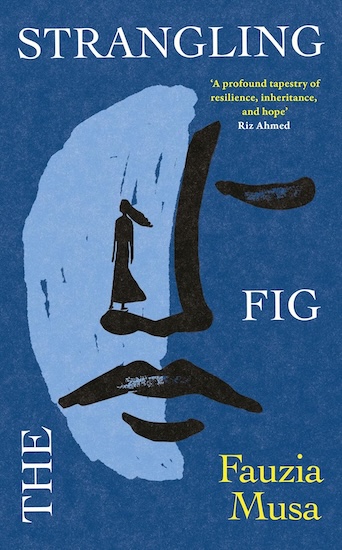
The Strangling Fig
The Strangling Fig
Spanning generations and continents, The Strangling Fig explores the lasting impact of grief, family secrets, and inherited trauma on the lives of women in one Muslim family. Hyderabad, 1946: Ashraf is a young girl when her father is murdered on the eve of the Partition of British India. His death transforms her relationship with her mother, leaving Ashraf emotionally isolated and searching for the affection she can no longer find at home. As she grows older, the wounds of her childhood shape her choices in love, marriage, and motherhood, influencing her relationship with her own daughter. California, 2002: Sixteen-year-old Seher feels abandoned by her mother and struggles to find a place for herself. When she begins seeing the ghost of her grandmother, Ashraf, she finds the guidance and emotional connection she has been missing. But as Seher becomes increasingly dependent on this supernatural presence, she discovers that the bond offers comfort at a troubling cost. Moving between India and the United States, Musa weaves together the experiences of women separated by generations but connected by family history and unresolved pain. Blending family drama with elements of magical realism, the novel examines how loss and emotional wounds can be passed from mother to daughter—and whether understanding the past can help break the cycle.
2026
4
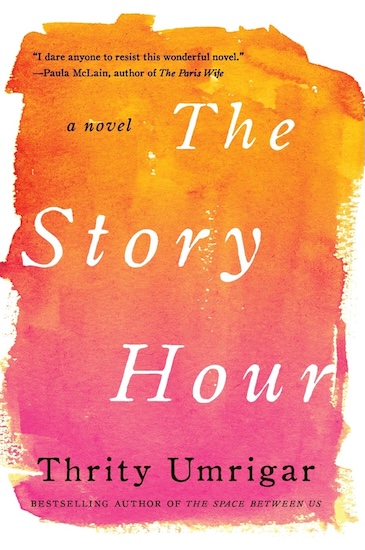
The Story Hour
The Story Hour
When Lakshmi, an Indian immigrant trapped in a loveless marriage, attempts suicide, she meets Maggie Bose, an experienced African American psychologist who becomes unexpectedly invested in her recovery. Lonely and isolated from her family in India, Lakshmi struggles to find her place in a country where she feels powerless and misunderstood. Maggie, who initially believes she can help Lakshmi through therapy, gradually discovers that their relationship is becoming something more complicated than a professional one. As the women share stories about their pasts, they develop a deep friendship that crosses boundaries of culture, class, and experience. But both carry secrets that threaten to shatter their growing trust. When painful truths emerge, their relationship is tested in ways neither could have anticipated. The Story Hour explores the stories people tell to survive, the complexity of human relationships, and the difficult path toward forgiveness and self-acceptance.
2014
5
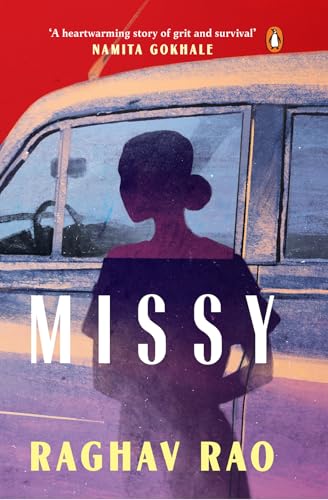
Missy
Missy
Madras, India, 1974. Seventeen-year-old Savi has grown up in St Ursula’s convent, where orphaned girls are expected to become nuns or domestic servants. Intelligent and gifted with languages, she dreams of a different future. When she becomes a governess for the wealthy Nandiyar family, she encounters a world of privilege and possibility—and falls in love with Ananda, a young apprentice sculptor. But a night of horrific violence forces them to flee India and begin new lives under different identities. Four decades later, Savi has reinvented herself as Missy, a successful driving school owner in Chicago and a respected member of the South Asian community. A devoted mother to her two daughters, Mansi and Shilpa, she appears to have achieved the American dream. However, when a charming young doctor named Varun enters their lives, secrets from her past threaten to unravel everything she has built. Spanning continents and generations, Missy explores migration, reinvention, family loyalty, and the lasting consequences of the choices people make to survive.
2024

Famous authors from India

About India

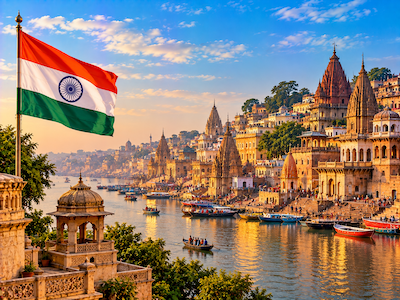
India is one of the world’s most geographically and culturally diverse countries, stretching from the Himalayan mountains to tropical coasts and from the Thar Desert to the forests and plains of the subcontinent. Its many regions are shaped by distinct languages, religions, cuisines, traditions, and histories. India’s cultural landscape reflects ancient civilizations alongside centuries of Buddhist, Hindu, Jain, Islamic, Sikh, Christian, Persian, European, and other influences.

Region
Asia
Literary Context

India has one of the world’s oldest and most diverse literary traditions. Ancient Sanskrit literature includes the Mahabharata, Ramayana, Vedas, Upanishads, poetry, drama, and philosophical texts, while Tamil has a classical literary tradition dating back more than two thousand years. India’s many regional languages—including Bengali, Hindi, Urdu, Malayalam, Marathi, Kannada, Telugu, Gujarati, Punjabi, and Assamese—have developed their own rich literary traditions. Modern Indian literature encompasses colonialism, independence, caste, gender, religion, migration, family, and the tension between tradition and modernity. Major writers include Rabindranath Tagore, the first Asian Nobel laureate in Literature, Premchand, Mulk Raj Anand, R. K. Narayan, Ismat Chughtai, Mahasweta Devi, Arundhati Roy, Amitav Ghosh, and Salman Rushdie. Contemporary Indian writing increasingly brings together regional voices, Dalit and Adivasi literature, feminist writing, and the experiences of the Indian diaspora.
Asia