Books from India
Suggest a book
All genres
Historical Fiction
Literary Fiction
Fantasy
Romance
Horror
Thriller
Non-Fiction
Mystery
Memoir
Classics
History
Sci-Fi
Contemporary Fiction
Science Fiction
Fiction
Poetry
Essays
Family Saga
Magical Realism
Family Drama
Dark Academia
Psychological Fiction
Dark Comedy
Political Writing
Feminist Fiction
Satire
Campus Fiction
Cultural Studies
Biography
Philosophy
Comedy
Drama
Young Adult
Gothic
Dystopia
Crime
Children's Books
Short Stories
Mythology
Cozy
Retellings
Humour
Adventure
All themes
Love & Passion
Adventure & Journey
Identity & Belonging
War & Conflict
Freedom & Resistance
Family & Heritage
Nature & Landscape
Society & Class
Spirituality & Faith
Solitude & Exile
Coming of Age
Revolution & Change
Friendship
History
Immigration
Myths and Retellings
Colonialism
Women & Society
Mental Health
Motherhood
1
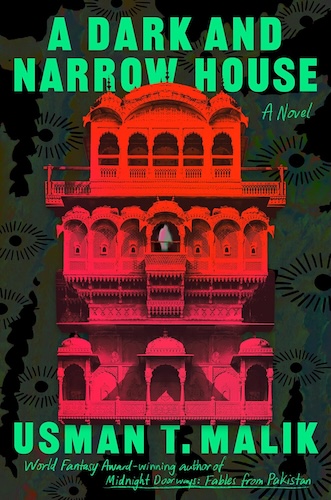
A Dark and Narrow House
When a mysterious, deadly plague sweeps across the world, a group of friends seeks refuge in a luxurious countryside mansion near the Pakistan–India border. But the haveli conceals an ancient darkness, and when they uncover a sealed chest hidden in a nearby cave, they unleash a primordial force that turns their sanctuary into a nightmare. Trapped inside the sprawling estate, the friends begin to unravel under the influence of its sinister magic, confronting buried traumas, personal demons, and the stories they tell themselves to survive. Drawing on South Asian and Middle Eastern folklore, this atmospheric dark fantasy explores memory, fear, and the terrifying power of the past.
2027
2
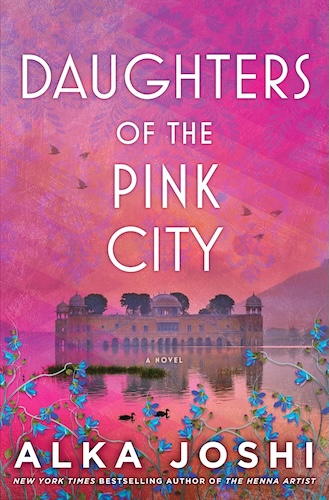
Daughters of the Pink City
Jaipur, colonial India. Sixteen-year-old Deepa’s life is turned upside down when her mother mysteriously disappears, leaving her and her younger brother in the care of strict grandparents. In a world governed by tradition and rigid expectations for women, Deepa discovers kathak, a classical Indian dance that awakens her passion and offers a glimpse of freedom. Secretly training with a courtesan, she risks defying her family to pursue her art—and uncovers buried secrets about forbidden love, betrayal, and her mother’s past. A richly layered historical novel about female resilience, artistic expression, and the courage to choose your own destiny.
2027
3
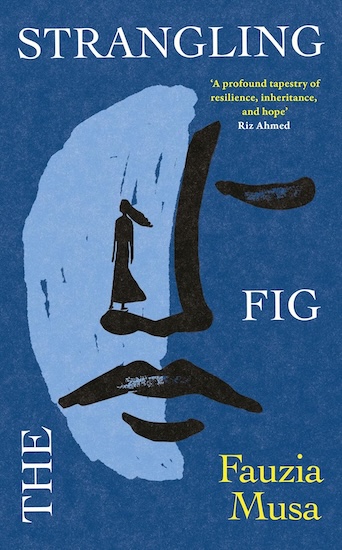
The Strangling Fig
Spanning generations and continents, The Strangling Fig explores the lasting impact of grief, family secrets, and inherited trauma on the lives of women in one Muslim family.
Hyderabad, 1946: Ashraf is a young girl when her father is murdered on the eve of the Partition of British India. His death transforms her relationship with her mother, leaving Ashraf emotionally isolated and searching for the affection she can no longer find at home. As she grows older, the wounds of her childhood shape her choices in love, marriage, and motherhood, influencing her relationship with her own daughter.
California, 2002: Sixteen-year-old Seher feels abandoned by her mother and struggles to find a place for herself. When she begins seeing the ghost of her grandmother, Ashraf, she finds the guidance and emotional connection she has been missing. But as Seher becomes increasingly dependent on this supernatural presence, she discovers that the bond offers comfort at a troubling cost.
Moving between India and the United States, Musa weaves together the experiences of women separated by generations but connected by family history and unresolved pain. Blending family drama with elements of magical realism, the novel examines how loss and emotional wounds can be passed from mother to daughter—and whether understanding the past can help break the cycle.
2026
4
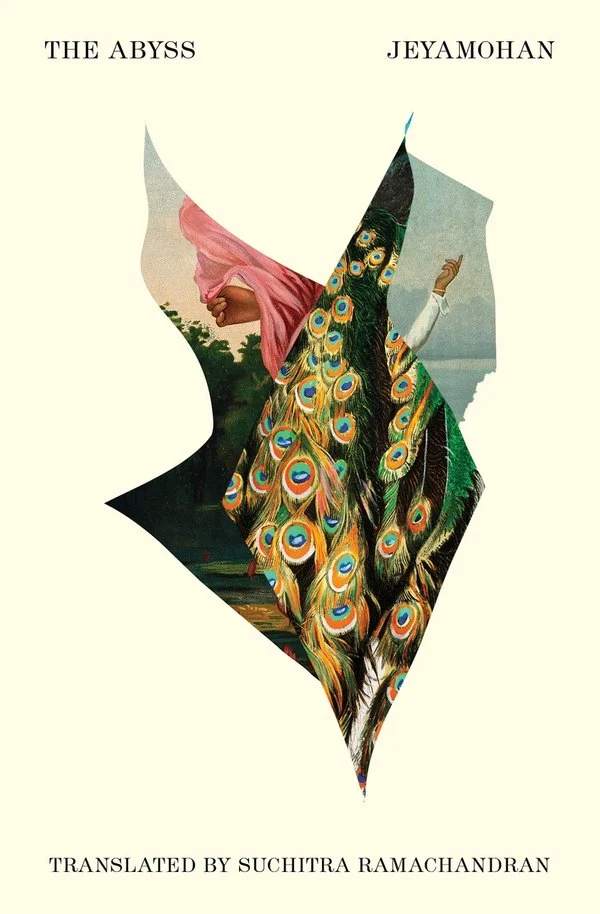
The Abyss
In the hidden world of India’s professional begging networks, human suffering has become a business. Pothivelu Pandaram is a respected, religious man who has built his prosperity on an appalling trade: he buys and breeds people with physical disabilities, then places them outside temples to beg for money. Among those he exploits are Mangandi Samy, a profoundly disabled man whose haunting songs express a longing for divine love, and others whose lives have been reduced to commodities. Pandaram treats them as possessions rather than human beings, convinced that his success and social standing justify his actions. But when an unexpected transaction disrupts his carefully controlled world, the moral foundations of his existence begin to crumble. Combining dark humour, grotesque realism, and spiritual inquiry, Jeyamohan confronts readers with uncomfortable questions about compassion, exploitation, and human dignity. Rather than offering easy answers, The Abyss challenges us to examine the cruelty people can inflict on one another—and the possibility of liberation even in the most degrading circumstances.
2026
5

The Imitation Englishman
In 1916, as the First World War reshapes the world, Madhusudan Chandra Joshi, a young Indian clerk from the Himalayan town of Almora, travels to Heidelberg to study law and secure a better future. His plans take an unexpected turn when he meets Amir Farooqui, a mysterious revolutionary who draws him into the Hindu–German Conspiracy, an international effort by Indian nationalists in exile to overthrow British colonial rule. As the war makes Germany increasingly dangerous for Indian students and activists, the two men embark on separate journeys: Madhusudan heads to London to continue his education, while Amir travels to San Francisco to reconnect with fellow revolutionaries. In London, Madhusudan encounters the racism and inequalities underpinning the British Empire, forcing him to question his ambitions and his understanding of identity. Moving between India, Europe, and America, Devki Pande’s historical novel explores the complicated relationship between colonialism, education, belonging, and resistance. Inspired by the author’s own family history, it is a story of political awakening, personal transformation, and the search for freedom in an unequal world.
2026
6
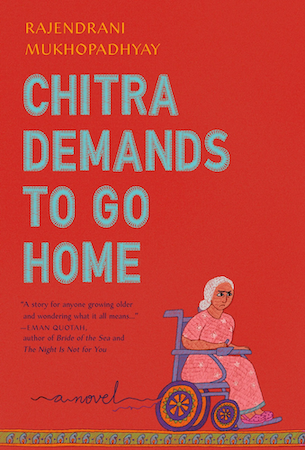
Chitra Demands to Go Home
Seventy-five-year-old Chitra is a Bengali widow who has spent much of her life caring for her family and maintaining a beloved home in Kolkata. Now, with her children grown and living their own lives, she looks forward to enjoying her independence and travelling the world. But her plans collapse when she suffers a stroke while visiting her younger son in the United States. After her son also experiences a medical emergency, Chitra finds herself in Tranquil Town, an assisted-living facility in Columbus, Ohio, surrounded by strangers and unfamiliar customs. Determined to return to India, she refuses to accept her new circumstances and relentlessly pressures her sons to take her home. Yet beneath her stubbornness lies a deeper struggle with displacement, ageing, and the loss of control over her own life. With warmth, humour, and emotional insight, Rajendrani Mukhopadhyay explores the complexities of intergenerational relationships, cultural differences, and the meaning of home. Chitra’s story challenges familiar expectations about ageing and family duty, offering a compassionate portrait of a woman determined to live on her own terms.
2026
7

The Girl with Seven Lives
Twenty-five-year-old Devi has spent her life learning how to survive in a world that offers her few chances and even fewer protections. Growing up in the slums of Delhi, she has become a resourceful fighter, but her past has also earned her dangerous enemies. Now kidnapped and held at gunpoint, Devi faces a terrifying ordeal: her captor is auctioning her life online and demands that she confess to the crimes he believes she has committed. To stay alive, she must recount the extraordinary story of her seven lives, revealing secrets and unexpected truths as the night unfolds.
Moving across India, from Delhi and Punjab to Kerala, Goa, and Mumbai, the novel combines suspense, dark humour, and social observation. Through Devi’s shifting identities and remarkable resilience, Swarup explores survival, inequality, and a woman’s struggle to reclaim control over her own destiny.
2026
8
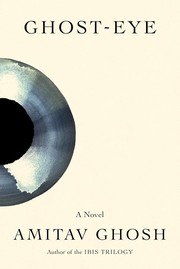
Ghost-Eye
In Ghost-Eye, Amitav Ghosh weaves together reincarnation, family secrets, and environmental concerns across two generations. In 1969 Calcutta, three-year-old Varsha Gupta begins describing memories of a previous life, including a different mother and a home beside a river. Her unusual claims lead her family to Dr. Shoma Bose, a psychiatrist investigating cases of apparent reincarnation. Decades later, Varsha’s case file attracts the attention of environmental activists, drawing Shoma’s nephew Dinu into a search that brings buried memories and unexpected connections to light. Moving between India and contemporary Brooklyn, the novel blends magical realism, mystery, and ecological fiction to explore the relationship between human identity, memory, and the natural world. It raises questions about how lives are interconnected and how humanity’s relationship with the environment shapes both personal histories and collective futures.
2026
9
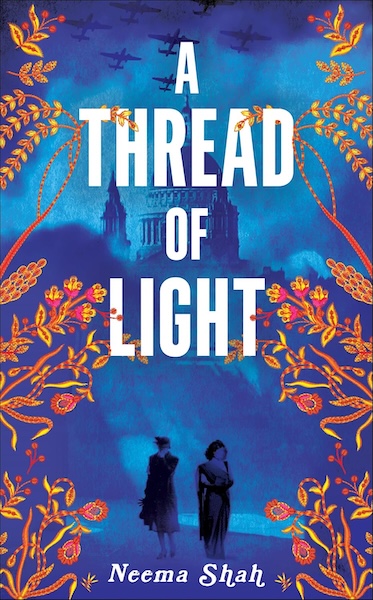
A Thread of Light
London, 1941. As German bombers descend on the city, two women find themselves caught in a different struggle: the fight for Indian independence from British rule.
Ruby, a lonely air raid warden, becomes involved with the India Forum, a group campaigning for India’s freedom. She has her own reasons for joining the movement, but her growing attraction to Satyajit, a charismatic and potentially dangerous freedom fighter, forces her to question her loyalties. Meanwhile, Kitty, an Indian lawyer who has left her family in Bombay to build a life in Britain with the man she loves, risks everything to help Indian men challenge wartime conscription.
As their lives intersect, political tensions, personal betrayals, and the threat of violence push both women towards decisions that could change their futures forever.
Set against the Blitz and India’s independence movement, A Thread of Light uncovers a lesser-known chapter of British wartime history. Through its intertwined stories of love, sacrifice, and resistance, the novel explores the complicated relationship between colonial power and freedom, asking what people are willing to risk for their beliefs and the people they love.
2025
10
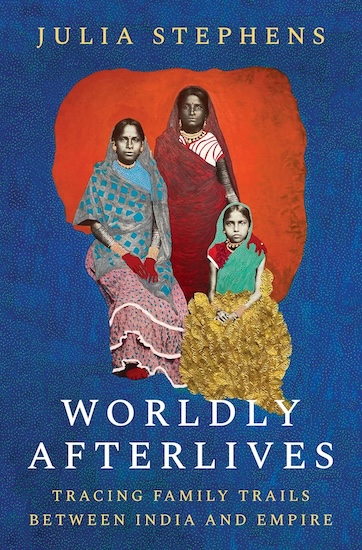
Worldly Afterlives: Tracing Family Trails Between India and Empire
What remains of an empire long after its subjects have scattered across the world? In this illuminating work of historical research, Julia Stephens traces the lives of Indian migrants who travelled across the British Empire, uncovering the intimate stories hidden in colonial records, family photographs, heirlooms, and forgotten archives. From the Indian Ocean to Malaya, Zanzibar, South Africa, and beyond, she follows generations of families whose experiences challenge conventional narratives of migration and belonging. Combining archival discoveries with interviews and contemporary family histories, Stephens reveals how colonialism continues to shape identity, memory, and the ways descendants understand their past. A compelling exploration of the human stories behind empire, Worldly Afterlives reimagines history through the lives of those too often left out of its official records.
2025
11
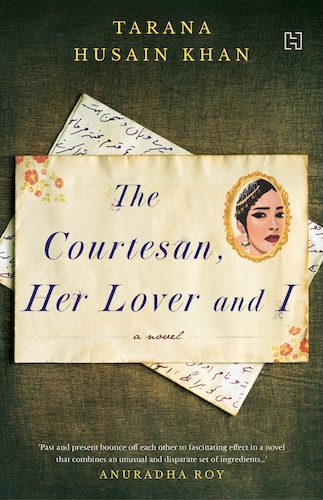
The Courtesan, Her Lover, and I
In the historic North Indian town of Rampur, two women separated by more than a century discover an unexpected connection through literature, history, and the struggle to have their voices heard. In the nineteenth century, Munni Bai Hijab, a gifted courtesan and poet, captures the heart of the celebrated Urdu poet Dagh Dehlvi. Yet as her lover immortalises her in his verses, her own literary achievements risk being overshadowed by her role as his muse. In contemporary Rampur, Rukmini, an aspiring writer whose family has returned from Dubai after her husband’s business collapses, rediscovers her long-abandoned ambitions. While researching the town’s past at the Rampur Raza Library, she encounters Dagh’s letters and becomes fascinated by Hijab’s forgotten story. As Rukmini uncovers the poet’s life, she begins to recognise parallels with her own struggles as a wife, mother, and woman seeking creative independence. Blending historical fiction, romance, and cultural history, Tarana Husain Khan’s novel explores women’s literary legacies, the complexities of desire, and the power of reclaiming stories that history has overlooked.
2025
12
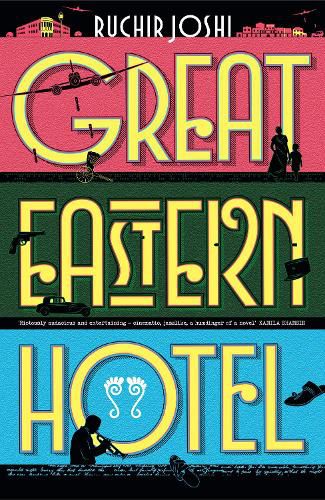
Great Eastern Hotel
Set in Calcutta (now Kolkata) during the Second World War and the turbulent years that follow, Great Eastern Hotel is an expansive historical novel about a city caught between colonial rule, political upheaval and the promise of independence. The story begins in August 1941, on the day of Rabindranath Tagore’s death, when thousands gather to mourn the celebrated poet. Against this backdrop, the lives of four central characters begin to intertwine: Nirupama, a history student and Communist Party volunteer; Imogen, the English daughter of a British colonial official; Kedar, an aspiring painter from a wealthy family; and Gopal, a young pickpocket drawn into a dangerous underworld. Their paths cross with those of soldiers, artists, revolutionaries and secret agents who gather at the city’s famous Great Eastern Hotel. Through interconnected stories of love, ambition, espionage and political struggle, Joshi captures a society on the brink of transformation. The hotel becomes a symbol of Kolkata itself—a meeting place for cultures, conflicting loyalties and people whose lives are swept up in the currents of history.
2025