Books from India
Suggest a book
All genres
Historical Fiction
Literary Fiction
Fantasy
Romance
Horror
Thriller
Non-Fiction
Mystery
Memoir
Classics
History
Sci-Fi
Contemporary Fiction
Science Fiction
Fiction
Poetry
Essays
Family Saga
Magical Realism
Family Drama
Dark Academia
Psychological Fiction
Dark Comedy
Political Writing
Feminist Fiction
Satire
Campus Fiction
Cultural Studies
Biography
Philosophy
Comedy
Drama
Young Adult
Gothic
Dystopia
Crime
Children's Books
Short Stories
Mythology
Cozy
Retellings
Humour
Adventure
All themes
Love & Passion
Adventure & Journey
Identity & Belonging
War & Conflict
Freedom & Resistance
Family & Heritage
Nature & Landscape
Society & Class
Spirituality & Faith
Solitude & Exile
Coming of Age
Revolution & Change
Friendship
History
Immigration
Myths and Retellings
Colonialism
Women & Society
Mental Health
Motherhood
1

The Widows of Malabar Hill
Set in Bombay in 1921, The Widows of Malabar Hill introduces Perveen Mistry, one of India’s first female lawyers. Educated in England and working in her father’s legal practice, Perveen encounters an unusual inheritance case involving three Muslim widows who live in seclusion and communicate with the outside world through male representatives. When she discovers inconsistencies in the documents governing their late husband’s estate, she begins to suspect that the women may be vulnerable to manipulation or exploitation. Her investigation becomes more dangerous when a murder draws her deeper into the case. Alongside the mystery, Perveen’s own experiences reveal the limitations placed on women in colonial Indian society, particularly in matters of marriage, education, and professional independence. Massey combines historical detail with a compelling detective story, exploring women’s rights, religious traditions, and the pursuit of justice in a changing society.
2018
2

The Storyteller's Secret
The Storyteller’s Secret follows Jaya, an Indian American journalist whose personal life begins to unravel after she experiences a painful miscarriage and the breakdown of her marriage. Seeking answers and a fresh perspective, she travels to India to reconnect with her family’s roots. There, she meets Ravi, her grandmother’s former servant, who shares the story of Amisha, Jaya’s grandmother, and the difficult choices that shaped her life in a small Indian village during the 1930s. Amisha was a gifted storyteller whose aspirations extended beyond the traditional roles available to women, but her ambitions were constrained by social expectations and a marriage that offered little freedom. As Jaya uncovers her grandmother’s past, she begins to understand her own struggles differently. Badani explores family secrets, women’s independence, cultural traditions, and the healing power of understanding previous generations.
2018
3

In Other Words
In Other Words is a memoir about Jhumpa Lahiri’s decision to learn Italian and her determination to express herself through a language that is not her own. Although she grew up speaking English and Bengali, Lahiri develops a deep fascination with Italian and eventually moves to Rome with her family to immerse herself in the language. Written originally in Italian and published with an English translation, the book reflects on the vulnerability, frustration, and freedom involved in learning to communicate in unfamiliar words. Through personal anecdotes, literary reflections, and metaphors, Lahiri compares language learning to migration, describing the experience of becoming an outsider in a place where she longs to belong. The memoir explores creativity, cultural identity, and the relationship between language and selfhood, revealing how adopting a new language can create space for reinvention and a different understanding of oneself.
2015
4

The Story Hour
When Lakshmi, an Indian immigrant trapped in a loveless marriage, attempts suicide, she meets Maggie Bose, an experienced African American psychologist who becomes unexpectedly invested in her recovery. Lonely and isolated from her family in India, Lakshmi struggles to find her place in a country where she feels powerless and misunderstood. Maggie, who initially believes she can help Lakshmi through therapy, gradually discovers that their relationship is becoming something more complicated than a professional one. As the women share stories about their pasts, they develop a deep friendship that crosses boundaries of culture, class, and experience. But both carry secrets that threaten to shatter their growing trust. When painful truths emerge, their relationship is tested in ways neither could have anticipated. The Story Hour explores the stories people tell to survive, the complexity of human relationships, and the difficult path toward forgiveness and self-acceptance.
2014
5
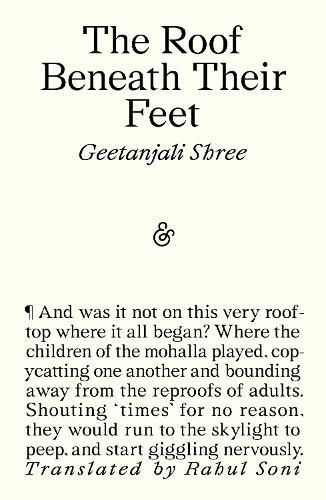
The Roof Beneath Their Feet
In a close-knit residential complex in India, the rooftops of Laburnum House offer a rare refuge from the expectations and restrictions of everyday life. Chachcho, trapped in a lonely marriage, finds companionship in Lalna, a woman abandoned by her husband whom she takes into her home. Their intense and unconventional bond soon becomes the subject of neighbourhood gossip, as their closeness challenges accepted ideas about marriage, female desire and respectability. Years later, following Chachcho’s death, Lalna returns, prompting Chachcho’s nephew, Bitva, to revisit family memories and question the story of his own origins. Moving between perspectives and shifting recollections, Geetanjali Shree creates an intricate portrait of women’s lives, hidden desires and the stories families tell to protect themselves. The rooftop becomes a powerful symbol of freedom—a space where women can escape the watchful eyes of society and imagine lives beyond its boundaries.
2013
6
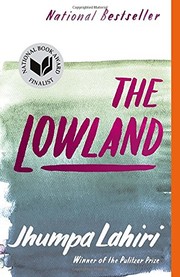
The Lowland
The Lowland tells the story of two brothers, Subhash and Udayan, who grow up together in Calcutta but choose dramatically different paths as adults. During the 1960s, Udayan becomes involved in the Naxalite movement, a radical communist uprising that challenges India’s political and social order. Subhash, by contrast, leaves for the United States to pursue an academic career. When political violence destroys Udayan’s future, Subhash returns to India and makes a decision that binds him to his brother’s family for decades. The consequences of this choice unfold across generations, affecting relationships, marriages, and the identity of Udayan’s daughter, Bela. Lahiri explores guilt, loyalty, political conviction, and the lasting consequences of family secrets, showing how a single act can shape the lives of people who were never responsible for it.
2013
7
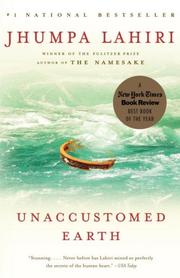
Unaccustomed Earth
Unaccustomed Earth is a collection of eight stories examining the experiences of Bengali families living in the United States and the complex relationships between generations. The first section focuses on individuals negotiating marriage, parenthood, grief, and cultural expectations as they attempt to build lives far from their ancestral homeland. The final three stories follow Hema and Kaushik, two Bengali Americans whose lives intersect during childhood and again in adulthood, revealing how family decisions and personal losses shape their futures. Lahiri explores the tensions between parental expectations and individual freedom, particularly as younger generations grow up with different ideas about identity, love, and belonging. Through subtle portrayals of everyday life, the collection reveals how family bonds can offer both security and constraint, and how people carry the influence of their upbringing long after they believe they have moved beyond it.
2009
8
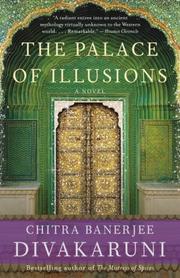
The Palace of Illusions
The Palace of Illusions retells the ancient Indian epic Mahabharata from the perspective of Panchaali, also known as Draupadi, the princess who becomes the wife of the five Pandava brothers. Born from fire and raised amid royal expectations, Panchaali is intelligent, passionate, and determined to influence her own destiny in a world governed by men, duty, and political ambition. As her husbands fight to reclaim their kingdom, she becomes entangled in rivalries, betrayals, and the devastating conflict that eventually leads to war. The novel offers a fresh interpretation of familiar events by foregrounding Panchaali’s inner life, desires, and frustrations. Divakaruni explores gender, power, fate, and the consequences of pride, questioning how women experience and influence histories traditionally told through the deeds of male heroes
2008
9

Sea of Poppies
Set in 1838, shortly before the First Opium War, Sea of Poppies follows a diverse group of characters whose lives converge aboard the Ibis, a former slave ship sailing from India to Mauritius. Among them are Deeti, a village woman escaping an oppressive marriage; Kalua, a low-caste ox-cart driver; Neel Rattan Halder, a wealthy landowner facing ruin; and Zachary Reid, an American sailor navigating questions of race and identity. As they journey across the Indian Ocean, these individuals find themselves bound together by circumstances shaped by colonialism, the opium trade, caste discrimination, and economic exploitation. Through their intertwined stories, Amitav Ghosh brings to life a turbulent period in Indian history, revealing how imperial ambitions transform ordinary lives. Blending historical detail, adventure, and rich linguistic diversity, the novel explores displacement, social inequality, and the universal desire for freedom and belonging.
2008
10
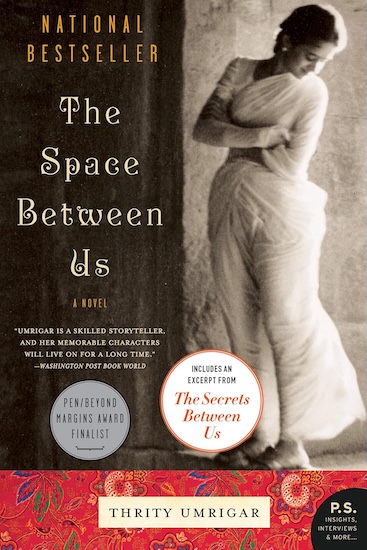
The Space Between Us (#1 Between Us)
In Mumbai, the lives of two women from vastly different social worlds become intertwined through a relationship shaped by affection, dependence, and inequality. Bhima, an impoverished domestic worker, has spent decades serving Sera Dubash, a middle-class Parsi woman living in relative comfort. Both women have endured painful marriages and personal tragedies, yet the privileges available to Sera remain far beyond Bhima’s reach. When Bhima’s granddaughter Maya becomes pregnant outside marriage, the fragile balance between the two households is threatened, exposing the prejudices and unspoken rules that govern their relationship. As secrets emerge and loyalties are tested, the women must confront the boundaries imposed by class, gender, and social expectations. Set against the vivid backdrop of contemporary Mumbai, The Space Between Us is a moving exploration of female friendship, domestic labour, and the unequal ways society distributes dignity and opportunity.
2006
11

Madras on Rainy Days
At nineteen, Layla is caught between two worlds: the conservative Muslim upbringing her Indian immigrant parents have given her and the independence she has discovered growing up in America. When her parents arrange her marriage to Sameer, a man she barely knows, she reluctantly travels to Hyderabad, hoping to find a sense of belonging in the traditions she has spent years resisting. Amid elaborate wedding rituals, family expectations, and rising Hindu-Muslim tensions, Layla begins to question everything she thought she understood about love, faith, and womanhood. Madras on Rainy Days is a compelling exploration of female independence, cultural identity, and the secrets that lie beneath the surface of family life.
2005
12
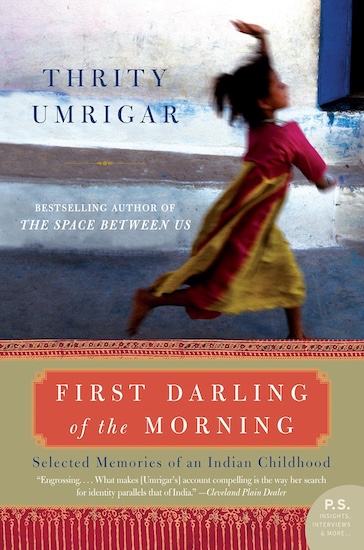
First Darling of the Morning: Selected Memories of an Indian Childhood
Growing up in 1960s and 1970s Bombay, Thrity Umrigar navigates the contradictions of childhood in a middle-class Parsi family. Attending a Catholic school in a predominantly Hindu city, she becomes increasingly aware of the cultural, religious, and economic divisions that shape the world around her. At home, she experiences both the warmth of her father’s affection and the painful consequences of her mother’s harsh discipline. As she grows older, Umrigar begins questioning the expectations imposed on her and confronting the complicated truths of her family. Through intimate memories of childhood, adolescence, and her eventual departure for America at twenty-one, she reflects on identity, belonging, family secrets, and the inequalities of Indian society. First Darling of the Morning is a deeply personal memoir about growing up between cultures and finding the courage to imagine a life beyond the boundaries of one’s upbringing.
2004