Books from Egypt
Suggest a book
All genres
Historical Fiction
Literary Fiction
Fantasy
Romance
Horror
Thriller
Non-Fiction
Mystery
Memoir
Classics
History
Sci-Fi
Contemporary Fiction
Science Fiction
Fiction
Poetry
Essays
Family Saga
Magical Realism
Family Drama
Dark Academia
Psychological Fiction
Dark Comedy
Political Writing
Feminist Fiction
Satire
Campus Fiction
Cultural Studies
Biography
Philosophy
Comedy
Drama
Young Adult
Gothic
Dystopia
Crime
Children's Books
Short Stories
Mythology
Cozy
Retellings
Humour
Adventure
All themes
Love & Passion
Adventure & Journey
Identity & Belonging
War & Conflict
Freedom & Resistance
Family & Heritage
Nature & Landscape
Society & Class
Spirituality & Faith
Solitude & Exile
Coming of Age
Revolution & Change
Friendship
History
Immigration
Myths and Retellings
Colonialism
Women & Society
Mental Health
Motherhood
1
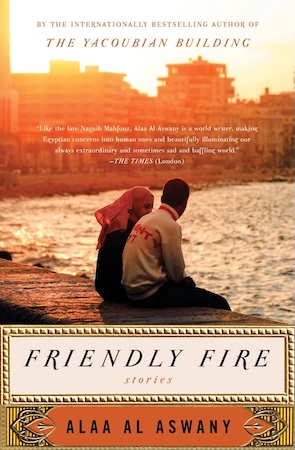
Friendly Fire
An Israeli family gathers for the holidays, but beneath the familiar rituals lie old resentments, unspoken fears, and questions about the meaning of home. Amotz Yaari, a successful engineer, and his wife, Daniela, find their carefully ordered lives disrupted by a family crisis that sends Daniela travelling to Africa to visit her widowed brother-in-law. Meanwhile, their son is serving in the Israeli army, and the family struggles to reconcile its private concerns with the realities of military service and political conflict. Moving between domestic life and distant landscapes, Friendly Fire examines the fragile bonds that hold families together and the ways war infiltrates even the most intimate relationships.
2009
2
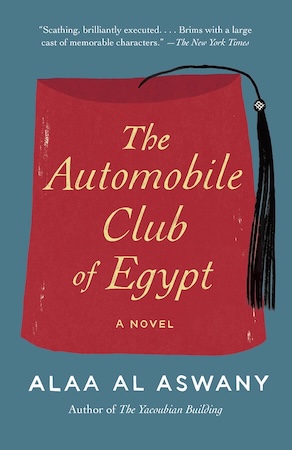
The Automobile Club of Egypt
When Egypt’s 2011 revolution brings millions into the streets demanding dignity, justice, and freedom, a diverse cast of Egyptians finds itself swept into a historic struggle. There are idealistic young activists, ambitious politicians, wealthy businessmen, religious conservatives, and ordinary citizens hoping for a better future. Yet as the revolution unfolds, the forces of money, military power, and religious authority begin to undermine its promises. Personal ambitions collide with political ideals, and those who once stood together discover how easily truth can be manipulated to preserve power. Through interconnected lives, Alaa Al Aswany captures the hope and disillusionment of a nation fighting to determine its future, exposing the mechanisms through which authoritarianism survives even when a revolution appears to have succeeded.
2016
3
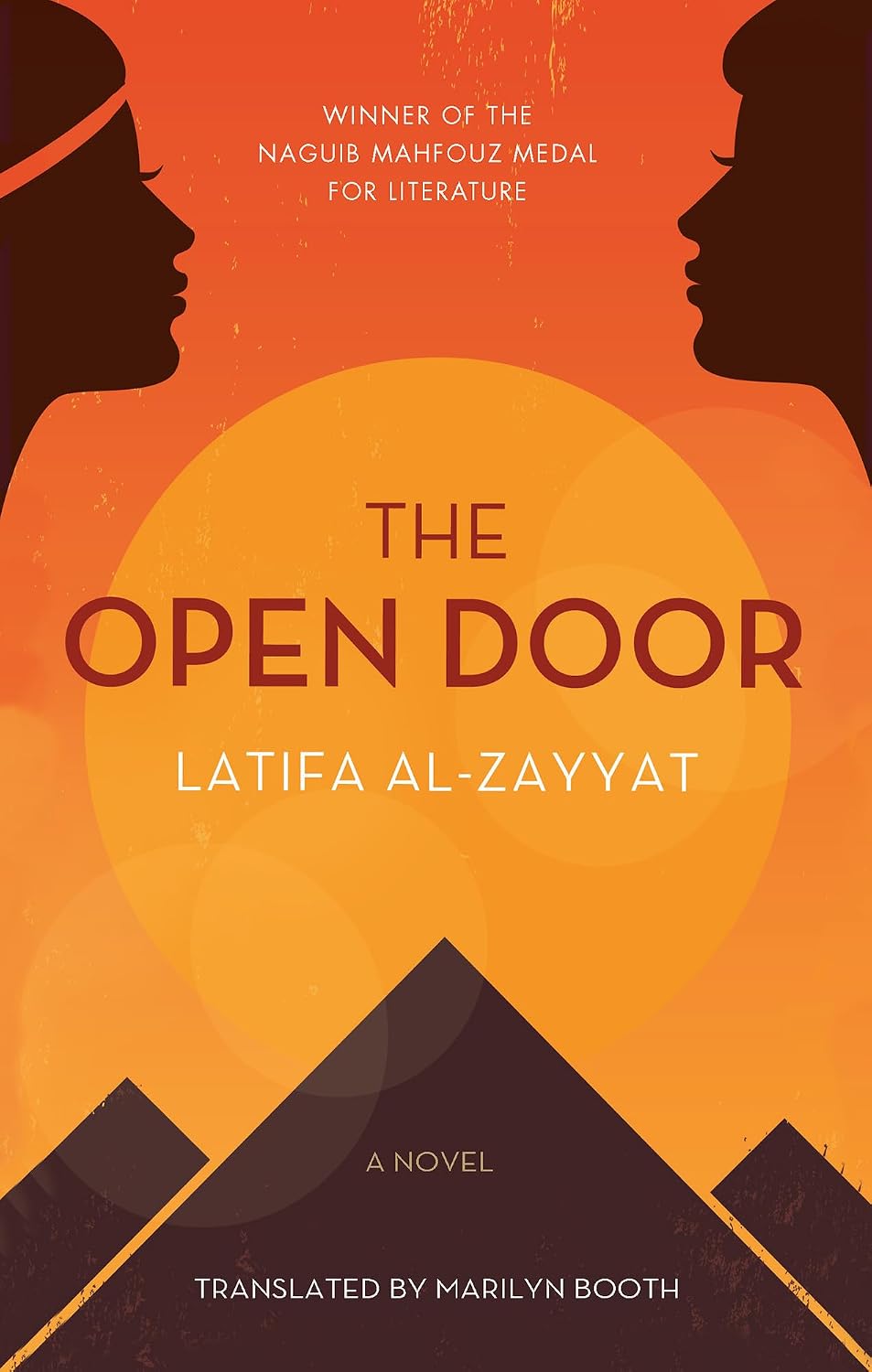
Open Door
Open Door is an autobiographical account by Latifa, an Afghan woman who describes her experiences growing up in Kabul under Taliban rule. Before the Taliban seized power, she enjoyed a relatively modern upbringing, attending school and imagining a future shaped by education and independence. As the regime tightened its control over everyday life, however, women and girls were increasingly deprived of basic freedoms, including the right to study, work, and move freely in public.
Through personal memories and reflections, Latifa recounts the fear, restrictions, and uncertainty that came to define life under the regime. Her story reveals how political oppression reaches into the most intimate aspects of family life, education, and personal identity. It also highlights the resilience of Afghan women who continued to seek knowledge and dignity despite severe constraints. Both a personal testimony and a broader reflection on human rights, Open Door explores the struggle for freedom in a society where women’s autonomy is systematically denied.
2017
4
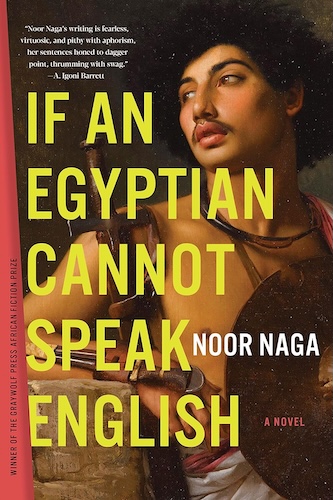
If an Egyptian Cannot Speak English
In the aftermath of Egypt’s Arab Spring, two strangers meet in a Cairo café: an Egyptian photographer haunted by the revolution and an Egyptian American woman searching for a connection to a homeland she has never truly known. Their attraction grows into an intense relationship shaped by desire, cultural misunderstanding, and unequal power. As each tries to remake themselves through the other, the boundaries between intimacy and exploitation begin to blur. Told through an experimental, fragmented narrative, Noor Naga’s unsettling novel challenges conventional ideas about identity, belonging, and who has the right to claim a place. Both a provocative love story and a sharp examination of postcolonial power, If an Egyptian Cannot Speak English asks whether returning to one’s roots is ever as simple as coming home.
2022
5
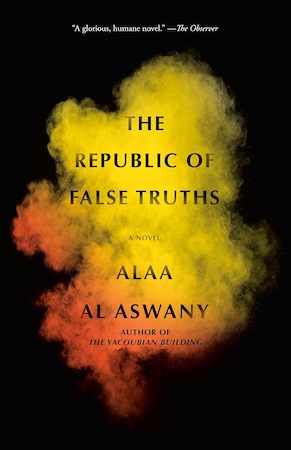
The Republic of False Truths
Cairo, 2011. After decades under a repressive regime, tensions are rising in the city streets. No one is out of reach of the revolution. There is General Alwany, a high-ranking member of the government's security agency, a pious man who loves his family yet won't hesitate to torture enemies of the state; Asma, a young teacher who chafes against the brazen corruption at her school; Ashraf, an out-of-work actor who is having an affair with his maid and who gets pulled into Tahrir Square through a chance encounter; Nourhan, a television personality who loyally defends those in power; and many more.
As these lives collide, a new generation finds a voice, love blossoms across class divides, and the revolution gains strength. Even the general finds himself at a crossroads as his own daughter joins the protests. Yet the old regime will not give up without a fight.
With an unforgettably vivid cast of characters and a heart-pounding narrative banned across much of the region, Alaa Al Aswany gives us a deeply human portrait of the Egyptian Revolution, and an impassioned retelling of his country's turbulent recent history.
2022
6
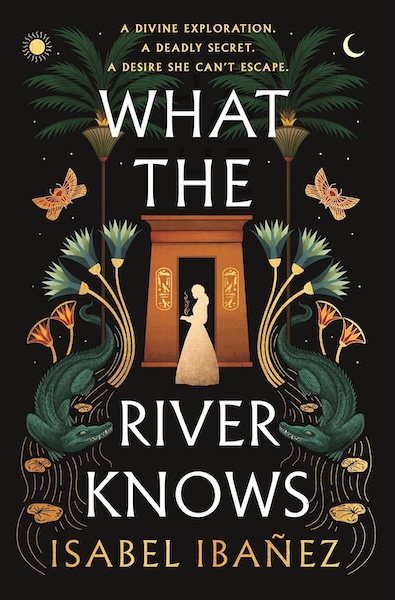
What the River Knows
Set in Egypt in 1884, What the River Knows follows nineteen-year-old Inez Olivera, a young woman from a wealthy Argentine family whose life changes after the mysterious deaths of her parents. Determined to discover what happened to them, Inez travels to Egypt, where she encounters political intrigue, dangerous secrets, and a world far removed from the privileged life she has known. Her investigation brings her into conflict with Whitford Hayes, an Englishman working for her uncle, whose guarded behaviour makes it difficult to determine whether he is an ally or an adversary. As Inez uncovers clues about her parents’ past, she becomes entangled in a mystery involving ancient Egyptian history and dangerous magic. Blending historical fantasy, romance, and suspense, the novel explores independence, trust, and the risks of pursuing the truth.
2023
7
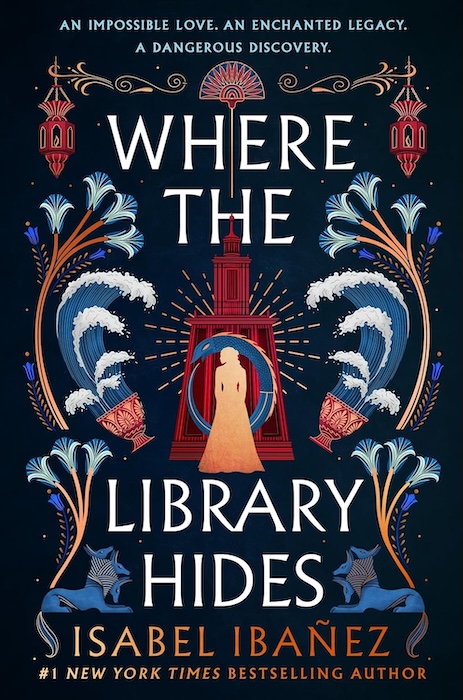
Where the Library Hides
In this sequel to What the River Knows, Inez Olivera continues to navigate the dangerous world she encountered in Egypt. Still reeling from betrayal and the murder of her cousin Elvira, Inez faces new threats involving her inheritance, her family’s secrets, and the mysterious forces surrounding her investigation. Her uncle presents her with an ultimatum that could determine her future: marriage to Whitford Hayes, a former British soldier whose true intentions remain uncertain. Although their relationship is marked by distrust and unresolved attraction, the two must confront the dangers surrounding them. Set against the atmosphere of nineteenth-century Egypt, the novel combines historical adventure, romance, and supernatural mystery. Inez must decide whom she can trust as she seeks answers and fights to retain control over her own destiny.
2024
8
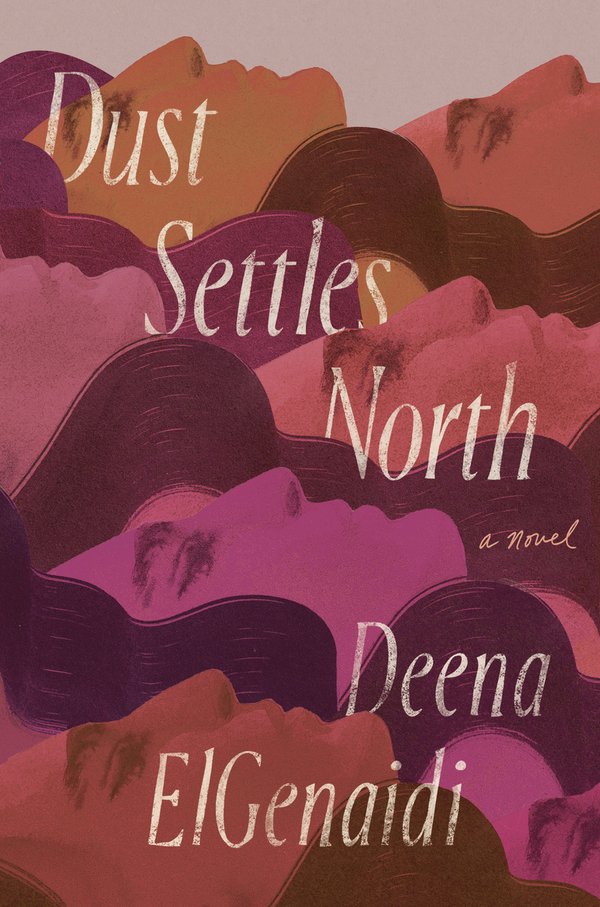
Dust Settles North
Set in 2012, in the aftermath of Egypt’s revolution, Dust Settles North follows Hannah and Zain, two Egyptian American siblings whose lives are upended by their mother’s sudden death and their father’s devastating betrayal. Travelling from New York to Cairo to bury their mother, they find themselves confronting not only their grief but also the painful secrets that have shaped their family.
Hannah abandons her plans to attend Columbia Law School and stays in Egypt, where she navigates unfamiliar surroundings, complicated romantic relationships, and a growing political consciousness. Meanwhile, Zain remains in the United States, where his self-destructive behaviour threatens his relationships and forces him to question whether he is repeating his father’s mistakes.
When the siblings reunite in Cairo, Hannah becomes caught up in the atmosphere of political upheaval surrounding the Arab Spring, while both struggle to reconcile their conservative Muslim upbringing with their evolving beliefs and desires.
Tender and introspective, the novel explores grief, faith, cultural identity, and the complicated ties between parents and children. Through Hannah and Zain’s journeys, ElGenaidi examines what it means to belong to two cultures while searching for a sense of home—and whether a fractured family can find a way to heal.
2025
9
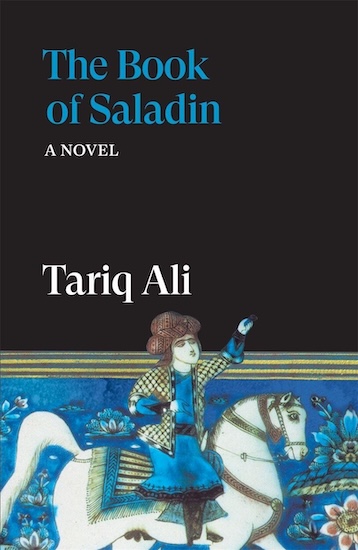
The Book of Saladin (The Islam Quintet)
Set in the twelfth century, The Book of Saladin reimagines the life of Salah al-Din, better known as Saladin, the Kurdish Muslim ruler who united Egypt and Syria and recaptured Jerusalem from the Crusaders in 1187.
The novel takes the form of Saladin’s fictional memoir, dictated to Ibn Yakub, a Jewish scribe tasked with recording the Sultan’s life and achievements. To create a fuller portrait of his subject, Ibn Yakub interviews Saladin’s wives, servants, and companions, revealing the private relationships and personal ambitions behind the public image of a celebrated military leader.
As Saladin rises to power and prepares to reclaim Jerusalem, the narrative explores the political rivalries, religious tensions, and fragile alliances that shape his world. Alongside military campaigns and diplomatic intrigue, the novel delves into the intimate lives of the royal household, including a passionate relationship between Saladin’s favoured wife, Jamila, and another woman in the harem, Halima.
Ali presents a complex portrait of medieval Muslim society, challenging simplified accounts of the Crusades and exploring the contradictions between political ideals and personal desires. Questions of faith, power, loyalty, sexuality, and cultural coexistence run throughout the story, connecting the struggles of the medieval world with conflicts that continue to resonate today.
2026
10
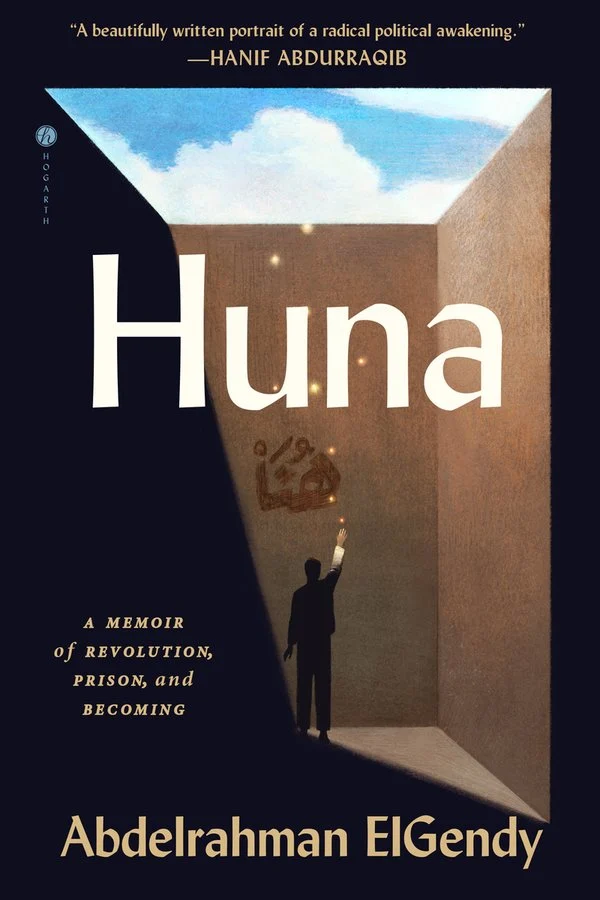
Huna
At seventeen, Abdelrahman ElGendy is arrested during Egypt’s political upheaval and spends six years imprisoned alongside his father. Amid brutal conditions and an uncertain future, he turns to writing as an act of survival and resistance. Both an intimate memoir of family, friendship, and endurance and a powerful indictment of authoritarianism, Huna asks what it means to hold on to your humanity when the world tries to erase you.
2026
11
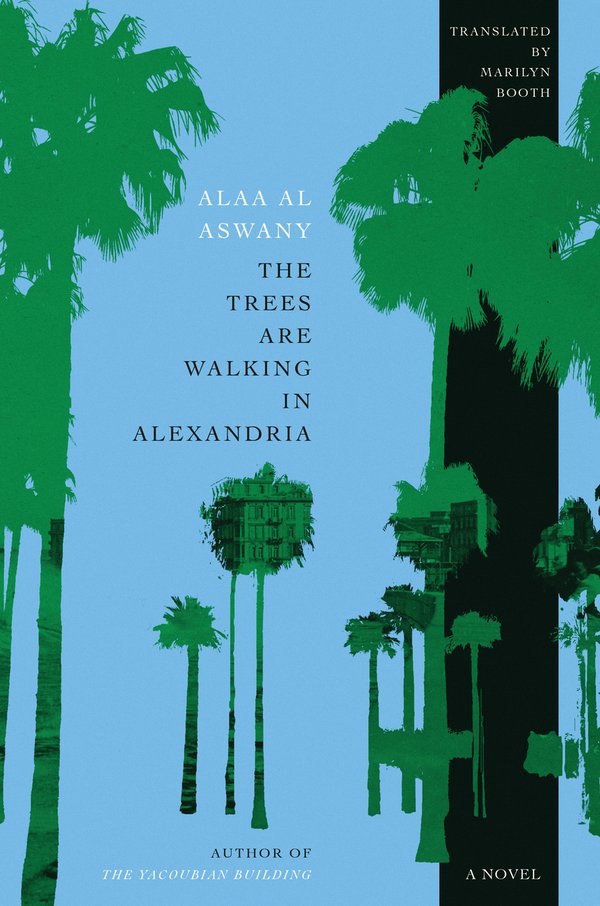
The Trees Are Walking in Alexandria
Alexandria, 1964. Under President Gamal Abdel Nasser, Egypt is undergoing a political transformation that threatens the city’s cosmopolitan spirit. At the elegant waterfront restaurant Artinos, a diverse circle of friends gathers each evening to discuss art, love, justice, and the future of their country. Among them are Lyda, the restaurant’s owner; Carlo, a charismatic Italian bartender; Anas, a painter; Abbas, a liberal lawyer; and Chantal, the owner of Alexandria’s most popular French bookshop. United by their affection for the city they call home, they struggle to reconcile their ideals with a regime that increasingly demands obedience and suppresses individual freedoms. As businesses are nationalised, suspicions deepen, and political pressure intensifies, their friendships and convictions face an unprecedented test. Through the intertwined lives of these characters, Alaa Al Aswany captures the twilight of a multicultural world, exploring how authoritarianism transforms society and how ordinary people navigate the painful collision between personal loyalties and political power.
2027