Books from Algeria
Suggest a book
All genres
Historical Fiction
Literary Fiction
Fantasy
Romance
Horror
Thriller
Non-Fiction
Mystery
Memoir
Classics
History
Sci-Fi
Contemporary Fiction
Science Fiction
Fiction
Poetry
Essays
Family Saga
Magical Realism
Family Drama
Dark Academia
Psychological Fiction
Dark Comedy
Political Writing
Feminist Fiction
Satire
Campus Fiction
Cultural Studies
Biography
Philosophy
Comedy
Drama
Young Adult
Gothic
Dystopia
Crime
Children's Books
Short Stories
Mythology
Cozy
Retellings
Humour
Adventure
All themes
Love & Passion
Adventure & Journey
Identity & Belonging
War & Conflict
Freedom & Resistance
Family & Heritage
Nature & Landscape
Society & Class
Spirituality & Faith
Solitude & Exile
Coming of Age
Revolution & Change
Friendship
History
Immigration
Myths and Retellings
Colonialism
Women & Society
Mental Health
Motherhood
1
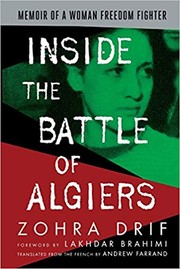
Inside the Battle of Algiers
In this memoir, Algerian revolutionary Zohra Drif recounts her experiences during Algeria’s struggle for independence from French colonial rule in the 1950s and early 1960s. A young woman studying law in Algiers, Drif joins the National Liberation Front (FLN) and becomes involved in its armed resistance alongside other women who challenge both colonial authority and traditional expectations of women’s roles in society.
Through personal recollections, she describes the political tensions, underground operations, arrests, and difficult choices that shaped the independence movement. Her account also explores the place of women in revolutionary struggle and the moral complexities of political violence. Offering a firsthand perspective on one of the defining conflicts of modern Algerian history, the memoir examines the sacrifices, convictions, and contradictions involved in fighting for national liberation.
2017
2
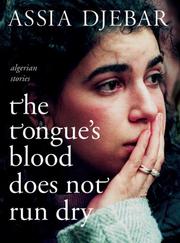
Tongue's Blood Does Not Run Dry
Tongue’s Blood Does Not Run Dry is a novel by Algerian writer Assia Djebar that explores women’s lives, resistance, and the struggle for freedom in a society shaped by colonial history and patriarchal traditions. Through interwoven voices and personal testimonies, Djebar portrays women confronting restrictions on their independence, struggling to express their experiences, and seeking to reclaim control over their own stories. The novel reflects the lasting consequences of Algeria’s colonial past and the ways political oppression intersects with the silencing of women. Language becomes a central concern: speaking, remembering, and bearing witness are acts of defiance against forces that seek to erase individual experiences. Combining lyrical writing with a collective perspective, Djebar challenges conventional historical narratives that marginalise women’s contributions and suffering. The work highlights the connection between personal freedom and collective liberation, showing how women’s voices preserve memories that might otherwise disappear from history.
1984
3
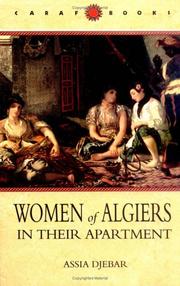
Women of Algiers in Their Apartment
Women of Algiers in Their Apartment is a collection of short stories by Algerian writer Assia Djebar that explores the lives of women navigating the aftermath of colonialism and the Algerian War of Independence. Through interwoven narratives, Djebar portrays women from different generations as they confront the restrictions imposed by patriarchal traditions, the trauma of violence, and the challenges of claiming independence in a changing society. Drawing inspiration from Eugène Delacroix’s painting of the same name, the collection reimagines women traditionally depicted as silent and secluded, giving them voices through which to express their desires, memories, and struggles. Djebar combines personal testimonies, historical reflection, and lyrical prose to examine how women’s experiences have been marginalised in official accounts of national history. Her characters negotiate the tension between tradition and modernity while seeking autonomy and meaningful connection. The collection becomes both an act of remembrance and a literary form of resistance, revealing the complex relationship between women’s liberation, cultural identity, and the unfinished struggle for freedom in postcolonial Algeria.
1980