Books from Dominican Republic
Suggest a book
All genres
Historical Fiction
Literary Fiction
Fantasy
Romance
Horror
Thriller
Non-Fiction
Mystery
Memoir
Classics
History
Sci-Fi
Contemporary Fiction
Science Fiction
Fiction
Poetry
Essays
Family Saga
Magical Realism
Family Drama
Dark Academia
Psychological Fiction
Dark Comedy
Political Writing
Feminist Fiction
Satire
Campus Fiction
Cultural Studies
Biography
Philosophy
Comedy
Drama
Young Adult
Gothic
Dystopia
Crime
Children's Books
Short Stories
Mythology
Cozy
Retellings
Humour
Adventure
All themes
Love & Passion
Adventure & Journey
Identity & Belonging
War & Conflict
Freedom & Resistance
Family & Heritage
Nature & Landscape
Society & Class
Spirituality & Faith
Solitude & Exile
Coming of Age
Revolution & Change
Friendship
History
Immigration
Myths and Retellings
Colonialism
Women & Society
Mental Health
Motherhood
1
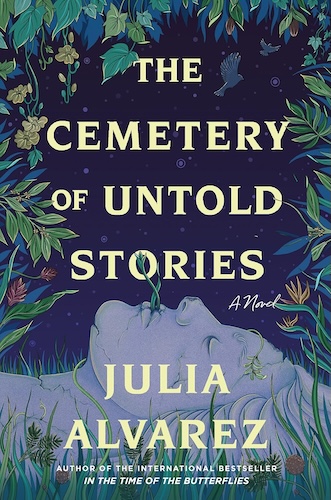
The Cemetery of Untold Stories
What happens to the stories we never tell? When celebrated novelist Alma Cruz retires, she returns to her family’s homeland, the Dominican Republic, and creates an unusual resting place for her unfinished manuscripts: a cemetery where forgotten characters can finally be laid to rest. But the stories refuse to remain buried. As their characters begin speaking back to their creator, hidden histories, family secrets, and forgotten lives emerge from the pages. Blending magical realism with Dominican history, Julia Alvarez explores who gets to tell a story, whose voices are silenced, and whether we ever truly own the stories we create. A moving celebration of the power of storytelling, this novel reminds us that even the tales we try to bury can find their way into the light.
2025
2
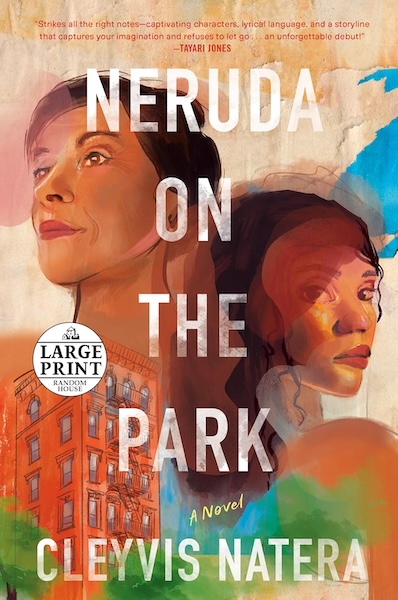
Neruda on the Park
For twenty years, the Guerrero family has called Nothar Park, a predominantly Dominican neighbourhood in New York City, home. But when a neighbouring tenement is demolished to make way for luxury condominiums, the threat of gentrification pushes the community toward a breaking point. Eusebia Guerrero, determined to protect the neighbourhood and the people who shaped her life, begins organising increasingly risky schemes to frighten developers away. Her daughter, Luz, has very different ambitions: a successful career in corporate law and the comfortable lifestyle her immigrant parents worked hard to provide.
When Luz loses her job and falls into a passionate relationship with a wealthy property developer connected to the very project her mother opposes, the conflict between them becomes deeply personal. Meanwhile, Luz’s father secretly plans their retirement in the Dominican Republic, reopening old tensions about home and belonging.
With humour and emotional depth, Neruda on the Park explores gentrification, generational conflict, immigrant identity, and the difficult choices families face when the place they call home begins to disappear.
2022
3
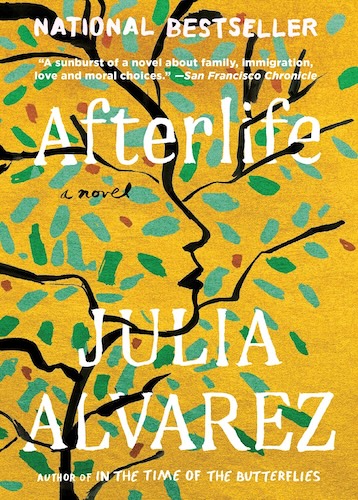
Afterlive
What do we owe the people who need us when we are barely holding ourselves together? Antonia Vega, a recently retired literature professor, is still reeling from the sudden death of her beloved husband when her life begins to unravel further: her unpredictable sister disappears, and a pregnant, undocumented teenager turns up seeking shelter. Accustomed to finding answers in books, Antonia discovers that grief and compassion demand more than words. Set in rural Vermont, this intimate, quietly powerful novel explores sisterhood, immigration, moral responsibility, and the courage it takes to begin again. As Antonia navigates a world fractured by fear and distrust, she must decide how to honour her own needs without turning away from the suffering of others.
2020
4
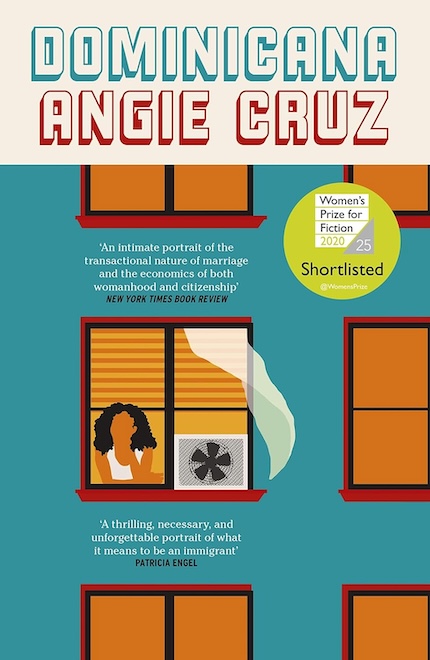
Dominicana
Fifteen-year-old Ana Canción has never dreamed of leaving the Dominican countryside, but when Juan Ruiz, a man twice her age, offers to marry her and take her to New York City, her family sees an opportunity for a better future. On New Year’s Day in 1965, Ana leaves behind everything she knows and arrives in Washington Heights, where she finds herself trapped in an unhappy marriage with a controlling and unfaithful husband. Lonely and struggling to adapt to life in a new country, she begins to imagine a future beyond the narrow role expected of her.
When Juan returns to the Dominican Republic amid growing political turmoil, Ana discovers new freedoms through English lessons, friendships, and an unexpected romantic connection with his younger brother, César. But her growing independence clashes with her family’s hopes and the sacrifices expected of her. Set against the backdrop of the Dominican Civil War and the Dominican immigrant community in New York, Dominicana is a moving coming-of-age story about migration, womanhood, and the courage to claim a life of one’s own.
2019
5
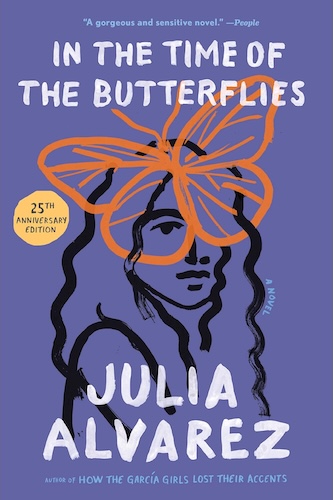
In the Time of the Butterflies
Four sisters. One brutal dictatorship. A courage that would outlive them all.
In the Dominican Republic under Rafael Trujillo’s oppressive regime, the Mirabal sisters lead seemingly ordinary lives until they are drawn into the underground resistance. As Minerva, Patria, and María Teresa risk everything to challenge the dictator, their youngest sister, Dedé, must confront the consequences of their growing defiance. Inspired by the true story of the Mirabal sisters, three of whom were murdered on Trujillo’s orders in 1960, Julia Alvarez brings their lives to the page with tenderness and emotional power. Through love, family bonds, and acts of extraordinary bravery, this moving novel explores the price of resistance and the strength it takes to stand against tyranny. The sisters, remembered as Las Mariposas (the Butterflies), became enduring symbols of freedom and courage.
1994
6
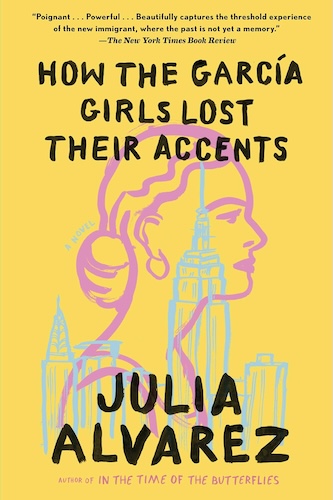
How the Garcia Girls Lost Their Accents
Four sisters. Two cultures. One homeland they can never quite leave behind.
When the García family flees the Dominican Republic for New York in 1960, sisters Carla, Sandra, Yolanda, and Sofía find themselves caught between the world they left and the one they are expected to embrace. As they straighten their hair, abandon Spanish, and navigate American adolescence, each struggles to reconcile family traditions with the freedom to become someone new. Told in reverse chronological order through interconnected stories, Julia Alvarez’s celebrated debut novel explores the intimate costs of immigration: the longing to belong, the awkwardness of growing up between cultures, and the parts of ourselves we lose—or discover—along the way. Witty, tender, and deeply personal, it captures the bittersweet experience of having more than one home and never feeling entirely at home in either.
1991